2027 Online Game Programming and Development Degrees With Career-Ready Coding Coursework

Co-Founder and Chief Data Scientist
Choosing an online game programming degree is really a career investment question: will the curriculum build enough coding skill to compete for technical roles? The U. S. Bureau of Labor Statistics reports that software developers had a median annual wage of $133,080 in May 2024, showing why strong programming preparation matters. This guide is for future game developers comparing online degrees, costs, admissions, coursework, and job outcomes so they can choose a program that fits their goals, budget, and preferred learning format.
Key Things You Should Know
- An online game programming degree should teach production-ready coding, not only game design; look for C++, C#, data structures, game engines, networking, graphics programming, debugging, and a portfolio-based capstone.
- For salary planning, game programming roles are usually benchmarked against software developer and related technical occupations; the BLS reported $133,080 as the May 2024 median annual wage for software developers, but outcomes vary by role, location, studio size, and portfolio quality.
- Cost and credibility matter: College Board's 2024 pricing data listed average 2024-25 tuition and fees at $11,610 for in-state public four-year students and $43,350 for private nonprofit four-year students, so accreditation, transfer credits, and total program cost should be checked before enrollment.
What is an online game programming degree?
An online game programming degree is a college program that prepares students to build the technical systems behind video games, simulations, interactive media, and real-time applications. Unlike a general game design program, which may focus more on story, level design, art direction, or player experience, game programming emphasizes code, algorithms, tools, engines, performance, and software development workflows.
Most programs are offered as associate, bachelor's, or master's degrees. A bachelor's degree is the most common route for students aiming for entry-level programming roles at game studios, software companies, simulation firms, or extended reality teams. Associate programs can be useful for transfer or junior technical roles, while graduate programs usually serve students who already have programming experience and want to specialize in artificial intelligence, graphics, engines, or technical leadership.
The degree is a strong fit if you enjoy solving technical problems, building interactive systems, and revising code until it works reliably. It may not be the best fit if you mainly want to create character art, concept art, branding, or interface visuals; in that case, a graphic design degree or digital media program may align better with your strengths.
The table below compares common game-related degree paths. Use it to match the program type with the kind of work you actually want to do after graduation.
| Program type | Best fit | Typical focus | Career direction |
| Associate in game development | Students seeking a lower-cost start or transfer path | Introductory programming, basic engines, math, general education | Transfer to bachelor's program, QA testing, junior support roles |
| Bachelor's in game programming | Students seeking technical game development jobs | C++, C#, algorithms, engines, graphics, physics, production pipeline | Gameplay programmer, tools programmer, junior software developer |
| Bachelor's in game design | Students focused on gameplay systems and player experience | Level design, systems design, prototyping, scripting, usability | Game designer, technical designer, level designer |
| Master's in game development or interactive computing | Students with prior coding or design experience | Advanced graphics, AI, simulation, research, leadership | Senior technical roles, simulation development, applied research |
A good program should help you graduate with more than a transcript. Employers usually want evidence that you can build, test, optimize, document, and collaborate on playable software. That means the strongest online degrees include portfolio projects, version control, engine-based assignments, and team production work.
How does an online game programming degree compare with campus programs?
Online and campus game programming programs can lead to similar academic credentials, but the learning experience is different. The right choice depends on how you learn, how much flexibility you need, whether you want in-person studio access, and how comfortable you are collaborating remotely.
The comparison below highlights the practical trade-offs. It can help you decide whether online learning supports your goals or whether a campus-based studio environment would be more useful.
| Factor | Online game programming degree | Campus game programming degree | Decision point |
| Schedule | Often more flexible, especially with asynchronous lectures | Usually follows fixed class and lab times | Online may fit working adults better |
| Collaboration | Uses Git, Discord, learning platforms, video meetings, and cloud tools | Offers face-to-face labs, studio spaces, and informal peer work | Choose online only if you can communicate consistently in remote teams |
| Equipment | Requires a capable personal computer and reliable internet | May provide access to labs, rendering machines, VR hardware, or motion tools | Campus can be useful for hardware-heavy specializations |
| Portfolio development | Can be strong if courses include playable builds and team projects | Can be strong if the school runs studios, jams, or showcases | Format matters less than the quality of completed projects |
| Networking | Depends on virtual events, faculty access, alumni channels, and student groups | May include local studio visits, campus events, and in-person showcases | Ask how online students connect with recruiters and alumni |
Online programs make the most sense for students who need geographic flexibility, already have a suitable computer setup, and can manage deadlines without daily in-person structure. Campus programs may be better for students who want physical studio access, local networking, or frequent hands-on support.
A common mistake is assuming "online" means easier. In a coding-heavy game program, the work can be intense because students must debug independently, manage source control, submit builds, and communicate clearly with remote teammates. Before enrolling, ask whether online students complete team-based projects, receive code reviews, and get access to the same career services as campus students.
What accreditation should an online game development program have?
Accreditation is one of the most important quality checks for any online degree. For game programming programs in the U.S., the first thing to verify is institutional accreditation from an agency recognized by the U.S. Department of Education or the Council for Higher Education Accreditation. This affects credit transfer, federal financial aid eligibility, graduate school options, and employer confidence.
Programmatic accreditation is less standardized in game development than in fields such as nursing or accounting. Some computer science, software engineering, or computing programs may hold ABET accreditation, which can be a positive signal for technical rigor. However, many legitimate game programming degrees do not have separate programmatic accreditation, especially if they are housed in digital media, interactive design, or entertainment technology departments.
Use the following checks before you apply. These steps help you avoid unrecognized credentials and programs that look appealing but may not support your long-term goals.
- Confirm the school's institutional accreditation through the U.S. Department of Education's Database of Accredited Postsecondary Institutions and Programs or the accreditor's own directory.
- Check whether the specific degree name, campus, and online delivery format are covered by the institution's accreditation status.
- Ask whether credits transfer to public universities or graduate programs if you may continue your education later.
- Review faculty profiles for professional experience in software development, game engines, graphics, simulation, or interactive systems.
- Request examples of student portfolios, capstones, internship partners, and employer outcomes instead of relying only on marketing language.
Red flags include unclear accreditation claims, pressure to enroll immediately, vague course descriptions, no public curriculum, no evidence of student projects, and unusually broad career promises. A credible school should be willing to explain accreditation, total cost, transfer policy, technical requirements, and career support in plain language.
Employer Confidence in Online vs. In-Person Degree Skills, Global 2024

What coding coursework is in a game programming degree?
Career-ready game programming coursework should build from general computing foundations into real-time interactive systems. The best curricula do not treat game engines as shortcuts; they teach students what engines do, how to extend them, and how to debug performance problems when a game becomes complex.
The table below summarizes the coding coursework you should expect in a strong online game programming degree. It also explains why each area matters in professional production.
| Course area | What students learn | Why it matters for game jobs |
| Programming fundamentals | Variables, control flow, functions, object-oriented programming, memory basics | Provides the foundation for all later gameplay, tools, and engine work |
| C++ and C# | Systems-level programming, gameplay scripting, engine integration | C++ is common in engines and performance-sensitive systems; C# is widely used in Unity workflows |
| Data structures and algorithms | Lists, trees, graphs, search, sorting, complexity, optimization | Helps programmers build efficient systems for inventory, AI, pathfinding, and game state |
| Game engines | Unity, Unreal Engine, scripting, prefabs, blueprints, components, build pipelines | Employers often expect candidates to understand at least one major engine environment |
| Computer graphics | Rendering pipelines, shaders, lighting, cameras, transformations | Useful for graphics programming, visual effects, optimization, and technical art collaboration |
| Physics and simulation | Collision, rigid bodies, motion, vectors, forces, numerical methods | Supports believable movement, interaction, vehicles, combat systems, and simulations |
| Networking and multiplayer systems | Client-server models, latency, synchronization, replication, security basics | Important for online games, co-op play, live service systems, and networked simulations |
| Software engineering practices | Git, testing, debugging, agile workflows, documentation, code review | Shows employers that students can work in production teams, not just finish solo assignments |
| Capstone or portfolio production | Team project planning, playable builds, iteration, presentation, postmortems | Creates evidence of skill for applications, interviews, and technical screenings |
AI is also changing what "career-ready" means. Studios increasingly use procedural tools, machine learning-assisted workflows, automated testing, and AI-supported content pipelines, but programmers still need strong fundamentals to evaluate outputs, protect performance, and avoid brittle systems. Students who want deeper preparation for AI-heavy game systems may later compare an online masters in AI after building a solid undergraduate coding base.
When reviewing a curriculum, do not stop at course titles. Ask admissions or the department for sample syllabi, programming languages used, engine versions, project requirements, and whether students submit source code for review. A course called "Game Development I" can mean anything from visual scripting to advanced engine architecture, so specifics matter.
What are the admission requirements for game programming programs?
Admission requirements vary by school and degree level, but most online bachelor's programs in game programming expect applicants to show academic readiness, basic math ability, and interest in computing. Many programs are test-optional, but selective schools may still consider standardized test scores, prior coding courses, or a portfolio.
Applicants usually encounter a combination of the following requirements. Review them early so you can strengthen weak areas before deadlines arrive.
- High school diploma, GED, or equivalent credential for undergraduate admission.
- Official transcripts from high school and any colleges previously attended.
- Minimum GPA requirement, which varies by institution and may be higher for direct admission to computing majors.
- Math preparation, often including algebra, precalculus, trigonometry, or calculus readiness depending on program rigor.
- Personal statement or short essay explaining interest in game programming, computing, or interactive media.
- Portfolio or project samples for some programs, especially if the degree blends programming, design, and production.
- English proficiency documentation for applicants whose prior education was not in English.
- Technical requirements, including a computer that can run required engines, development tools, and version control software.
Transfer students should pay special attention to credit evaluation. General education credits may transfer more easily than programming courses because computing departments often require language-specific or sequence-specific preparation. If you already completed computer science, math, or digital media classes, request a degree audit before committing.
Avoid applying only to programs with the most exciting game trailers or campus branding. A better strategy is to compare prerequisites, transfer rules, graduation requirements, and portfolio expectations. If you are new to coding, look for programs with structured beginner support rather than assuming you can catch up independently in advanced courses.
How long does an online game programming degree take?
The time needed to finish an online game programming degree depends on degree level, transfer credits, enrollment status, course availability, and whether the program uses traditional semesters or accelerated terms. A full-time bachelor's program typically follows a four-year plan, while students with transfer credits may finish faster.
The table below gives a practical timeline comparison. Use it to estimate the level of commitment rather than as a guarantee, since each school sets its own credit requirements and course sequence.
| Degree path | Typical completion time | Best for | Important trade-off |
| Certificate or bootcamp-style program | Several months to about one year | Students testing interest or adding a specific engine skill | Faster, but may not replace a degree for employers that prefer bachelor's-level preparation |
| Associate degree | About two years full time | Students seeking an affordable start or transfer route | May not include enough advanced graphics, networking, or engine coursework for programming roles |
| Bachelor's degree | About four years full time | Students targeting entry-level technical roles | Requires sustained math, computing, and project work |
| Bachelor's completion program | Often two to three years after transfer | Students with prior college credits | Completion speed depends on how many credits apply to the major |
| Master's degree | Often one to three years | Students specializing after a computing or game-related bachelor's | Usually assumes prior programming skill |
Part-time study can make the degree more manageable for working adults, but it may extend the timeline and delay portfolio completion. Accelerated programs can reduce calendar time, but they are demanding because programming assignments often require long debugging cycles that cannot be rushed.
Before enrolling, ask whether required programming courses are offered every term. A hidden delay can occur when a student fails or postpones a prerequisite that is only offered once per year. Also ask whether capstone projects require synchronous meetings, because team production schedules can affect working students.
How much do online game programming degrees cost?
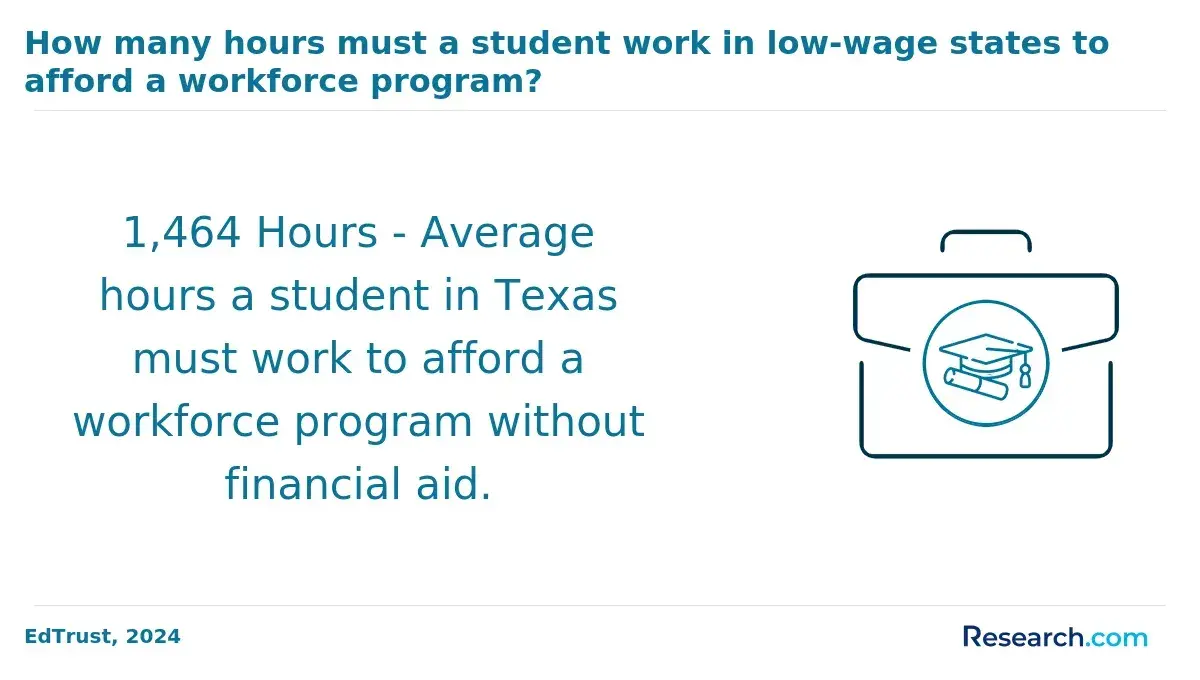
Online game programming degree costs vary widely because tuition depends on institution type, residency rules, credit requirements, technology fees, transfer credits, and financial aid. Do not compare programs by tuition alone; compare total cost of attendance, expected time to completion, and the amount of debt you would need to take on.
Recent national pricing benchmarks help put program quotes in context. College Board's 2024 Trends in College Pricing and Student Aid reported the following average published tuition and fee figures for 2024-25:
- $11,610 for in-state students at public four-year institutions.
- $30,780 for out-of-state students at public four-year institutions.
- $43,350 for students at private nonprofit four-year institutions.
These figures are not online-game-program prices, but they are useful comparison points when a school quotes annual tuition. Online students should also check whether the school charges separate technology, software, course, or portfolio fees.
The table below explains the major cost factors that can change the real price of a game programming degree. Use it to compare schools beyond the advertised tuition number.
| Cost factor | Why it matters | What to ask |
| Tuition model | Schools may charge per credit, per term, or by residency status | Is online tuition the same for in-state and out-of-state students? |
| Transfer credits | Accepted credits can reduce both tuition and time | How many prior credits apply directly to the major and general education requirements? |
| Required hardware | Game engines may require a capable computer, graphics card, headset, or storage | What are the minimum and recommended computer specifications? |
| Software and engine costs | Some tools are free for students, while others may require licenses or subscriptions | Are all required tools included in tuition or student fees? |
| Course availability | Delayed prerequisites can add extra terms | Are core programming courses offered every term? |
| Financial aid | Federal aid generally requires eligible institutions and qualifying enrollment | Is the school eligible for federal student aid, and what is the average net price after aid? |
To reduce costs, start with an accredited public institution or community college transfer pathway if it preserves your target bachelor's requirements. Also compare net price, not sticker price. A private nonprofit university may appear expensive but offer institutional aid, while a lower-tuition option may cost more than expected if credits do not transfer or courses are delayed.
What jobs can you get with a game programming degree?
A game programming degree can lead to roles inside game studios and to related technical jobs in software, simulation, training, defense, education technology, virtual production, and extended reality. This flexibility matters because the game industry is competitive and often project-based, so graduates benefit from skills that transfer beyond entertainment games.
The table below outlines common roles connected to game programming coursework. It focuses on responsibilities rather than promising outcomes, since job titles vary by employer.
| Role | Typical responsibilities | Helpful coursework or portfolio evidence |
| Gameplay programmer | Builds player mechanics, combat systems, interaction logic, cameras, and controls | Playable prototypes, C++ or C#, engine scripting, debugging samples |
| Engine programmer | Improves core engine systems, performance, rendering, tools, or platform support | Advanced C++, graphics, memory management, optimization projects |
| Tools programmer | Creates internal software that helps designers, artists, and developers work faster | Editor extensions, pipeline tools, UI utilities, scripting projects |
| Graphics programmer | Works on rendering, shaders, lighting, visual effects, and performance | Shader demos, graphics coursework, math, GPU-focused projects |
| AI programmer | Builds non-player character behavior, pathfinding, decision systems, and procedural logic | Algorithms, state machines, behavior trees, pathfinding demos |
| Network programmer | Develops multiplayer systems, synchronization, latency handling, and server logic | Client-server projects, replication demos, networking coursework |
| Quality assurance automation tester | Writes scripts and tools to test builds, reproduce bugs, and support release quality | Testing frameworks, scripting, bug reports, version control experience |
| Simulation software developer | Builds interactive systems for training, visualization, education, or research | Physics, real-time systems, VR or AR prototypes, documentation |
Students interested in game preservation, digital collections, interactive archives, or educational media may also explore adjacent paths connected to information organization; for that niche, comparing online library schools can make sense if the goal is digital curation rather than programming production.
To become more competitive, build a portfolio that shows finished work, not only screenshots. Recruiters and technical interviewers often want to see source code organization, playable builds, documentation, performance awareness, and your explanation of what you personally contributed to a team project.
Common career-planning mistakes include aiming only for "game developer" without choosing a technical specialty, graduating with group projects that do not identify individual contributions, ignoring software jobs outside entertainment, and failing to practice technical interviews. A stronger approach is to choose two target roles, build projects aligned with those roles, and keep a public portfolio or Git repository clean enough for review.
How much do game programmers earn in the U.S.?
There is no single federal salary category for "game programmer," so salary planning usually relies on related U.S. occupations such as software developers, computer programmers, special effects artists and animators, and quality assurance analysts and testers. The closest benchmark for many coding-heavy game roles is software developer.
The BLS reported that software developers had a median annual wage of $133,080 in May 2024. This does not mean a new game programming graduate should expect that exact figure; it is a national median across industries, experience levels, regions, and employers. Entry-level game roles, contract roles, indie studios, and high-cost metro areas can differ substantially.
The BLS also projected employment for software developers, quality assurance analysts, and testers to grow 17% from 2023 to 2033 in its 2024 Occupational Outlook Handbook update. For students, the key takeaway is that strong programming skills have broad labor-market value, even if the entertainment game sector is more competitive than general software development. The table below shows how to interpret salary expectations by career direction. It is meant for planning, not as a guarantee of pay.
| Career direction | Salary benchmark to research | What can affect pay |
| Game studio programming | Software developer and employer-specific game programmer postings | Studio size, location, shipped titles, engine expertise, specialization |
| Simulation and training software | Software developer roles in technical, defense, education, or enterprise settings | Security requirements, domain knowledge, real-time systems experience |
| QA automation or technical testing | Software quality assurance analyst and tester roles | Automation skills, scripting, platform knowledge, release experience |
| Technical art or graphics support | Software developer, graphics, and special effects-related postings | Shader skills, art pipeline knowledge, engine tools, portfolio strength |
When evaluating return on investment, compare the total cost of the degree with realistic entry-level roles in your target region. Use job postings to confirm required languages, engines, and experience levels. If most postings request C++, Unreal, networking, or shipped projects, choose coursework and portfolio projects that directly address those requirements.
What certifications help game programming graduates?
Certifications are not usually required for game programming jobs, but they can strengthen a resume when they validate specific tools, cloud platforms, security knowledge, or project management skills. They are most useful when paired with a portfolio; a certificate alone rarely proves that you can build a game system.
The table below lists certifications and credential areas that may help game programming graduates. Choose credentials based on your target role rather than collecting badges at random.
| Certification or credential area | Best for | How it helps |
| Unity certifications | Students targeting Unity-based gameplay, mobile, indie, or simulation work | Signals familiarity with Unity workflows, scripting, and production concepts |
| Unreal Engine training or authorized courses | Students targeting Unreal gameplay, visualization, virtual production, or technical art | Supports portfolio claims around Blueprints, C++, real-time rendering, and engine workflows |
| AWS, Microsoft Azure, or Google Cloud credentials | Students interested in multiplayer backends, live services, analytics, or cloud deployment | Shows familiarity with cloud infrastructure used in online systems |
| CompTIA Security+ or similar security fundamentals | Students considering networked games, platform operations, or secure software roles | Builds baseline awareness of security risks in connected software |
| Scrum or agile credentials | Students moving into production coordination or technical lead paths | Helps explain team workflow knowledge, though it should not replace technical skill |
| Graduate coursework in data or AI | Students aiming for game analytics, recommendation systems, AI behavior, or procedural systems | Can deepen specialization after a programming foundation is already in place |
Students drawn to player analytics, telemetry, procedural balancing, or machine learning systems may eventually compare a master of data science online with AI-focused graduate options. That path is usually more valuable after you have enough programming and math experience to apply advanced methods in real projects.
A practical credential strategy is to first build a strong portfolio, then add one certification that supports your target role. For example, a Unity credential may help a mobile gameplay candidate, while a cloud credential may help a multiplayer backend candidate. Avoid paying for certifications that do not connect to the jobs you plan to pursue.
Other Things You Should Know About Game Programming & Development
Applicants should prepare 2 to 4 sample projects, such as a playable game prototype, a GitHub repository, and code samples in C++, C#, or Python. Many programs also ask for a résumé and a short statement of interest, while some require only standard university admission documents.
Not always, but many employers prefer candidates with a bachelor's degree in game programming, computer science, software engineering, or a related field. A strong portfolio and technical interview performance can also matter heavily.
In 2027, online game programming degrees typically focus on languages like C++, Java, and Python. These languages are essential for understanding game engines, developing complex game systems, and ensuring cross-platform compatibility. Specialized coursework often includes using engines like Unity and Unreal, which rely heavily on C# and C++.
Yes, but the online program must give you serious project experience, code review, engine practice, teamwork, and career support. Employers generally care more about what you can build and explain than whether you learned online or on campus.
References
- Game Developer salary in US https://builtin.com/salaries/us/game-developer
- Game Development Bachelor's Degree https://www.fullsail.edu/degrees/game-development-bachelor
- Online Game Development Courses | Learn from Top Game Devs https://www.cgspectrum.com/courses/game-development
- Game Developer Certifications: Best Credentials to Advance Your Career | Teal https://www.tealhq.com/career-paths/game-developer-certifications
- Game Design | Vancouver Film School https://vfs.edu/programs/game-design
- We help game developers learn and grow https://gamedev.tv/
- Is Game Programming a Good Career Path? Opportunities, Salary, Outlook - Champlain College https://www.champlain.edu/blog/stories/game-programming-career-path/
- Bachelor of Game Development Major in Game Programming | AIE Institute https://aieinstitute.edu.au/course/bachelor-of-game-development-major-in-game-programming/
- What can I do with a Games Degree? https://www.bcu.ac.uk/blog/games/what-can-you-do-with-a-games-degree
- Game Development Programming Certificate https://catalog.nhti.edu/animation-and-graphic-game-programming/certificate/game-development-programming-certificate