
2027 Fastest Online Ed.S Degree in Special Education Programs

Co-Founder and Chief Data Scientist
The number of public school students aged three to 21 in the United States who received special education under the Individuals with Disabilities Education Act (IDEA) increased from 6.4 million in A.Y. 2012-2013 to 7.5 million in A.Y. 2022-2023 (National Center for Education Statistics, 2024). However, public schools struggle to fill special education teaching positions.
These trends indicate a growing need for educator leaders who are trained to improve outcomes for students with disabilities.
Those looking to become educators and make an impact in the field of special education can consider taking up an online Ed.S degree in special education. In this guide, I'll provide an overview of fast-track programs for this field to help you understand what to expect.
What are the benefits of getting an accelerated online Ed.S in Special Education degree?
- An accelerated online Ed.S. in Special Education prepares graduates for leadership roles requiring expertise beyond a master’s, such as special education director, administrator, or program coordinator.
- Professionals with an Ed.S. in Special Education earn a median annual salary ranging from $75,000 to over $100,000, depending on role and location, with higher earnings potential in administrative or district-level positions.
- This degree equips you with advanced knowledge and leadership skills to oversee programs, design inclusive curricula, and advocate for diverse learners—all with the flexibility of online learning.
What can I expect from an accelerated online Ed.S in Special Education degree program?
An accelerated online Ed.S degree in Special Education program prepares professionals for advanced roles in special education through a flexible, fast-paced curriculum.
- Coursework emphasizes research-based strategies, policy, advocacy, and instructional leadership for diverse student needs.
- Programs often include practical components such as capstone projects or clinical experiences to apply theory in real-world settings.
- Delivered fully online, these programs provide accessibility and flexibility for working educators, featuring short, intensive courses and opportunities for interaction with experienced faculty through virtual platforms.
- Given the fast pace of this program, students must expect an intensive study schedule. This will help them quickly gain the expertise needed to advance inclusive education.
- Graduates gain expertise to lead, coordinate, or administer special education services, making this degree particularly suitable for educators seeking to advance their careers without a lengthy time commitment.
Where can I work with an accelerated online Ed.S in Special Education degree?
Graduates with an accelerated online Ed.S degree in Special Education are highly sought after in a variety of educational settings and related fields.
- Public and Private K-12 School Districts. Fill critical roles in supporting students with disabilities. Beyond direct instruction, they also provide training and guidance to general education teachers on inclusive practices.
- Specialized Learning Centers and Private Practices. Offer focused interventions for students with unique learning profiles.
- Residential Care Facilities or Hospitals. Provide educational services to children and adolescents with complex needs.
- Educational Consulting Firms. Advise schools and families on best practices in special education.
- Assistive Technology Industry. Help integrate adaptive tools and software to enhance learning for students with disabilities.
Outside of traditional schools, Ed.S graduates can work in state and federal education agencies, nonprofit organizations, and private education companies that specialize in special education services.
How much can I make with an accelerated online Education Specialist in Special Education degree?
Graduates with an accelerated online Ed.S degree in Special Education typically earn competitive salaries reflecting their advanced expertise and leadership roles in education.
To give you an idea of how much you can make in this profession, here are some estimates for certain roles related to this career path.
- According to 2024 salary data from the U.S Bureau of Labor Statistics (BLS), the annual mean wage for special education teachers ranges from about $70,000 to $75,000.
- More specialized or senior positions, such as Education Specialists or Directors, can expect salaries reaching even higher compensation.
- Most Education and Childcare Administrators earned between $77,000 and $131,000.
- Instructional Coordinators made salaries ranging from about $74,000 to $115,000.
The last three roles often involve program management, policy implementation, and instructional leadership, justifying the higher salary compared to typical special education teachers.
- List of Fastest Online Ed.S in Special Education Programs for 2027 List of Programs
- How long does it take to complete an accelerated online Ed.S in Special Education program? Completion Time
- How does an accelerated online Ed.S in Special Education degree compare to a traditional program? How does an accelerated online Ed.S in Special Education degree compare to a traditional program?
- What is the average cost of an accelerated Ed.S in Special Education program? Average Cost
- What are the financial aid options for students enrolling in an accelerated online Ed.S in Special Education program? Financial Aid
- What are the prerequisites for enrolling in an accelerated online Ed.S in Special Education program? Admission Requirements
- What courses are typically in an accelerated online Ed.S in Special Education program? What courses are typically in an accelerated online Ed.S in Special Education program?
- What are the licensure implications of an online Ed.S vs. on-campus program? What are the licensure implications of an online Ed.S vs. on-campus program?
- How to choose the best fast-track online Ed.S in Special Education degree program? How to choose the best fast-track online Ed.S in Special Education degree program?
- Is the Accelerated Online Ed.S in Special Education a Cost-Effective Investment? Is the Accelerated Online Ed.S in Special Education a Cost-Effective Investment?
- What are the potential challenges of an accelerated online Ed.S in Special Education program? What are the potential challenges of an accelerated online Ed.S in Special Education program?
- What career paths are available for graduates of accelerated online Ed.S in Special Education programs? Career Paths
- What is the job market for graduates with an accelerated online Ed.S in Special Education degree? Job Market
- What complementary qualifications can further advance your expertise? What complementary qualifications can further advance your expertise?
Fastest Online Ed.S in Special Education Programs for 2027
An online Education Specialist degree in Special Education can help experienced educators move into advanced instructional, supervisory, and district-level roles without committing to a full doctoral program. For working teachers, intervention specialists, and school leaders, the main question is not only which program is fastest, but which program is fast without sacrificing accreditation, licensure alignment, field experience, or practical support.
This guide compares accelerated online Ed.S in Special Education programs, explains how long they typically take, what they cost, what admission requirements to expect, and how to evaluate whether the degree fits your career goals. It also covers licensure considerations, career paths, labor market signals, financial aid options, and common mistakes to avoid before enrolling. Accelerated education pathways are now common across fields, from special education to options such as the fastest online addiction psychology degree programs, but speed should never be the only factor in your decision.
Quick Answer: What Is the Fastest Online Ed.S in Special Education?
The fastest online Ed.S in Special Education programs can often be completed in about 12 to 18 months, depending on transfer credits, course load, start dates, and whether the program includes an internship, practicum, or capstone. Liberty University lists an estimated completion time of approximately 12 to 18 months, while Arkansas State University, National University, Walden University, and American College of Education list options that can be completed in approximately 18 months.
The best accelerated program is usually one that combines four features: recognized accreditation, a curriculum aligned with your career goal, flexible online delivery, and clear guidance on state licensure or endorsement requirements. A shorter program is not necessarily better if it does not meet your state’s requirements for special education leadership, administration, or advanced endorsement.
How We Ranked These Programs
Accelerated graduate education requires a significant investment of time and money, so this list focuses on online Ed.S programs with special education pathways or specialization options that are designed for faster completion. We considered program length, credit requirements, cost information provided by schools, online flexibility, accreditation, transfer policies, and relevance to special education leadership or advanced practice.
Research.com’s ranking methodology uses data from sources such as the College Scorecard database, the IPEDS database, the National Center for Education Statistics, and Peterson’s database, including the Distance Learning Licensed Data Set. Program details can change, so prospective students should verify tuition, credits, fieldwork, transfer limits, and licensure outcomes directly with each institution before applying.
Best Fast-Track Online Ed.S in Special Education Programs
| School | Estimated Completion Time | Credits | Cost Information Provided | Accreditation Listed | Best Fit |
| Arkansas State University | Approximately 18 months | 33 | Estimated total tuition of $11,220 | Council for the Accreditation of Educator Preparation | Educators seeking a special education director leadership pathway |
| Liberty University | Approximately 12 to 18 months | 30 | $610 per credit | Southern Association of Colleges and Schools Commission on Colleges | Educators who want a fast online Ed.S that may connect to doctoral study |
| National University | Approximately 18 months | 33 | Estimated total tuition per year of $6,465 | Western Association of Schools and Colleges | Students who want year-round enrollment and no dissertation requirement |
| Walden University | Approximately 18 months | 45 quarter credits | $670 per quarter hour | Higher Learning Commission | Educators seeking a practice-focused online program with a capstone |
| American College of Education | Approximately 18 months | 34 | $306 per credit | Higher Learning Commission | Cost-conscious educators who want multiple start dates and student support |
1. Arkansas State University
Arkansas State University offers a fully online Ed.S in Educational Leadership with a Special Education Director accelerated pathway. The program is designed for special education professionals who want to prepare for district-level leadership responsibilities, including program oversight, service coordination, and compliance-related work. It includes a state-approved internship and a course option for students interested in an Arkansas teaching license.
- Program length: Approximately 18 months
- Tracks or concentrations: Advance Perspective track; Professional Practice track
- Cost per credit: Arkansas State University provides an estimate of $11,220 for total tuition
- Credits required: 33
- Accreditation: Council for the Accreditation of Educator Preparation
2. Liberty University
Liberty University offers a fully online Ed.S in Special Education with eight-week courses and several start dates each year. Students may transfer up to 50% of eligible credits, which can shorten the time to completion for qualified applicants. The program can also serve as a bridge for educators who may later pursue an Ed.D. or another doctoral credential.
- Program length: Approximately 12 to 18 months
- Tracks or concentrations: Ed.S in Special Education
- Cost per credit: $610 per credit
- Credits required: 30
- Accreditation: Southern Association of Colleges and Schools Commission on Colleges
3. National University
National University offers a fully online Ed.S program with year-round enrollment, transfer credit options, and no dissertation requirement. Students can build a special education focus by completing six specialization elective courses. The curriculum also includes two research courses and a capstone, making it a practical option for educators who want advanced study without a doctoral dissertation.
- Program length: Approximately 18 months
- Tracks or concentrations: Ed.S in Special Education
- Cost per credit: National University provides an estimate of $6,465 for total tuition per year
- Credits required: 33
- Accreditation: Western Association of Schools and Colleges
4. Walden University
Walden University offers a fully online Ed.S in Special Education with flexible pacing for working educators. According to the university, the curriculum is informed by the Council for Exceptional Children’s Professional Preparation Standards. Students complete an ePortfolio and a final capstone project tied to real-world special education practice.
- Program length: Approximately 18 months
- Tracks or concentrations: Ed.S in Special Education
- Cost per credit: $670 per quarter hour
- Credits required: 45 quarter credits
- Accreditation: Higher Learning Commission
5. American College of Education
American College of Education offers an online Ed.S in Special Education with multiple start dates, free tutoring, and 24/7 student support. The program covers advanced topics such as reading intervention strategies, current issues in special education, and autism spectrum-related practice.
- Program length: Approximately 18 months
- Tracks or concentrations: Ed.S in Special Education
- Cost per credit: $306
- Credits required: 34
- Accreditation: Higher Learning Commission
How Long Does an Accelerated Online Ed.S in Special Education Take?
Most accelerated online Ed.S in Special Education programs can be completed in 18 months to two years. Some intensive formats may allow completion in as little as one year, but that usually requires a demanding full-time schedule, continuous enrollment, and limited breaks between terms.
The fastest programs typically use short course sessions, multiple annual start dates, streamlined degree plans, and transfer-friendly policies. Ed.S programs commonly require 30 to 36 credits, which is one reason they are often faster than doctoral programs. Similar time-saving structures are used in other graduate fields, including the fastest online MSN pediatric nurse practitioner programs, but education students should pay special attention to practicum and licensure rules because those requirements can affect the actual timeline.
| Timeline Factor | How It Can Speed Up Completion | What to Check Before Enrolling |
| Transfer credits | Reduces the number of courses you must complete | Maximum transfer limit, age of credits, and course equivalency rules |
| Short course terms | Allows more courses to be completed across the year | Whether seven- or eight-week courses overlap with your work schedule |
| Multiple start dates | Prevents long waiting periods before beginning the program | Application deadlines and course sequencing |
| Capstone instead of dissertation | May reduce the research timeline compared with doctoral pathways | Capstone scope, faculty review process, and required field application |
| Internship or practicum | Can be completed while working if the school allows local placements | State approval, site requirements, supervisor qualifications, and background checks |
Accelerated Online Ed.S vs. Traditional Ed.S: What Is Different?
An accelerated online Ed.S in Special Education can lead to the same graduate credential as a traditional program, but the learning format is more compressed. Traditional Ed.S programs often take two to three years, while accelerated online options may take one to 1.5 years for students who maintain a heavier course load.
The most visible difference is scheduling. Fast-track online programs often use seven- or eight-week terms rather than 16-week semesters. They may also offer asynchronous coursework, year-round enrollment, and remote access to classes. These features are helpful for working educators, but they also create a faster pace with less downtime between assignments, discussions, projects, and fieldwork.
Accreditation and state approval matter more than format. A properly accredited and state-aligned online program can be respected by employers and licensing agencies, but students should confirm that the program meets their state’s rules before assuming an online degree will qualify them for an endorsement or administrative license.
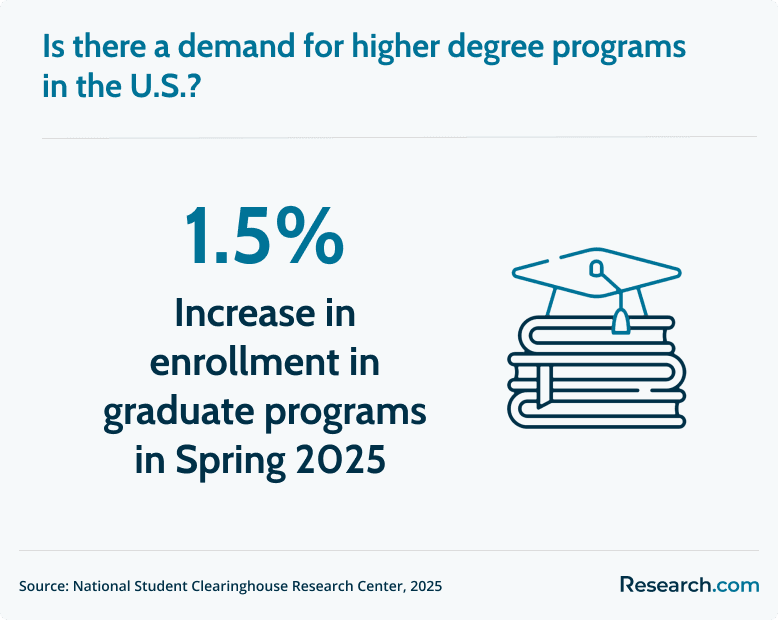
Graduate education is also becoming more flexible. Research on enrollment trends in graduate programs points to how access to advanced degrees can affect educational opportunity across generations. The National Student Clearinghouse Research Center also reported that graduate enrollment increased by 1.5% from Spring 2024 in Spring 2025 enrollment data.
| Feature | Accelerated Online Ed.S | Traditional Ed.S |
| Typical pace | Faster, often one to 1.5 years | Often two to three years |
| Course length | Commonly seven- or eight-week sessions | Often 16-week semesters |
| Flexibility | Usually designed for working educators and remote study | May require campus attendance or fixed class times |
| Workload | More compressed and time-intensive | More spread out over time |
| Best for | Self-directed professionals who need faster advancement | Students who prefer a slower pace or more in-person interaction |
What Is the Average Cost of an Accelerated Online Ed.S in Special Education?
Tuition for an accelerated online Ed.S in Special Education varies by school, credit requirement, transfer policy, fees, and residency rules. Based on the programs reviewed for this guide, total tuition commonly falls between approximately $10,000 and $30,000 or more.
Some programs are priced near the lower end. Arkansas State University, for example, lists estimated total tuition around $11,220. Larger or higher-cost universities may be closer to the $20,000 to $30,000 plus range. Per-credit pricing can range from about $220 to more than $600, and that number matters because many Ed.S programs require 30 to 36 credits.
Do not compare programs by tuition alone. A lower tuition rate may be offset by more credits, added technology fees, limited transfer acceptance, or required travel. A higher tuition rate may still be reasonable if the program accepts transfer credit, includes student resources, and aligns directly with your licensure or leadership goals.
- Fees: Ask about application, technology, course resource, practicum, and graduation fees.
- Books and materials: Some online programs include digital resources, while others require separate purchases.
- Licensure or certification costs: State applications, testing, background checks, and endorsement fees may apply after graduation.
- Transfer credit impact: Accepted credits can reduce tuition, but only if the school applies them to your actual degree plan.
- Payment timing: Flat-rate or term-based tuition can make budgeting easier, but only if you can complete courses on schedule.
Students comparing cost-focused options may also want to review affordable online Ed.S programs in leadership, especially if their goal is special education administration or district-level leadership.
Financial Aid Options for Online Ed.S in Special Education Students
Graduate students in online Ed.S programs may qualify for federal aid, institutional aid, employer tuition support, professional scholarships, or service-based grant programs. The right mix depends on your school, employment status, service commitment, and whether the program meets eligibility rules for federal financial aid.
- Federal Grad PLUS Loans: These federal loans can help graduate students cover costs not met by other aid. They require a credit check but do not require financial need. Eligible borrowers can receive up to the cost of attendance minus other aid.
- Teacher Education Assistance for College and Higher Education Grant: The TEACH Grant may be available to online Ed.S students who commit to teaching in a high-need field, including special education, for four years after graduation.
- American Council on Rural Special Education Scholarship: ACRES offers a $1,000 scholarship for individuals currently or recently employed as certified teachers in rural school districts, working in special education or “retooling” from regular education to special education.
- John A. Tooley Scholarship for Developmental Disabilities: This award supports undergraduate and graduate students from Wayne County, Ohio, who are studying special education or developmental disabilities and are committed to serving individuals with disabilities.
- University and department scholarships: Education departments and financial aid offices may offer awards based on merit, need, field of study, or service goals.
- Professional organizations: Groups such as the Council for Exceptional Children and the National Association of Special Education Teachers may offer scholarships or maintain scholarship directories.
- Employer support: School districts may offer tuition reimbursement, professional development funds, or salary-lane incentives, but policies vary widely.
It is wise to combine funding sources where allowed. Students in other career-focused online programs, including online CompTIA Security+ training bootcamps, often use a similar approach by pairing institutional support, employer assistance, and targeted scholarships to lower out-of-pocket costs.
The College Board reported that graduate students received an average of $28,420 in student aid from grants, federal loans, and other sources in 2023-2024. The chart below provides additional context.
Admission Requirements for an Accelerated Online Ed.S in Special Education
Fast online Ed.S programs are advanced post-master’s degrees, so admissions requirements are usually more selective than those for a master’s program. Schools want evidence that applicants have graduate-level academic ability, classroom or school-based experience, and a clear reason for pursuing advanced special education training.
- Master’s degree in education or a related field: Most programs require a master’s degree from a regionally accredited institution, commonly in education, special education, educational leadership, or a closely related area.
- Valid teaching license: Many programs expect applicants to hold an active teaching license, especially if the program is tied to special education leadership, endorsement, or administrative preparation.
- Professional teaching experience: Applicants are often expected to have two to three years of teaching experience, preferably in special education, intervention, inclusive classrooms, or related support roles.
- Minimum GPA: A 3.0 graduate GPA is commonly requested, although some schools may review applicants with lower GPAs if they show strong professional experience or other qualifications.
- Application materials: Programs may require recommendations, a résumé or CV, a personal statement, transcripts, background checks for fieldwork, and occasionally GRE scores.
Applicants should also understand the advanced responsibilities of special education teachers before enrolling, because many Ed.S programs move beyond classroom instruction into supervision, compliance, intervention design, and systems-level leadership.
Some schools offer conditional admission for applicants who do not meet every requirement but can demonstrate readiness for intensive graduate study.
Common Courses in an Online Ed.S in Special Education
Although course names vary by university, accelerated online Ed.S programs usually focus on advanced special education practice, leadership, assessment, law, research, and program improvement. The goal is to prepare educators to solve complex problems affecting students with disabilities, teachers, families, and school systems.
| Course Area | What Students Learn | Why It Matters |
| Special education foundations | Legal, historical, ethical, and philosophical principles, including IDEA and Section 504 | Supports compliant and equitable services for students with disabilities |
| Assessment and diagnosis | Formal and informal assessment, data interpretation, and bias reduction | Improves eligibility decisions, interventions, and IEP planning |
| Advanced instructional methods | Differentiated instruction, Universal Design for Learning, and evidence-based reading, writing, and math supports | Helps educators support students with diverse learning needs |
| Behavior intervention | PBIS, functional behavior assessments, and behavior intervention plans | Prepares graduates to support students with emotional or behavioral challenges |
| Collaboration and family engagement | Communication with families, general educators, related service providers, and community agencies | Strengthens IEP implementation and service coordination |
| Research and applied inquiry | Research design, data analysis, and evidence-based decision-making | Builds capacity to evaluate and improve special education programs |
| Capstone or practicum | Applied projects, supervised fieldwork, or leadership-based practice | Connects coursework to real school or district needs |
Many programs include work related to developing Individualized Education Programs, interpreting student data, and coordinating services across school teams. Some programs also offer specialized study in autism spectrum disorders, learning and behavior disorders, assistive technology, early childhood special education, or transition planning.
Licensure Implications: Online Ed.S vs. On-Campus Ed.S
An online Ed.S and an on-campus Ed.S can lead to similar licensure or endorsement outcomes if the program is properly accredited and approved for the relevant state pathway. The delivery format is less important than whether the curriculum, fieldwork, supervision, and assessments meet your state’s requirements.
The risk is assuming that an online program automatically qualifies you for licensure in your state. Some states have specific rules for field placements, residency, internships, administrator preparation, or special education director credentials. Before enrolling, contact both the university and your state education agency.
- Special education administrator license: May qualify professionals to oversee special education programs at a school or district level.
- Director of special education license: Required in many states for leaders managing district or regional special education departments.
- Supervisor of special education endorsement: May allow educators to supervise programs and special education staff without a full principal credential.
- Educational leadership or principal licensure: Some leadership-focused Ed.S programs may support eligibility for school administrator or principal roles.
- Specialist endorsements: These may focus on areas such as autism spectrum disorders, learning disabilities, emotional and behavioral disorders, or intellectual disabilities.
Licensure alignment is just as important in education as it is in regulated health fields. For example, students comparing online Associate of Science in Nursing programs must verify clinical and licensure requirements before enrolling; Ed.S students should take the same approach with state education credentials.
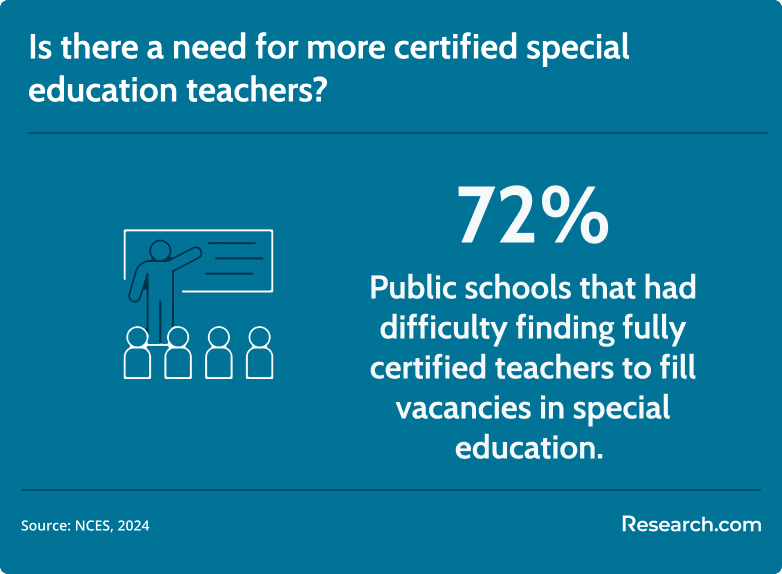
The National Center for Education Statistics reported that 72% of public schools had difficulty finding fully certified teachers to fill special education vacancies for SY 2024-2025. NCES also reported that 53% of public schools had too few candidates applying for non-teaching positions.
How to Choose the Best Fast-Track Online Ed.S in Special Education
The best accelerated Ed.S program is the one that meets your professional goal, fits your schedule, aligns with your state’s rules, and has a cost you can justify. Use the following criteria to compare programs before applying.
1. Confirm Accreditation and State Approval
Check institutional accreditation first, then determine whether the education program is approved for the licensure, endorsement, or leadership outcome you want. If your goal is a state-specific role such as special education director, do not rely only on the program title.
2. Review Transfer Credit Policies
Some universities allow substantial transfer credit, including up to 50% of the required credits. Ask whether your previous graduate coursework qualifies, how old credits can be, and whether transferred courses shorten the actual completion timeline.
3. Match the Curriculum to Your Career Goal
A classroom-focused Ed.S may be useful for advanced instructional practice, while a leadership-focused Ed.S may be better for supervision, compliance, budgeting, and district administration. Read course descriptions carefully, not just program names.
4. Evaluate Online Course Design
Accelerated online programs work best when the platform, advising, faculty communication, and technical support are strong. Ask whether courses are asynchronous, whether live sessions are required, and how quickly faculty respond to students.
5. Ask About Fieldwork and Practicum Rules
If the program includes an internship, practicum, or applied capstone, ask whether you can complete it in your current school or district. Also confirm who can supervise the experience and whether your state accepts out-of-state online preparation.
6. Consider Future Doctoral Study
Some Ed.S credits may apply toward an Ed.D. or other doctoral program, but this is never guaranteed. If doctoral study is part of your long-term plan, ask about credit transfer into future programs and compare leadership credentials such as those discussed in this guide to DBA vs. Ed.D. degree differences.
Questions to Ask Before Enrolling
| Question | Why It Matters |
| Is the program approved for my state’s intended license or endorsement? | Accreditation alone may not satisfy state-specific requirements. |
| How many credits can I transfer into the program? | Transfer credit can reduce both cost and time to completion. |
| Are there required live sessions, campus visits, or residencies? | These requirements can affect work schedules and travel costs. |
| Can I complete fieldwork at my current school or district? | Local placement flexibility can make an accelerated format more realistic. |
| What support is available for licensure paperwork? | Strong advising can prevent delays after graduation. |
| What is the total cost after fees, materials, and licensure expenses? | The listed tuition rate may not reflect the full price. |
Is an Accelerated Online Ed.S in Special Education Worth the Cost?
An accelerated online Ed.S can be a cost-effective investment for educators who already hold a master’s degree and need a targeted credential for leadership, specialized practice, or advancement. Because the Ed.S is shorter than many doctoral pathways, students may reduce both tuition exposure and opportunity cost. The payoff is strongest when the degree clearly connects to a role you can pursue, such as special education director, supervisor, curriculum specialist, or district-level administrator.
However, the degree may not be worth the cost if it does not meet your state’s licensure requirements, does not improve your salary lane or advancement prospects, or duplicates graduate training you already have. Compare the Ed.S with doctoral options, including the shortest online Ed.D. degree programs, if your long-term goal is superintendent-level leadership, college teaching, or advanced research.
| An Ed.S May Be Worth It If... | Consider Another Option If... |
| You need post-master’s specialization without a dissertation | You need a doctorate for your target role |
| Your district recognizes the credential for advancement or salary movement | Your employer does not value or reward the degree |
| The program aligns with your state licensure pathway | The program is not approved for your state or endorsement goal |
| You want leadership training focused on special education systems | You mainly want entry-level teaching preparation |
| You can manage compressed online coursework while working | You need a slower pace or extensive in-person support |
Challenges of Accelerated Online Ed.S Programs
Fast programs are convenient, but they are not easy. The compressed format can create heavy weekly reading, writing, discussion, and project demands. Students who are teaching full time may need to plan ahead for grading cycles, IEP meetings, family obligations, and practicum requirements.
- Time pressure: Seven- or eight-week courses move quickly, leaving little room to recover from missed deadlines.
- Limited face-to-face interaction: Online students must be intentional about building relationships with faculty, peers, and mentors.
- Technology dependence: Reliable internet, comfort with digital platforms, and organized file management are essential.
- Fieldwork complexity: Practicum or internship requirements may be difficult if your school schedule or state rules are restrictive.
- Licensure uncertainty: Out-of-state online programs may not automatically meet your state’s credentialing requirements.
Students new to online learning should evaluate their technology readiness before enrolling. Program models outside education, including online anthropology degree programs, show how important flexible resources, clear course design, and digital access are for successful remote study.
Common Mistakes to Avoid
- Choosing only by speed: A 12-month program is not a good choice if it lacks the licensure alignment or support you need.
- Ignoring accreditation: Always verify institutional accreditation and program-level approval where relevant.
- Comparing only tuition rates: Look at total cost, fees, transfer credit, materials, and licensure expenses.
- Assuming online means self-paced: Many online Ed.S programs have fixed weekly deadlines even if classes are asynchronous.
- Overlooking practicum requirements: Fieldwork can affect your schedule, timeline, and eligibility for state credentials.
- Relying only on rankings: Rankings can narrow your search, but your final decision should be based on fit, cost, licensure, and career value.
- Assuming salary outcomes are guaranteed: Earnings depend on district policies, role availability, experience, location, and credential recognition.
Career Paths for Graduates of Online Ed.S in Special Education Programs
An Ed.S in Special Education is most useful for educators who want to move beyond a traditional classroom role into leadership, program development, specialist support, or administration. Career outcomes vary by state credential rules and employer requirements, but the degree can support several advanced pathways.
- Special education director or supervisor: Oversees district or school-level special education services, compliance, staffing, and program implementation.
- Instructional coordinator or curriculum specialist: Designs, evaluates, and improves special education curriculum while supporting teachers with implementation.
- Special education administrator: Manages budgets, staff, services, policies, and compliance for students with disabilities.
- Behavior intervention specialist or consultant: Develops behavioral support plans and collaborates with IEP teams, psychologists, teachers, and families. Related training may include online applied behavior analysis certification options.
- Transition coordinator: Helps students with disabilities prepare for employment, independent living, postsecondary education, and adult services.
- Postsecondary instructor: Teaches future educators, paraprofessionals, or professional development learners in special education topics.
- Educational consultant or advocate: Works with schools, districts, families, or organizations to improve services, IEP implementation, and student support systems.
- Educational diagnostician: Conducts comprehensive assessments to help identify learning and developmental needs.
- Early intervention specialist: Supports young children with developmental delays and their families; some pathways may require additional training such as ASHA-accredited online and campus SLP programs or related developmental specialization.
Some Ed.S-level roles can place education professionals in salary ranges associated with school leadership positions, depending on district structure and responsibilities. Readers comparing administrative advancement can review how experience, location, and credentials affect school principal salary and career paths.
The chart below provides annual mean wage information for selected roles that may be relevant to graduates of special education Ed.S programs.
Job Market Outlook for Ed.S in Special Education Graduates
Demand for qualified special education professionals is shaped by student service needs, teacher shortages, compliance requirements, and the need for specialized intervention support. According to the National Center for Education Statistics, 15% of all U.S. public school students ages three to 21 received special education or related services under the Individuals with Disabilities Education Act in 2022-2023.
For graduates with an accelerated online Ed.S in Special Education, opportunities may be strongest in leadership, administration, curriculum support, intervention, and specialized service coordination. The degree can be especially relevant where districts need professionals who understand special education law, IEP implementation, behavioral supports, inclusive practices, and program compliance.
- O*NET OnLine employment trends show 5,100 projected annual job openings in 2023-2033 for Educational and Childcare Administrators, Preschool and Daycare.
- O*NET OnLine employment trends show 20,800 projected annual job openings each year for Educational Administrators, Kindergarten through Secondary Schools.
- The Bureau of Labor Statistics projects 35,900 openings for special education teachers each year from 2023 to 2033.
- NCES reported that 69% of public schools had difficulty hiring for one or more non-teaching staff positions such as instructional coach or academic interventionist.
The following chart shows additional NCES data on the percentage of vacancies filled in relevant roles for A.Y. 2024-2025.
Student Perspectives on Fast Online Ed.S Programs in Special Education
- Darnell: "My online Ed.S strengthened my understanding of behavior intervention and special education law, and I now apply that knowledge in my curriculum coordination work. The virtual format still felt connected because faculty and classmates were active throughout the program."
- Robert: "Completing the Ed.S online helped me become a stronger advocate for students with disabilities. The workload moved quickly, but the tools and strategies were practical enough to use in my classroom right away."
- Olivia: "The accelerated online Ed.S helped me step into a district leadership role within 18 months. Because I could study online, I was able to keep teaching full time, manage family responsibilities, and build specialized skills at the same time."
Complementary Qualifications That Can Strengthen an Ed.S in Special Education
An Ed.S in Special Education can build advanced expertise in instruction, compliance, assessment, and leadership. Additional credentials can make that expertise more versatile, especially for educators who want to work in program evaluation, assistive technology, research, data systems, autism support, behavior intervention, transition services, or instructional resource development.
- Applied behavior analysis training: Useful for educators who want deeper preparation in behavioral assessment and intervention.
- Assistive technology credentials: Helpful for professionals supporting accessible learning tools and inclusive classroom design.
- Educational leadership certification: Important for roles involving supervision, compliance, staffing, and district administration.
- Data or assessment training: Valuable for educators who evaluate interventions, IEP outcomes, and schoolwide special education services.
- Library and information science: May support research, resource curation, accessibility, and information management. Educators interested in this route can compare affordable online MLIS programs.
References
- Ma, J. et al. (2024). Trends in College Pricing and Student Aid 2024. College Board. https://research.collegeboard.org/media/pdf/Trends-in-College-Pricing-and-Student-Aid-2024-ADA.pdf
- National Center for Education Statistics (May 2024). Students With Disabilities. https://nces.ed.gov/programs/coe/indicator/cgg/students-with-disabilities
- National Center for Education Statistics (August 2024). School Pulse Panel - Interactive Results. https://nces.ed.gov/surveys/spp/results.asp#staff-hiring-aug24-chart6
- National Center for Education Statistics (October 2024). Most U.S. public elementary and secondary schools faced hiring challenges for the start of the 2024–25 academic year. https://nces.ed.gov/whatsnew/press_releases/10_17_2024.asp
- National Student Clearinghouse Research Center (May 2025). Current Term Enrollment Estimates. https://nscresearchcenter.org/current-term-enrollment-estimates
- O*NET OnLine (n.d.). National Employment Trends, 11-9031.00 - Education and Childcare Administrators, Preschool and Daycare. https://www.onetonline.org/link/localtrends/11-9031.00?st= Data retrieved July 2025
- O*NET OnLine (n.d.). National Employment Trends, 11-9032.00 - Education Administrators, Kindergarten through Secondary. https://www.onetonline.org/link/localtrends/11-9032.00?st= Data retrieved July 2025
- U.S. Bureau of Labor Statistics (n.d.). Occupational Employment and Wage Statistics, Industry: Cross-industry, Private, Federal, State, and Local Government, Period: May 2024. https://data.bls.gov/oes/#/industry/000000 Data retrieved July 2025
- U.S. Bureau of Labor Statistics (April 2025). Special Education Teachers. https://www.bls.gov/ooh/education-training-and-library/special-education-teachers.htm
Key Insights
- The fastest online Ed.S in Special Education programs typically take about 12 to 18 months, but practicum, transfer credit, and state licensure rules can change your actual timeline.
- Speed should come after accreditation, licensure alignment, and career fit. A fast program that does not meet your state’s requirements may not support your intended role.
- Total tuition for programs reviewed in this guide commonly ranges from approximately $10,000 to $30,000 or more, but fees, materials, transfer policies, and licensure costs can significantly affect the final price.
- An Ed.S is best suited for educators who already hold a master’s degree and want advanced special education leadership, supervision, intervention, or administrative preparation without pursuing a full doctorate.
- Before applying, ask each school whether the program is approved for your state, how fieldwork is completed, how many credits can transfer, and what student support is available in the accelerated format.
Other Things You Need to Know About Accelerated Online Ed.S in Special Education Degrees
Most online Ed.S. programs in special education require 150 to 300 supervised fieldwork hours, often completed in the student’s current school. Programs may also require a portfolio, mentoring logs, and an on-site evaluation by a licensed supervisor or faculty member.
Participants need a reliable high-speed internet connection, a computer meeting specific hardware and software standards, and sometimes a webcam for virtual classrooms and exams. Check the institution's detailed technical requirements for any additional necessary tools or platforms.


