
2027 Fastest Online MSN Pediatric Nurse Practitioner Programs

Co-Founder and Chief Data Scientist
For Registered Nurses (RNs) aiming to elevate their careers and make a profound impact in pediatric care, pursuing an MSN with a pediatric nurse practitioner specialization is an excellent choice. According to the latest nursing data, only about 3.7% of the more than 290,000 licensed nurse practitioners in the United States are certified in pediatrics, highlighting the considerable shortage of pediatric-focused providers
This article explores the fastest online MSN–PNP programs, providing a detailed guide for aspiring pediatric nurse practitioners. We'll address benefits such as flexible scheduling, strong potential for career advancement, and the urgent demand for PNPs across the healthcare system.
What are the benefits of an online MSN pediatric nurse practitioner program?
- A degree as a Pediatric Nurse Practitioner opens doors to various advanced roles in diverse healthcare settings, including general hospitals (pediatric units), outpatient clinics, private pediatric practices, and even some home health agencies.
- The median annual salary for pediatricians in the United States is approximately $202,000, with average salaries ranging from $192,000 to $237,000 depending on experience, location, and subspecialty.
- Obtaining a pediatrics-related degree online offers significant flexibility and convenience. You can complete coursework on your schedule from any location, allowing you to balance your studies with work or family commitments.
What can I expect from an online MSN pediatric nurse practitioner program?
A pediatric nurse practitioner (PNP) degree prepares you to provide advanced healthcare to infants, children, and adolescents, focusing on both primary and sometimes acute care settings. You can expect a rigorous curriculum that combines advanced nursing theory with specialized pediatric content, including courses in advanced physiology/pathophysiology, health assessment, pharmacology, and pediatric-specific clinical management.
Where can I work with an online MSN pediatric nurse practitioner program?
A pediatric nurse practitioner degree opens up a wide range of rewarding career opportunities focused on the health and well-being of children from infancy through adolescence. In many states and countries, PNPs have significant autonomy and can diagnose conditions, order and interpret diagnostic tests, prescribe medications, and develop comprehensive treatment plans.
How much can I make with a pediatric nurse practitioner degree?
With a pediatric nurse practitioner degree, you can expect to earn a competitive salary that reflects your specialized skills in pediatric healthcare. As of mid-2025, the average annual salary for a pediatric nurse practitioner in the United States is approximately $135,000, which breaks down to about $65 per hour or $11,263 per month.
Salaries can vary widely based on factors such as location, experience, and employer, with most PNPs earning between $110,000 (25th percentile) and $170,000 (75th percentile).
- List of the Fastest Online MSN Pediatric Nurse Practitioner Programs for 2027 List of Programs
- How long does it take to complete an online MSN pediatric nurse practitioner degree program? Completion Time
- How does an online MSN pediatric nurse practitioner degree program compare to an on-campus program? How does an online MSN pediatric nurse practitioner degree program compare to an on-campus program?
- What is the average cost of an online MSN pediatric nurse practitioner degree program? Average Cost
- What are the financial aid options for students enrolling in an online MSN pediatric nurse practitioner degree program? Financial Aid
- What are the prerequisites for enrolling in an online MSN pediatric nurse practitioner degree program? Requirements
- What courses are typically in an online MSN pediatric nurse practitioner degree program? Courses
- What types of specializations are available in an online MSN pediatric nurse practitioner degree program? What types of specializations are available in an online MSN pediatric nurse practitioner degree program?
- How to choose the best online MSN pediatric nurse practitioner degree program? How to choose the best online MSN pediatric nurse practitioner degree program?
- What career paths are available for graduates of an online MSN pediatric nurse practitioner degree program Career Paths
- What is the job market for graduates with an online MSN pediatric nurse practitioner degree program? Job Market
- What challenges should I anticipate in an online MSN pediatric nurse practitioner program? What challenges should I anticipate in an online MSN pediatric nurse practitioner program?
- What accreditation and licensure requirements should I consider for an online MSN pediatric nurse practitioner program? What accreditation and licensure requirements should I consider for an online MSN pediatric nurse practitioner program?
- Can a Direct Entry Program for Nurse Practitioner Accelerate My Career Transition? Can a Direct Entry Program for Nurse Practitioner Accelerate My Career Transition?
- How do online MSN and DNP programs differ for advancing pediatric care? How do online MSN and DNP programs differ for advancing pediatric care?
Fastest Online MSN Pediatric Nurse Practitioner Programs for 2027
Choosing an online MSN Pediatric Nurse Practitioner program is a high-stakes decision for registered nurses who want to move into advanced pediatric care without pausing their careers. The fastest programs can shorten the timeline, but speed should never be the only factor. Accreditation, clinical placement support, state authorization, certification preparation, and total cost all affect whether a program will actually help you become licensed and employable as a pediatric nurse practitioner.
This guide is designed for working nurses comparing accelerated online MSN-PNP options. You will find a ranked program list, side-by-side decision factors, admissions expectations, cost considerations, clinical requirements, career paths, and common mistakes to avoid. If you are still comparing nursing pathways, you may also want to review the fastest online RN to MSN bridge programs to understand how bridge routes differ from traditional MSN-PNP tracks.
Quick answer: What is the fastest online MSN Pediatric Nurse Practitioner program?
Among the programs listed here, Vanderbilt University offers the shortest stated completion timeline at 1 year for its Pediatric Nurse Practitioner – Primary Care specialty. Several other online or hybrid MSN-PNP programs list timelines from 18 months to 29 months, while some part-time or extended plans can take 4 years. The best “fast” program is the one that is accredited, approved for your state, fits your clinical placement needs, and prepares you for pediatric nurse practitioner certification.
How Research.com evaluates programs
Research.com rankings are built to help prospective students compare programs using verifiable education data rather than marketing claims alone. For nursing programs, accreditation and program transparency matter because graduates typically need to meet certification and state licensure requirements before practicing as nurse practitioners.
Our research process draws from established education databases and institutional information, including:
- Integrated Postsecondary Education Data System (IPEDS database)
- Peterson’s database, including the Distance Learning Licensed Data Set
- College Scorecard database
- National Center for Education Statistics
| Rank | School and program | Stated length | Track | Cost per credit | Credits | Accreditation |
| 1 | Vanderbilt University Pediatric Nurse Practitioner – Primary Care Specialty | 1 year | Primary Care | $2,057 | 45 credits | Commission on Collegiate Nursing Education |
| 2 | Case Western Reserve University Primary Care Pediatric Nurse Practitioner Program | 18 months | Primary Care | $1,124 | 40 credits | Commission on Collegiate Nursing Education |
| 3 | Old Dominion University Pediatric Nurse Practitioner MSN Program | 18 months | Primary Care | $486 | 49 credits | Commission on Collegiate Nursing Education |
| 4 | Maryville University MSN Program - Pediatric Nurse Practitioner Concentration | 28 months | Primary Care | $752 | 47 credits | Commission on Collegiate Nursing Education |
| 5 | Regis College Pediatric Nurse Practitioner MSN Program | 28 months | Primary Care | $995 | 46 credits | Accreditation Council for Education in Nursing |
| 6 | University of Texas at Arlington MSN Pediatric Primary Care Nurse Practitioner Program | 29 months | Primary Care | $654 | 41 credits | Commission on Collegiate Nursing Education |
| 7 | Walden University MSN Pediatric Nurse Practitioner-Primary Care Program | 24 months | Primary Care | $775 | 63 credits | Commission on Collegiate Nursing Education |
| 8 | Herzing University MSN Pediatric Nurse Practitioner Program | 20 months | Primary Care | $755 | 48 credits | Commission on Collegiate Nursing Education |
| 9 | Spring Arbor University MSN Pediatric Nurse Practitioner-Primary Care Program | 4 years | Primary Care | $797 | 82 credits | Commission on Collegiate Nursing Education |
| 10 | University of Colorado Master of Science Primary Care Pediatric Nurse Practitioner Program | 4 years | Primary Care | $797 | 82 credits | Commission on Collegiate Nursing Education |
1. Vanderbilt University Pediatric Nurse Practitioner – Primary Care Specialty
The Pediatric Nurse Practitioner – Primary Care specialty at Vanderbilt University School of Nursing is structured for nurses preparing to deliver advanced primary care to infants, children, and adolescents. The program uses a hybrid format that combines online coursework with brief required campus sessions, giving students remote flexibility while still including in-person learning experiences.
- Program length: 1 year
- Track/concentration: Primary Care
- Cost per credit: $2,057
- Required credits to graduate: 45 credits
- Accreditation: Commission on Collegiate Nursing Education
2. Case Western Reserve University Primary Care Pediatric Nurse Practitioner Program
The Primary Care Pediatric Nurse Practitioner program at Case Western Reserve University’s Frances Payne Bolton School of Nursing prepares nurses for advanced practice in pediatric primary care. Its curriculum emphasizes strong didactic preparation along with clinical experience so graduates can care for children from birth through adulthood.
- Program length: 18 months
- Track/concentration: Primary Care
- Cost per credit: $1,124
- Required credits to graduate: 40 credits
- Accreditation: Commission on Collegiate Nursing Education
3. Old Dominion University Pediatric Nurse Practitioner MSN Program
Old Dominion University (ODU) offers a CCNE-accredited Pediatric Nurse Practitioner MSN program focused on care for well children, children at risk, and children with chronic conditions. Students build advanced assessment, diagnostic, and management skills for pediatric primary care under faculty with pediatric healthcare experience.
- Program length: 18 months
- Track/concentration: Primary Care
- Cost per credit: $486
- Required credits to graduate: 49 credits
- Accreditation: Commission on Collegiate Nursing Education
4. Maryville University MSN Program - Pediatric Nurse Practitioner Concentration
Maryville University offers a fully online MSN with a Pediatric Nurse Practitioner concentration for nurses who want to provide primary care to infants, children, and adolescents. Coursework includes prevention, health promotion, counseling, and family-centered approaches to pediatric care.
- Program length: 28 months
- Track/concentration: Primary Care
- Cost per credit: $752
- Required credits to graduate: 47 credits
- Accreditation: Commission on Collegiate Nursing Education
5. Regis College Pediatric Nurse Practitioner MSN Program
Regis College offers a fully online Pediatric Nurse Practitioner MSN program for nurses pursuing pediatric primary care roles. The program covers advanced care for children and families, and Regis assists students with clinical placements that align with their location and professional needs, including approved placements at current workplaces when appropriate preceptorship requirements are met.
- Program length: 28 months
- Track/concentration: Primary Care
- Cost per credit: $995
- Required credits to graduate: 46 credits
- Accreditation: Accreditation Council for Education in Nursing
6. University of Texas at Arlington MSN Pediatric Primary Care Nurse Practitioner Program
The online MSN Pediatric Primary Care Nurse Practitioner program at the University of Texas at Arlington is built for nurses who want to provide evidence-based pediatric care from birth through 21 years of age. The curriculum prepares advanced practice nurses to support pediatric healthcare across wellness, prevention, chronic disease management, and acute primary care concerns.
- Program length: 29 months
- Track/concentration: Primary Care
- Cost per credit: $654
- Required credits to graduate: 41 credits
- Accreditation: Commission on Collegiate Nursing Education
7. Walden University MSN Pediatric Nurse Practitioner-Primary Care Program
Walden University offers an online MSN Pediatric Nurse Practitioner-Primary Care program designed for working nurses who need flexibility while completing advanced coursework and practicum requirements. Student supports include academic advising, practicum placement assistance, and technical help available around the clock.
- Program length: 24 months
- Track/concentration: Primary Care
- Cost per credit: $775
- Required credits to graduate: 63 credits
- Accreditation: Commission on Collegiate Nursing Education
8. Herzing University MSN Pediatric Nurse Practitioner Program
The online MSN Pediatric Nurse Practitioner program at Herzing University combines MSN core courses, direct care coursework, and pediatric specialty classes. Students study advanced nursing practice, healthcare needs from infancy through adolescence, clinical decision-making, and pediatric primary care skills.
- Program length: 20 months
- Track/concentration: Primary Care
- Cost per credit: $755
- Required credits to graduate: 48 credits
- Accreditation: Commission on Collegiate Nursing Education
9. Spring Arbor University MSN Pediatric Nurse Practitioner-Primary Care Program
The online MSN Pediatric Nurse Practitioner – Primary Care program at Spring Arbor University is offered in a flexible, faith-based format. The program prepares students for advanced pediatric primary care while integrating Christian values into academic, professional, and personal development.
- Program length: 4 years
- Track/concentration: Primary Care
- Cost per credit: $797
- Required credits to graduate: 82 credits
- Accreditation: Commission on Collegiate Nursing Education
10. University of Colorado Master of Science Primary Care Pediatric Nurse Practitioner Program
The online Master of Science Primary Care Pediatric Nurse Practitioner program at the University of Colorado Anschutz Medical Campus supports clinical learning, particularly for students in the Denver/Aurora area. The program partners with clinics and hospitals, including Children's Hospital Colorado, and practicum coursework includes four clinical rotations, each about 135 hours, across pediatric settings.
- Program length: 4 years
- Track/concentration: Primary Care
- Cost per credit: $797
- Required credits to graduate: 82 credits
- Accreditation: Commission on Collegiate Nursing Education
How long does it take to complete an online pediatric nurse practitioner program?
Most online pediatric nurse practitioner programs take 18 months to 3 years, depending on enrollment pace, clinical scheduling, transfer credits, prior nursing education, and whether the student follows a full-time or part-time plan.
Full-time MSN-PNP students often complete the degree in about 2 to 3 years, while accelerated options may advertise timelines of approximately 18 to 24 months. Similar timing considerations apply in other nurse practitioner specialties, including the shortest post master's PMHNP online programs, where clinical placement speed and course sequencing can affect the real completion date.
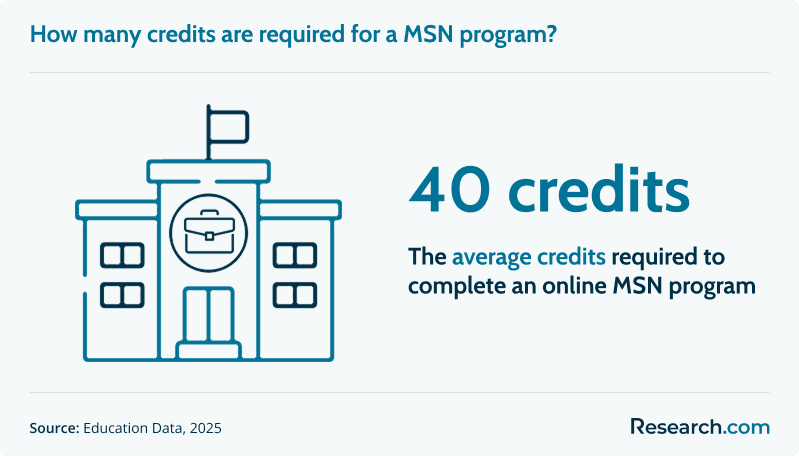
Credit requirements commonly fall between about 40 to 63 credits, although some programs require more. Students also complete hundreds of clinical hours, typically around 500-600 hours, in approved healthcare settings. These practicum requirements are often the main reason an online program may take longer than the advertised minimum.
Students may finish faster if they enter with approved graduate transfer credits or can complete clinical hours without delays. RN-to-MSN bridge students, part-time students, or students in extended plans may need up to 4 years.
| Student situation | Likely timeline | What can slow completion |
| Full-time MSN-PNP student | About 2 to 3 years | Limited clinical site availability, course sequencing, work schedule conflicts |
| Accelerated MSN-PNP student | Approximately 18 to 24 months | Heavy course load, compressed clinical expectations, fewer breaks |
| Part-time MSN-PNP student | Longer than full-time plans | Taking fewer credits per term, balancing employment and family responsibilities |
| RN-to-MSN or bridge student | Sometimes up to 4 years | Additional bridge coursework and undergraduate-level requirements |
How does an online MSN pediatric nurse practitioner program compare to an on-campus program?
Online and on-campus MSN-PNP programs can lead to the same advanced nursing goal, but they serve different learners. Online programs usually work best for registered nurses who need flexible coursework and local clinical placements. Campus programs may be better for students who prefer fixed schedules, face-to-face instruction, and direct access to simulation labs and faculty.
Online PNP programs commonly use asynchronous lectures, virtual simulations, case discussions, digital resources, and approved local practicums. This model can resemble the flexibility seen in other graduate healthcare degrees, such as the best online master of health administration programs, but nursing students must still complete supervised clinical experiences in real healthcare settings.
Campus-based programs typically provide more in-person interaction with instructors, classmates, clinical mentors, and simulation staff. Students who learn best through immediate feedback and structured weekly routines may find the campus format more supportive.
| Factor | Online MSN-PNP | On-campus MSN-PNP |
| Best for | Working nurses who need scheduling flexibility | Students who want a structured in-person learning environment |
| Course delivery | Online lectures, discussions, digital assignments, virtual simulations | Classroom instruction, in-person labs, campus-based activities |
| Clinical experience | Usually completed locally at approved sites | Often arranged through school-affiliated local partners |
| Faculty access | Email, video meetings, online advising, virtual office hours | In-person meetings, campus office hours, direct lab feedback |
| Main trade-off | More independence and self-management required | Less flexibility for students with full-time work or distance barriers |
What is the average cost of an online MSN pediatric nurse practitioner program?
The total cost of an online Pediatric Nurse Practitioner program in the U.S. generally ranges from $15,000 to over $66,000, depending on the institution, credit requirements, tuition rate, fees, and clinical or residency expenses.
Some programs, such as Maryville University, have total tuition costs starting around $15,500. Higher-cost programs, including Johns Hopkins University, can exceed $70,000 when tuition is calculated by credit hour.
Many online PNP programs charge tuition per credit hour, often between $995 and $2,100 per credit hour at reputable universities offering online PNP options. Credit requirements usually range from 40 to 75 credits. Regis College, for example, charges about $995 per credit hour and lists completion in as little as 28 months, while Johns Hopkins University charges nearly $2,000 per credit hour for its pediatric NP tracks.
Students should also budget for technology fees, books, background checks, drug screening, immunization documentation, clinical placement-related expenses, certification exam preparation, and possible travel for campus residencies or clinical experiences. Online study may reduce housing and commuting costs, but it does not eliminate clinical expenses.
If you are comparing advanced nursing roles by potential return on education costs, this overview of AGNP vs FNP salary can help you evaluate related nurse practitioner pathways.
| Cost item | Why it matters | Question to ask before enrolling |
| Tuition per credit | This is usually the largest direct expense | Is the rate locked, or can tuition increase while I am enrolled? |
| Required credits | More credits can raise the total price even if the per-credit rate looks lower | How many credits are required for my exact track? |
| Clinical placement costs | Travel, onboarding, documentation, and site fees can add up | Does the school help secure placements, or am I responsible for finding preceptors? |
| Residency or campus visits | Hybrid programs may require travel and lodging | How many visits are required, and where do they take place? |
| Fees and materials | Technology, books, exams, and supplies can affect affordability | What is the full cost of attendance, not just tuition? |
What financial aid options are available for online MSN pediatric nurse practitioner students?
Online MSN-PNP students may use several funding sources, including institutional scholarships, nursing organization awards, federal loans, and employer tuition benefits. Funding options are often similar to those available in specialty nursing programs such as the fastest online women’s health nurse practitioner graduate certificate programs.
- School-sponsored scholarships: Many universities offer scholarships for graduate nursing students. These awards may be less competitive than national scholarships, so ask the nursing department and financial aid office about program-specific funding.
- NAPNAP Foundation scholarships and grants: The NAPNAP Foundation scholarships and grants support pediatric nursing research, clinical practice, and efforts that improve outcomes for children and families, including the Empowering Professional Diversity Scholarship and research grants.
- Federal grants: Federal grants are more common at the undergraduate level, but some graduate nursing students may qualify for limited grant opportunities tied to specific programs or eligibility categories. Completing the Free Application for Federal Student Aid is the first step.
- Federal Direct Graduate PLUS Loans: Graduate students enrolled at least half-time may use these loans up to the cost of attendance minus other aid received. Eligibility includes a credit check but is not need-based.
- Employer tuition reimbursement: Hospitals and healthcare systems may help pay for graduate nursing education, especially when the degree aligns with workforce needs. Confirm reimbursement limits, grade requirements, work commitments, and repayment obligations with human resources.
Ways to reduce the cost of an online MSN-PNP program
- Compare total program cost instead of looking only at the per-credit tuition rate.
- Ask whether approved transfer credits can reduce the number of credits you must complete.
- Check whether your employer offers tuition reimbursement or clinical schedule flexibility.
- Prioritize accredited programs that qualify for federal financial aid.
- Confirm whether clinical placement support is included or requires extra costs.
What are the prerequisites for enrolling in an online MSN pediatric nurse practitioner program?
Admissions requirements vary by school, but most online MSN Pediatric Nurse Practitioner programs expect applicants to already be licensed registered nurses with a strong academic record and a nursing background. These requirements are more advanced than entry-level healthcare credentials such as medical assistant certification requirements.
- A Bachelor of Science in Nursing from a program accredited by the Commission on Collegiate Nursing Education or the Accreditation Commission for Education in Nursing. Some schools provide bridge options for registered nurses with an associate degree or nursing diploma.
- A current, unrestricted, and unencumbered RN license in the state where the student will complete clinical hours. Students generally must maintain the license throughout enrollment.
- A minimum cumulative GPA, often 3.0 on a 4.0 scale, commonly calculated from recent credits such as the last 60 semester hours or the most recent degree.
- Completion of prerequisite coursework, frequently including college-level statistics and sometimes an undergraduate health assessment or physical assessment course.
- Official transcripts from every postsecondary institution attended.
- Application materials such as a personal statement, recommendation letters, a current resume, and, in some cases, an interview or standardized test scores.
- Some programs may require at least one year of clinical nursing experience before admission.
| Requirement | Why schools ask for it | What to verify |
| BSN or approved bridge eligibility | Confirms preparation for graduate nursing coursework | Whether your prior nursing program meets accreditation expectations |
| Active RN license | Required for clinical practice and state compliance | Whether your license is valid in the state where you will complete clinicals |
| Minimum GPA | Indicates readiness for graduate-level study | How the school calculates GPA and whether exceptions are available |
| Prerequisite courses | Ensures students have essential quantitative and assessment knowledge | Whether older coursework still counts |
| Clinical experience | Supports readiness for advanced pediatric practice | Whether pediatric RN experience is preferred or required |
What courses are typically included in an online MSN pediatric nurse practitioner program?
Online MSN-PNP programs combine advanced practice nursing foundations with pediatric specialty coursework and supervised clinical experiences. Course names differ by school, but most programs cover assessment, diagnosis, pharmacology, evidence-based practice, healthcare systems, ethics, and pediatric management.
- Advanced pathophysiology: Students examine disease processes and physiological changes across the lifespan, with application to infants, children, and adolescents.
- Advanced pharmacology or pharmacotherapeutics: Coursework addresses drug classes, pharmacokinetics, pharmacodynamics, pharmacogenomics, and safe medication management for pediatric patients.
- Pediatric health promotion and maintenance: Students study growth and development, developmental milestones, injury prevention, health supervision, screening guidance, and anticipatory guidance for families.
- Management of acute and common pediatric conditions: This content covers diagnosis and treatment planning for common pediatric illnesses and injuries, including infectious, respiratory, gastrointestinal, dermatologic, and other primary care concerns.
- Research and evidence-based practice: Students learn to evaluate research, interpret data, apply evidence to practice, and often complete an evidence-based project.
- Healthcare policy, ethics, and leadership: Coursework explores healthcare systems, ethical decision-making, advocacy, leadership, and the advanced practice nurse’s role in improving care delivery.
- Theoretical foundations of nursing practice: Students analyze nursing theories and conceptual models and apply them to advanced clinical decision-making.
Students comparing broader healthcare roles may find some overlap with clinical communication, patient education, and care coordination topics discussed in guides to medical assistant qualifications and skills, although the MSN-PNP pathway is a graduate advanced practice nursing route.
What specializations are available in an online MSN pediatric nurse practitioner program?
The most common pediatric nurse practitioner specialization online is Pediatric Nurse Practitioner – Primary Care. Some schools also offer acute care or dual options. As with other graduate nursing pathways, including the fastest online public health nursing msn programs, the right track depends on the population and setting you want to serve.
| Specialization | Primary focus | Common work settings | Best fit for students who want to |
| Primary Care Pediatric Nurse Practitioner (PNP-PC) | Well-child care, prevention, health promotion, developmental screening, immunizations, and management of common acute and chronic conditions | Pediatric clinics, private practices, community health settings, school-based health centers | Build long-term relationships with children and families in outpatient care |
| Acute Care Pediatric Nurse Practitioner (PNP-AC) | Complex, acute, chronic, or critical pediatric conditions | Hospitals, pediatric intensive care units, emergency departments, specialty inpatient units | Work with seriously ill children in high-acuity settings |
| Dual primary and acute care tracks | Broader pediatric preparation across outpatient and inpatient needs | Depends on state scope of practice, certification, and employer requirements | Keep more pediatric practice options open, when available |
Students interested in infants, maternal-child health, or family transition after birth may also want to compare pediatric primary care with roles described in What does a postpartum nurse do?
How should you choose the best online MSN pediatric nurse practitioner program?
The best online MSN-PNP program is not automatically the fastest or cheapest. It is the program that meets accreditation standards, fits your state’s licensure rules, provides appropriate clinical support, and aligns with your target pediatric setting.
- Confirm accreditation first. Look for recognized nursing accreditation from the Commission on Collegiate Nursing Education or the Accreditation Commission for Education in Nursing. Accreditation affects certification eligibility, financial aid access, transfer options, and employer confidence.
- Check state authorization and licensure alignment. Online programs may not be approved for every state. Ask whether the program meets educational requirements for NP licensure in the state where you plan to practice.
- Choose the correct clinical track. Select PNP-PC if you want outpatient primary care. Consider PNP-AC if your goal is hospital-based pediatric acute or critical care.
- Evaluate clinical placement support. Clinical placement delays can extend your timeline. Ask whether the school finds placements, assists with placements, or expects students to secure preceptors independently.
- Compare real total cost. Include tuition, fees, books, travel, background checks, technology, and clinical expenses. Do not rely on tuition alone.
- Review faculty and student support. Strong online programs provide faculty access, advising, technical support, library access, tutoring, and career guidance.
- Ask about certification preparation. The curriculum should prepare you for the certification exam tied to your PNP track.
Questions to ask before applying
- Is the program accredited by CCNE or ACEN?
- Does the program accept students from my state?
- Does the curriculum meet NP licensure requirements where I plan to practice?
- Who is responsible for finding pediatric clinical placements?
- How many clinical hours are required, and where can they be completed?
- Are campus visits or intensives required?
- What is the full cost of attendance?
- What happens if I cannot secure a clinical site on time?
- What certification exam does the program prepare graduates to take?
What career paths are available for graduates of an online MSN pediatric nurse practitioner program?
Graduates of online MSN pediatric nurse practitioner programs may pursue advanced pediatric practice after meeting certification and state licensure requirements. These roles are distinct from administrative healthcare careers, though students exploring non-clinical alternatives can compare options such as a medical administrative assistant career.
| Career path | Typical responsibilities | Common settings |
| Primary Care Pediatric Nurse Practitioner | Perform well-child exams, developmental screenings, immunization counseling, health maintenance, and management of common pediatric illnesses | Pediatric practices, outpatient clinics, community health centers |
| Acute Care Pediatric Nurse Practitioner | Care for children with complex, acute, chronic, or critical conditions | PICUs, emergency departments, inpatient pediatric units, specialty hospital services |
| Specialty Pediatric Nurse Practitioner | Support children with focused needs such as cancer, heart defects, diabetes, or chronic respiratory illnesses | Specialty clinics, children’s hospitals, multidisciplinary care teams |
| School-Based Health Provider | Manage acute issues, chronic health needs, preventive care, immunizations, and health education in school settings | School-based health centers |
| Community or Public Health Pediatric Provider | Participate in outreach, maternal-child health initiatives, preventive programs, and care for underserved populations | Public health agencies, rural clinics, community organizations |
What is the job market for online MSN pediatric nurse practitioner graduates?
The job market for nurse practitioners is strong, and pediatric nurse practitioners may find opportunities in primary care, hospitals, school-based care, specialty clinics, and community health. According to Pediatric nurse practitioners career information, demand is influenced by pediatric care needs, access to healthcare, and shortages in primary and acute care pediatric providers.
Only about 3-4% of nurse practitioners are certified in pediatrics, which can make pediatric specialization valuable in organizations that need providers focused on children and adolescents.
The projected growth rate for nurse practitioner positions is 40% between 2023 and 2033, according to the latest labor statistics cited in this guide. That growth is expected to create over 135,000 new job openings for nurse practitioners by 2033, which is far above typical growth for many occupations.
How technology is affecting pediatric NP training and practice
Online MSN-PNP programs increasingly use virtual simulations, digital case studies, electronic learning platforms, and remote advising to prepare students for clinical reasoning before they enter practicum settings. In practice, pediatric nurse practitioners also need comfort with electronic health records, digital patient communication tools, and technology-supported care coordination. Technology does not replace hands-on clinical training, but it can strengthen preparation when paired with supervised pediatric practice.
What challenges should you expect in an online MSN pediatric nurse practitioner program?
Online MSN-PNP programs are flexible, but they are not easy. Students must manage graduate coursework, clinical requirements, professional responsibilities, and personal obligations without the routine structure of a campus classroom.
- Clinical placement coordination: Finding approved pediatric sites and preceptors can be one of the biggest challenges, especially in competitive regions.
- Time management: Working nurses need protected study time for lectures, assignments, exam preparation, and clinical documentation.
- Technology demands: Students must be comfortable with learning platforms, virtual simulations, online testing tools, and digital communication.
- Clinical readiness: Pediatric assessment, pharmacology, and family-centered care require careful preparation because children’s needs differ from adult patients’ needs.
- Cost pressure: Tuition and fees can create financial strain. Students comparing lower-cost options may want to review inexpensive online nursing programs while still checking accreditation and licensure fit.
Common mistakes to avoid
| Mistake | Why it can hurt you | Better approach |
| Choosing the fastest program without checking accreditation | You may risk certification, licensure, or employer acceptance problems | Verify CCNE or ACEN accreditation before applying |
| Assuming online means no campus or travel requirements | Some programs require campus sessions, intensives, or travel for clinicals | Ask for all in-person requirements in writing |
| Looking only at tuition per credit | A lower rate may still cost more if the program requires more credits or fees | Compare full cost of attendance |
| Ignoring clinical placement policies | Delayed preceptor approval can delay graduation | Ask who secures placements and what happens if a site falls through |
| Assuming every program works in every state | State authorization and licensure rules vary | Confirm eligibility for your state before enrolling |
| Expecting salary outcomes to be guaranteed | Pay depends on location, experience, setting, certification, and employer | Use salary data as a planning tool, not a promise |
What accreditation and licensure requirements matter for an online MSN pediatric nurse practitioner program?
Accreditation and licensure alignment should be checked before you apply. A program should hold recognized nursing accreditation, such as accreditation from the Commission on Collegiate Nursing Education or the Accreditation Commission for Education in Nursing. You should also confirm that the curriculum supports certification preparation and meets the educational requirements for advanced practice licensure in the state where you intend to work.
State rules can affect clinical placement locations, required coursework, certification eligibility, and scope of practice. If you are considering a higher-level pathway instead of the MSN, you can compare advanced options such as accelerated online DNP programs.
Can a direct entry nurse practitioner program accelerate a career change?
A direct entry nurse practitioner pathway may be an option for someone who already holds a bachelor’s degree in a non-nursing field and wants to transition into advanced nursing. These programs are intensive because they must build foundational nursing knowledge, clinical skills, and advanced practice preparation in a compressed structure.
Direct entry routes are not the same as MSN-PNP programs designed for licensed registered nurses. Before choosing this path, verify admissions requirements, RN licensure steps, clinical expectations, accreditation, state approval, and whether the program leads to the pediatric nurse practitioner track you want. To explore this route further, review options for a direct entry program for nurse practitioner.
How do online MSN and DNP programs differ for pediatric nurse practitioners?
An online MSN-PNP program is typically designed to prepare registered nurses for advanced pediatric clinical practice. An online DNP pathway adds more emphasis on leadership, systems improvement, quality improvement, policy, and evidence translation at a broader organizational level.
| Pathway | Main purpose | Best for |
| Online MSN-PNP | Preparation for pediatric nurse practitioner clinical practice | RNs who want to become primary or acute care pediatric nurse practitioners |
| Online DNP | Advanced clinical leadership, quality improvement, and systems-focused practice | Nurses who want expanded leadership preparation or a terminal practice degree |
If you are comparing doctoral options, this guide to the easiest DNP programs online can help you understand alternative advanced practice formats.
What graduates say about online MSN pediatric nurse practitioner programs
- : "Completing my MSN Pediatric Nurse Practitioner program online allowed me to keep working and remain present for my family while gaining the clinical knowledge I needed to care for children. The flexibility mattered, but the program still demanded discipline, planning, and steady communication with faculty. — Sandra"
- : "I was unsure whether an online format would feel connected enough, but the platform, faculty support, and peer discussions made the experience more interactive than I expected. Being able to revisit lectures helped me absorb complex pediatric content at my own pace. — Carmen"
- : "The online format made graduate study possible without relocating. The coursework was rigorous, the clinical expectations were serious, and the support services helped me stay on track while balancing life outside school. — Melissa"
Key Insights
- The fastest listed online MSN-PNP option is Vanderbilt University at 1 year, but the right program depends on accreditation, state approval, clinical placement support, and certification preparation.
- Most online pediatric nurse practitioner programs take 18 months to 3 years, with some accelerated options around 18 to 24 months and some extended plans lasting 4 years.
- Online programs still require supervised clinical experience. Flexibility applies mainly to coursework, not to the hands-on practice requirements.
- Total program cost can range from $15,000 to over $66,000, and some programs can exceed $70,000 when calculated by credit hour tuition rates.
- Accreditation from CCNE or ACEN is one of the most important filters when comparing programs because it can affect certification, licensure, financial aid, and employer acceptance.
- PNP-PC tracks are best for outpatient pediatric primary care, while PNP-AC tracks are designed for acute, complex, or critical pediatric care settings.
- The nurse practitioner job outlook is strong, with projected growth of 40% between 2023 and 2033 and over 135,000 new job openings for nurse practitioners by 2033.
- Common application mistakes include ignoring state licensure rules, underestimating clinical placement challenges, focusing only on tuition, and assuming salary outcomes are guaranteed.
References:
- Ellis, E. (2024, March 27). When to Take Your Sick Child to the Pediatrician. Duke Health. https://www.dukehealth.org/blog/when-take-your-sick-child-pediatrician
- Hanson, M. (2024, November 23). Average Cost of a Master’s Degree. Education Data Initiative. https://educationdata.org/average-cost-of-a-masters-degree
- Ma, J., Pender, M., & Oster, M. (2024). Trends in College Pricing and Student Aid 2024. https://research.collegeboard.org/media/pdf/Trends-in-College-Pricing-and-Student-Aid-2024-ADA.pdf
- PayScale. (2025, April 13). Average Pediatrics Nurse Practitioner (NP) Salary. Retrieved June 4, 2025, from https://www.payscale.com/research/US/Job=Pediatrics_Nurse_Practitioner_(NP)/Salary
- U.S. Bureau of Labor Statistics. (2024). Nurse Practitioners [Interactive data]. May 2024 OEWS Profiles, Occupational Employment and Wage Statistics (OEWS) Profiles. Retrieved June 4, 2025, from https://data.bls.gov/oesprofile
Other Things You Should Know About the Fastest Online MSN Pediatric Nurse Practitioner Programs
Most accelerated online MSN Pediatric Nurse Practitioner programs in 2027 require a Bachelor of Science in Nursing (BSN) as a prerequisite. Some programs offer bridge options for nurses with an associate degree or non-nursing bachelor's degree to meet the entry requirements.
Online MSN Pediatric Nurse Practitioner programs provide flexibility for working nurses by offering asynchronous classes that can be accessed at any time, allowing them to balance work and study. Many programs also offer part-time options and clinical placements that consider nurses' current work commitments.


