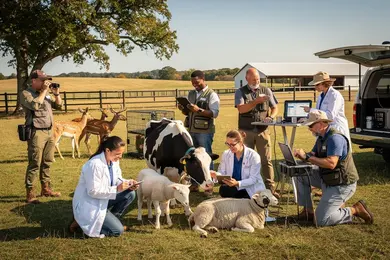
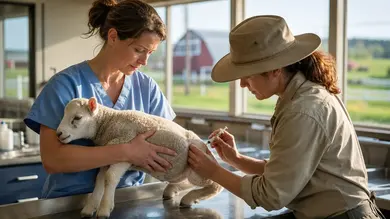
2027 Accredited Online Animal Science Degree Programs for Working Adults: Flexible, Part-Time, and Self-Paced Options

Co-Founder and Chief Data Scientist
Choosing an accredited online animal science degree while working full time means weighing schedule flexibility, lab requirements, transfer credits, and cost before you enroll. NCES reported in its 2024 education data that more than half of U. S. undergraduates took at least one distance education course, showing how normal online learning has become for adults. This guide is for career changers, farm and livestock workers, veterinary support staff, military learners, and parents comparing flexible options. You will learn how accreditation, part-time pacing, self-paced courses, tuition, timelines, and career outcomes affect whether a program fits your life and goals.
Key Things You Should Know
- Choose a U.S. institution recognized by the Department of Education or CHEA, and check AVMA CVTEA accreditation only if the program is veterinary technology rather than general animal science.
- Working adults usually do best with 6 to 9 credits per term, which commonly means about 12 to 27 study hours per week; full-time enrollment can shorten completion but may be difficult with a 40-hour workweek.
- A 120-credit bachelor's degree often takes about 4 years full time, 5 to 6 years part time, or about 2 years in a degree-completion pathway if you transfer 60 approved credits; some schools may accept up to 90 transfer credits, but limits vary.
What Is an Accredited Online Animal Science Degree Program and Why Does Accreditation Matter?
An accredited online animal science degree is a college program delivered fully or mostly online by an institution that has been reviewed by a recognized accrediting agency. The curriculum typically covers livestock production, animal nutrition, genetics, reproduction, welfare, food systems, anatomy, physiology, and animal health management.
Some programs are broad agriculture degrees with an animal science concentration, while others are bachelor's completion programs designed for students who already have college credits.
Accreditation matters because it affects financial aid eligibility, transfer credit, graduate school admission, and employer confidence. For most animal science bachelor's programs, institutional accreditation is the key requirement. Programmatic accreditation is not universally required for general animal science degrees, but it can matter in adjacent fields.
For example, veterinary technology programs should be reviewed for AVMA CVTEA accreditation if your goal is veterinary technician credentialing.
The table below separates the accreditation checks that matter most. This is important because many working adults compare animal science, veterinary technology, agriculture, and pre-veterinary pathways as if they were the same, but they can lead to different requirements.
| Accreditation or approval type | What it means | Why working adults should care |
| Institutional accreditation | The college or university has been reviewed by a recognized accreditor | Usually required for federal financial aid, credit transfer, and graduate school consideration |
| Programmatic accreditation | A specific program is reviewed by a field-specific accreditor | Not standard for general animal science, but important in some related professional programs |
| AVMA CVTEA accreditation | Applies to veterinary technology programs | Critical if your goal is veterinary technician licensure or credentialing in many states |
| State authorization | The school is approved to serve online students in your state | Important if you live outside the school's home state or need in-person placements |
| Graduate or pre-vet prerequisite alignment | Courses match requirements for future veterinary, agriculture, or graduate programs | Prevents the costly mistake of earning credits that do not meet your next-step requirements |
For adults comparing online options, the safest approach is to verify accreditation directly through the school, the accreditor, and the U.S. Department of Education's accreditation database. Do not rely only on marketing language such as "recognized," "approved," or "career-ready."
Which Flexible Animal Science Degree Formats Are Best for Working Adults: Part-Time, Full-Time, or Self-Paced?
The best format depends on your weekly availability, job schedule, family responsibilities, and urgency to finish. In animal science, fully self-paced degrees are less common than asynchronous or part-time online programs because science courses may have labs, exams, group projects, field assignments, or scheduled proctoring windows.
The table below compares common formats. Use it to match your realistic weekly study time with the kind of deadlines and structure you can sustain.
| Format | Typical fit | Main advantage | Main trade-off |
| Full-time online | Adults with flexible jobs, strong support at home, or employer-funded study time | Fastest path to completion | Often requires 30 or more study hours per week during heavy science terms |
| Part-time online | Adults working full time or caring for family | More manageable workload and lower per-term cost | Longer time to graduation |
| Asynchronous online | Shift workers, parents, military learners, and rural students | Lectures and assignments can often be completed around work hours | Still has deadlines, exams, and group expectations |
| Synchronous online | Students who want live interaction and a fixed class rhythm | More real-time support from faculty and peers | Evening or scheduled sessions may conflict with work |
| Self-paced or competency-based | Highly independent students with prior experience and strong time management | May allow faster progress through familiar material | Can be risky if you need structure, regular feedback, or lab coordination |
| Hybrid online | Students near campus, farms, labs, or approved field sites | Better for hands-on animal science experiences | Requires travel or scheduled in-person attendance |
Part-time study is often the most realistic choice for working adults because it reduces overload while keeping momentum. A self-paced option may make sense if you already work in agriculture, livestock production, equine care, feed sales, or animal health support and can document strong independent learning habits.
Before choosing a format, ask the school for specific scheduling rules rather than accepting the word "flexible" at face value. The most important questions are:
- Are lectures asynchronous, live, or a mix of both?
- Are exams proctored during fixed time windows?
- Can labs be completed online, locally, during short campus visits, or through approved field sites?
- What is the minimum and maximum number of credits allowed each term?
- Does the program allow stop-outs, reduced course loads, or temporary leaves without losing progress?
- Are self-paced courses subject to term deadlines or maximum completion limits?
A common mistake is assuming online means no schedule. In reality, many online animal science courses are asynchronous but not deadline-free, and science-heavy terms can be demanding even without commuting.
What Are the Admission Requirements for Accredited Online Animal Science Degree Programs?
Admission requirements vary by degree level and school type. Bachelor's programs usually require a high school diploma or GED, transcripts, an application, and sometimes prerequisite coursework in biology, chemistry, algebra, or college writing. Degree-completion programs may require an associate degree or a minimum number of transferable college credits.
Working adults should pay close attention to prerequisite and transfer policies because these can determine whether you enter as a first-year student, transfer student, or upper-division degree-completion student. If you are comparing animal science with faster healthcare pathways, an option such as a medical assistant certification accelerated program has very different admissions expectations and career outcomes, so compare timelines and credential goals carefully.
Most accredited online animal science programs will ask for some combination of the following materials. Reviewing these early can prevent delays, especially if you have attended multiple colleges or have older credits.
- Official high school, GED, military, and college transcripts
- Minimum GPA, often with higher expectations for transfer or upper-division admission
- Prerequisite courses such as biology, chemistry, statistics, animal science, or composition
- Personal statement or goal statement for selective programs
- Resume or work history, especially for adult-friendly or degree-completion pathways
- Proof of English proficiency for applicants whose prior education was not in English
- State residency documentation if tuition rates differ for in-state and out-of-state students
Some online programs are open to first-time college students, while others are designed for learners who already completed general education courses elsewhere. If you have agricultural work experience, ask whether the school awards credit for prior learning, industry certifications, military training, or portfolio assessment. Not every program does, and science prerequisites are often less flexible than electives.
The cost of an online animal science degree depends on residency, public versus private status, transfer credits, course fees, lab materials, technology fees, books, and travel for hands-on requirements. College Board's 2024 pricing data reported average published tuition and fees of $11,610 for in-state students at public four-year colleges and $43,350 at private nonprofit four-year colleges for the 2024-25 academic year. For online learners, the key lesson is that the sticker price can vary dramatically by institution type and residency policy.
Use the following cost categories when comparing programs. Tuition is only one part of the real price, especially in science-based programs that may require supplies, proctoring, or travel.
- Per-credit tuition for in-state, out-of-state, online, or nonresident students
- Mandatory online learning, technology, student services, graduation, and proctoring fees
- Lab kits, software, textbooks, protective gear, or local site costs
- Travel costs for short residencies, internships, farm placements, or campus labs
- Lost income if you reduce work hours to take a heavier course load
- Interest costs if you rely on unsubsidized loans or private borrowing
Financial aid can reduce the net cost if the school is eligible for federal aid and you meet aid requirements. Start with the FAFSA, then ask each school about institutional scholarships, adult learner grants, agriculture scholarships, employer tuition assistance, military benefits, payment plans, and transfer scholarships.
The table below shows cost questions that are especially useful for working adults. It focuses on expenses that are easy to miss during a quick tuition comparison.
| Cost factor | Why it matters | Question to ask |
| Online tuition rate | Some public universities charge the same online rate regardless of residency, while others do not | Is online tuition different from campus tuition? |
| Transfer credits | Accepted credits can reduce total tuition and time to degree | How many credits can I transfer, and which will count toward the major? |
| Lab and field expenses | Animal science may include supplies, site visits, or short in-person components | Are there required campus visits or local placement costs? |
| Course load rules | Part-time study can lower each bill but extend total time | Is there a minimum credit load for aid, scholarships, or employer reimbursement? |
| Employer tuition assistance | Some employers reimburse only after successful course completion | Can billing be deferred until reimbursement arrives? |
Cost comparisons should also account for your opportunity cost. A low-cost program may not be the best value if it lacks needed courses, delays graduation, or fails to support internships. Conversely, a higher-priced program may not be worth it unless it offers strong transfer acceptance, advising, hands-on access, and career alignment.
If you are comparing graduate healthcare pathways alongside animal science or agriculture options, reviewing the average cost of DNP program options can help illustrate how much degree level and professional licensing goals affect total educational investment.
A bachelor's degree usually requires about 120 credits. A full-time student may finish in about 4 years, while a working adult taking 6 to 9 credits per term may need 5 to 6 years or longer. A transfer student who enters with an associate degree or substantial general education credits may finish much faster if the credits apply to degree requirements.
The table below summarizes common timelines. The point is not to choose the fastest path automatically, but to choose the pace that you can complete without repeated withdrawals or burnout.
| Student profile | Possible course load | Estimated completion pattern | Best fit |
| First-time full-time student | 12 to 15 credits per term | About 4 years | Students with flexible work hours or strong financial support |
| Working adult part-time student | 6 to 9 credits per term | Often 5 to 6 years or more | Adults balancing full-time work, caregiving, and school |
| Transfer student with 30 credits | 6 to 12 credits per term | Often 3 to 4 years depending on major fit | Students with completed general education courses |
| Degree-completion student with 60 credits | 6 to 12 credits per term | Often about 2 to 3 years | Students with an associate degree or transferable lower-division coursework |
| Accelerated or summer-enrolled student | Year-round enrollment | Can shorten the calendar timeline | Students who can handle continuous coursework without long breaks |
Transfer credits can be one of the biggest advantages for adult learners, but only if they apply to the right categories. Credits that transfer as electives may not reduce the number of animal science, biology, chemistry, or upper-division major courses you still need.
Before enrolling, follow these steps to estimate your real timeline:
- Request an unofficial transfer review before paying an enrollment deposit.
- Ask which credits count toward general education, major prerequisites, upper-division requirements, and free electives.
- Confirm whether older science credits expire or need department review.
- Ask for a term-by-term plan based on your intended part-time or full-time pace.
- Check whether key animal science courses are offered every term or only once per year.
- Confirm whether internships, practicums, or capstone projects must be completed in a specific sequence.
A major red flag is a school that gives only a vague transfer estimate before enrollment. Working adults should ask for written degree planning because one missed prerequisite can add an extra term or year.

The strongest online animal science program for a working adult is not always the cheapest, fastest, or most flexible. It is the program that combines recognized accreditation, realistic scheduling, relevant curriculum, hands-on access, transparent costs, transfer-friendly policies, and career support aligned with your goals.
Use the following comparison checklist when speaking with admissions advisors. It focuses on details that often separate a manageable adult-friendly program from one that becomes difficult after the first term.
- Institutional accreditation recognized by the U.S. Department of Education or CHEA
- Clear distinction between animal science, veterinary technology, pre-veterinary studies, agriculture, and biology pathways
- Asynchronous course availability for required major courses, not just electives
- Part-time enrollment options without delaying required course sequences unnecessarily
- Transparent lab, internship, practicum, capstone, or fieldwork requirements
- Written transfer-credit evaluation before enrollment
- Dedicated academic advising for online and adult students
- Career services connected to agriculture, livestock, animal health, food systems, or graduate school pathways
- Published tuition, fees, refund policies, and satisfactory academic progress rules
- Technology support that covers evenings or weekends if you study outside business hours
The table below highlights common mistakes and better alternatives. This is useful because many poor program choices begin with reasonable assumptions that turn out to be incomplete.
| Common mistake | Why it can hurt you | Better approach |
| Choosing based only on tuition | Low tuition may be offset by poor transfer acceptance or required travel | Compare total cost to completion |
| Assuming flexible means self-paced | Many online courses still have weekly deadlines | Ask for sample syllabi and exam schedules |
| Ignoring hands-on requirements | Labs or fieldwork may conflict with work or location | Confirm where and when practical experiences occur |
| Not checking major course rotation | Required courses may be offered only once per year | Request a term-by-term graduation plan |
| Confusing animal science with veterinary technology | The credentials can lead to different career and licensure paths | Match the program to your intended role |
It can also help to compare how other online career programs disclose accreditation and aid. For example, guides to medical billing and coding online schools often emphasize institutional approval, program fit, and financial aid transparency, which are the same habits animal science students should use when reviewing colleges.
An animal science degree can support careers in livestock production, feed and nutrition, animal health product sales, breeding and genetics, extension education, food safety, quality assurance, farm management, research support, equine operations, and preparation for graduate or veterinary school. It is not the same as a DVM, and it usually does not by itself qualify someone to practice veterinary medicine.
BLS wage data from May 2024 reported a median annual wage of $80,190 for agricultural and food scientists, a category that includes several science-based roles connected to food production and agriculture. This figure is not a promise for animal science graduates; it is a labor-market benchmark that depends on role, degree level, experience, employer, geography, and whether the job requires graduate training.
The table below connects common animal science-related paths with typical responsibilities. Use it to evaluate whether a program's curriculum actually matches the work you want to do.
| Career direction | Typical responsibilities | Education considerations |
| Livestock production or farm management | Oversee feeding, breeding, welfare, records, biosecurity, and operations | Bachelor's degree plus hands-on experience is valuable |
| Animal nutrition or feed industry | Support ration planning, feed sales, product education, and producer relationships | Nutrition coursework, chemistry, and communication skills matter |
| Animal health or pharmaceutical sales | Educate producers or clinics about products, compliance, and animal health practices | Science foundation plus sales experience can be useful |
| Research or lab support | Collect data, manage animal care protocols, assist with trials, and maintain records | Research methods, statistics, and lab experience are important |
| Extension, education, or outreach | Translate animal science research for producers, youth programs, or communities | Communication, agriculture systems, and public service experience help |
| Pre-veterinary pathway | Prepare for veterinary school prerequisites and animal experience expectations | Requires careful course planning and strong academic performance |
Current trends are reshaping animal science work. Employers increasingly value data literacy, precision livestock tools, biosecurity awareness, animal welfare knowledge, sustainability practices, and the ability to communicate science to producers and consumers.
Students interested in food, wellness, and human nutrition careers may also compare animal science with a nutritionist bachelor degree online, but the coursework and licensing implications can differ significantly by state and career goal.
An online animal science degree may be worth it if it helps you move from entry-level animal care into management, qualify for agriculture industry roles, prepare for graduate study, or build a stronger science foundation for pre-veterinary planning. It may be less suitable if you need a credential that leads directly to state licensure, a clinical veterinary role, or an immediate high-wage outcome without additional experience.
Balancing an online animal science degree with work requires more than motivation. Science courses often include readings, problem sets, quizzes, lab reports, group assignments, and exams, so adults should plan around weekly workload rather than credit count alone.
A practical planning rule is to expect about 2 to 3 study hours per credit each week. That means a 6-credit part-time term may require about 12 to 18 hours weekly, while 9 credits may require about 18 to 27 hours. The right course load is the one you can sustain through busy work seasons, family obligations, and difficult science units.
Use these steps to create a schedule before the term begins. They are especially helpful if your job includes shift work, travel, farm duties, overtime, or caregiving responsibilities.
- Choose a weekly study block before registering, not after classes begin.
- Start with 6 credits if you are returning to school after a long break or taking science prerequisites.
- Avoid taking two lab-heavy or writing-heavy courses together during your first term.
- Tell your advisor about work travel, calving or foaling seasons, harvest periods, or rotating shifts.
- Use employer tuition assistance only after confirming grade, reimbursement, and course approval rules.
- Build a backup plan for childcare, internet outages, proctored exams, and required field hours.
- Reassess your course load after the first major exam or project instead of waiting until the withdrawal deadline.
Adults often underestimate the emotional load of studying after work. If you have a demanding job, part-time enrollment may produce better long-term progress than repeatedly attempting full-time study and withdrawing. The goal is steady completion, not the fastest possible schedule on paper.
A strong online animal science program should support students academically, technically, and professionally. This matters more for working adults because you may study at night, need fast advising decisions, or require help arranging field experiences near your home.
Look for support services that are available to online students, not just campus students. The most useful services include:
- Online academic advising with evening or flexible appointment options
- Transfer-credit advising before and after admission
- Online tutoring for biology, chemistry, statistics, writing, and animal science courses
- Library database access, research help, and citation support
- Career coaching for agriculture, animal health, food systems, and graduate school applications
- Disability services and testing accommodations for online courses
- Technical support during evenings or weekends
- Help identifying approved internship, practicum, or fieldwork sites near your location
- Faculty access through office hours, discussion boards, email, or virtual meetings
Online learning resources should also match the science content of the degree. Recorded demonstrations, virtual labs, case studies, animal handling videos, simulation tools, data analysis assignments, and remote collaboration platforms can improve learning, but they do not replace every hands-on experience.
If you are comparing animal science with healthcare programs, notice whether each program provides role-specific support. An ASN program, for example, is structured around clinical placement and licensure preparation, while animal science programs may focus more on agriculture systems, livestock management, research, or pre-veterinary preparation.
Do Online Animal Science Degree Programs Include Internships, Practicums, or Other Hands-On Learning Requirements?
Many online animal science programs include hands-on learning, but the structure varies. Some require internships, capstone projects, laboratory courses, animal handling experiences, local field placements, or short campus residencies. Others allow students to complete applied projects through an employer, farm, extension office, research site, veterinary setting, livestock operation, or approved community partner.
This is one of the most important areas to verify before enrolling because working adults may not be able to travel, reduce work hours, or attend weekday daytime labs. A program can be online and still include required in-person components.
Before choosing a program, ask these hands-on learning questions:
- Are internships, practicums, labs, field experiences, or campus visits required for graduation?
- Can current employment count toward an internship if duties align with program outcomes?
- Who finds and approves the site: the student, the school, or both?
- Are background checks, liability insurance, vaccinations, animal handling training, or safety modules required?
- Can field hours be completed during evenings, weekends, or seasonal work periods?
- Are there alternatives for students who live far from farms, labs, research centers, or approved animal facilities?
- Does the program require documentation, supervisor evaluations, journals, projects, or presentations?
Hands-on requirements are not a weakness; they can make the degree more valuable. The problem occurs when students discover them too late. Ask for the handbook, internship manual, or capstone requirements before committing to a program.
Other Things You Should Know About Animal Science
It can, but only if the courses match the prerequisites required by the veterinary schools you plan to apply to. Check biology, chemistry, organic chemistry, physics, math, animal nutrition, and lab requirements early, and confirm whether online labs are accepted.
No. Animal science is usually broader and focuses on livestock, nutrition, genetics, reproduction, welfare, agriculture, and research. Veterinary technology is a clinical support pathway that may lead to veterinary technician credentialing, depending on state rules and program accreditation.
Employers are generally more concerned with institutional accreditation, relevant coursework, hands-on experience, and job-ready skills than with whether lectures were online. For agriculture and animal-related roles, practical experience can be just as important as the degree format.
Useful skills include animal handling, recordkeeping, data analysis, communication, biosecurity practices, nutrition basics, welfare assessment, sales or producer relations, and familiarity with precision agriculture or livestock management technology.
- Online Vet Tech Program - Associate Degree | Penn Foster https://www.pennfoster.edu/programs/veterinary/veterinary-technician-associate-degree
- Making the Most of Your Animal Science Degree https://unity.edu/distance-education-blogs/animal-science-internships/
- Application Animal Science: University of Hohenheim https://www.uni-hohenheim.de/en/application-animalscience-info
- Online Animal Science Level 4 Certificate of Higher Education https://www.csgcc.ac.uk/en/programme-courses/university-course/animal-science-equine/online-animal-science-level-4-certificate
- 0 Online Bachelors in Animal Science by universities in United Kingdom | DistanceLearningportal https://www.distancelearningportal.com/study-options-c/bachelors/268927277/animal-science-united-kingdom.html
- Start Your Animal Care Career With Animal Science Course Online https://www.onlinecoursesaustralia.edu.au/online-courses/zoology/zoology-animal-science-course/starting-your-animal-care-career-with-an-animal-science-course-online/
- Elanco Fundamentals of Animal Science Certification https://www.icevonline.com/animal-science
- Online Option for Animal Science Degrees - Peterson's https://www.petersons.com/blog/online-option-for-animal-science-degrees/
- 25 Great Small Colleges for Animal Lovers https://www.greatvaluecolleges.net/25-great-small-colleges-for-animal-lovers/
- Master of Science (MSc) in Animal Science - University of Copenhagen https://www.ku.dk/studies/masters/animal-science