2027 Fastest Accredited Online Animal Science Programs: Accelerated Degrees and Completion Times

Co-Founder and Chief Data Scientist
Choosing the fastest online animal science degree is really a timing, cost, and accreditation decision. The U. S. Bureau of Labor Statistics' 2024 update projects steady demand for agricultural and food scientists, making faster completion appealing for students targeting animal nutrition, livestock production, pre-veterinary pathways, or agribusiness roles.
This guide explains which accredited online options can move fastest, what "accelerated" actually means, and how transfer credits, prerequisites, course load, lab or field requirements, and start dates can shorten or extend your real graduation timeline.
Key Things You Should Know
- The fastest realistic route is usually a transfer-heavy bachelor's completion plan: students entering with about 60 to 90 approved credits may finish in roughly 12 to 24 months, while first-time bachelor's students should expect closer to 3.5 to 4 years.
- Accelerated online animal science programs commonly use 5-week, 7-week, or 8-week terms, but shorter terms compress the same credit hours into less time rather than making the workload lighter.
- Many accredited bachelor's programs require 120 semester credits or about 180 quarter credits; transfer-credit caps commonly reach 75% of the degree, but major prerequisites, upper-division residency rules, and lab or field experiences can limit how much time you actually save.
Which Colleges Offer the Fastest Accredited Online Animal Science Programs?
The fastest accredited online animal science options are usually not traditional four-year programs advertised as "finish in one year." They are regionally accredited online bachelor's or bachelor's-completion programs that let students bring in substantial transfer credit, study year-round, and avoid unnecessary scheduling gaps.
The table below compares well-known U.S. online options that are either specifically animal science programs or closely related animal-focused degrees. Use the "fastest realistic path" column carefully: it assumes strong transfer credit, full-time enrollment, and no missing prerequisite sequence.
| College | Online program | Accreditation type to verify | Format factors that can speed completion | Fastest realistic path for prepared transfer students |
| Oregon State University Ecampus | B.S. in Animal Sciences | Regional institutional accreditation | Online major coursework, quarter calendar, broad transfer-credit review | About 1 to 2 years after substantial approved transfer credit, depending on remaining upper-division and science requirements |
| Kansas State University Global Campus | B.S. in Animal Sciences and Industry | Regional institutional accreditation | Online degree-completion structure, transfer-friendly pathway, industry-focused coursework | About 2 years for students who enter with many lower-division requirements already completed |
| Unity Environmental University | B.S. in Animal Health and Behavior | Regional institutional accreditation | Short online terms, multiple start dates, high transfer-credit potential | About 12 to 18 months for students with near-maximum applicable transfer credit, though it is adjacent to animal science rather than a traditional production-animal science major |
| Purdue University Veterinary Nursing Distance Learning | Associate of Applied Science in Veterinary Nursing | Regional institutional accreditation and programmatic veterinary technology accreditation to verify | Distance coursework with required clinical skills experience | Often faster for students seeking a veterinary nursing credential, but it is not a bachelor's degree in animal science |
For most students, Oregon State and Kansas State are stronger matches if the goal is a true animal science bachelor's degree. Unity may be faster for students focused on animal care, behavior, welfare, or wildlife-facing roles, but students planning for graduate animal science, livestock production, or pre-veterinary prerequisites should compare course-by-course fit before choosing the shorter route.
The most important distinction is whether you are starting from zero credits or completing a degree. A student with an associate degree, completed general education, biology, chemistry, and college algebra may move quickly; a first-time student who still needs foundational sciences will usually need a traditional sequence even if the courses are online.
How Long Does It Take to Complete an Accredited Online Animal Science Degree?
An accredited online animal science degree typically takes four years from the first college course to graduation. "Fastest" means the shortest credible time to finish the remaining degree requirements after accounting for transfer credits, term length, course availability, prerequisites, and any in-person animal handling, internship, or field-based requirements.
The table below shows realistic completion ranges by starting point. It is useful because advertised timelines often describe ideal transfer students, not students beginning all 120 semester credits from scratch.
| Student starting point | Likely credits remaining | Common online pace | Realistic completion time | Main timeline risk |
| First-time bachelor's student | About 120 semester credits | Full-time, fall and spring, sometimes summer | 3.5 to 4 years | Science prerequisites and limited upper-division sequencing |
| Student with general education completed | About 75 to 90 semester credits | Full-time with some summer enrollment | 2.5 to 3 years | Missing biology, chemistry, statistics, or animal science prerequisites |
| Associate degree transfer student | About 60 semester credits | Full-time, year-round when available | 18 to 24 months | Credits transferring as electives rather than degree requirements |
| High-credit transfer student | About 30 to 45 semester credits | Heavy full-time or accelerated terms | 12 to 18 months | Upper-division residency requirements and required major courses offered only once per year |
| Working adult taking part-time courses | Varies widely | 1 to 2 courses per term | 3 to 6 years depending on credits remaining | Burnout, skipped terms, and limited summer availability |
Credit load matters as much as term length. A student taking two 8-week courses at a time may complete credits quickly, but the weekly workload can resemble a full-time job during exams, lab reports, or major projects.
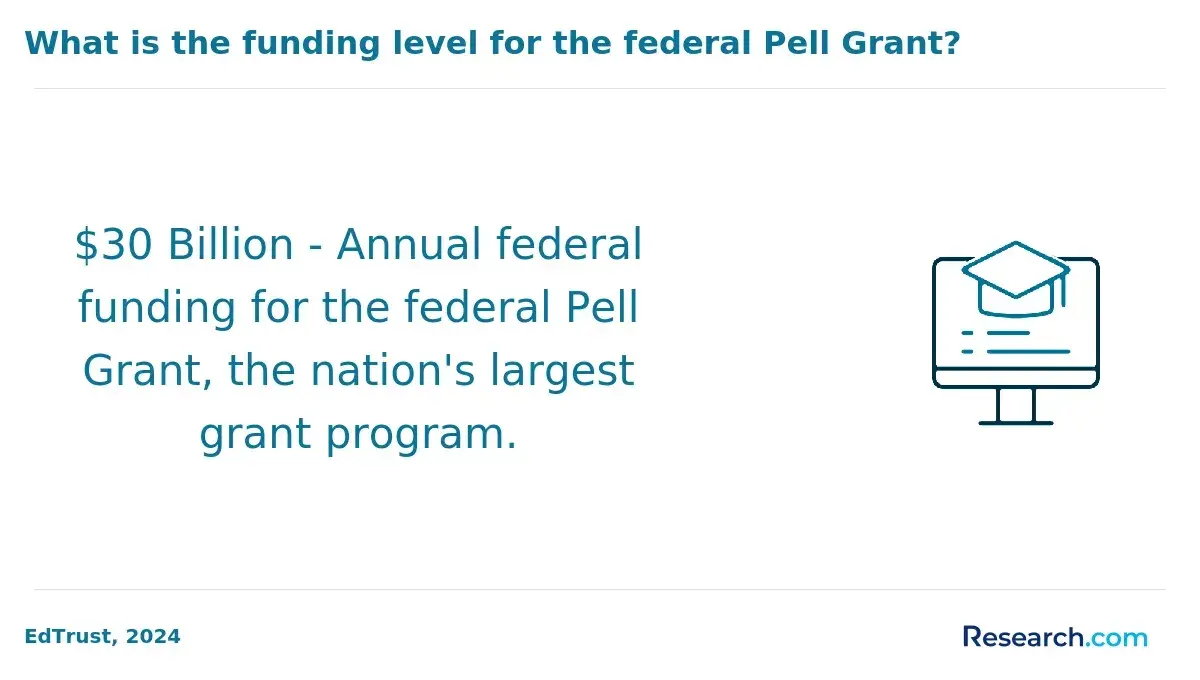
Recent federal financial aid rules also affect pacing. The 2024-25 maximum Federal Pell Grant was $7,395, which can help eligible students cover part of tuition, but aid eligibility is tied to enrollment intensity and satisfactory academic progress. Dropping courses to manage workload can protect grades, but it may also slow graduation and affect aid calculations.
How Do Accelerated and Competency-Based Online Animal Science Programs Work?
Accelerated online animal science programs usually work by shortening academic terms, allowing year-round enrollment, accepting transfer credit, or structuring the degree as a completion program. Competency-based education is less common in animal science than in business or health administration, because animal science often includes sequential sciences and applied animal systems coursework.
These formats can shorten calendar time, but each works differently. Students comparing options should focus on how credits are earned and scheduled, not just the marketing language.
- Short-term courses: Five-week, seven-week, or eight-week courses let students finish more sessions per year, but each course moves faster and usually requires more weekly study time.
- Year-round enrollment: Summer, winter, or multiple start dates can reduce idle time between terms, especially for students who need only a few remaining courses.
- Degree-completion design: Programs built for transfer students often concentrate upper-division major requirements online, which can be faster than piecing together a traditional campus sequence remotely.
- Competency-based general education: Some students complete lower-division requirements through approved competency-based or credit-by-exam options, then transfer those credits into an animal science bachelor's program if the receiving school allows it.
- Stacked course planning: Advisors may sequence prerequisites so biology, chemistry, nutrition, reproduction, genetics, and animal management courses do not block each other later.
Healthcare education offers a useful comparison: a medical assistant certification accelerated program may compress training into weeks because it is usually shorter and credential-focused, while a bachelor's in animal science must still satisfy a full undergraduate credit structure. That is why "accelerated" in animal science usually means faster degree completion, not a six-week degree.
Students should be cautious with self-paced claims. If the program requires upper-division animal science courses offered only once per year, a self-paced general education format will not eliminate every scheduling bottleneck.
An online animal science program should first have recognized institutional accreditation from a U.S. regional or national accreditor approved by the U.S. Department of Education or the Council for Higher Education Accreditation. For most bachelor's-bound students, regional institutional accreditation is the safest standard because it is widely recognized for transfer credit, graduate admission, and employer tuition reimbursement.
Programmatic accreditation is more complicated. Traditional animal science bachelor's degrees do not always have a single required programmatic accreditor in the way nursing or veterinary technology programs do. However, related veterinary technology or veterinary nursing programs may need AVMA CVTEA accreditation if the student's goal is credentialing as a veterinary technician or technologist.
Before enrolling, students should verify accreditation directly rather than relying on a school's marketing page. The following checks help prevent costly mistakes that can delay graduation or limit future options.
- Confirm the institution appears in the U.S. Department of Education's recognized accreditation database or the accreditor's own directory.
- Ask whether the exact online program, not just the campus, is covered by institutional accreditation.
- If pursuing veterinary technician licensure, confirm whether the program has the required veterinary technology programmatic accreditation for the student's state.
- Ask graduate schools, veterinary schools, or employers whether the degree meets their prerequisite or hiring expectations.
- Get transfer-credit and residency requirements in writing before committing to an accelerated timeline.
Accreditation does not guarantee that every course will transfer or that every employer will value the degree equally. It does, however, reduce the risk that a fast program becomes a dead end for graduate study, financial aid, licensure, or professional mobility.
Transfer credit is usually the biggest time-saver in an online animal science degree. A student who transfers 60 applicable credits may cut the degree nearly in half, while a student who transfers 90 applicable credits may need only upper-division major courses, electives, and institutional residency credits.
The table below shows how different credit sources can affect completion time. The key word is "applicable": credits must count toward specific degree requirements, not merely appear on the transcript.
| Credit source | How it may help | Common limitation | Best use for faster completion |
| Community college transfer credit | Can satisfy general education, introductory biology, chemistry, math, and electives | Upper-division animal science requirements usually must be completed at the bachelor's-granting institution | Complete lower-division requirements before transfer |
| Associate degree | May satisfy a large block of general education or lower-division credits | Not all associate degrees align with animal science prerequisites | Choose biology, agriculture, or science-heavy electives when possible |
| AP, IB, CLEP, or DSST exams | Can reduce general education or elective requirements | Schools set score minimums and may limit exam credits | Use for non-major requirements after confirming acceptance |
| Military or workforce training | May count as elective or technical credit | Often does not replace major science courses | Submit official evaluations early to avoid late surprises |
| Prior learning assessment | May award credit for documented professional learning | Portfolio review can take time and may not apply to lab science requirements | Use for electives or applied experience, not as a substitute for required prerequisites unless approved |
Students should request a preliminary degree audit before enrolling. A general statement such as "we accept up to 90 transfer credits" is not enough; the faster timeline depends on whether those credits replace required courses in biology, chemistry, genetics, nutrition, reproduction, statistics, animal management, and upper-division electives.
The most common mistake is assuming all old credits will transfer cleanly. Courses with outdated science content, low grades, quarter-to-semester conversion issues, or non-equivalent titles may transfer as electives, which helps total credits but not necessarily time to graduation.
Admission requirements for accelerated online animal science programs vary by school, but most bachelor's programs require a high school diploma or equivalent for first-year admission and official transcripts from every college previously attended for transfer admission. Transfer students may also need minimum GPA standards, completed prerequisite courses, or a certain number of transferable credits.
Start dates are especially important for speed. Programs with multiple starts per year can reduce waiting time, but animal science courses may still follow a fixed sequence. A student admitted quickly may not graduate quickly if a required course is unavailable until the following academic term.
When speaking with admissions or advising teams, ask questions that reveal the real timeline rather than the best-case marketing timeline.
- How many start dates are available each year for the animal science major, not just general online enrollment?
- Which required courses are offered every term, and which are offered only once per year?
- What is the maximum credit load allowed in accelerated sessions?
- Can science prerequisites be taken online through the same institution or transferred from another accredited college?
- Is there a required internship, practicum, field experience, or proctored lab component?
- How long does the official transfer-credit evaluation take after transcripts are submitted?
- Will the school provide a term-by-term graduation plan before the enrollment deposit is due?
Students comparing online start-date flexibility may notice that some allied health programs advertise highly structured enrollment calendars; for example, guides to medical billing and coding online schools often emphasize frequent starts because those programs are shorter and less sequence-heavy. Animal science students should look beyond the start date and confirm when major courses actually run.
A good accelerated program should be transparent about prerequisites, transfer evaluations, and expected workload. If an advisor cannot explain which courses remain and when they are offered, the advertised completion time may not be reliable.
The cost of a fast online animal science degree depends on tuition per credit, the number of credits remaining, fees, books, software, lab kits, travel for any fieldwork, and whether the student pays in-state, out-of-state, or flat online tuition. Faster completion can reduce living costs and time away from full-time work, but it does not automatically reduce tuition if the same number of credits is required.
The table below summarizes the major cost drivers. It helps students separate true savings from costs that simply shift into a shorter and more intense period.
| Cost factor | Why it matters for accelerated students | Question to ask the school |
| Tuition per credit | Most bachelor's degrees still require 120 semester credits or the equivalent, even when delivered faster | What is the total tuition for my remaining credits after transfer evaluation? |
| Online fees | Technology, distance learning, proctoring, or course fees can add to each term | Are fees charged per credit, per course, or per term? |
| Lab or field expenses | Animal handling, local placements, travel, or supplies may not be included in tuition | Are there required in-person experiences, and who pays related costs? |
| Transfer-credit acceptance | More accepted credits can reduce total tuition and shorten enrollment time | Which of my credits apply to degree requirements rather than electives? |
| Course overloads | Taking extra credits may speed completion but can increase short-term billing and workload risk | Is overload tuition billed differently, and does it affect financial aid? |
Financial aid may be available if the institution and program meet federal aid requirements and the student completes the FAFSA. Eligible students may use grants, loans, scholarships, employer tuition assistance, veterans benefits, or payment plans, but award amounts depend on enrollment status, dependency status, cost of attendance, and aid history.
Cost comparisons should be program-specific. A discussion of the average cost of DNP program options, for instance, can be useful as a reminder that online tuition varies widely by discipline and credential level; an undergraduate animal science student should still calculate cost from remaining credits, fees, and transfer applicability rather than from headline tuition alone.
The best value is not always the cheapest or fastest program. A slightly longer accredited program may be the better investment if it includes stronger advising, better prerequisite alignment for veterinary school, more relevant animal systems courses, or clearer field-experience support.
You can work full time while completing an accelerated online animal science degree, but it is most realistic if you take a moderate course load and plan around peak workload periods. Animal science courses may include lab reports, quantitative assignments, group projects, proctored exams, or field observations that are harder to compress than discussion-based courses.
The table below compares common enrollment patterns for working adults. It is useful because the fastest schedule is not always the most sustainable schedule.
| Enrollment pace | Typical course load | Best fit | Trade-off |
| Part-time | 1 course per accelerated term or 1 to 2 courses per semester | Full-time workers, caregivers, students with unpredictable schedules | Slower completion but lower burnout risk |
| Moderate full-time | 2 courses per accelerated term or 12 credits in a standard semester | Students with stable work hours and strong study routines | Faster progress but limited flexibility during exams and projects |
| Heavy accelerated | Multiple short-term courses stacked year-round | Students with few outside obligations or temporary work reductions | Fastest calendar pace but highest risk of poor grades or withdrawal |
| Final-year completion sprint | High-credit load after most prerequisites are complete | Students with 30 to 45 credits remaining and clear course availability | Can finish quickly if required courses are offered on time |
Students in intensive healthcare pathways face a similar workload problem; an ASN program may be online-supported but still demanding because clinical or lab requirements control the schedule. Animal science is usually more flexible than nursing, but hands-on or field-based requirements can still limit when and where coursework happens.
A practical approach is to start with one accelerated science course and one lighter general education or elective course, then increase the load only if grades and work-life balance remain manageable. Fast graduation is helpful only if the student can maintain the GPA needed for graduate school, veterinary prerequisites, internships, or employer reimbursement.
Employers and graduate schools generally care more about accreditation, course relevance, skills, experience, and academic performance than whether the degree was completed online. A regionally accredited online animal science degree from a recognized institution can be respected, especially when the transcript shows rigorous science coursework and the student can discuss practical animal experience.
Career outcomes vary because animal science is a broad field. Graduates may pursue roles in livestock production, animal nutrition sales, feed or pharmaceutical companies, extension support, laboratory animal care, animal welfare organizations, agribusiness, regulatory support, or preparation for veterinary or graduate school.
The U.S. Bureau of Labor Statistics' 2024 Occupational Outlook Handbook update reported a median annual wage of $78,740 for agricultural and food scientists using May 2023 wage data. That figure is a broad national benchmark, not a promise for animal science bachelor's graduates; actual pay depends on role, region, experience, graduate education, and whether the job is research-, production-, sales-, or care-focused.
Employer confidence is stronger when the degree is paired with evidence of applied skill. Students should look for programs that help them build experience in animal handling, nutrition formulation, data interpretation, biosecurity, welfare assessment, genetics, reproduction, or farm and facility operations.
Students interested in adjacent food, health, and animal nutrition pathways may also compare a nutritionist bachelor degree online, especially if their long-term goal involves feed, diet formulation, wellness education, or graduate study in nutrition. The best choice depends on whether the student wants an animal-focused science curriculum or a broader human nutrition pathway.
One current trend is the growing use of data tools, automation, and precision agriculture in animal industries. Programs that include statistics, data literacy, animal production systems, and applied problem-solving may be more useful than programs that are fast but light on technical coursework.
How Should You Compare the Fastest Accredited Online Animal Science Programs?
The best fast online animal science program is the one that lets you graduate quickly without losing accreditation value, prerequisite alignment, field relevance, or financial aid eligibility. A program that looks slower on paper may be faster in practice if it accepts more of your credits and offers required courses every term.
Use the following comparison steps before enrolling. They are designed to reveal the real completion time, total cost, and academic fit behind each advertised timeline.
- Verify institutional accreditation and any programmatic accreditation needed for your career goal.
- Request an official or preliminary transfer-credit evaluation before accepting an accelerated timeline.
- Ask for a written term-by-term plan showing every remaining required course and expected graduation term.
- Confirm whether science prerequisites, labs, fieldwork, internships, or animal handling requirements can be completed online or locally.
- Compare total remaining cost, not just tuition per credit or annual tuition.
- Check whether courses are 5-week, 7-week, 8-week, or 16-week and estimate weekly study hours accordingly.
- Ask how often upper-division animal science courses are offered and whether any are limited to fall or spring.
- Review graduate school, veterinary school, or employer prerequisites if you plan to use the degree for a specific next step.
- Decide whether speed, GPA protection, hands-on experience, or cost control matters most for your situation.
Common red flags include vague accreditation claims, no written transfer evaluation, pressure to enroll before receiving a degree plan, promises that all prior credits will transfer, and marketing that treats accelerated terms as easier coursework. Another warning sign is a program that emphasizes speed but cannot explain how students complete labs, field experiences, or animal-focused applied learning.
A strong final shortlist should include no more than three to five schools. For each one, compare credits remaining, total estimated tuition and fees, required in-person components, start dates, course sequencing, transfer limits, financial aid eligibility, and how well the curriculum supports your target career or graduate pathway.
Other Things You Should Know About Animal Science
No. Animal science is usually a broader bachelor's-level field covering animal biology, nutrition, genetics, production, welfare, and industry systems. Veterinary technology is typically a credentialed clinical pathway focused on assisting veterinarians and may require programmatic accreditation for licensure or credentialing.
It can, but only if the curriculum includes the specific biology, chemistry, physics, math, and animal science prerequisites required by the veterinary schools you plan to apply to. Always compare course requirements before enrolling.
Some programs are fully online academically, while others may require local field experiences, internships, proctored labs, or animal handling work. Ask whether any requirement must be completed on campus or can be arranged near your home.
Possible paths include animal production, feed and nutrition sales, agribusiness support, animal welfare, extension-related roles, laboratory animal care, regulatory support, and preparation for graduate or veterinary school. Job fit depends heavily on coursework, experience, location, and career goals.
- Application for Master’s in Agricultural Sciences, major in Animal Science https://dein-studium.uni-hohenheim.de/en/applying-and-enrollment/applying/application-for-masters-in-agricultural-sciences-major-in-animal-science
- Understanding the Different Paths to Animal Care Careers - mefa.org https://www.mefa.org/article/understanding-the-different-paths-to-animal-care-careers/
- Bachelor of Animal Science – BAnSci https://www.massey.ac.nz/study/all-qualifications-and-degrees/bachelor-of-animal-science-UBANS/
- Jobs Working with Animals: Career Growth for Professionals https://www.mackinnon-bruce.com/insights-hub/blog/jobs-working-with-animals--career-growth-for-professionals/