2027 Cheapest Accredited Online Animal Science Degree Programs: Tuition, Fees, and Financial Aid

Co-Founder and Chief Data Scientist
Choosing the cheapest accredited online animal science degree is harder than comparing tuition rates. Mandatory fees, transfer-credit rules, books, labs, and financial aid can change the real price. The College Board's 2024 pricing report shows average published tuition and fees of $11,610 at public four-year in-state institutions and $43,350 at private nonprofit four-year institutions, making cost comparison essential.
This guide is for students seeking affordable online animal science or closely related animal-focused degrees, and it explains how to compare accreditation, total cost, net price, and aid before enrolling.
Key Things You Should Know
- Among widely available accredited online animal science or closely related animal-focused bachelor's programs with published online tuition, Eastern Kentucky University's online BS in Animal Studies is often one of the lowest-cost options at about $434 per credit, or roughly $52,080 before aid for 120 credits.
- The lowest advertised tuition is not always the lowest total cost. Oregon State's online BS in Animal Sciences uses quarter credits at about $366 per credit, but a full 180-quarter-credit degree estimate is about $65,880 before fees, books, transfer savings, or grants.
- Net price matters more than sticker price because FAFSA-based aid, state grants, institutional scholarships, employer tuition benefits, and transfer credits can reduce what a student actually pays; the federal Pell Grant maximum is $7,395 for eligible students in the 2024-25 award year.
What Are the Cheapest Accredited Online Animal Science Degree Programs?
The cheapest accredited online animal science degree programs are typically bachelor's programs offered by regionally accredited universities with either fully online delivery or online-completable formats.
Because fully online animal science majors are less common than online business or psychology degrees, students should also compare closely related programs in animal studies, animal health, animal behavior, livestock production, and animal sciences and industry.
The table below compares programs with published online tuition and animal-focused curricula. Estimates use full-program credit requirements before financial aid and assume the student completes all required credits at the listed institution, so transfer students may pay less.
| School | Online degree option | Accreditation type to verify | Published online tuition used for estimate | Estimated tuition before aid | Cost note |
| Eastern Kentucky University | BS in Animal Studies | Regional institutional accreditation through SACSCOC | About $434 per semester credit | About $52,080 for 120 credits | Often a lower-sticker-price option for animal-focused online study; confirm current online fees and textbook policy. |
| Unity Environmental University | BS in Animal Health and Behavior | Regional institutional accreditation through NECHE | About $470 per semester credit | About $56,400 for 120 credits | Animal-focused curriculum with online delivery; compare fit if you want production agriculture or pre-veterinary coursework. |
| Kansas State University | BS in Animal Sciences and Industry, online | Regional institutional accreditation through the Higher Learning Commission | About $528 per semester credit | About $63,360 for 120 credits | Strong agricultural university option; verify whether all concentration, lab, and elective requirements can be completed online. |
| Oregon State University Ecampus | BS in Animal Sciences | Regional institutional accreditation through NWCCU | About $366 per quarter credit | About $65,880 for 180 quarter credits | Quarter credits make the per-credit rate look lower, so compare total degree credits rather than rate alone. |
These programs are not interchangeable. A student interested in livestock nutrition, breeding, or agricultural production may prefer a program explicitly titled animal science, while someone focused on shelter work, animal welfare, behavior, or animal care management may find an animal studies or animal health curriculum more relevant.
A practical shortlist should start with cost, but it should not end there. Students should also compare whether the program supports their goal, such as veterinary school prerequisites, livestock industry roles, graduate study, animal behavior work, extension services, or companion animal careers.
How Were the Cheapest Online Animal Science Degree Programs Ranked?
The ranking logic prioritizes true affordability over marketing language. A program with a low per-credit rate can become more expensive if it requires more credits, charges high online fees, limits transfer credits, or does not qualify students for federal financial aid.
Programs were compared using the following cost-first methodology:
- Confirm that the school is institutionally accredited by an accreditor recognized by the U.S. Department of Education.
- Identify online or online-completable animal science, animal sciences and industry, animal studies, animal health, or animal behavior bachelor's degree options.
- Use published online tuition rates and required degree credits to estimate tuition before aid.
- Flag tuition structures that can distort comparison, such as quarter credits, in-state pricing, out-of-state pricing, flat-rate tuition, and completion-program formats.
- Consider affordability factors beyond sticker price, including FAFSA eligibility, scholarships, transfer-credit acceptance, residency requirements, and required fees.
This approach avoids a common mistake: ranking a school as cheapest because its per-credit price is low without checking the total number of credits or mandatory charges. For example, a $366 quarter-credit rate is not directly comparable to a $434 semester-credit rate unless the full degree requirement is converted into total program cost.
If two programs differ by only a few thousand dollars before aid, the better value may be the one that accepts more transfer credits, offers stronger advising, aligns better with your career goal, or reduces the need for extra prerequisite coursework later.
How Can You Verify the Accreditation of an Online Animal Science Degree Program?
Accreditation is the first affordability filter because an unaccredited or improperly accredited program can block federal aid, transfer credit, employer recognition, graduate admission, and professional school prerequisites. For most online animal science bachelor's degrees, the key requirement is institutional accreditation from a U.S. Department of Education-recognized accreditor.
Before applying, use this verification sequence to avoid paying for a program that does not meet your academic or career needs:
- Search the school in the U.S. Department of Education's Database of Accredited Postsecondary Institutions and Programs.
- Confirm that the institution name, campus, and accreditor match what the school advertises.
- Check whether the online degree is offered by the same accredited institution, not by an unaffiliated training vendor.
- Ask admissions whether the degree appears on the official transcript exactly as an animal science, animal studies, animal health, or related bachelor's degree.
- If you plan to apply to veterinary school, graduate school, or a state-regulated role, confirm prerequisite acceptance directly with that school, employer, or licensing board.
Programmatic accreditation is less common for animal science bachelor's programs than it is for nursing, education, or allied health programs. That does not automatically make a program weak, but it does mean students should pay close attention to curriculum, labs, faculty expertise, internship options, and whether courses meet external prerequisite expectations.
The real cost of an accredited online animal science degree includes more than tuition. Students should separate tuition, which is the instructional charge; mandatory fees, which are required charges such as technology or distance-learning fees; total program cost, which adds required materials and completion costs; and net price, which is the amount left after grants and scholarships.
The table below shows how the same program can look different depending on which cost number you use. This is especially important for online learners because many do not pay campus housing costs but may still pay technology, lab, exam-proctoring, or course-material charges.
| Cost term | What it includes | Why it matters | Question to ask the school |
| Advertised tuition | Per-credit or per-term instructional price | Useful for a first comparison but incomplete by itself | Is this rate the same for online, in-state, and out-of-state students? |
| Mandatory fees | Technology, distance education, student services, graduation, course, or assessment fees | Can add meaningful cost even when tuition looks low | Which fees are required for every online student? |
| Total program cost | Tuition, mandatory fees, books, required materials, labs, travel, and graduation charges | Shows the likely price before aid | Can you provide a full cost sheet for my expected credit load? |
| Net price | Total cost minus grants, scholarships, and other gift aid | Best estimate of what you pay or borrow | What would my estimated net price be after FAFSA and institutional aid? |
A simple cost formula is useful: multiply the tuition rate by the remaining credits you must complete, then add required fees, books, course materials, travel for any required experiences, and graduation fees. After that, subtract grants, scholarships, employer benefits, and tuition waivers that you are likely to receive.
The College Board's 2024 data shows why this matters: published tuition and fees can differ sharply by institution type, and online students may see different billing rules from campus students. The takeaway is not that one sector is always cheaper, but that every student should compare the full bill rather than a single tuition line.
Tuition models affect affordability because they determine how quickly costs rise as you add credits, slow down, change majors, or transfer. Students comparing animal science programs should look for pricing models that match their schedule and credit history.
The most important tuition models to compare are:
- Per-credit tuition: You pay for each credit attempted, which is transparent for part-time students but can become expensive if you repeat courses or take extra electives.
- Flat-rate tuition: You pay one rate within a credit range, which can lower the cost per credit for full-time students who can handle a heavier course load.
- Same-rate online tuition: Online students pay the same rate regardless of state residency, which can be valuable for out-of-state students comparing public universities.
- In-state and out-of-state tuition: Public universities may charge different rates, so a low in-state price may not apply to you.
- Completion-program pricing: Some programs are designed for students who already have transfer credits, making the advertised degree cost misleading for first-year students.
Health and science students often face similar pricing trade-offs across online programs. For example, comparing the average cost of DNP program options shows how per-credit pricing, fees, and clinical requirements can change affordability even within the same field.
For online animal science students, the most affordable model is usually the one that lets you complete the fewest paid credits at the best verified rate. A student entering with 60 transferable credits may find a higher-tuition completion program cheaper than a lower-tuition program that accepts fewer credits.
FAFSA-based aid can apply to accredited online animal science degree programs when the institution participates in federal student aid and the student meets eligibility rules. Online delivery alone does not disqualify a student from federal aid, but the school and program must be eligible.
Students should follow these steps to check aid before comparing final costs:
- Confirm that the institution participates in federal student aid programs.
- Submit the FAFSA for the correct award year and list each school you are considering.
- Review each financial aid offer separately because schools may package grants, scholarships, work-study, and loans differently.
- Separate gift aid from loans so you know what reduces the price and what must be repaid.
- Ask whether your enrollment level, such as half time or full time, changes grant eligibility or loan limits.
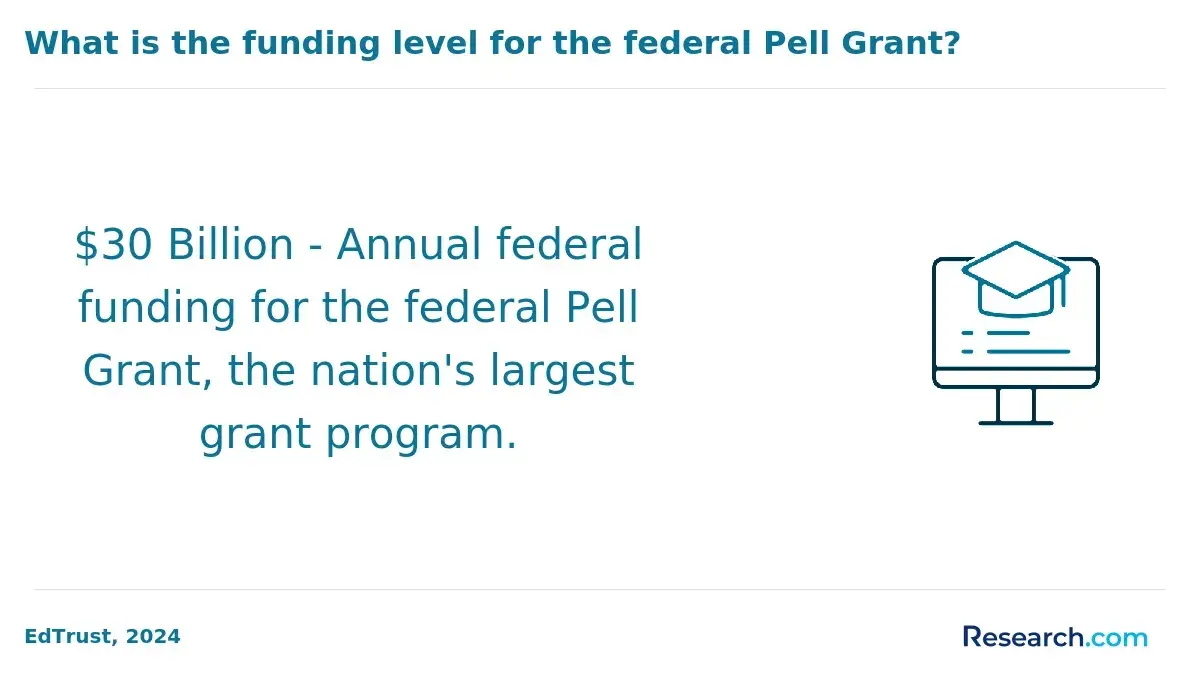
The federal Pell Grant maximum is $7,395 for eligible students in the 2024-25 award year, but the actual award depends on federal calculations, enrollment intensity, and cost of attendance. This means two students in the same online animal science program may have different net prices.
Students comparing online career programs should use the same aid-checking discipline across fields. For example, the financial aid issues students examine when reviewing medical billing and coding online schools are similar: accreditation, aid eligibility, total cost, and the difference between grants and loans.
Scholarships and grants are usually more valuable than loans because they do not need to be repaid when students meet the award rules. Online animal science students should search for funding from the federal government, state agencies, universities, agricultural organizations, animal welfare groups, employers, and local foundations.
The strongest funding search usually includes several categories:
- Federal grants: FAFSA-based awards such as Pell Grants for eligible undergraduate students.
- State grants: Need-based or merit-based aid that may require residency, enrollment intensity, or attendance at an eligible institution.
- Institutional scholarships: University awards based on academics, financial need, transfer status, major, leadership, or agricultural interests.
- Agriculture and animal-industry scholarships: Awards from breed associations, livestock organizations, 4-H or FFA-related groups, veterinary groups, and local farm bureaus.
- Employer tuition benefits: Reimbursement or direct-pay programs from veterinary clinics, animal shelters, farms, food companies, laboratories, or public agencies.
- Military and public-service benefits: GI Bill benefits, tuition assistance, or agency-specific education support for eligible students.
Always ask whether an award is renewable. A $3,000 first-year scholarship is helpful, but a smaller renewable award may reduce total debt more if it continues across several terms.
Students interested in animal nutrition, food systems, or wellness-related career paths may also compare adjacent programs such as a nutritionist bachelor degree online, especially if their long-term goal involves feed formulation, companion animal nutrition, public health, or graduate study.
Transfer credits are one of the most powerful ways to lower the cost of an online animal science degree because they reduce the number of credits you must pay for at the university. The savings can be especially large for students who already completed general education courses at a community college.
Before enrolling, students should ask for a written transfer evaluation and pay close attention to these rules:
- Maximum transfer credits: Some bachelor's programs accept up to a set number of credits, but the limit varies by school.
- Residency requirement: Universities usually require students to complete a minimum number of credits through the degree-granting institution.
- Major-course rules: Animal science, biology, chemistry, nutrition, or upper-division courses may need department approval.
- Age limits on science courses: Some programs may reject older lab science credits, especially if they support prerequisites for advanced study.
- Prior learning assessment: Military training, industry certifications, or documented professional experience may count at some schools, but not all.
Competency-based study can also reduce cost when students move quickly through material they already know, but it is not always available in animal science majors because science programs often require sequenced courses, labs, or faculty-evaluated assignments. Students should confirm whether competency-based credits will transfer to graduate programs or professional schools before choosing that route.
Transfer planning is also important in other science-heavy online degrees. Students comparing an ASN program, for example, often need to check clinical, lab, and residency rules before assuming credits will reduce the final price.
How Should Students Compare the Net Price, Quality, and Return on Investment of Online Animal Science Degree Programs?
The best-value online animal science degree is the one that combines an affordable net price with credible accreditation, relevant coursework, reasonable completion time, and outcomes that fit the student's goal. A slightly more expensive program may be worth considering if it offers stronger advising, better transfer acceptance, a curriculum aligned with veterinary prerequisites, or industry-recognized agricultural coursework.
Use this comparison checklist before making a final enrollment decision:
- Calculate your estimated net price for each school after grants, scholarships, tuition benefits, and transfer credits.
- Confirm that the degree title and curriculum match your goal, such as livestock production, animal welfare, pre-veterinary study, animal behavior, or graduate school preparation.
- Ask for completion-rate, retention, and career-support information for online students, not only campus students.
- Review whether required labs, internships, fieldwork, or practicums create travel or scheduling costs.
- Compare debt risk by estimating how much you would need to borrow after gift aid and work income.
- Check whether the program's science prerequisites are accepted by veterinary schools, graduate programs, or employers you are targeting.
The U.S. Bureau of Labor Statistics' 2024 occupational data can help students think about labor-market fit, but it should not be used as a salary promise. Animal science graduates may pursue roles in agriculture, animal care, research support, food systems, sales, extension, shelter management, or graduate and professional education, and pay varies by role, location, experience, and credentials.
Some students may decide that a shorter credential is a better first step than a full bachelor's degree. For instance, someone comparing healthcare-adjacent career training might review a medical assistant certification accelerated program to understand how certificate timelines and costs differ from bachelor's-level study.
The most avoidable mistake is choosing the lowest-tuition program without checking fit. A cheap degree that does not meet prerequisite, transfer, or career requirements can become expensive if you need additional coursework later.
Other Things You Should Know About Animal Science Degrees
It can be, but acceptance depends on the veterinary school and whether the courses meet prerequisite requirements. Students should confirm required biology, chemistry, physics, animal science, and lab courses directly with each veterinary school before enrolling.
Many include projects, local field experiences, internships, labs, or applied assignments, but the format varies. Ask whether any in-person attendance, animal handling, farm experience, or supervised site work is required.
Many online students do work while enrolled, but science courses can be demanding. Part-time study may be more manageable, though it can extend the timeline and may affect financial aid or scholarship eligibility.
Possible paths include animal care management, livestock production support, animal welfare, agricultural sales, feed and nutrition support, extension assistance, shelter operations, research support, and preparation for graduate or veterinary study. Requirements vary by employer and role.
- Top Veterinary & Animal Science Scholarships https://www.vettechcolleges.com/blog/50-veterinary-animal-science-scholarships
- Purina Animal Nutrition Scholarship - Scholarship America https://scholarshipamerica.org/scholarship/purina/
- BSAS https://www.bisas.org.uk/blog/the-future-of-animal-science-in-higher-education/
- Can I Study Animal Science Courses Online? https://www.stonebridge.uk.com/blog/veterinary/animal-science-courses-online-or/