2027 Online Animal Science Degree Programs With No Letters of Recommendation Required

Co-Founder and Chief Data Scientist
Applicants returning to college, changing careers, or lacking recent academic contacts may prefer online Animal Science degrees with no recommendation-letter requirement. National Center for Education Statistics data published in 2024 reported that about 7 million U.S. postsecondary students were enrolled exclusively in distance education in fall 2022, underscoring the scale of online study.
This guide explains how streamlined admissions work, what schools assess instead, and how to compare accredited programs, costs, transfer rules, and career alignment before applying.
Key Things You Should Know
- "No letters of recommendation required" means the published application for your exact program and applicant type does not ask for references; it does not mean transcripts, minimum GPA standards, prerequisites, essays, or application fees disappear.
- Legitimate options are commonly undergraduate bachelor's-completion or transfer-friendly programs. Verify the current program page and institutional accreditation before applying, because requirements can differ between first-year, transfer, and graduate applicants.
- Cost and career fit matter more than simplified paperwork: NCES reported average 2023-24 undergraduate tuition and fees of $11,610 at U.S. public four-year institutions for in-state students, while actual online Animal Science pricing depends heavily on residency, transfer credit, and required lab or practicum work.
Which Online Animal Science Degree Programs Require No Letters of Recommendation?
Online Animal Science offerings are less common than broad agricultural-science degrees, and admissions rules are set by institution and applicant category. At the undergraduate level, recommendation letters are often absent from standard applications, particularly for transfer, degree-completion, and adult-focused pathways. That is different from a graduate Animal Science program, where references are still commonly requested.
The following examples identify program types and institutions prospective students can investigate. Before submitting an application, confirm the current requirement directly in the school's admissions portal or catalog; a school may change forms, deadlines, or standards between terms.
| Online study option to investigate | Typical audience | Recommendation-letter status to verify | Important program-fit question |
| Kansas State University Global Campus Animal Sciences and Industry pathway | Transfer and degree-completion students | Standard undergraduate admission materials may not list letters | How many animal-science major courses must be completed through K-State? |
| Oregon State University Ecampus animal-related agricultural study options | First-year and transfer students seeking flexible science coursework | Undergraduate application requirements should be checked by applicant type | Does the curriculum provide the Animal Science concentration and hands-on experience you need? |
| University of Nebraska online agricultural and animal-science study options | Working adults and transfer applicants | Program and degree-completion requirements should be confirmed for the intended term | Are required laboratories, animal handling activities, or internships available near you? |
| Online agricultural science degree with Animal Science electives | Students needing broader agricultural preparation | Many undergraduate applications do not use references, but policies vary | Will the title, coursework, and advising support your target job or graduate-school plan? |
Do not treat a related agricultural degree as interchangeable with Animal Science. Animal nutrition, reproduction, genetics, livestock production, welfare, and physiology may be central to an Animal Science curriculum but only elective topics in a broader program. Students considering food, health, and nutrition-adjacent careers can also compare a nutritionist bachelor degree online pathway, but it serves different professional goals and does not replace animal-science preparation.
A program with letters listed as "optional" is not necessarily a no-recommendation program. Optional letters can still be encouraged for applicants below a GPA threshold, those seeking scholarships, or students applying to a competitive concentration. A true no-letter policy should state that references are not required for the relevant application route.
What Are the Admission Requirements for Online Animal Science Degree Programs With No Recommendation Letters?
Most online undergraduate programs use the same academic admissions standards as their campus-based equivalents. Streamlined admissions usually remove one document rather than reduce the institution's expectation that applicants can complete college-level science coursework.
This comparison shows materials commonly requested in place of recommendation letters. Exact GPA floors and prerequisites vary, so use it as a preparation checklist rather than an admissions guarantee.
| Application material | Why the school uses it | What applicants should check |
| Official high school or college transcripts | Shows academic preparation and transferable credit | Minimum cumulative GPA, science grades, and transcript delivery deadline |
| Completed application and residency information | Establishes applicant type and tuition eligibility | Whether first-year, transfer, nondegree, and international applicants use different forms |
| Prerequisite coursework | Confirms readiness for biology, chemistry, algebra, or statistics | Required grade, course equivalency, and whether a lab must be completed in person |
| Personal statement or short responses | Provides context for goals, gaps, or career direction | Whether it is required, optional, or used only for conditional review |
| Resume or employment history | Can document agriculture, livestock, veterinary-support, or management experience | Whether relevant experience may satisfy a placement or experiential-learning requirement |
Some programs are test-optional and may not request SAT or ACT scores, especially from transfer applicants. Test-optional does not mean scores are never useful; applicants should ask whether submitting strong scores could affect placement, scholarship review, or admission when academic records are limited.
Applicants should obtain a written answer from admissions before paying an application fee. Ask whether letters are required for admission, scholarships, honors participation, a particular concentration, or later graduate study. Save the response with the term and program name because policies may be updated.
Are Online Animal Science Programs With No Letters of Recommendation Easier to Get Into?
Not necessarily. A no-letter policy makes the application more accessible for people without recent professors, supervisors, or professional contacts, but it does not establish a lower academic bar. Schools can still make decisions using transcripts, prerequisite grades, academic trends, available capacity, and the applicant's intended pathway.
Programs may be especially workable for employed adults, community-college transfers, military-connected learners, and applicants with substantial animal-care experience. They may be a weaker choice for someone who needs close faculty mentorship to build a competitive graduate-school or veterinary-school application, since those routes often later require strong academic references.
The Bureau of Labor Statistics projects 8% employment growth for U.S. agricultural and food scientists from 2023 to 2033. That broad occupation group includes some Animal Science-related work, but it is not a placement rate and does not mean every Animal Science graduate qualifies for every role. Use it to assess the wider labor-market context, then compare each program's curriculum with the jobs you want.
A common mistake is selecting the program with the fewest documents without checking whether it includes required science labs, internship support, or a suitable specialization. A better comparison weighs admissions convenience alongside academic preparation, total cost, transferability, and employer-relevant experience.
Without letters, admissions teams rely more heavily on evidence applicants can document directly. This approach can be fairer for students who have been out of school for years, but it requires a careful, complete application.
Schools commonly evaluate the following evidence to understand readiness and fit:
- Transcript strength, especially grades in biology, chemistry, mathematics, and prior agriculture courses.
- Completion of prerequisites and evidence that laboratory requirements have been met or can be met on schedule.
- A personal statement that connects animal-related interests, career plans, and the reason for choosing online study.
- Relevant paid or volunteer experience, such as livestock operations, shelters, kennels, feed businesses, extension activities, or veterinary-support settings.
- Resume details that show reliability, communication, recordkeeping, biosecurity awareness, or supervisory responsibility.
Use a statement to add context rather than repeat your resume. For example, explain a low semester GPA briefly, identify what changed, and point to later evidence of readiness. Do not assume that animal ownership alone demonstrates college-level preparation; describe specific responsibilities, training, and measurable work where applicable.
Applicants who need to strengthen their record can complete missing prerequisites at an accredited college, earn strong grades, and speak with an advisor before applying. This is more persuasive than relying on an informal reference when the program does not request one.
Start with institutional accreditation. In the United States, legitimate degree-granting colleges are generally accredited by an agency recognized by the U.S. Department of Education or the Council for Higher Education Accreditation. Accreditation matters for federal aid eligibility, credit transfer, graduate-school review, and employer confidence.
Animal Science does not have one universal programmatic accreditor equivalent to the accreditation structure used in some regulated health professions. Instead, evaluate whether the institution is properly accredited and whether the curriculum, faculty, laboratory access, animal-experience opportunities, and academic support fit your goals.
Use these steps to verify a program before enrolling:
- Find the exact degree title, delivery format, and admissions policy on the college's official website, not only on an advertising or lead-generation page.
- Confirm institutional accreditation through the accreditor's directory and review whether the institution is authorized to serve students in your state.
- Read the curriculum course by course for biology, chemistry, nutrition, genetics, physiology, production systems, welfare, and any required practical experiences.
- Ask how online students complete labs, fieldwork, internships, proctored assessments, and animal-contact requirements.
- Request a written estimate of tuition, mandatory fees, technology charges, and any travel or lab costs before accepting admission.
Red flags include promises of admission regardless of prior education, pressure to enroll immediately, vague faculty credentials, unclear degree requirements, and a refusal to provide a complete cost estimate. A no-recommendation rule alone is not a red flag; the problem is a lack of transparent academic and consumer information.
There is no single national price for an online Animal Science degree. Tuition may be charged per credit, by term, or at a flat online rate; public institutions may also distinguish between resident and nonresident students. A bachelor's-completion program can cost substantially less than a four-year start-from-scratch degree when accepted transfer credits cover general education and prerequisites.
For perspective, NCES reported average published tuition and fees of $11,610 for in-state students at U.S. public four-year institutions in 2023-24. This is a broad campus-based benchmark, not an Animal Science online-program price or a prediction of what any student will pay. Compare each school's net price after grants, employer benefits, and transfer credit evaluation.
Your written cost estimate should account for the following items, which can materially change the total:
- Per-credit tuition and the number of credits remaining after transfer evaluation.
- University, distance-learning, technology, proctoring, and graduation fees.
- Textbooks, course materials, software, and laboratory kits.
- Travel, lodging, animal facility access, or local costs for labs, practicums, and internships.
- Potential income lost if required field experiences conflict with work schedules.
Do not compare tuition alone across health and science education options. For a benchmark in a more advanced clinical field, reviewing the average cost of DNP program can illustrate why degree level, clinical requirements, and professional outcomes must be considered separately.
Ask whether the quoted rate is locked for continuing students, whether it applies to out-of-state online learners, and whether the program can require future in-person coursework. These details are often more useful than a headline tuition figure.
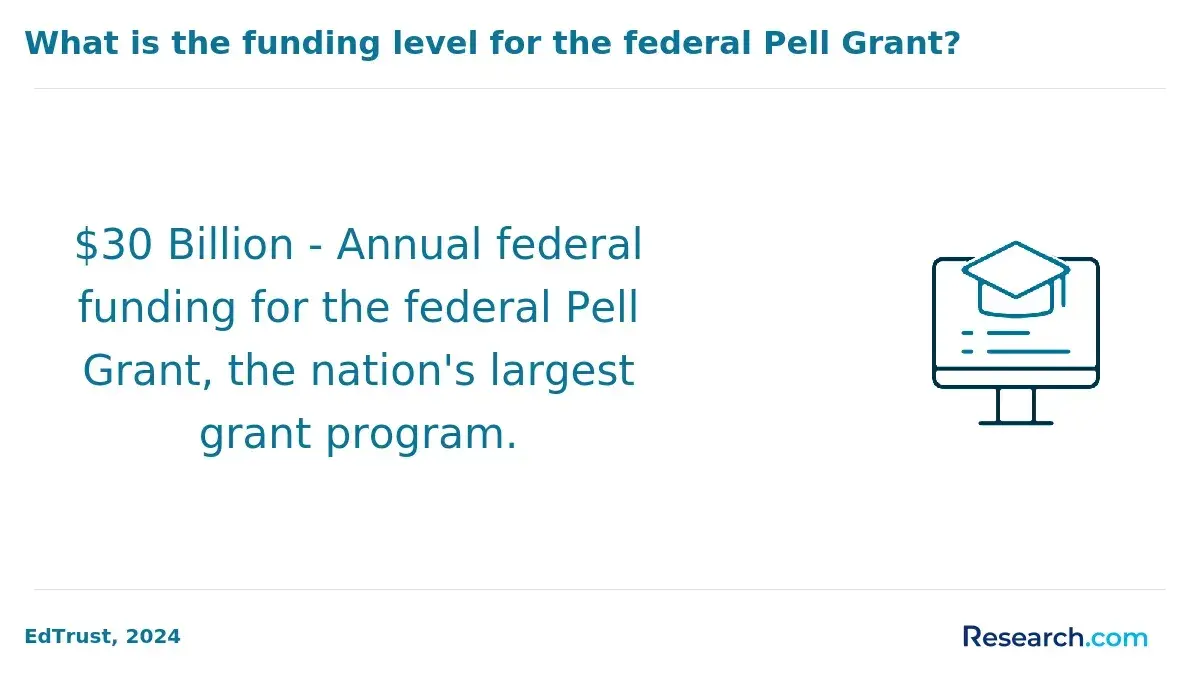
Yes, eligible students in qualifying online degree programs may use federal financial aid. Admissions requirements and aid eligibility are separate: not needing recommendations does not automatically affect eligibility for grants, loans, work-study, scholarships, or employer tuition assistance.
Complete the Free Application for Federal Student Aid (FAFSA) as early as possible and ask the financial-aid office whether your enrollment pattern meets the school's definition of full-time, half-time, or less-than-half-time study. Award amounts and loan eligibility depend on factors including financial need, dependency status, enrollment intensity, satisfactory academic progress, and annual or aggregate borrowing limits.
Before borrowing, compare these funding sources in the order that best protects your budget:
- Federal, state, institutional, and agriculture-related scholarships or grants that do not need repayment.
- Employer education benefits, workforce-development support, and military or veteran education benefits when applicable.
- Federal student loans after reviewing interest, origination fees, repayment obligations, and projected borrowing.
- Private loans only after understanding the credit, cosigner, variable-rate, and repayment terms.
Online learners exploring adjacent administrative healthcare training may also find schools that advertise aid options for medical billing and coding online schools. That is a different field, but the same rule applies: confirm institutional eligibility and compare net cost, not promotional claims.
Ask whether scholarships require recommendations even when admission does not. This is an easily missed distinction, particularly for departmental awards, honors programs, and competitive transfer scholarships.
A traditional bachelor's degree generally requires about 120 semester credits, but completion time depends on prior credit, course sequencing, prerequisite gaps, and whether labs or field experiences are offered every term. A full-time student beginning without transfer credit may need roughly four years, while a well-aligned transfer student in a bachelor's-completion format may finish sooner.
Online delivery can increase scheduling flexibility, but it does not remove the sequencing of science courses. Chemistry may precede nutrition or physiology, and internships may have seasonal or site-specific requirements. Students working full time should map required courses term by term before relying on an advertised completion timeline.
Compare the program calendar using these practical questions:
- Are courses offered in standard semesters, accelerated sessions, or both?
- Can students take required major courses every term, including summer?
- Which labs, practicums, or proctored exams require fixed dates or travel?
- What happens if a prerequisite course is unavailable or must be repeated?
- Can part-time students keep financial aid, advising access, and course priority?
Shorter healthcare credentials have different timelines and outcomes. For example, an medical assistant certification accelerated program is not comparable to a bachelor's degree in Animal Science, because the curriculum, credential level, and career preparation differ.
Many online Animal Science and agricultural-science programs accept transfer credit, but acceptance is not the same as applying credit to the major. A college may accept a course as elective credit while requiring you to retake a comparable biology, chemistry, nutrition, or production course for degree requirements.
Request an official transfer evaluation before committing whenever possible. Provide transcripts and, if asked, course descriptions or syllabi for science and agriculture courses. Students transferring from a community college should compare articulation agreements, residency requirements, maximum transferable credits, and minimum grades required for major courses.
These questions can prevent a costly enrollment surprise:
- How many credits are accepted, and how many apply specifically to general education, electives, and the Animal Science major?
- What is the minimum number of credits that must be earned from the degree-granting institution?
- Will prior laboratory courses satisfy online program prerequisites?
- Are credits from prior learning, military training, industry credentials, or exams accepted?
- Will a transfer evaluation be available in writing before enrollment and financial-aid disbursement?
Students comparing associate-level transfer routes in another science-based profession can see how degree pathways differ through an ASN program. Nursing has separate clinical and licensure rules, so its transfer policies should not be assumed to apply to Animal Science.
Keep copies of syllabi, catalog descriptions, lab outlines, and graded work from previous science courses. These materials can help an evaluator determine equivalency when course titles alone are unclear.
How Should You Compare Online Animal Science Degree Programs That Do Not Require Letters of Recommendation?
Compare programs based on career relevance and consumer transparency, not merely the easiest application. An online degree is a strong option when it gives you the science foundation, practical exposure, and schedule flexibility needed for your target role. It may be a poor fit if you need daily campus animal-facility access, intensive faculty-led research, or a pathway with location-specific professional requirements.
This decision framework focuses on factors that can materially affect the value of an online Animal Science degree.
| Comparison factor | What a strong answer looks like | Why it matters |
| Admissions policy | Written confirmation that letters are not required for your program, term, and applicant category | Avoids discovering additional requirements after starting an application |
| Accreditation and authorization | Recognized institutional accreditation and clear authorization to enroll students in your state | Supports aid access, transfer review, and degree credibility |
| Curriculum | Clearly listed Animal Science coursework and defined lab, internship, or experiential-learning arrangements | Determines readiness for the intended job or graduate program |
| Total cost | Written estimate based on credits remaining, fees, materials, and travel requirements | Prevents tuition-only comparisons that understate the price |
| Transfer policy | Official evaluation explaining how previous credits apply to degree requirements | Directly affects completion time and cost |
| Career support | Advising, internship guidance, employer connections, and graduate-school planning appropriate to online students | Helps turn coursework into relevant experience and next steps |
Animal Science can support work in livestock production, feed and nutrition businesses, animal welfare, breeding operations, agricultural sales, extension-related settings, research support, and farm or facility management. The BLS reported a median annual wage of $76,400 for U.S. agricultural and food scientists in May 2023; this broad category is useful salary context, not a typical starting salary for all Animal Science graduates. Pay varies by occupation, location, education, experience, and employer.
Before applying, contact the program with a concise set of questions: Is this the exact Animal Science degree I need? Are recommendation letters required anywhere in the admissions or scholarship process? How will practical requirements be completed where I live? What is my estimated net cost after transfer credit? The quality of those answers is an important signal of whether the program is prepared to support online learners.
Other Things You Should Know About Animal Science
Often, yes. No-recommendation admissions can be useful for adult learners without recent academic references. You will usually still need official transcripts and may need to document completion of science or math prerequisites.
No. A bachelor's degree in Animal Science can be one possible academic foundation for veterinary-school applicants, but it is not a veterinary credential and does not guarantee admission to veterinary school. Veterinary programs have their own prerequisite, testing, experience, and reference requirements.
Ask admissions whether "optional" means they are never considered, recommended for some applicants, or required for scholarships or special pathways. Request confirmation for your applicant type and intended start term in writing.
Official transcripts usually identify the institution and credential, while transcript practices vary by school. Employers are more likely to focus on the degree, relevant coursework, practical experience, technical skills, and the institution's reputation than on simplified admissions requirements.
- Illinois Online. (n.d.). Master of Animal Sciences. University of Illinois Urbana-Champaign. https://online.illinois.edu/online-programs/graduate-programs/master-of-animal-science/
- NC State University Department of Animal Science. (n.d.). Online learning: Master of Animal Science. North Carolina State University. https://cals.ncsu.edu/animal-science/students/online/
- Oregon State University Ecampus. (n.d.). Bachelor of Science in Animal Sciences online. Oregon State University. https://ecampus.oregonstate.edu/online-degrees/undergraduate/animal-sciences/
- Oregon State University Ecampus. (2025, November 21). Which online animal science or conservation degree should I choose? Oregon State University. https://ecampus.oregonstate.edu/news/explore-3-online-degrees-focused-on-animal-science-and-conservation/
- Purdue University College of Agriculture. (n.d.). Animal sciences - Online programs. Purdue University. https://ag.purdue.edu/department/ansc/online-programs.html