2027 Online Animal Science Master's Programs With University Scholarships: Awards, Eligibility & Tuition After Aid

Co-Founder and Chief Data Scientist
Graduate tuition can make an Animal Science master's difficult to finance without a plan: NCES reported average 2022-23 graduate tuition and fees of $12,596 at U.S. public institutions and $28,017 at private nonprofit institutions. University scholarships can reduce that cost, but online eligibility, enrollment requirements, and renewal terms vary widely. This guide is for prospective and current online Animal Science graduate students who want to compare school-based aid, calculate realistic costs after aid, and build a stronger funding strategy before enrolling.
Key Things to Know About Animal Science Master's Programs with Scholarships
- Online Animal Science master's students may qualify for university-wide graduate scholarships, college-of-agriculture awards, need-based aid, federal loans, and employer tuition assistance, but many awards exclude fully online enrollment or require at least half-time study.
- For context, NCES reported average U.S. graduate tuition and fees of $12,596 at public institutions and $28,017 at private nonprofit institutions for 2022-23; use each program's per-credit rate and mandatory fees to estimate your actual pre-aid cost.
- Prioritize renewable awards and aid that can be stacked, then confirm in writing whether the award applies to online tuition, course fees, summer terms, and the specific Animal Science degree pathway.
What online Animal Science master's programs offer university scholarships?
Fully online, degree-specific Animal Science scholarships are less common than broad university graduate scholarships. Many schools administer awards through a college of agriculture, graduate school, foundation, or continuing and online education unit instead of labeling them as "online Animal Science scholarships." That means eligibility must be checked at both the program and scholarship level.
The following options illustrate where an applicant may find an online-compatible funding path. Availability, award values, deadlines, and online-student eligibility can change by term, so treat this as a comparison starting point rather than an award guarantee.
| University and online pathway | Likely university funding route to investigate | Important verification point |
| Kansas State University, online graduate study in Animal Sciences and Industry | Graduate School, College of Agriculture, departmental, and Global Campus funding pages | Confirm whether the particular scholarship permits distance students and whether the degree is classified as eligible. |
| University of Nebraska-Lincoln, distance graduate options related to Animal Science | Graduate Studies, College of Agricultural Sciences and Natural Resources, and departmental awards | Ask whether online-only enrollment affects assistantship or scholarship consideration. |
| Texas A&M University, online agriculture graduate pathways with Animal Science coursework or emphasis options | Graduate school, college, department, and employer-partnership assistance | Verify the exact degree title, residency classification, and whether the award applies to distance-delivered courses. |
Choose a program only after comparing the written net-cost estimate, not just the scholarship listing. A lower advertised tuition can still be the more expensive option if it has high distance-learning fees or offers little institutional aid.
Applicants comparing financial-aid rules across clinical and science-based graduate pathways can also see how program length affects borrowing by reviewing shortest DNP programs online. The fields differ, but the cost-planning principle is the same: compare total required credits, not only tuition per credit.
What is the average tuition for Animal Science master's programs before aid?
There is no single national average specifically for online Animal Science master's tuition because programs differ in credit requirements, residency pricing, delivery fees, and whether laboratory or campus experiences are required. The most useful national benchmark is NCES's 2022-23 average graduate tuition and fees: $12,596 at public institutions and $28,017 at private nonprofit institutions. Those figures cover all graduate fields and delivery formats, so they are a budgeting reference rather than an Animal Science price quote.
Calculate each school's pre-aid cost by multiplying required credits by the applicable online per-credit tuition, then adding mandatory university, distance-learning, technology, course, and travel costs. Do not assume an online program eliminates all campus expenses; some animal production, nutrition, reproduction, or research components may require travel or intensive sessions.
This comparison separates charges students commonly overlook when comparing offers.
| Cost component | How it affects your estimate | Question to ask |
| Tuition | Usually the largest direct cost and may be charged per credit or by term. | Is the online rate the same for every required course? |
| Mandatory fees | May be charged per term, per credit, or per course and may not be covered by scholarships. | Which fees are excluded from institutional awards? |
| Residency or field experiences | Can add travel, lodging, supplies, animal-handling, or facility costs. | How many in-person requirements are mandatory? |
| Lost income or reduced work hours | Can materially change affordability for students who reduce employment to study. | What course load is realistic while working? |
Ask for a term-by-term billing estimate before accepting admission. This makes it easier to compare a scholarship that is paid annually with tuition that is billed every semester.
What types of financial aid and scholarships are available for Animal Science master's programs?
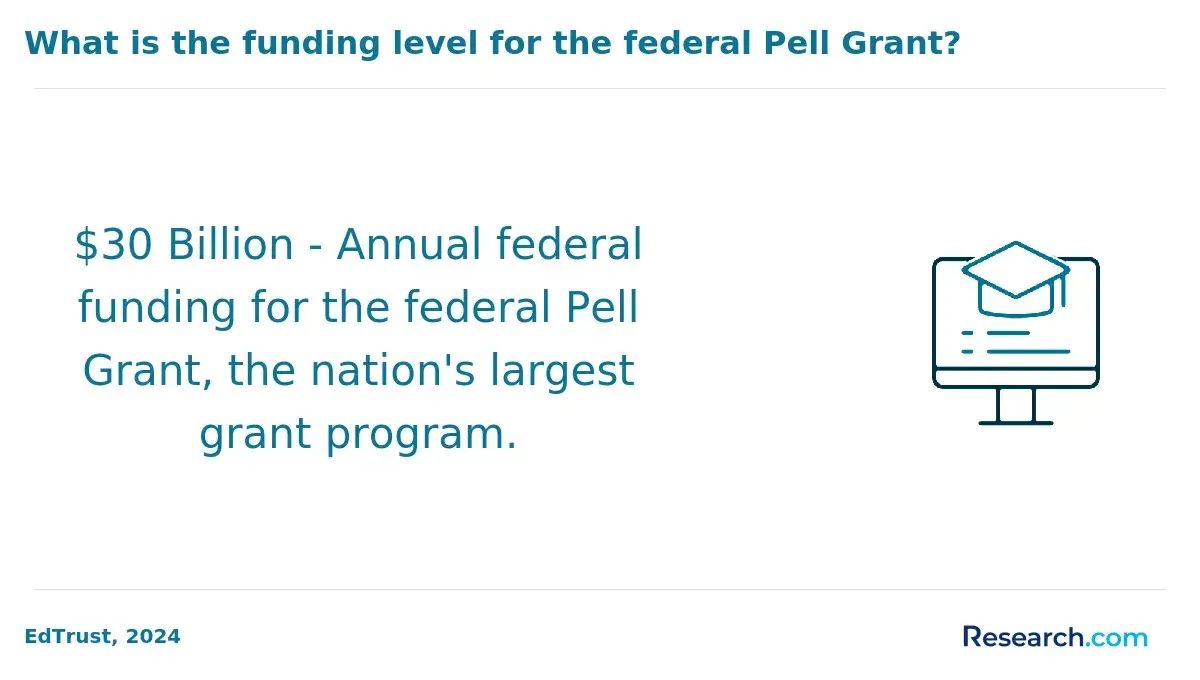
"Scholarship" usually means gift aid that does not need to be repaid, while grants are typically need-based gift aid. Financial aid can also include loans, assistantships, work opportunities, and employer benefits. For online students, the key distinction is whether aid is restricted by program, modality, enrollment level, residency, academic area, or financial need.
The main funding categories below serve different situations, so a balanced package is often safer than relying on one competitive award.
| Funding type | Best fit | Typical limitation |
| University merit scholarship | Students with strong academic records, relevant experience, leadership, or a compelling professional goal | Often competitive, limited, and sometimes restricted to specific terms or enrollment types |
| Need-based grant or institutional aid | Students with demonstrated financial need who complete required aid forms | May depend on citizenship status, enrollment, and available institutional funds |
| Departmental or agriculture foundation award | Students whose background matches livestock, dairy, equine, poultry, nutrition, production, or research criteria | May require a separate application and may favor a narrow area of study |
| Graduate assistantship | Students able to complete research, teaching, extension, or service work | Frequently unavailable to fully online students or tied to campus presence |
| Employer tuition assistance | Working professionals whose degree supports their current role | May require advance approval, continued employment, or repayment if leaving the employer |
| Federal Direct Unsubsidized or Graduate PLUS loans | Eligible students who need predictable financing after gift aid | Must be repaid and may increase total borrowing costs |
File the FAFSA when eligible even if you expect a merit award. It can establish eligibility for federal loans and need-based institutional aid, and some universities use it to make their own funding decisions.
Students exploring several health and science education routes should avoid assuming that admission requirements and financial aid rules transfer from one field to another; for example, nursing schools that don't require TEAS or HESI have admissions structures that are separate from Animal Science graduate scholarship criteria.
How much do Animal Science master's scholarships typically cover?
Animal Science master's scholarships commonly reduce only part of tuition rather than covering the entire degree. A "full scholarship" may mean tuition only, while a "full cost of attendance" package can also include fees, books, housing, and other allowable education costs. Read the award letter closely before treating either description as a complete funding solution.
Use the award's coverage basis to compare offers fairly.
| Award structure | What it may reduce | Net-cost implication |
| Fixed annual or term award | A stated amount applied to the student account | Its value can shrink relative to total cost if tuition rises or the program takes longer than expected. |
| Per-credit tuition scholarship | A portion of eligible instructional charges | Useful for part-time online students, but confirm whether all required courses qualify. |
| Tuition waiver | Some or all tuition charges | Fees, books, travel, and living expenses may remain the student's responsibility. |
| Assistantship package | May include compensation and, at some institutions, tuition support | Can substantially improve affordability but often requires work hours and campus availability. |
To estimate net tuition after aid, subtract confirmed gift aid from eligible billed charges. Keep loans separate from scholarships in your comparison because a loan reduces the amount due now, not the amount ultimately owed. If two programs have similar sticker prices, a renewable partial scholarship with clear terms may be more valuable than a larger one-time award.
Do not use an outside scholarship amount to assume matching university aid. Some institutions reduce other institutional grants when external awards bring total aid above the school's cost-of-attendance limit.
Who is eligible for Animal Science master's scholarships?
Eligibility is determined by the individual award, not by the Animal Science degree alone. A student can be admitted to an online master's program and still be ineligible for a scholarship because of enrollment status, academic criteria, residency, timing, or a modality exclusion.
Most university scholarship reviews consider some combination of these requirements.
- Admission to an eligible graduate program by the scholarship deadline, not merely a submitted application.
- A minimum graduate or undergraduate GPA, academic performance in science coursework, or evidence of research potential for merit-based awards.
- Enrollment at a specified level, commonly half-time or full-time, during the term the award is disbursed.
- Online, hybrid, campus-based, state-residency, citizenship, or location rules stated in the scholarship terms.
- A declared Animal Science-related specialization, career interest, producer background, industry involvement, or demographic criterion when the donor restricts the award.
- FAFSA or institution-specific financial information for need-based aid.
Working professionals should particularly check whether part-time enrollment is eligible. Employer reimbursement can be a stronger primary funding source when a school's best institutional awards require full-time study or campus assistantship work.
Comparable online professional programs may have their own admissions filters; resources on an ultrasound tech school online illustrate why applicants should confirm each program's delivery and participation requirements instead of assuming all online education follows one model.
What is the application process for Animal Science master's scholarships?
Start the scholarship process before submitting your final enrollment decision. Many university awards have deadlines earlier than the graduate admission deadline, and some require a separate application after admission.
A practical application sequence helps prevent missed opportunities and incomplete files.
- Make a spreadsheet with each school, scholarship name, deadline, online eligibility rule, renewal condition, required enrollment level, and contact person.
- Apply for admission early enough to receive the student identification or program acceptance required for scholarship access.
- Complete the FAFSA if eligible and submit any institutional financial-aid forms by the priority deadline.
- Request official transcripts and recommendation letters well before deadlines, choosing recommenders who can address academic ability, animal-industry experience, or research readiness.
- Write a tailored statement connecting your Animal Science focus to a defined career goal, such as livestock production, nutrition, animal welfare, extension, food systems, or research.
- Upload required materials, verify submission status, and save copies of confirmations and award terms.
- After receiving offers, ask the financial-aid office for a written explanation of what charges each award covers and whether it can be renewed or combined with other aid.
Common mistakes include reusing a generic essay, submitting after the priority date, and failing to disclose outside aid when required. Another costly error is accepting an award without checking whether the stated amount is split across terms or reduced for part-time enrollment.
Program pacing can affect aid eligibility across fields. Readers evaluating time-to-completion trade-offs in another graduate pathway can review nurse practitioner courses, while remembering that Animal Science scholarship rules remain institution-specific.
Do online Animal Science students qualify for the same aid as on-campus students?
Online Animal Science students can qualify for many of the same federal aid programs and university-wide scholarships as campus students, provided the institution and program are eligible and the student meets the award's enrollment requirements. However, equal access is not universal. Departmental awards, donor-funded scholarships, tuition waivers, and assistantships may explicitly require campus participation, local residency, or in-person research work.
Before applying, ask the financial-aid office these questions in writing.
- Is a fully online student in my exact Animal Science master's program eligible for this scholarship?
- Does the award require full-time enrollment, and how does the school define full-time graduate study?
- Does it cover online-course fees, technology fees, and required residencies, or tuition only?
- Can distance students receive graduate assistantships, and are any campus hours required?
- Will taking one course in a term reduce, delay, or cancel the award?
Do not interpret "available to graduate students" as confirmation of online eligibility. Request the policy page or award terms and retain the response. This is especially important when comparing a flexible online format with a campus program that offers more assistantship access.
Can Animal Science master's students combine multiple scholarships and grants?
Yes, Animal Science master's students can often combine university scholarships, private scholarships, grants, employer reimbursement, savings, and federal loans. This approach can reduce borrowing more effectively than waiting for one large award. The limiting factor is usually the university's packaging policy and the federal cost-of-attendance limit, not a blanket ban on receiving multiple awards.
Stacking is most useful when each source fills a different gap.
| Combination | Potential advantage | Watch for |
| University merit award plus external scholarship | May reduce tuition and fees without adding debt | The school may adjust other institutional aid after receiving outside funds. |
| Employer reimbursement plus partial scholarship | Can lower out-of-pocket cost for employed students | Employer payment timing, grade requirements, tax treatment, and work-commitment terms. |
| Need-based grant plus federal loan | Gift aid reduces the amount that must be borrowed | Loan eligibility and total aid cannot exceed allowable educational costs. |
| Assistantship plus scholarship | May improve affordability and add relevant experience | Workload, campus obligations, and whether the school permits both awards. |
Report every outside award to the financial-aid office promptly. Ask whether the school will first reduce loans, work-study, or institutional grant aid if your package must be adjusted. In many cases, requesting loan reduction first is sensible because it preserves gift aid, but the school's policy controls the final packaging decision.
What are the requirements to maintain scholarship status in Animal Science master's programs?
Scholarships are commonly conditional for more than one term. Renewal requirements may include a minimum GPA, satisfactory academic progress, continuous enrollment, timely degree progress, and compliance with university conduct standards. The award letter is the controlling document; general scholarship policies may not capture donor-specific requirements.
Use these habits to protect renewable funding throughout the degree.
- Save the original award letter and note the minimum GPA, required credits, renewal application date, maximum number of terms, and any service or reporting obligation.
- Check your academic standing before withdrawing from or changing a course, because reduced enrollment can affect both current disbursement and future renewal.
- Meet with the program adviser before taking a leave of absence, changing concentrations, or extending the degree timeline.
- Complete any renewal form, FAFSA, thank-you letter, donor update, or progress report by the stated deadline.
- Notify financial aid about external scholarships, employer payments, or assistantship changes that could alter the aid package.
A common red flag is language stating that renewal is "subject to available funds." This does not necessarily make an award unreliable, but it means students should maintain a backup plan rather than budgeting as if every future-year payment is guaranteed.
What tips can help Animal Science master's students secure more scholarship funding?
Students improve their funding position by treating scholarships as part of program selection rather than a last-minute discount. Apply broadly across university, departmental, professional, employer, and community sources, but prioritize awards whose criteria genuinely match your record and enrollment plan.
These strategies can make applications more competitive and make offers easier to compare.
- Apply early for admission because scholarship committees may review only admitted applicants or make awards on a rolling basis.
- Match each personal statement to the donor's purpose and connect your goals to specific Animal Science outcomes instead of submitting a generic career narrative.
- Use recommenders who can provide concrete evidence of academic performance, research skill, livestock or animal-care experience, leadership, or industry impact.
- Ask current employers about tuition reimbursement before choosing a school, including grade thresholds, annual caps, preapproval, and post-completion employment obligations.
- Compare scholarship offers by total remaining cost, including fees and required travel, rather than by the award amount alone.
- Request reconsideration respectfully if a competing offer or changed financial circumstance materially affects your ability to enroll; provide documentation and ask whether additional institutional funding is available.
Avoid paying application fees to entities that promise guaranteed scholarships, and do not provide financial information through unofficial channels. University financial-aid offices can confirm whether an award notice is legitimate.
If you are comparing the economics of multiple online healthcare and science education routes, online accelerated nursing programs for non nurses can provide a useful contrast in program intensity; it should not be used to predict Animal Science scholarship eligibility or costs.
Other Things You Should Know About Animal Science
Ask each university for its award notification timeline and enrollment deposit deadline. If deadlines conflict, request a short extension in writing. Do not assume an admission offer includes scholarship funding unless the award is confirmed separately.
Scholarship tax treatment depends on how funds are used and your individual circumstances. Amounts used for qualified tuition and required course materials may be treated differently from funds used for living expenses. Consult a qualified tax professional or IRS guidance for your situation.
Some university and donor scholarships are open to international students, while federal student aid generally has different eligibility rules. Check citizenship and residency language for every award and ask whether the online program permits enrollment from your country or location.
Request a detailed cost breakdown, ask about departmental awards and payment plans, check employer assistance, and consider reducing borrowing by taking a manageable part-time load. Compare the total cost and completion timeline with other accredited programs before committing.
References
- Private vs. Public Colleges: Differences, Pros & Cons https://collegewise.com/blog/private-vs.-public-colleges-differences
- Private vs. Public Universities https://www.callutheran.edu/guides/private-public-universities/
- Lallemand Animal Nutrition Scholarship https://www.lallemandanimalnutrition.com/en/united-states/lallemand-animal-nutrition-scholarship-program/
- Top Veterinary & Animal Science Scholarships https://www.vettechcolleges.com/blog/50-veterinary-animal-science-scholarships
- 30 Scholarships for Animal Lovers | Imagine Scholarships https://imaginescholarships.com/30-scholarships-for-animal-lovers/
- Average Private vs Public College Tuition [2025]: Data Analysis https://educationdata.org/private-vs-public-college-tuition