2027 Are There Any One-Year Online Animal Science Degree Programs Worth Considering?

Co-Founder and Chief Data Scientist
If you are looking for a one-year online animal science degree, the most important thing to know is this: the fast option usually is not a full degree. In the United States, accredited animal science degrees typically take longer because the field combines biology, nutrition, genetics, production systems, welfare, and practical animal-handling skills. A one-year online pathway is more commonly a certificate, a short professional program, or a completion route for students who already have substantial college credit.
That distinction matters. A certificate can help you build job-ready knowledge quickly, strengthen a resume, or test whether animal science is the right field before committing to a longer program. A full degree, however, is usually the better fit if you plan to pursue veterinary school, research, advanced agriculture roles, graduate study, or positions that expect broad scientific training.
This guide explains what one-year online animal science programs can and cannot do, how to evaluate available options, what they cost, what admissions requirements to expect, and how to decide whether a short online program is enough for your career goals.
Key Points About One-Year Online Animal Science Degree Programs
- One-year online Animal Science degrees are rare and often consist of certificate or diploma programs rather than full bachelor's degrees, focusing on practical skills over comprehensive theory.
- Compared to traditional degrees, these programs offer flexible schedules but limited lab work and hands-on animal experience, which are crucial in this field.
- Students should verify accreditation and industry recognition, as Animal Science careers often require thorough scientific training and internships typically absent in accelerated online formats.
Is It Feasible to Finish a Animal Science Degree in One Year?
For most students, finishing a complete accredited animal science degree online in one year is not realistic. Animal science is a science-based and applied field, and degree programs normally require a sequence of courses in biology, genetics, nutrition, physiology, animal management, and production systems. Many programs also expect labs, field experiences, internships, or other applied learning that cannot be compressed easily into a single year.
Most accredited animal science degrees take two to four years, depending on the credential level, transfer credits, course load, and program format. A student who starts from zero college credits should expect a longer timeline. A student with substantial prior coursework may finish faster through a degree-completion program, but that is different from earning the entire degree in one year.
Where one-year online options do exist, they are usually certificates rather than degrees. Programs such as those offered by Blue Ridge Community College and the University of Nebraska focus on targeted skills in animal care, husbandry, nutrition, management, or related technical areas. These can be useful for workforce entry, career advancement, or continuing education, but they do not replace the depth of a full associate or bachelor’s degree.
The feasibility also depends on your goal. If you want an entry-level animal care role or a short academic credential, a one-year online certificate may be practical. If you want a degree that supports veterinary school preparation, graduate study, research, or higher-level agriculture careers, a one-year fully online path is usually too limited.
Are There Available One-Year Online Animal Science Degree Programs?
There are currently no accredited one-year online Animal Science degree programs in the United States. Students may find short online animal science programs, but these are typically certificates, not associate or bachelor’s degrees. This difference is important for transfer credit, graduate school eligibility, employer expectations, and long-term career planning.
Most online animal science degrees, including associate and bachelor’s programs, require two or more years of study when taken full-time. Bachelor’s programs are usually broader and include general education, science prerequisites, animal systems coursework, and electives that support career or graduate-school goals.
Shorter certificate programs can still be valuable if you need a focused credential. They may help you learn basic animal care principles, strengthen your application for related jobs, or prepare for further study. Students comparing pathways may also benefit from reviewing a list of college majors to see how animal science overlaps with agriculture, biology, veterinary-related study, and environmental fields.
| Program or pathway | Credential type | Typical use |
| Blue Ridge Community and Technical College - Animal Science Certificate | 1 year, online certificate | Builds knowledge in animal welfare, husbandry, and basic competencies for animal care roles or further study. |
| University of Nebraska-Lincoln - Animal Science Management Online Certificate | Online certificate | Focuses on nutrition, growth, reproduction, genetics, and management principles for non-degree seekers and working professionals. |
| Oregon State University - Online Bachelor of Science in Animal Science | Bachelor’s degree | Not a one-year option; provides broader preparation in nutrition, breeding, production systems, and equine science for advanced animal agriculture careers or veterinary school preparation. |
Before enrolling, confirm the exact credential name, accreditation status, number of required credits, transfer policies, and whether the program is eligible for financial aid. A program advertised as “fast” or “online” may still have in-person requirements, limited transferability, or a credential level that does not match your career plan.

Why Consider Taking Up One-Year Online Animal Science Programs?
A one-year online animal science program can make sense when your goal is targeted skill-building rather than earning a full degree. These programs are best suited for students who want a faster introduction to animal care, working adults who need flexible coursework, and professionals in agriculture or animal services who want to update specific knowledge without committing to a multi-year program.
The main advantage is focus. Instead of spending several years on a full degree plan, a certificate can concentrate on practical areas such as animal welfare, husbandry, nutrition, reproduction, genetics, or management. That can be useful if you already work with animals and need formal coursework to support a promotion, career change, or future academic plan.
- Faster skill development: A one-year format can help you build foundational knowledge more quickly than a traditional degree. This is useful for students seeking entry-level exposure to animal care, livestock management, shelter work, or related support roles.
- Flexible online delivery: Online coursework can be easier to manage around work, family responsibilities, or location barriers. This matters for rural students, working adults, and learners who do not live near a college with an animal science program.
- Lower commitment than a full degree: A certificate can help you test your interest in animal science before investing in a longer associate or bachelor’s program.
- Career-focused curriculum: Programs such as the Blue Ridge CTC Certificate in Animal Science emphasize animal welfare, husbandry, and technical competencies that may connect directly to animal care roles.
- Useful bridge to further education: A short program may help you prepare for a longer degree, especially if you need a structured introduction before transferring into a more comprehensive pathway.
The best candidates are realistic about what a one-year program can provide. It can strengthen knowledge and employability in some settings, but it may not meet requirements for veterinary school, research positions, licensure-related tracks, or jobs requiring a bachelor’s degree. If your priority is a shorter credential with manageable academic demands, comparing animal science certificates with options such as what is the easiest associates degree to get online may help you weigh speed, rigor, and career value.
What Are the Drawbacks of Pursuing One-Year Online Animal Science Programs?
The biggest drawback is that one-year online animal science programs usually do not provide the same academic depth, practical experience, or career mobility as a full degree. A short program may be efficient, but it can also leave gaps if your target role expects extensive laboratory work, supervised animal handling, research preparation, or a bachelor’s-level science background.
- Limited degree value: Since one-year options are typically certificates, they may not satisfy employers or graduate programs that require an associate or bachelor’s degree.
- Heavy workload in a short period: Accelerated study can move quickly through topics such as genetics, physiology, and nutrition. Students who need more time to absorb scientific material may find the pace difficult.
- Less hands-on training: Animal science depends heavily on observation, handling, facilities, labs, and field-based learning. Online programs may use videos, simulations, local experiences, or assignments, but these may not fully replace in-person practice.
- Fewer built-in internships or field placements: A compressed program may leave little room for meaningful internships, farm experience, shelter work, or research exposure unless you arrange those opportunities separately.
- Reduced networking: Online and accelerated formats can limit informal contact with faculty, classmates, alumni, and local industry partners.
- High self-management demands: Students need strong time management, consistent study habits, and the ability to complete technical coursework without frequent in-person support.
A common mistake is choosing a short program because it is fast, then later discovering it does not meet the requirements for a desired job or next degree. Before enrolling, compare the curriculum against your actual goal. If the role requires animal handling experience, ask whether the program includes supervised practical components or whether you will need to add volunteer work, employment, or internships on your own.
What Are the Eligibility Requirements for One-Year Online Animal Science Programs?
Eligibility requirements depend on the credential. One-year online animal science options are usually certificates, while faster degree completion depends on previously earned credits. Graduate-level one-year options have different requirements and are designed for students who already hold a relevant bachelor’s degree.
Because accelerated formats move quickly, schools often want evidence that students are academically prepared. That may include prior coursework, a minimum GPA, transfer credits, or proof of readiness for college-level science courses.
- Certificate Programs: These usually require a high school diploma or GED. The one-year Animal Science Certificate at Blue Ridge CTC is an example of a workforce-oriented option that does not necessarily require prior college credits or animal science experience.
- Accelerated Bachelor's degree Completion Tracks: These are not true one-year degrees for first-time college students. They typically require substantial prior college credits and may allow transfer of up to 90 credits toward the degree. Students coming from an accelerated associate degree program or another college pathway should confirm how many credits will transfer before applying.
- Graduate-Level One-Year Programs (M.S. in Animal Science): These generally require a bachelor’s degree in Animal Science or a related field, a minimum undergraduate GPA typically around 3.0, GRE scores for research-intensive options, letters of recommendation, and a statement of research interests.
- Additional Requirements: Some programs may require placement exams, background checks, immunization documentation, or other screening if the curriculum includes clinical, field, or practical components.
Applicants should also check technology requirements, course scheduling expectations, and whether any in-person labs, exams, internships, or practicums are required. A program described as online may still include local or campus-based components.
What Should I Look for in One-Year Online Animal Science Degree Programs?
Because true one-year online animal science degrees are not generally available, evaluate programs by credential accuracy, academic quality, practical relevance, and transfer value. A strong program should clearly state whether it is a certificate, degree, degree-completion pathway, or graduate program. If the website is vague, ask admissions for written clarification before applying.
- Accreditation for One-Year Online Animal Science Programs: Look for accreditation from recognized regional bodies such as SACSCOC, HLC, or NWCCU. Accreditation affects financial aid eligibility, transfer credit, employer recognition, and access to advanced study.
- Clear credential title: Confirm whether you will earn a certificate, associate degree, bachelor’s degree, or graduate credential. Do not assume a short online program is a degree unless the school explicitly states it.
- Faculty Expertise: Review whether instructors have relevant academic or industry experience in animal nutrition, genetics, welfare science, livestock production, companion animal care, or related areas.
- Admission Requirements for One-Year Animal Science Degrees: Check prerequisites, transfer-credit rules, minimum GPA expectations, standardized test requirements, and any required science coursework.
- Course Delivery Format: Determine whether courses are synchronous, asynchronous, or hybrid. Also ask about labs, fieldwork, proctored exams, and any required campus visits.
- Tuition and Financial Aid: Tuition can range significantly, from around $107 to over $1,300 per credit. Calculate the full cost, not just the per-credit rate. Include fees, books, technology charges, travel for any in-person requirements, and whether the program qualifies for FAFSA or institutional aid. Students comparing affordable options can review low tuition online colleges that accept fafsa.
- Curriculum Alignment: Match the coursework to your goal. A program focused on livestock production may not be ideal for a student interested in companion animals, conservation, veterinary preparation, or animal behavior.
- Practical experience options: Ask whether the program helps students arrange internships, local placements, volunteer experiences, or supervised animal-handling opportunities.
- Transfer and progression pathways: If you may pursue a longer degree later, confirm whether credits transfer into an associate or bachelor’s program and whether the school has articulation agreements.
A good program should help you move toward a specific next step. If you cannot connect the curriculum to a job, transfer pathway, graduate program, or skill goal, keep comparing options.
How Much Do One-Year Online Animal Science Degree Programs Typically Cost?
One-year online programs in Animal Science, including certificates, generally cost between $3,000 and $12,000 in total tuition across the United States. The final price depends on the institution, number of credits, residency status, fees, and whether the program is a certificate or part of a longer degree pathway.
Certificate programs often require fewer credits than a full degree, which is why they can be more affordable. The total credit requirement usually ranges from 24 to 36 credits for certificates. Some certificate programs at community colleges charge $100 to $400 per credit hour.
Costs can rise if the school charges separate online learning fees, lab fees, technology fees, textbook or course-material costs, or travel expenses for any required in-person component. Students should also check whether tuition differs for in-state and out-of-state learners, especially at public institutions.
| Cost factor | Why it matters |
| Per-credit tuition | Determines the core tuition expense and can vary widely by institution type and residency status. |
| Total credits | A certificate requiring 24 to 36 credits will cost less than a longer degree at the same per-credit rate. |
| Fees and materials | Online, lab, technology, textbook, and course-material costs can increase the total price. |
| Financial aid eligibility | Not every short program qualifies for the same aid as a degree program, so students should confirm aid options before enrolling. |
By comparison, a traditional online bachelor's degree in Animal Science that takes about four years to complete often costs between $30,000 and $60,000 or more. A one-year certificate can be a lower-cost way to build knowledge quickly, but it should be judged by its career value and transferability, not price alone.
What Can I Expect From One-Year Online Animal Science Degree Programs?
Students in one-year online animal science programs should expect a fast, focused curriculum rather than the broad training of a full degree. Most programs are certificate-based and designed to introduce core concepts that apply to animal care, agriculture, husbandry, and management.
Coursework may cover animal nutrition, genetics basics, behavior, reproduction, welfare, husbandry, and production or management principles. The Blue Ridge CTC Animal Science Certificate, for example, emphasizes animal welfare and specialized husbandry skills.
Online delivery may include recorded lectures, readings, discussion boards, case studies, virtual simulations, industry videos, virtual field trips, and applied assignments. Some programs may encourage or require local experiences, but direct animal handling is often more limited than in campus-based programs.
You should also expect a demanding schedule. A one-year format compresses material into a shorter timeline, so staying current with readings, assignments, exams, and projects is essential. Students who work full time should review weekly time expectations before enrolling.
Graduates are typically prepared for entry-level roles, skill enhancement, or continued study rather than advanced scientific or professional roles that require a bachelor’s degree or graduate education. If your goal is to transfer into a longer program, choose a school with recognized accreditation and clear transfer policies. Students comparing reputable online pathways can also review information about a national accredited college.
Are There Financial Aid Options for One-Year Online Animal Science Degree Programs?
Financial aid may be available for one-year online animal science programs, but eligibility depends on the school, credential level, enrollment status, and whether the program is approved for aid. Students should not assume that every certificate qualifies for the same financial aid as a degree program.
- Federal Aid: Completing the Free Application for Federal Student Aid (FAFSA) is the standard first step for determining eligibility for federal loans and grants. Pell Grants can offer up to $7,395 annually and generally do not require repayment unless specific conditions apply.
- State and Institutional Aid: Some states provide scholarships and grants that can apply to online education. Colleges may also offer need-based or merit-based aid for eligible online students.
- Scholarships and Employer Assistance: Students in science-related fields may qualify for targeted scholarships such as the Novus Biologicals Scholarship. Working adults should also ask whether their employer offers tuition reimbursement or professional development funding.
Before choosing a program, contact the school’s financial aid office and ask three direct questions: whether the program is aid-eligible, what total attendance costs include, and whether dropping below a required course load would affect aid. For short accelerated programs, pacing and enrollment status can matter.
What Animal Science Graduates Say About Their Online Degree
- Truce: "Completing the one-year online Animal Science degree allowed me to quickly enhance my professional skills without sacrificing my full-time job. The accelerated pace was intense but rewarding, and the average cost made this degree a smart investment in my future career in veterinary tech. I highly recommend this program to anyone looking to move forward fast!"
- Jorge: "Pursuing the competency-based Animal Science degree online gave me the flexibility to learn at my own speed while ensuring I truly mastered essential topics. The curriculum was comprehensive yet manageable within a year, and I appreciated how it aligned with industry standards, making me confident in my career switch to animal nutrition. The cost was reasonable compared to traditional programs, which made it accessible and worth every penny."
- Luca: "The focused year-long Animal Science program offered online was perfect for balancing life and education. I valued the real-world applications we covered and saw immediate improvement in my understanding of animal behavior and welfare. The affordable tuition and efficient completion timeline made it a practical choice that's already advancing my work in agricultural research."
Student experiences can be helpful, but they should not replace program research. Before enrolling, verify the credential type, accreditation, curriculum, cost, transfer options, and whether the program provides enough hands-on learning for your intended career path.
Other Things You Should Know About Pursuing One-Year Animal Science Degrees
In 2027, online Animal Science students can gain practical experience through virtual lab simulations, collaborative projects with local farms, and internships arranged with animal care facilities. Online programs often partner with local institutions to provide practical exposure and hands-on training opportunities despite the digital format.
In 2027, online Animal Science degrees are recognized by accrediting bodies such as the Distance Education Accrediting Commission (DEAC) and regional accreditors like the Southern Association of Colleges and Schools Commission on Colleges (SACSCOC). These accreditations ensure program credibility and quality.
A one-year online Animal Science degree in 2027 typically covers core subjects like animal biology, nutrition, genetics, and welfare. These courses aim to provide foundational knowledge crucial for understanding animal science principles and practices in various industries and research settings.
References
- Discover the Online Vet Tech Schools with Financial Aid https://www.edumed.org/online-schools/vet-tech-programs/financial-aid/
- What Are the Pros and Cons of Online Vet Tech School? - College of Veterinary Medicine - Purdue University https://vet.purdue.edu/nursing/articles/what-are-the-pros-and-cons-of-online-vet-tech-school.php
- Online Graduate Programs in Animal Welfare & Behavior https://www.vet.upenn.edu/programs/graduate-awb/
- Financial aid and scholarship opportunities https://vetmed.umn.edu/dvm/admissions/financial-aid
- MPS in Animal Science and Behavior https://unity.edu/knowledge-articles/mps-in-animal-science-and-behavior/
- Online Pre-Reqs pros and cons | Student Doctor Network https://forums.studentdoctor.net/threads/online-pre-reqs-pros-and-cons.1501397/
- Scholarships and Financial Aid https://animalscience.unl.edu/academic-programs/scholarships-and-financial-aid/
- Bachelor of Animal Science https://study.csu.edu.au/courses/bachelor-animal-science
- Home https://www.husson.edu/online/online-degrees/bachelor-of-science-in-animal-care-and-behavior
- USDA Economic Research Service. Farm Sector Income Forecast. USDA Economic Research Service.
- Bureau of Labor Statistics. Employed persons by detailed industry, sex, race, and Hispanic or Latino ethnicity: 2024. BLS.
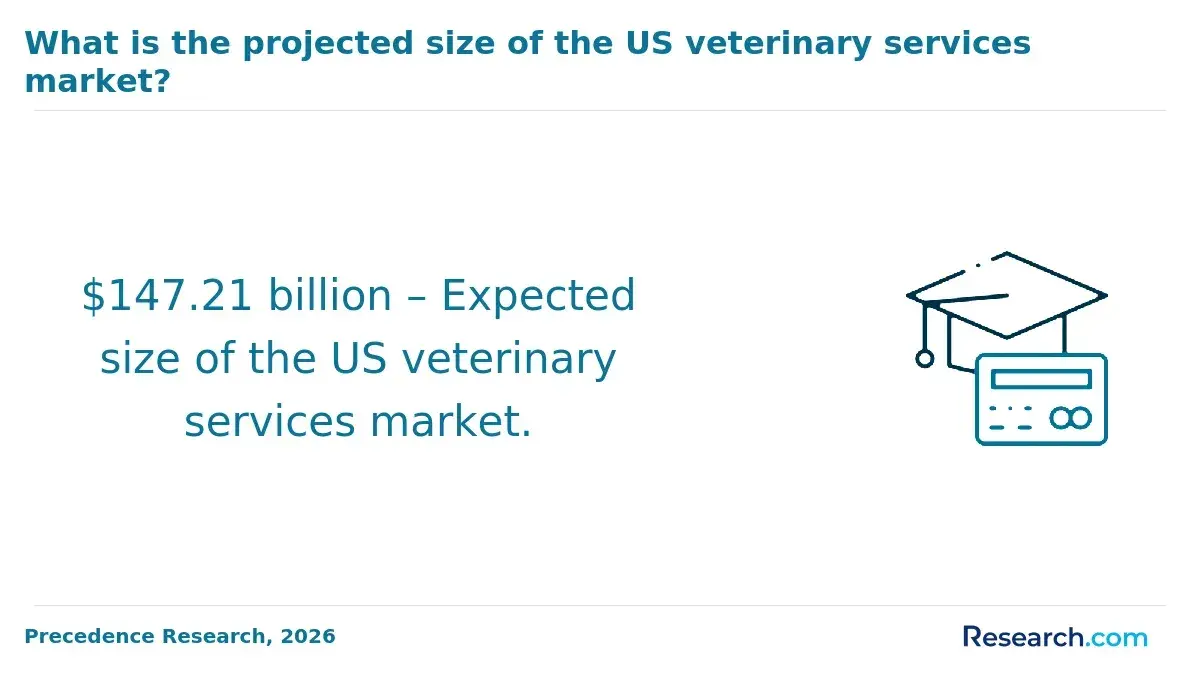
- Precedence Research. Veterinary Services Market. Precedence Research.