2027 Online Animal Science Degree Programs With University Scholarships: Awards, Eligibility, and Net Cost

Co-Founder and Chief Data Scientist
An online Animal Science degree can look affordable until technology fees, laboratory courses, travel requirements, and limited online-only scholarship eligibility are added. For context, the maximum Federal Pell Grant for the 2024-25 award year was $7,395, but eligibility depends on financial need and enrollment details.
This guide is for prospective, transfer, adult, and military students comparing university aid. Learn how institutional scholarships work, what award terms to verify, and how to calculate the amount you may actually pay rather than relying on published tuition or a headline scholarship.
Key Things You Should Know
- Online Animal Science students may be eligible for university-funded merit or need-based scholarships, but many awards require degree-seeking status, a minimum GPA, a separate application, or full-time enrollment; online enrollment alone does not establish eligibility.
- A scholarship's value depends on the total bill: subtract renewable institutional awards, eligible federal and state grants, and outside scholarships from tuition, mandatory fees, course materials, and any required in-person laboratory or practicum travel costs.
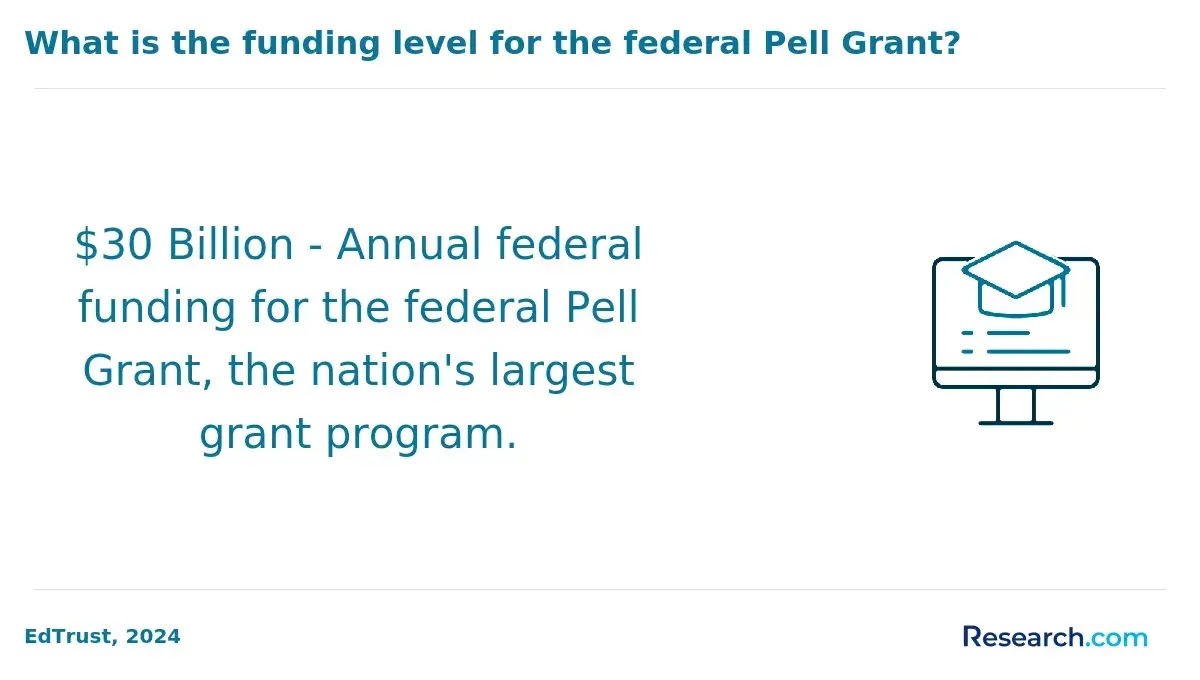
- The $7,395 maximum Federal Pell Grant for the 2024-25 award year can materially reduce costs for eligible students, but it is need-based federal grant aid rather than a guaranteed university scholarship, and the actual amount can be lower.
Which Online Animal Science Degree Programs Offer University Scholarships?
Online bachelor's programs in Animal Science are most often offered through land-grant universities and agricultural colleges. Institutions may make online degree-seeking students eligible for general university scholarships, college-of-agriculture awards, transfer scholarships, military benefits, or need-based grants. However, an on-campus scholarship page does not prove that distance learners qualify, so applicants should obtain written confirmation for their exact online program and enrollment plan.
Common program formats and the scholarship questions that matter most are summarized below. A program can be academically suitable and still offer less institutional aid to online students than to campus-based students.
| Online study option | Typical academic focus | Scholarship access to verify | Cost consideration |
| Bachelor's completion or full bachelor's degree | Animal nutrition, production, genetics, welfare, business, and livestock systems | Whether institutional freshman, transfer, agriculture-college, and merit awards include online degree-seeking students | Per-credit tuition, upper-division course pricing, and required practical experiences |
| Animal science-related agriculture degree | Livestock management, equine studies, agribusiness, or agricultural education | Whether the scholarship applies to the selected major rather than only a campus program | Specialized course materials, facilities fees, and travel |
| Graduate certificate or master's pathway | Nutrition, animal welfare, food systems, or agricultural leadership | Whether graduate students can receive institutional scholarships, assistantships, or employer-supported aid | Graduate tuition often has different aid rules from undergraduate tuition |
When comparing related health and science pathways, students who are considering food, nutrition, or animal-health-adjacent work may also want to examine a nutritionist bachelor degree online. It is a different academic path, but comparing program requirements and aid eligibility can help clarify which credential best matches a student's intended career.
Animal Science programs are particularly suitable for students interested in livestock production, animal nutrition, animal welfare, agricultural sales, extension, research support, or graduate preparation. They are not, by themselves, a substitute for a Doctor of Veterinary Medicine degree or state-specific veterinary technician credential. Before applying, confirm program accreditation or institutional accreditation, lab expectations, internship arrangements, transfer-credit policy, and whether the degree supports the job or graduate-school objective you have in mind.
How Much Scholarship Money Can Online Animal Science Degree Students Receive?
There is no single standard university scholarship amount for online Animal Science students. Awards may be a one-time amount, a renewable annual amount, a tuition discount, or a limited pool distributed competitively. The usable figure is the award listed in your individual financial-aid offer, not the maximum amount advertised for a scholarship competition.
Use award notices to separate funding by type. This distinction prevents students from treating loans or work-study eligibility as scholarship money.
| Aid type | How the amount is set | Repayment expectation | What to check |
| University merit scholarship | Academic record, test policy where applicable, transfer GPA, leadership, or other institutional criteria | Usually no repayment if terms are met | Annual amount, eligible program, enrollment minimum, renewal GPA, and maximum terms |
| University need-based grant or scholarship | Financial-aid application information and institutional funding rules | Usually no repayment if terms are met | FAFSA requirement, priority deadline, annual review, and whether an online student is eligible |
| Federal Pell Grant | Federal need analysis, enrollment intensity, and annual eligibility | No repayment in normal circumstances | Eligibility and enrollment-based amount; the 2024-25 maximum was $7,395 |
| Federal student loan | Annual loan limits and student eligibility | Generally must be repaid with interest | Do not subtract it as free aid when judging scholarship value |
A practical way to judge a university award is to convert it into a yearly and program-wide value. For example, a hypothetical $3,000 scholarship renewable for four years is potentially worth $12,000 only if the student remains eligible every year. If the online program takes longer because the student attends part time, or if the award covers only full-time terms, the practical value may be much smaller.
Scholarship shopping should also account for opportunity cost. Students comparing an Animal Science degree with a clinical support pathway can review an medical assistant certification accelerated program to understand how shorter credentials can have different tuition timelines and aid structures. That comparison does not make the programs interchangeable; it simply helps students weigh their education investment against their career goal.
What Are the Eligibility Requirements for Online Animal Science Degree Scholarships?
Eligibility rules vary by university and scholarship fund. Institutional scholarships commonly use admissions status, academic performance, financial need, residency, major, and enrollment intensity. Some agriculture-specific awards also require participation in livestock organizations, community service, leadership, or career interest in a particular agricultural field.
Before treating any award as part of your budget, verify the following conditions in the official scholarship terms or directly with financial aid.
- Whether students enrolled fully online, rather than attending on campus, are eligible.
- Whether you must be admitted as a degree-seeking Animal Science major before the scholarship deadline.
- Minimum cumulative high school, college-transfer, or institutional GPA requirements.
- Required enrollment level, such as full time, half time, or a specified number of credits per term.
- Residency or citizenship requirements and whether state residency changes the tuition rate.
- Whether FAFSA submission, demonstrated financial need, or a separate institutional aid form is required.
- Whether the award is limited to first-year, transfer, continuing, graduate, or campus-based students.
- Whether outside scholarships or other institutional aid can reduce the award.
A frequent mistake is assuming that admission qualifies a student for all university scholarships. Admissions and scholarship review are often separate processes, and priority deadlines may occur months before a program begins. Another red flag is an award description that says "eligible students" without defining online status or renewal terms. Ask for the policy in writing and keep a copy with your offer letter.
Academic eligibility is not the only consideration. Students exploring a nursing alternative should understand that an ASN program has its own clinical-placement, licensure, and aid considerations, which differ from Animal Science requirements.
How Do You Apply for University Scholarships for an Online Animal Science Degree?
Start early because admissions deadlines, FAFSA availability, university scholarship portals, and departmental scholarship deadlines may not match. A student can be admitted to an online Animal Science program and still miss a scholarship deadline, particularly for competitive agriculture-college funds.
Follow this sequence to create a complete application record and avoid missing aid that requires a separate action.
- Apply for admission to the specific online Animal Science degree and submit all requested transcripts by the university's scholarship priority date.
- File the FAFSA for the appropriate award year if you may qualify for federal, state, or institutional need-based aid.
- Create an account in the university scholarship portal and search for awards open to online, distance, transfer, or agriculture students.
- Submit requested essays, recommendations, activity records, financial information, and proof of military affiliation or transfer status before each deadline.
- Read every offer letter for the annual amount, disbursement schedule, eligible terms, renewal rules, and conditions that may cause the award to change.
- Ask financial aid to provide, or explain how to locate, a term-by-term estimate of tuition, mandatory fees, and anticipated grants and scholarships.
Use the same careful approach when examining other online healthcare credentials. For example, medical billing and coding online schools may publish financial-aid information, but each school's institutional scholarship rules still need individual confirmation.
Keep a simple deadline file containing the award name, required materials, submission date, decision date, and renewal date. This is especially valuable for transfer students, whose final GPA and evaluated credits may not be available until after an initial scholarship review.
Are Scholarships for Online Animal Science Degree Programs Renewable Every Year?
Some university scholarships are renewable, but renewal is never automatic unless the award terms explicitly say so. Renewable aid is institutional funding that can continue into later academic years when the student meets stated conditions. A one-year scholarship may still be valuable, but it should not be multiplied across a four-year degree when estimating total affordability.
Most renewal agreements focus on continued academic progress and enrollment. The table highlights terms that commonly change an award's long-term value.
| Renewal condition | Why it matters for online students | Question to ask |
| Minimum GPA | A grade below the stated threshold can place the award at risk even if the student remains enrolled | Is GPA reviewed each term or annually, and is there an appeal process? |
| Enrollment intensity | Part-time attendance may reduce or eliminate awards designed for full-time students | What credit load is required in fall, spring, and summer? |
| Satisfactory academic progress | Repeated or withdrawn courses can affect aid eligibility and time-to-degree | Does scholarship renewal use the same standard as federal aid? |
| Maximum renewal period | An award may end after a set number of semesters or credits | How many terms remain after accepted transfer credits are applied? |
| Annual application or FAFSA | Some need-based institutional aid is reassessed every year | Must I reapply, submit FAFSA, or complete a scholarship profile annually? |
Plan for the possibility that an award will not renew. Build a conservative budget using only aid that is confirmed in writing, and ask whether a reduced course load, required field experience, or temporary leave affects eligibility. Students who need flexibility because of work or caregiving should give extra weight to programs whose aid rules work with part-time study rather than choosing the largest award on paper.
Can You Combine an Online Animal Science Scholarship With FAFSA and Other Financial Aid?
In many cases, yes. A university scholarship can be combined with FAFSA-based federal aid, state grants, outside scholarships, employer tuition assistance, veterans' education benefits, and payment plans. This is often called aid stacking. The final combination is controlled by university policy, federal aid rules, student eligibility, and the school's calculated cost of attendance.
Students should view FAFSA as an access step, not as a promise of a particular package. FAFSA information can determine eligibility for the Federal Pell Grant, federal loans, work-study consideration, and some institutional need-based aid. The financial-aid office may revise a package when an outside scholarship is reported or when tuition, enrollment, housing assumptions, or other cost-of-attendance components change.
Check these points before accepting an offer, because they determine whether additional funding lowers your bill or simply replaces other aid.
- Ask whether outside scholarships first reduce loans, work-study, institutional grants, or university merit scholarships.
- Confirm whether the university scholarship can be used with federal and state grants for a fully online program.
- Report private scholarships and employer benefits as the school requires rather than waiting until after aid is disbursed.
- Check whether veterans' benefits, active-duty tuition assistance, or employer reimbursement requires separate certification each term.
- Review whether summer enrollment changes annual grant eligibility or scholarship disbursement.
A financial-aid revision is not always negative: outside money may reduce borrowing. Still, students should request a revised written estimate after each new award. Never assume that two advertised awards can be added together in full without confirming the institution's stacking policy.
How Much Does an Online Animal Science Degree Cost After Scholarships and Financial Aid?
Net cost is the estimated amount remaining after grants and scholarships, before loans. It is more useful than sticker tuition because it includes the aid you actually receive and prompts you to include expenses that online learners can overlook. College Board reported average published 2024-25 tuition and fees of $11,610 for in-state students at public four-year institutions and $43,350 at private nonprofit four-year institutions. Those national figures are not online Animal Science price quotes, but they show why institution type and residency can outweigh a modest scholarship difference.
Calculate a program-specific estimate using the school's current tuition schedule and your written aid offer. The example below is hypothetical and illustrates the method, not a typical price or guaranteed aid package.
| Hypothetical annual estimate | Amount | How to interpret it |
| Tuition and mandatory university fees | $14,000 | Start with the rate for your residency, online program, credit load, and academic year |
| Program materials, technology, and required travel | $1,500 | Include proctoring, books, lab kits, field experiences, and travel when required |
| Total estimated direct and program-related cost | $15,500 | This is the amount to offset with confirmed aid and personal resources |
| Confirmed university scholarship | -$3,000 | Subtract only an amount awarded to you for the applicable term |
| Confirmed grants | -$2,000 | Do not include loans as a reduction in net cost unless evaluating cash-flow financing |
| Estimated net cost before loans | $10,500 | Compare this figure across schools using the same assumptions |
Housing, food, dependent care, and transportation can also be included in a school's cost of attendance even when they are not billed by the university. Online study may reduce commuting or relocation costs, but an Animal Science curriculum can require in-person labs, internships, or supervised experiences. Request a breakdown of direct billed charges and expected indirect expenses before deciding.
Students considering advanced clinical education can use the average cost of DNP program resource as an example of why total program length, clinical requirements, and aid policy matter alongside tuition. The same net-cost discipline applies to Animal Science: compare the whole path, not one term's discount.
Are There Scholarships for Transfer, Adult, Military, and Other Online Animal Science Students?
Yes, but availability and eligibility are highly institution-specific. Transfer, adult, military-connected, first-generation, returning, and part-time students should not assume that the largest incoming freshman awards are their only options. University-wide scholarships, departmental funds, state programs, employer benefits, and community-based awards may target these populations, although an online-only restriction can still apply.
These applicant groups should focus their search on aid sources that reflect their enrollment history and circumstances.
| Student group | Potential university aid route | Critical verification point |
| Transfer student | Transfer merit scholarship, agriculture-college scholarship, or Phi Theta Kappa-related award where offered | Minimum transferable credits, evaluated transfer GPA, and whether online students qualify |
| Adult or returning learner | Completion scholarship, need-based grant, workforce partnership, or employer tuition support | Part-time eligibility, prior-degree restrictions, and time limits |
| Military-connected student | Institutional military scholarship, tuition reduction, veterans' benefits, or active-duty tuition assistance | Certification process, residency classification, and interaction with other institutional aid |
| Rural or agriculture-experienced student | Departmental agriculture, livestock, FFA-related, or community foundation scholarship | Major restriction, online enrollment rule, and documentation of experience |
Transfer students should send transcripts early, because scholarship eligibility may depend on the school's official transfer-credit evaluation rather than the number of credits shown on a prior transcript. Adult students should also ask whether a scholarship requires continuous enrollment; breaks caused by work, caregiving, or deployment can affect renewal.
A common error is overlooking local agricultural associations, breed organizations, county foundations, and employers because their awards are smaller. Several smaller awards that are compatible with university aid may be more dependable than one highly competitive institutional scholarship, provided the school's stacking rules allow them.
What Is the Difference Between Merit-Based and Need-Based Scholarships for Online Animal Science Degrees?
Merit-based scholarships are generally awarded for academic achievement, transfer GPA, leadership, service, talent, or other nonfinancial criteria. Need-based scholarships and grants consider financial circumstances, usually through FAFSA information and sometimes an additional institutional form. Either type may have online-enrollment restrictions, and both can carry renewal requirements.
The comparison below shows why students should apply for both categories when eligible instead of assuming one is inherently better.
| Feature | Merit-based scholarship | Need-based scholarship or grant |
| Main basis for selection | Academic record or other achievement criteria | Demonstrated financial need under federal or institutional rules |
| FAFSA role | May not be required, depending on the institution | Often required for consideration or annual review |
| Common renewal focus | GPA, enrollment, conduct, and satisfactory progress | Continued need, FAFSA filing, enrollment, and satisfactory progress |
| Best planning use | Can provide predictable support when renewal terms are clear | Can reduce cost substantially when financial circumstances meet program criteria |
| Main caution | A strong initial award may end if enrollment or GPA requirements are missed | Amount can change when financial information, funding, or enrollment changes |
A merit scholarship is not automatically more secure, and a need-based grant is not automatically less valuable. The better offer is the one you are likely to remain eligible for and that produces the lower realistic net cost. Students with a strong transfer GPA should seek merit awards, while students with financial need should file FAFSA early even if they expect to receive academic scholarships.
How Should You Compare Scholarship Offers From Online Animal Science Degree Programs?
Compare offers using the same academic year, credit load, residency classification, and expected program pace. A larger scholarship can be less valuable than a smaller one at a lower-tuition university, particularly if the larger award is nonrenewable or limited to full-time enrollment that does not fit your schedule.
Create a side-by-side comparison using the categories below. This turns separate award letters into a decision tool rather than a collection of marketing claims.
- Annual tuition and mandatory fees for your exact online Animal Science curriculum and residency status.
- Expected cost of books, lab materials, proctoring, travel, field experiences, and required internships.
- Each confirmed grant and scholarship, labeled as institutional, federal, state, private, or employer-funded.
- Whether each award is one-time or renewable, plus the GPA, credit-load, FAFSA, and application conditions for renewal.
- Estimated net cost before loans for one year and for the expected number of years or terms to graduate.
- Accepted transfer credits and the resulting remaining credits, because fewer required credits can beat a larger scholarship.
- Whether loans, work-study, or outside scholarships may replace institutional grant aid after the package is revised.
- Academic fit, including online course delivery, faculty access, laboratory requirements, internship support, and career or graduate-school alignment.
Ask each financial-aid office four direct questions: "Are fully online Animal Science students eligible for this award?" "What amount is guaranteed for the coming year?" "What must I do to renew it?" and "What will my estimated net cost be before federal loans?" Request answers by email when possible.
The strongest scholarship value is not necessarily the highest advertised award. It is the offer with transparent terms, realistic renewal conditions, an academic format that fits your life, and the lowest manageable total cost for completing the degree. If two estimates are close, give added weight to the school that clearly documents costs and provides reliable support for required hands-on Animal Science experiences.
Other Things You Should Know About Animal Science
Some programs deliver most academic coursework online, but "online" does not always mean no in-person requirements. Animal handling labs, field experiences, internships, proctored exams, or capstone activities may require travel or approved local placement. Confirm these requirements before accepting an aid offer because they affect your total cost and schedule.
Depending on coursework, experience, and employer requirements, graduates may pursue roles in livestock production, animal nutrition support, feed or pharmaceutical sales, agricultural operations, animal welfare, extension support, research assistance, and agribusiness. Certain roles require additional education, certifications, or licensure. Veterinary practice requires professional veterinary education and licensure.
Usually not, but residency can affect tuition and state-funded aid eligibility. Some online programs charge one distance-learning rate regardless of location, while others use resident and nonresident pricing. Ask whether moving, military status, or state authorization rules affect your enrollment or price.
A typical bachelor's degree requires about four years of full-time study from the beginning, but completion time varies with transfer credits, course availability, prerequisites, and part-time enrollment. Ask for a degree map showing the remaining credits and whether required courses are offered in the terms you plan to attend.
References
- Grants & Awards https://www.animalbehaviorsociety.org/web/awards-srg.php
- Conservation Scholarships | Conservation Careers https://www.conservation-careers.com/conservation-scholarships/
- Purina Animal Nutrition Scholarship - Scholarship America https://scholarshipamerica.org/scholarship/purina/
- Top Veterinary & Animal Science Scholarships https://www.vettechcolleges.com/blog/50-veterinary-animal-science-scholarships
- Lallemand Animal Nutrition Scholarship https://www.lallemandanimalnutrition.com/en/united-states/lallemand-animal-nutrition-scholarship-program/