2027 Best Online Animal Science Degree Programs at Nonprofit Universities

Co-Founder and Chief Data Scientist
Choosing an online animal science degree means balancing flexibility with the laboratory, livestock, and field experience employers and graduate programs may expect. The decision matters because the U.S. Bureau of Labor Statistics projects 9% growth in veterinary technologist and technician employment from 2024 to 2034.
This guide helps prospective students compare nonprofit university programs by academic quality, total cost, online format, transfer options, support services, and career fit so they can build a realistic shortlist before applying.
Key Things You Should Know
- Nonprofit status is not a quality guarantee: prioritize institutional accreditation, a science-based curriculum, required practical experiences, and transparent outcomes over a school's public or private label.
- A bachelor's degree is typically the most versatile online animal science option; it can support agricultural production, animal nutrition, sales, welfare, and graduate-school preparation, while veterinary technician licensure usually requires a specifically accredited veterinary technology program.
- Career demand is favorable but role-dependent: veterinary technologists and technicians had a 2024 median annual wage of $45,980, while agricultural and food scientists had a $78,770 median; each path has different degree, experience, and licensure expectations.
What Makes an Online Animal Science Degree Program at a Nonprofit University Different?
An online animal science degree examines the biology, nutrition, genetics, health, behavior, management, and production of domesticated animals. Programs may emphasize livestock and equine production, companion animals, animal welfare, dairy science, poultry science, agribusiness, or pre-veterinary coursework. At the bachelor's level, students commonly complete general education, biology and chemistry prerequisites, and upper-division animal science classes.
Both public universities and private institutions can be nonprofit. A nonprofit university generally reinvests revenue into its educational mission rather than distributing profits to owners, but that status does not automatically establish affordability, academic rigor, transferability, or career value. Students should evaluate the actual degree design.
The following comparison shows the main program structures students may encounter and the decisions each supports.
| Program type | Typical fit | Common online reality | Important limitation |
| Associate degree | Students seeking an entry point or transfer pathway | Often two years before transfer | May not meet bachelor's-level employer or graduate-school expectations |
| Bachelor's degree | Career changers, transfer students, and future graduate students | Usually four years from scratch; shorter with transfer credit | Labs, internships, or animal handling may require local or campus participation |
| Master's degree | Professionals seeking advanced nutrition, production, welfare, or research expertise | Often part-time and designed for working adults | May require a related bachelor's degree and prerequisite sciences |
| Doctoral degree | Research, university teaching, or highly specialized science careers | Rarely fully online | Research supervision and laboratory work are normally campus-based |
Online study is strongest for lectures, case analysis, data interpretation, animal-production management, and discussion-based coursework. It is less suitable when a program needs students to demonstrate laboratory techniques, animal restraint, surgery-related skills, or clinical competencies. A student pursuing veterinary medicine, veterinary technology, laboratory animal science, or hands-on production management should expect some in-person learning.
Students interested in food, health, and nutrition can also compare course sequencing with a nutritionist bachelor degree online path, particularly when their goal involves feed science, public health, or animal and human nutrition intersections.
How Can Students Verify Accreditation for an Online Animal Science Degree at a Nonprofit University?
Students should verify two distinct forms of recognition: institutional accreditation and, where applicable, specialized accreditation. Institutional accreditation evaluates the university as a whole and is important for federal financial aid, credit transfer, and graduate admissions. Specialized accreditation evaluates a particular professional program and may be essential when a career has credentialing requirements.
For animal science, there is no universal programmatic accreditor equivalent to the accreditation required for many clinical professions. However, veterinary technology programs should be evaluated carefully because eligibility for the Veterinary Technician National Examination generally depends on graduating from a program accredited by the American Veterinary Medical Association's Committee on Veterinary Technician Education and Activities. A general online animal science degree is not automatically a veterinary technician degree.
Use these checks before paying an application fee. They help distinguish a legitimate online program from one that does not support your intended next step.
- Confirm the institution's accreditation in the U.S. Department of Education database and on the university's official accreditation page.
- Ask the department whether the animal science major has discipline-specific approval, affiliations, or external review.
- For veterinary technology, verify current AVMA-CVTEA accreditation and ask whether the program meets examination requirements in your state.
- Ask prospective graduate schools whether the online degree's science labs and prerequisites meet their admissions standards.
- Request written confirmation of where required labs, practicums, internships, or proctored assessments occur.
A red flag is an admissions representative who treats "accredited university" as proof that a particular degree meets professional licensure requirements. Requirements can vary by occupation and state, and schools should be able to explain the distinction clearly.
How Rigorous Are Online Animal Science Degree Programs at Nonprofit Universities?
Rigorous online animal science programs use the same learning outcomes expected in campus-based programs, but they deliver content through learning platforms, scheduled discussions, recorded lectures, group projects, examinations, and applied assignments. Students should expect substantial reading in biology and agricultural science, quantitative work, scientific writing, and evidence-based analysis rather than simply watching videos.
Coursework commonly includes animal anatomy and physiology, genetics, reproduction, nutrition, microbiology, livestock or companion-animal management, welfare, and agricultural economics. Pre-veterinary and research-oriented tracks may require additional chemistry, organic chemistry, physics, biochemistry, and laboratory sequences. These prerequisites are often difficult to complete entirely online.
The workload is especially important for working adults. A typical three-credit course often requires several hours of study beyond scheduled activities each week, although the exact commitment varies by course design and a student's science background. Accelerated terms can reduce calendar time but increase weekly reading, assignment, and examination pressure.
Before enrolling, compare the program's expectations for laboratory science and experiential learning.
| Requirement | What to confirm | Why it matters |
| Science laboratories | Whether labs are virtual, at-home, transferred, or completed at an approved local college | Graduate and professional programs may require in-person laboratory credit |
| Animal experience | Whether students arrange a local placement or travel to campus | Applied skills and professional exposure may depend on supervised practice |
| Exams | Remote proctoring, testing windows, identification requirements, and technology rules | These details affect schedule flexibility and privacy preferences |
| Capstone or internship | Hours, site approval process, insurance, and faculty supervision | Required fieldwork can add time and indirect costs |
Do not assume that "100% online" means every requirement is completed from home. Schools may use that phrase for lecture coursework while still requiring a local internship, occasional residency, or approved laboratory experience.
The cost of an online animal science degree depends more on residency status, transfer credit, course load, fees, and required experiences than on nonprofit status alone. Public nonprofit universities may offer lower rates to in-state students, while private nonprofit universities may charge one online rate regardless of residence and may offset a higher sticker price with institutional aid.
For context, National Center for Education Statistics data for the 2023-24 academic year reported average published tuition and fees of $11,610 at public four-year institutions for in-state students and $41,540 at private nonprofit four-year institutions. These are sector-wide figures, not animal science program prices, and they exclude housing, books, transportation, laboratory supplies, and fieldwork costs.
Compare the complete financial commitment rather than a per-credit tuition figure. The table identifies the cost categories applicants should request in writing.
| Cost category | Why advertised tuition may not capture it | Comparison question |
| Tuition | Rates may differ by residency, degree level, or transfer status | What is the rate for every remaining required credit? |
| Mandatory fees | Technology, distance-learning, graduation, and laboratory fees may be separate | Which fees apply to online students each term? |
| Laboratory and fieldwork costs | Supplies, travel, site expenses, and safety equipment can be significant | What practical requirements are not included in tuition? |
| Transfer credit | Unaccepted credits extend time to degree | How many credits are likely to apply before enrollment? |
| Opportunity cost | Reduced work hours or travel can affect household income | Can the course sequence fit my work and caregiving schedule? |
A lower tuition rate is not always the lower-cost choice if it accepts few transfer credits or requires multiple campus visits. Conversely, a higher-priced program may be worthwhile when it has a curriculum, faculty expertise, placement structure, or prerequisite pathway that directly supports a specific goal.
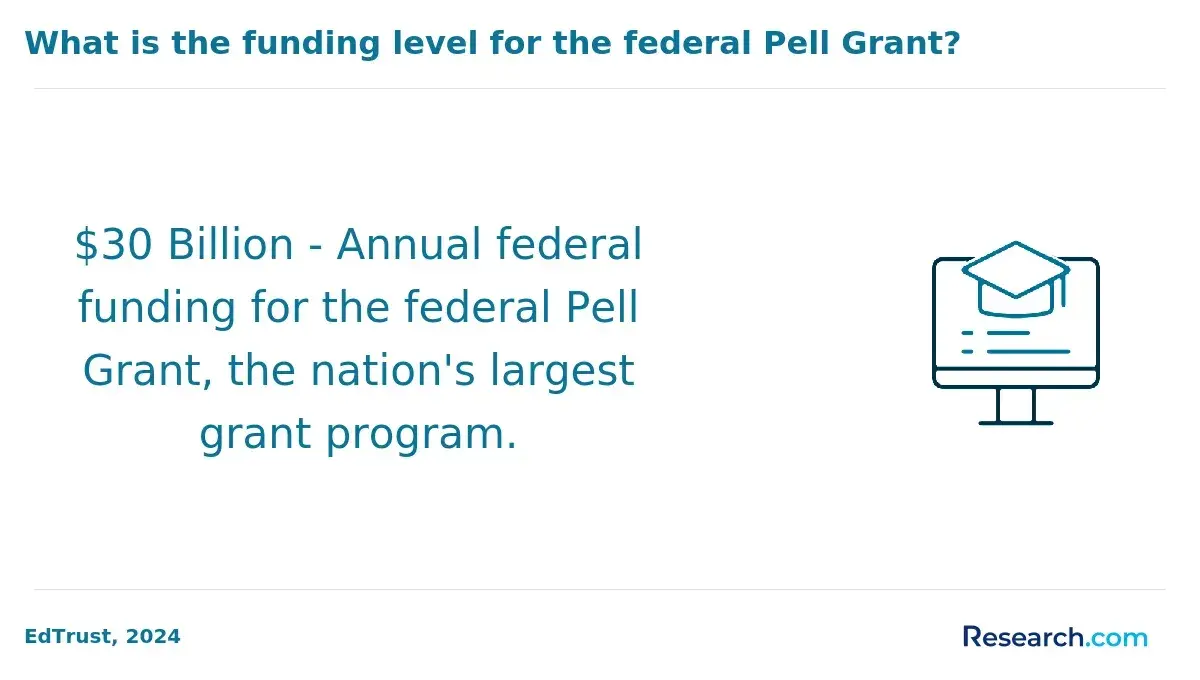
Eligible online students at accredited nonprofit universities may use many of the same aid options available to campus students, provided they meet enrollment and program requirements. The first step is filing the Free Application for Federal Student Aid, commonly called the FAFSA, for the relevant academic year.
For the 2025-26 award year, the maximum Federal Pell Grant was $7,395 for eligible undergraduate students. Individual awards depend on financial circumstances, enrollment intensity, cost of attendance, and other federal rules, so applicants should view the maximum as a ceiling rather than an expected award.
Students should build an aid plan that limits borrowing before accepting loans. Common options include the following.
- Federal Pell Grants and other federal grants for eligible undergraduate students
- Federal Direct Loans, which have annual and lifetime borrowing limits
- University scholarships based on merit, need, transfer status, agricultural involvement, or academic department criteria
- State grants, which may have residency or enrollment restrictions
- Employer tuition assistance for workers in agriculture, feed, animal health, veterinary, laboratory, or related fields
- External scholarships from agricultural associations, breed organizations, commodity groups, and local foundations
Ask the financial aid office whether online enrollment changes eligibility for institutional scholarships, work-study, or aid disbursement. Also request a net-price estimate that separates grants and scholarships from loans. Loans can make enrollment possible, but they must generally be repaid with interest.
Students considering clinical-health alternatives should also understand that aid policies can differ by credential type; an medical billing and coding online schools comparison can illustrate why program length, accrediting expectations, and workforce structure matter when evaluating financial value.
Flexibility varies widely among online animal science programs. Asynchronous courses allow students to review lectures and submit work within weekly deadlines, making them a practical option for many working adults. Synchronous courses require attendance at set times for lectures, labs, seminars, or group work. A program can be online and still have fixed attendance requirements.
Part-time enrollment is usually the best fit for students with full-time work or substantial caregiving responsibilities, while full-time enrollment can shorten time to graduation. Accelerated sessions may suit students who can devote concentrated time to one or two courses at once; traditional semesters may provide more time to absorb demanding science content.
Before committing, get answers to these scheduling questions in writing.
- Are core courses asynchronous, synchronous, or mixed?
- Can required courses be taken in the planned sequence without waiting an additional year?
- How often must students travel for labs, orientations, examinations, or residencies?
- Can local internships or farm, shelter, veterinary, laboratory, or extension placements be approved?
- Are clinical or field hours available during evenings or weekends?
- What happens if a student must pause enrollment for work, family, or military obligations?
Transfer students should also ask for an individualized degree plan. A transfer-friendly university may accept many credits, but only a detailed evaluation reveals whether they fulfill major requirements or count merely as electives.
Effective online support is especially important in animal science because students may need help arranging laboratories, internships, and career experiences away from the main campus. Nonprofit universities commonly provide academic advising, library access, tutoring, accessibility services, technical support, career coaching, and financial aid counseling, but availability and response times vary by institution.
Prioritize services that solve the practical barriers of completing a science degree online.
| Support service | What strong support looks like | Why it matters for animal science |
| Academic advising | Advisor understands prerequisite sequencing and transfer evaluations | Prevents missed chemistry, biology, or capstone requirements |
| Faculty access | Published office hours, prompt feedback, and discipline-specific guidance | Supports difficult science concepts and career planning |
| Experiential-learning coordination | Clear process for approving local sites and supervisors | Helps students secure valid internship or practicum credit |
| Career services | Resume review, employer connections, interview preparation, and job-search tools | Translates coursework into agriculture and animal-industry opportunities |
| Technology and library support | Extended-hours help desk and access to scientific databases | Reduces disruption for remote learners completing research-heavy courses |
Ask to speak with an online program advisor and, if possible, a current student. A polished website is less informative than a clear explanation of who approves field sites, how quickly faculty respond, and how online learners receive help when a required course becomes unavailable.
Students who are weighing animal science against a direct patient-care route may find it useful to compare support needs with an ASN program, where clinical placement and licensure preparation are typically more formally structured.
An online animal science degree can prepare graduates for in-demand work when the curriculum and hands-on experiences align with a defined role. Potential settings include livestock production, feed and nutrition companies, animal-health businesses, breeding operations, agricultural extension, animal welfare organizations, laboratories, sales, regulatory support, and food-production organizations.
Career outcomes depend on degree level, prior experience, location, specialization, and employer requirements. The Bureau of Labor Statistics projects 6% employment growth for agricultural and food scientists from 2024 to 2034, with a 2024 median annual wage of $78,770. That occupation commonly requires at least a bachelor's degree, but specific research positions may require graduate education. The figures describe a broad occupational group rather than a guaranteed outcome for every animal science graduate.
The following examples show how educational choices can connect to career directions.
| Career direction | Typical preparation | Useful program features |
| Animal production or operations management | Bachelor's degree plus livestock, dairy, equine, poultry, or business experience | Production systems, economics, internships, and local industry connections |
| Feed, nutrition, or technical sales | Bachelor's degree; advanced roles may prefer graduate education | Nutrition, chemistry, communication, and data analysis |
| Animal welfare or shelter management | Bachelor's degree plus relevant experience | Behavior, welfare, ethics, management, and supervised fieldwork |
| Agricultural or food science | Bachelor's degree for some entry roles; graduate degree for many research roles | Research methods, statistics, laboratory science, and faculty mentorship |
| Veterinary technician | Accredited veterinary technology degree and applicable credentialing | AVMA-CVTEA accreditation and clinical skills training |
Animal science does not by itself qualify a graduate to become a veterinarian. Veterinarians must earn a Doctor of Veterinary Medicine degree and meet state licensing requirements. Similarly, some animal health, laboratory, food safety, and regulatory roles may require specialized training beyond a general degree.
Automation and data tools are increasingly relevant in precision livestock management, genomics, production analytics, and supply-chain operations. Students can improve their competitiveness by seeking coursework or projects involving statistics, spreadsheets, data interpretation, animal-record systems, and scientific communication alongside animal-handling experience.
An online bachelor's degree from an institutionally accredited nonprofit university can support graduate-school applications if it includes the prerequisite courses, grades, laboratory experiences, recommendations, and research exposure required by the target program. Graduate admissions committees typically evaluate the academic record and preparation more closely than whether lecture courses were delivered online.
For veterinary school, animal science master's programs, nutrition programs, and research degrees, applicants should review prerequisites early. Many professional and research programs expect in-person laboratory coursework in subjects such as general chemistry, organic chemistry, biology, physics, biochemistry, genetics, and statistics. An online bachelor's degree with virtual labs alone may not meet every requirement.
Students planning graduate study should use their undergraduate years deliberately.
- Identify several target graduate or professional programs before selecting an online undergraduate curriculum.
- Create a prerequisite checklist and confirm that each course includes an acceptable lecture and laboratory format.
- Choose elective courses that support the intended specialization, such as nutrition, reproduction, welfare, genetics, or research methods.
- Seek faculty relationships, research assistance, internships, or supervised animal experience that can produce informed recommendation letters.
- Keep syllabi and laboratory documentation in case a graduate program asks for evidence of course content.
A master's degree can be a logical next step for professionals seeking specialized expertise or stronger research preparation, but it is not automatically necessary for every industry role. A doctoral path makes the most sense for students targeting independent research, university faculty positions, or advanced scientific leadership.
For students comparing advanced degrees across health professions, the average cost of DNP program discussion reinforces a useful principle: compare graduate tuition with required clinical, residency, and career outcomes rather than relying on degree title alone.
How Should Students Compare the Best Online Animal Science Degree Programs at Nonprofit Universities?
The best online animal science degree is the one that meets your target career's academic requirements while remaining financially and logistically sustainable. A public nonprofit university may offer excellent value for in-state students, while a private nonprofit university may be preferable for its transfer policy, online scheduling, specialization, or individualized support. Neither category wins automatically.
Start with a shortlist of three to five programs, then compare each against the same decision criteria. The table provides a practical scorecard for that review.
| Decision factor | Evidence to request | Best fit indicator |
| Accreditation | Institutional accreditor and any discipline-specific recognition | Meets financial-aid, transfer, graduate-school, and credentialing needs |
| Curriculum | Degree plan, syllabi, concentrations, and laboratory format | Includes prerequisites and specialization relevant to your goal |
| Total cost | Written estimate covering tuition, fees, travel, supplies, and remaining credits | Affordable with manageable borrowing after grants and scholarships |
| Flexibility | Course schedule, attendance rules, residency dates, and completion plan | Works with employment, family, and local experiential-learning access |
| Transfer policy | Preliminary credit evaluation and maximum transfer limits | Applies prior credits to major requirements whenever possible |
| Career preparation | Internship support, employer relationships, alumni outcomes, and faculty expertise | Builds experience for the role or graduate program you want |
Use the following final process after comparing program websites. It reduces the chance of enrolling based on incomplete marketing information.
- Define your target occupation and identify whether it requires a general degree, a specialized credential, graduate school, or state licensure.
- Confirm institutional accreditation and any professional accreditation required for your chosen path.
- Request a transfer-credit review and a term-by-term degree plan before committing.
- Calculate total cost after grants and scholarships, including travel and fieldwork expenses.
- Review laboratory, internship, residency, and synchronous attendance requirements against your schedule.
- Ask for program-specific retention, graduation, internship, and career information when available.
- Apply to more than one academically suitable program so you can compare aid offers and practical fit.
Common mistakes include assuming every online degree is fully asynchronous, selecting the lowest advertised tuition without checking credit loss, confusing animal science with veterinary technology, and choosing a major before identifying the credentials required for a desired job. Applicants exploring faster allied-health credentials can see the importance of matching program length to career rules in a medical assistant certification accelerated program comparison.
An online animal science degree is generally worth considering when it provides the required science foundation, credible experiential learning, and a manageable debt level for your intended role. Students who need extensive clinical training, daily animal handling, or a tightly regulated credential may be better served by a hybrid or campus-based program.
Other Things You Should Know About Animal Science
Yes. Graduates may pursue roles in production agriculture, feed and nutrition support, animal welfare, sales, operations, research support, and related fields. The strongest opportunities usually combine the degree with internships, animal experience, communication skills, and a relevant specialization.
No. Animal science focuses broadly on animal biology, production, nutrition, genetics, welfare, and management. Veterinary medicine is a professional clinical field requiring a Doctor of Veterinary Medicine degree and state licensure to diagnose and treat animals.
Biology, chemistry, algebra, statistics, English composition, and agricultural education provide a useful foundation. Students who intend to pursue veterinary or research-focused graduate programs should take the most rigorous science and math courses available and plan for additional college prerequisites.
Some programs offer companion-animal, equine, behavior, welfare, or pre-veterinary options, while others concentrate on livestock and food-animal production. Review required courses and electives carefully because the major title alone does not reveal the program's emphasis.
- Animal Science - Northeast Iowa Community College https://www.nicc.edu/academics/programs/animal-science/
- Animal Studies (BA) https://www.madonna.edu/academics/programs/animal-studies/
- Animal Science (BS) https://www.etamu.edu/programs/animal-science-bs/
- Education Programs for Zoo and Aquarium Careers https://www.aza.org/education-programs-for-zoo-and-aquarium-careers