2027 The First Month as a Traditional BSN Graduate: Onboarding Questions and Progress Reviews
Audited and Verified:
Our Editorial and Data Verification Process
Research.com uses government datasets, official education statistics and primary institutional information to support its career and degree guides. Our review process checks factual accuracy, occupational definitions, source dates and the requirements associated with the credentials discussed.
How This Article Was Fact-Checked
Our editorial team verifies salary estimates, employment projections, education requirements and program information against original data providers and official organizations. Salary figures are checked against the relevant occupational definitions and reporting periods. Information about licensure, accreditation and required in-person training is reviewed separately.
Fact-checked and verified on:

Co-Founder and Chief Data Scientist
Your first month as a traditional BSN graduate is a transition from supervised student practice to accountable RN practice - not a test of whether you can manage every patient independently. You need to know what your employer expects, which tasks require observation, and how progress reviews affect your orientation.
This guide helps newly graduated nurses prepare questions for managers and preceptors, interpret competency feedback, confirm licensure status, and set realistic goals before taking on a fuller patient assignment.
Key Things You Should Know
- In the first 30 days, expect a mix of employment requirements, unit training, supervised patient care, and documented competency checks; the sequence varies by employer and specialty.
- A first-month progress review should identify what you can do consistently, what still needs supervision, and what support comes next - not treat orientation completion as automatic proof of independent readiness.
- Graduating, passing the NCLEX-RN, holding an active RN license, and being cleared by an employer for particular duties are separate milestones. Verify each before practicing in that capacity.
What should traditional BSN graduates expect during the first month of RN onboarding?
RN onboarding is the employer's process for establishing that a new hire can work safely within a particular organization and unit. It may include employment paperwork, electronic health record (EHR) access, policy training, a preceptorship, skills validation, and a nurse residency. A residency typically adds structured learning and mentorship beyond initial unit orientation; the terms are not interchangeable.
Early shifts often emphasize observing the unit's workflow and caring for patients alongside a preceptor. As you demonstrate reliable assessment, documentation, communication, and prioritization, your assignment may grow. The pace depends on patient acuity, specialty, prior exposure, staffing, and your observed performance - not simply the number of shifts completed.
Ask for your orientation schedule and competency record at the outset. Confirm which shifts are classroom-based, which involve supervised patient care, who evaluates you, and when your first review will occur. If a required task has not come up in patient care, ask how the unit arranges an appropriate opportunity to learn or assess it; do not mistake an unchecked box for permission to perform it alone, especially if you plan to advance later through DNP programs with accessible admission requirements.
Which onboarding questions should new registered nurses ask their managers and preceptors?
Separate questions about program expectations from questions about an individual patient. A manager or educator can clarify orientation policy; a preceptor can help you apply it during a shift. These questions reveal what support you can rely on before an urgent situation arises:
- Progression: What patient assignment is expected at this stage, and what evidence determines when it increases?
- Supervision: Which medications, procedures, or clinical situations require direct observation or a separate competency sign-off?
- Escalation: Who should I contact if my preceptor is unavailable, a patient deteriorates, or an assignment exceeds my current competence?
- Feedback: When will we review my competency record, and how should I raise a concern about my progress or orientation schedule?
- Resources: Where are current unit policies, equipment guidance, pharmacy support, and EHR help available during my shift?
Record the answers in your own orientation notes, without patient identifiers. If two instructors give conflicting directions, resolve the difference with the educator or manager rather than choosing whichever approach seems easier, which is an important habit for anyone looking ahead to graduate nursing routes for associate-degree nurses.
How do first-month nursing progress reviews evaluate clinical competency and readiness?
A useful review compares observed practice with unit expectations and identifies the next level of supervision. Employers use different forms and rating scales, so ask what each rating means locally. The distinctions below help you interpret a review without assuming that attendance or a completed checklist establishes independent competence.
| Evidence considered | What it can show | What it cannot establish alone |
| Observed care and preceptor feedback | How you assess, prioritize, communicate, and respond to coaching in actual shifts | Performance in every condition or patient population |
| Skills validation | Performance of specified tasks under the employer's assessment process | Authorization to perform unrelated tasks or work outside policy |
| Documentation and case discussion | Clinical reasoning, record quality, and recognition of when to escalate | Consistent performance under every workload |
| Orientation attendance | Completion of scheduled learning activities | Clinical competency by itself |
A review may find that you are progressing appropriately while still needing direct support for higher-acuity assignments, much like the structured progression required in accelerated Doctor of Nursing Practice programs. Ask your reviewer to distinguish not yet observed from observed and needs improvement; the first calls for an assessment opportunity, while the second calls for focused practice and reassessment. If a concern affects patient safety, it should be addressed promptly rather than saved for the scheduled review.
A traditional BSN prepares graduates to seek initial RN licensure, but the degree does not confer a license. NCLEX-RN eligibility and the licensing decision belong to the applicable state board of nursing. A passing exam result is an important step; it is not, by itself, confirmation that the board has issued an active license.
Before working in an RN role, verify your status through the board's official license-verification process and give your employer the information it requires. An unofficial exam indication or delayed result should not be treated as practice authorization. Some jurisdictions offer limited temporary permits under specific conditions; rely on one only if it has actually been issued to you and the proposed work falls within its terms and your employer's policy.
Tell your hiring contact promptly if issuance is delayed. Ask whether your start date, job duties, or orientation schedule must change, especially if you are balancing work with further education or consulting an online PMHNP certificate program guide for future specialization. Once licensed, continue to follow the law and employer requirements applicable where you practice; a license alone does not establish that you have been cleared for every unit-specific task.
Set goals around behaviors a preceptor can observe, not a promise to carry a full assignment by a fixed date. A practical goal connects a task, the expected level of support, and the evidence that will show progress.
- Choose one priority from feedback. For example, focus on recognizing changes in condition and communicating them promptly, rather than trying to improve every skill at once.
- Define observable evidence. Agree with your preceptor on what they will watch for during appropriate patient-care opportunities.
- Review after a shift. Compare your assessment and actions with the preceptor's observations, then identify one adjustment for the next shift.
- Revisit the support level. Ask whether you should continue direct observation, work with nearby support, or be assessed for the next stage of orientation.
"Independent practice" means managing assigned work within your RN scope and demonstrated competence while using colleagues, policies, and escalation channels appropriately. It never means practicing without help or accepting an assignment you cannot safely manage. If progress stalls because suitable learning opportunities or preceptor time are unavailable, discuss an adjusted plan with the educator or manager, or explore long-term career steps using an online nurse practitioner affordability guide.
Early assessments usually combine technical skills with clinical judgment. A nurse may perform a task correctly yet still need support recognizing when it is inappropriate, monitoring its effects, or communicating a concern. Exact requirements vary by unit and employer policy.
Common areas include focused assessment and reassessment; medication safety; infection prevention; accurate EHR documentation; patient education; handoffs; prioritization; and timely escalation of a change in condition. Units may separately validate equipment use, intravenous therapy, or specialty procedures. Delegation is also assessed in context: the RN remains accountable for using applicable scope rules, employer policy, and patient needs when assigning and following up on work.
Classroom instruction, simulation, and BSN clinical placements provide a foundation, not automatic employer sign-off, even for nurses considering shorter routes to family NP preparation. If you have studied a skill but have not performed it under the required supervision or validation process, say so. That gives your preceptor a chance to arrange safe practice rather than infer competence from your degree.
Both groups need organization-specific training, including policies, EHR workflows, equipment, and emergency procedures. A new graduate generally needs more deliberate progression from supervised care to a larger assignment and may participate in a nurse residency. An experienced RN may have a shorter orientation, but prior experience does not replace validation for an unfamiliar specialty, patient population, or device.
Compare programs by what they provide, not just their stated length. Ask whether you will have a consistent preceptor, protected learning time, scheduled feedback, and a process for extending orientation when competencies have not yet been demonstrated. A longer calendar period is not necessarily better if shifts provide little relevant patient exposure; a shorter one is not necessarily unsafe if progression is genuinely individualized and support remains available.
If your hospital combines new graduates and experienced hires in some classes, clarify which parts of your competency plan are individualized. Your BSN coursework may help you explain clinical reasoning—much like RN-to-BSN study without added bedside rotations supports academic growth—but your employer still needs evidence of safe performance on its unit.
The sharpest adjustment is often managing several responsibilities at once: responding to patient needs, documenting care, coordinating with the team, and noticing what requires escalation. A familiar skill can feel harder when interruptions and competing priorities are added. Ask your preceptor to discuss the reasoning behind the shift's priorities rather than trying to copy their pace.
Changing schedules, unfamiliar technology, and receiving frequent correction can also be exhausting. Feedback about a specific action is not a verdict on your potential as a nurse. Still, do not normalize repeated unsafe assignments, unavailable supervision, or being asked to perform an unvalidated task. Raise those concerns promptly with your preceptor, educator, charge nurse, or manager through the unit's escalation process.
If the difficulty is primarily a mismatch between your learning needs and the available orientation support, ask what can change before deciding that the specialty - or nursing itself - is the problem. A clear plan and reassessment date make that conversation more useful than simply requesting "more time," especially if you are also weighing options like affordable master's progression for bachelor's-prepared RNs to build long-term flexibility.
Turn feedback into a small, observable change. When a preceptor identifies incomplete reassessment documentation, for example, clarify what the record should show under current policy, apply that standard on a subsequent shift, and ask the preceptor to review your work. The aim is safer, clearer care - not merely a better evaluation rating.
At each review, ask for a concrete example of something you did well, one priority for improvement, and how that priority will be reassessed. Discuss any discrepancy between your understanding and the reviewer's observations without becoming defensive. If the concern involves an error or near miss, follow the organization's immediate patient-safety and reporting procedures; a later performance meeting is not a substitute.
Keep a brief personal record of goals, feedback, and completed learning activities, but leave out patient identifiers and confidential records. Over time, look for consistent performance across different shifts and workloads—much like evaluating long-term fit when comparing accelerated psychiatric nursing master's programs. That pattern is stronger evidence of readiness than one unusually smooth - or unusually difficult - day.
What career paths, certifications, salaries, and job outlooks follow a traditional BSN?
For a newly licensed BSN graduate, the immediate career decision is usually which RN setting offers appropriate orientation and a sustainable fit. Hospital, ambulatory, and community roles differ in patient needs, schedules, supervision, and the competencies they expect. Specialty employment may be possible as a new graduate when an employer offers suitable training; a BSN alone does not establish specialty readiness.
Professional certifications generally come later, because eligibility may require an active RN license and documented specialty practice. Check the relevant certifying organization's current rules before paying for an exam. Likewise, advanced practice roles such as family nurse practitioner require additional role- and population-specific education, certification, and state authorization. If that becomes a long-term goal, compare supervised clinical arrangements rather than choosing a program solely for its advertised duration; clinical training support in family NP education is one factor to investigate.
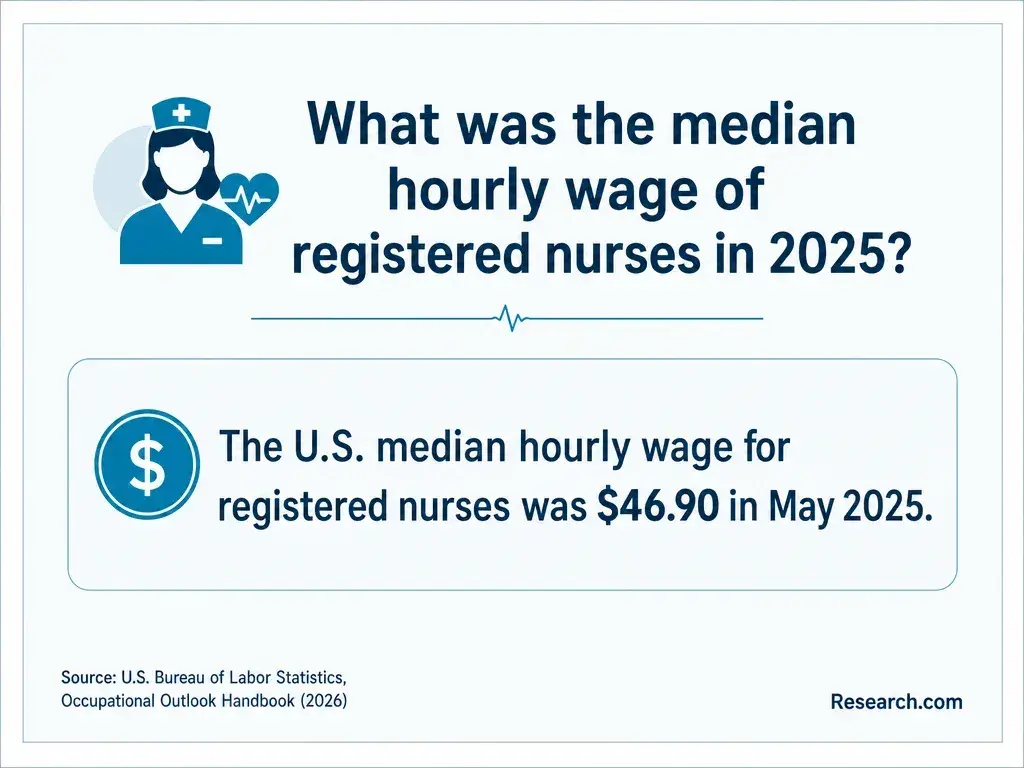
The U.S. Bureau of Labor Statistics reports registered-nurse wages and employment projections for the occupation as a whole. Those figures can help you understand the broader market, but they are not a starting salary for BSN graduates or a prediction for your unit. For an immediate job decision, compare actual offers - including base pay, shift differentials, benefits, schedule, orientation support, and location - alongside the experience each role will help you build.
Other Things You Should Know About Nursing
Yes. Explain the specific learning or communication issue to your educator or manager and ask how preceptor assignments are handled. Focus on the support you need rather than assuming a personality difference is the only cause.
Pay arrangements depend on the employer and applicable law. Before accepting an offer, ask which classes and required activities count as paid work time and whether attendance occurs outside scheduled shifts.
That depends on employer policy and available positions. Discuss the reason with your manager or educator first, and ask what onboarding would be required on the new unit.
Do not keep identifiable patient details or copies of records in personal notes. Follow your employer's privacy rules, and describe learning points without information that could identify a patient.
- Board of Nursing - Delaware Regulations https://regulations.delaware.gov/register/october2022/final/26%20DE%20Reg%20327%2010-01-22.htm
- Credentialing, Licensing, and Education | NCCIH - NIH https://www.nccih.nih.gov/health/credentialing-licensing-and-education
- Feedback and coaching - PMC - NIH https://pmc.ncbi.nlm.nih.gov/articles/PMC8821048/
- Virginia Board of Nursing https://www.dhp.virginia.gov/Boards/Nursing/AbouttheBoard/FAQ/
- Ongoing Coaching and Feedback | MIT Human Resources https://hr.mit.edu/performance/coaching
- What Is a Nurse Orientation Pathway? A Complete Guide for Educators and Leaders https://solutions.aacn.org/blog/what-is-a-nurse-orientation-pathway-a-complete-guide-for-educators-and-leaders
- New Grad Nurse Expectations: Orientation, Patient Load & Reality Guide | RegisteredNursing.org https://www.registerednursing.org/articles/new-grad-nurse-expectations/