2027 BS in Business Administration Program Choice: A Capstone That Can Support a Career Portfolio as a Capstone Option
Audited and Verified:
Our Editorial and Data Verification Process
Research.com uses government datasets, official education statistics and primary institutional information to support its career and degree guides. Our review process checks factual accuracy, occupational definitions, source dates and the requirements associated with the credentials discussed.
How This Article Was Fact-Checked
Our editorial team verifies salary estimates, employment projections, education requirements and program information against original data providers and official organizations. Salary figures are checked against the relevant occupational definitions and reporting periods. Information about licensure, accreditation and required in-person training is reviewed separately.
Fact-checked and verified on:

Co-Founder and Chief Data Scientist
A business administration capstone can become a useful career portfolio piece - but only if the project fits your target role and you are allowed to show the work. If you are comparing BS programs, the capstone requirement deserves more scrutiny than a course title on a curriculum page. This guide explains what to check before enrolling, how to choose a feasible project, and how to turn an academic deliverable into credible evidence of your skills without overstating results or exposing confidential information.
Key Things You Should Know
- Choose a capstone for its approved deliverable, available data, faculty feedback, and portfolio permissions - not simply because a program advertises applied learning.
- A typical full-time bachelor's pathway takes about four years, but transfer credit and course sequencing can change when you reach the capstone; request an individual degree audit.
- One well-documented analysis can demonstrate your methods and judgment, but a proposed plan is not proof of implemented results or a substitute for relevant work experience.
What Is a BS in Business Administration Degree?
A BS in Business Administration is an undergraduate degree covering business functions such as accounting, marketing, finance, operations, and management. Requirements vary by institution. A BS, BBA, and BS in Management may overlap, but their required courses, quantitative work, and capstone options are not interchangeable.
For a portfolio-minded student, the decisive distinction is whether the degree requires a capstone, offers one as an elective, or uses another culminating assessment. A capstone might be a case analysis, simulation, research project, or approved organizational project. Ask for the course description and a sample assignment brief, not just the degree overview. If your goal is specifically leadership development, explore shorter organizational leadership bachelor's programs as a separate curriculum comparison; check their applied-project requirements rather than assuming they match a business administration capstone.
Is a BS in Business Administration Degree Worth It?
It may be worth pursuing if you need a bachelor's credential, want broad business preparation, and can use coursework and a capstone to fill specific skill gaps. A portfolio strengthens that case when it shows how you framed a decision, evaluated evidence, and communicated a recommendation. It does not make the degree worthwhile by itself.
Compare the remaining cost and time against your goal. If you already hold a bachelor's degree and only need to demonstrate spreadsheet modeling or process analysis, a targeted course plus a supervised project may be more direct. If a bachelor's degree is a hiring requirement, compare completed-degree costs - not advertised tuition alone - among value-focused online business college choices. Confirm that the lower-cost option actually offers a capstone you can complete and discuss with employers.
What Jobs Can You Get With a BS in Business Administration?
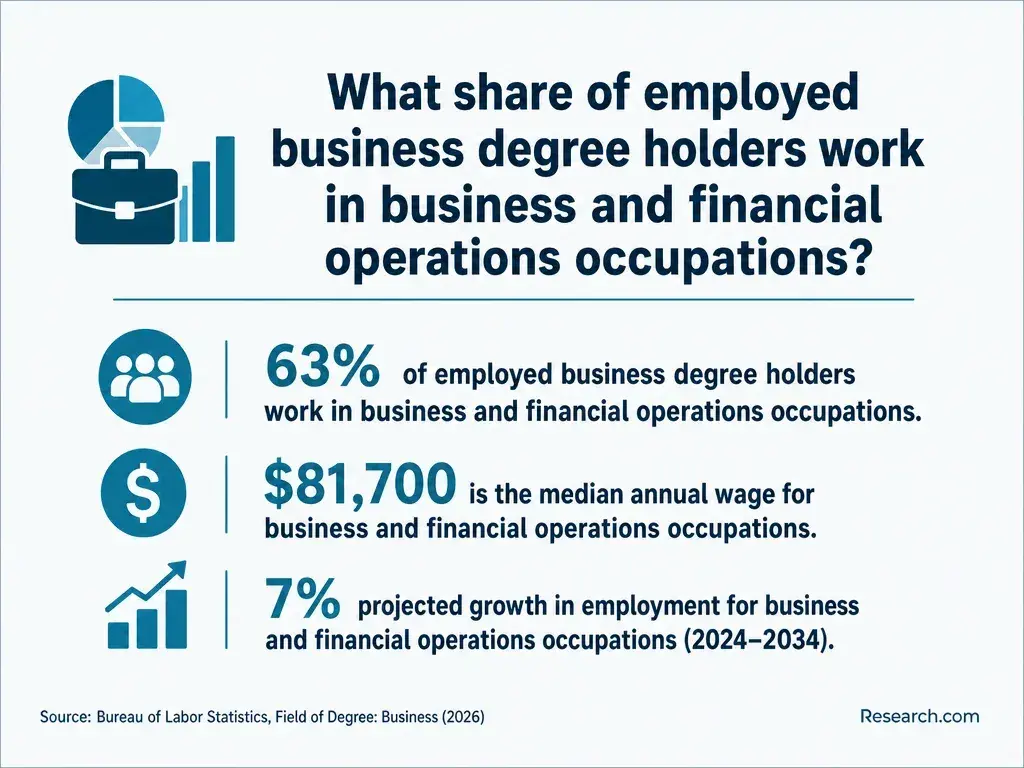
Potential starting points include operations coordinator, marketing coordinator, HR assistant, and project coordinator roles. Your capstone should resemble a task in the role you want: an operations applicant might show a process map and proposed measures, while a marketing applicant might present a customer-research analysis. Neither sample establishes that an employer adopted the recommendation.
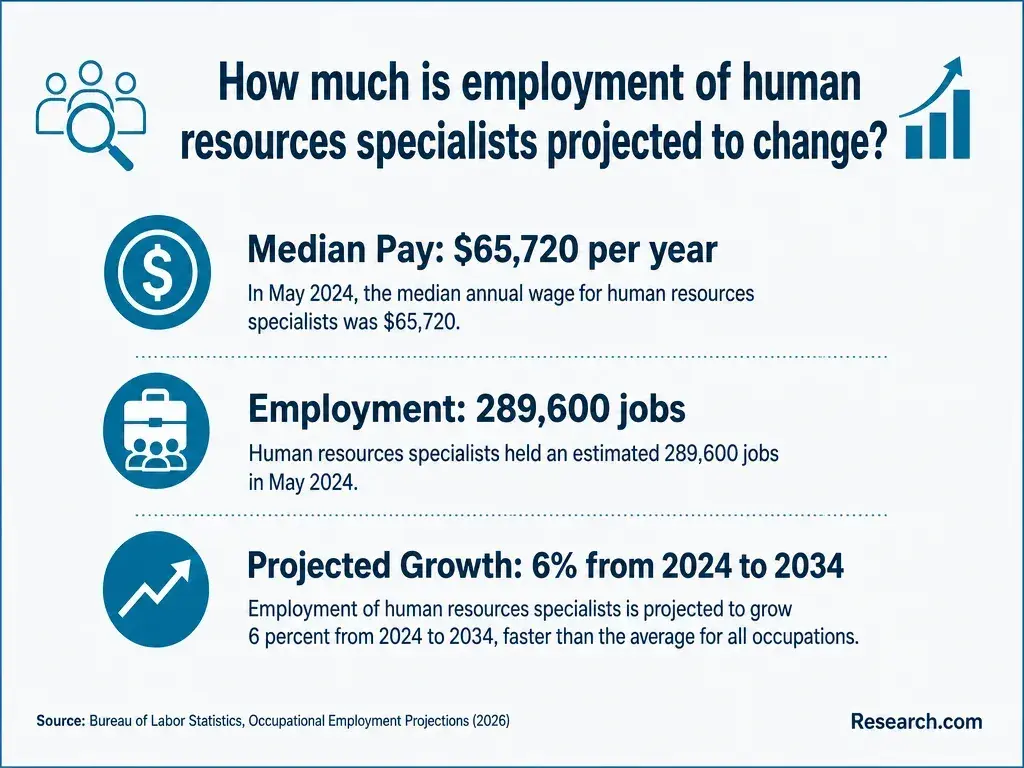
Choose the academic pathway around the function, not the job title alone. For example, someone targeting HR work should compare the business curriculum with online human resources programs for associate degree holders if they have transferable credits. HR-specific coursework or experience may be more useful than a general capstone, depending on the position. A degree and portfolio can support an application, but employers still assess role-specific skills and experience.
Verify the institution's recognized accreditation first. Then check whether the business school or the specific program is covered by any claimed AACSB, ACBSP, or IACBE accreditation; those accreditations have different scopes and do not replace institution-level review. Accreditation does not guarantee a particular capstone format, employer access, or job outcome.
Use the school's current catalog to confirm the degree and capstone requirements, and ask who approves project topics and assesses the final work. An application-fee saving is separate from those quality checks: if you are considering online universities with no application charge, verify accreditation and capstone policies for each program before applying.
Programs commonly combine general education with business courses in accounting, economics, finance, marketing, management, and quantitative methods. To prepare for a portfolio-ready capstone, look beyond course names: determine where you will practice spreadsheets, evaluate imperfect data, write for a decision-maker, and revise work after feedback. Some capstones require prior business-core courses or senior standing.
Match electives to the proposed deliverable. A supply chain analysis, for instance, benefits from operations and data coursework; a marketing plan needs appropriate research and measurement skills. Transfer students should verify that prior courses satisfy those requirements rather than counting only accepted credits. Students comparing a project-focused route can compare project management bachelor's credit transfer rules, while confirming separately whether the alternative degree's final project fits their career goal.
Choose the format that lets you complete the actual capstone work. Online delivery may still involve scheduled team meetings, live presentations, fixed deadlines, or approved workplace access. Campus study may offer easier face-to-face collaboration, but travel and class schedules can limit project time. Neither format automatically produces a stronger portfolio piece.
Ask whether the capstone can be completed individually, whether remote students can use public data or a simulation, and how faculty review drafts. If you need to remain employed, compare those obligations alongside business administration programs supporting continued employment. Get the likely meeting and presentation requirements before deciding that an online option fits your schedule.
Schools set their own requirements. First-year applicants generally need an accepted secondary-school credential; transfer applicants typically submit prior college transcripts. A school may also have separate requirements for entry to its business major. Admission, transfer-credit acceptance, and permission to enroll in a capstone are different decisions.
If you are returning to college, request a written evaluation showing which credits apply to general education, the business core, and prerequisites. Ask an adviser when you would become eligible for the capstone. That sequence matters when comparing quick online bachelor's pathways: a faster advertised calendar cannot remove an unmet prerequisite or a required course offered only in certain terms.
A bachelor's degree typically takes about four years of full-time study from the beginning, while a transfer student's timeline depends on credits applied to requirements, remaining courses, and course availability. The capstone may have prerequisites or be offered in limited terms, so a short list of remaining credits does not necessarily mean a short time to graduation.
For a useful comparison, request a degree audit and estimate tuition and required fees for the courses you still need. Include books, software, travel or proctoring, and any reduced work hours needed for a project. Review ranked US colleges for faster business degree completion as possible options, then ask each school whether its capstone schedule fits your projected final terms. Do not assume the fastest advertised route is your least expensive route.
Earnings depend on the occupation, location, employer, and experience - not on the degree title or the presence of a capstone. The U.S. Bureau of Labor Statistics reports a May 2025 median annual wage of $78,760 for market research analysts. That is an occupation-wide median, not an expected starting salary for a new business graduate or someone whose portfolio includes a market analysis.
Evaluate a capstone as evidence for a defined role rather than as a promised salary increase. If you are comparing degrees for project-oriented work, weigh remaining education costs and financing alongside job requirements; guidance on funding an online project management bachelor's degree may help frame that separate degree comparison. A strong sample can give you something concrete to discuss in an interview, but hiring and pay still depend on the employer's needs.
Can a Business Administration Capstone Build Your Career Portfolio?
Yes - if your program permits a shareable version and the finished work makes your contribution clear. Start with the decision-maker: for example, a small-business owner considering a scheduling change or a nonprofit manager reviewing a proposed outreach budget. A useful capstone identifies the decision, evaluates feasible options, and states what evidence would be needed before implementation.
Project setting affects both what you can learn and what you can show. These options have different access and permission limits:
| Project setting | Portfolio opportunity | Main limitation |
| Publicly available data | Share a reproducible analysis and sources | Public data may not describe an organization's internal needs |
| Approved workplace project | Address a specific operational decision | Employer data, findings, and work product may be restricted |
| Classroom case or simulation | Show a complete decision process without workplace access | Recommendations are academic, not measured business results |
Before committing to a topic, use this sequence to keep the academic project feasible and the eventual portfolio honest:
- Confirm the capstone rubric, required approvals, deadlines, and whether individual or group work is allowed.
- Define one decision and a narrow output, such as a process map, operating budget, or market analysis.
- Identify lawful data sources, relevant measures, assumptions, and the person who could evaluate the recommendation.
- Ask the faculty adviser and, for workplace work, the employer what may be collected, submitted, retained, or publicly shown.
- Revise the final output into a shareable sample that explains your methods, limitations, and personal contribution without claiming unverified impact.
Do not upload customer records, employee information, proprietary figures, or employer-owned materials without permission. Redact or replace restricted information only if the resulting sample remains accurate and permitted. If your intended project is deeply focused on logistics or procurement, compare the business administration capstone with those in supply chain bachelor's degrees in three years or less; a specialized curriculum may better support that particular portfolio goal. Before enrolling, obtain the current capstone brief and ask to see how a student's proposed topic would be approved.
Other Things You Should Know About Business Administration
Usually, if sharing is permitted and you identify your own contribution. Credit teammates and avoid presenting the group's full analysis as solely yours.
No. A short PDF or selected work sample can be easier to tailor to an application. Share it only with appropriate permissions.
Follow the course's AI policy and any workplace data rules. Verify generated calculations and claims yourself, and disclose tool use when required.
Tell your faculty adviser promptly. Ask whether you can narrow the scope or switch to an approved public-data case or simulation; do not assume the original project will still meet the rubric.
- Cost of Attendance (Budget) | 2025-2026 Federal Student Aid Handbook https://fsapartners.ed.gov/knowledge-center/fsa-handbook/2025-2026/vol3/ch2-cost-attendance-budget
- Frequently Asked Questions | Protecting Student Privacy https://studentprivacy.ed.gov/frequently-asked-questions
- Client-Based Capstones - Center for Community Solutions https://communitysolutions.ucr.edu/client-based-capstones
- Transfer Credit Policy - First-Year / Transfer Students | Pace University New York https://catalog.pace.edu/undergraduate/general-university/admission/transfer-credit-policy-first-year-transfer-students/
- Capstone Programs and Business Plan Support | cornell.edu https://innovation.weill.cornell.edu/programs-offerings-and-support/entrepreneurship-and-startup-basics/capstone-programs-and-business
- Capstone Project | UCLA Anderson School of Management https://www.anderson.ucla.edu/degrees/full-time-mba/academics/capstone-projects
- Undergraduate Transfer Credit Policy | nyu.edu https://www.nyu.edu/about/policies-guidelines-compliance/policies-and-guidelines/UndergraduateTransferCreditPolicy.html
- What Is a Capstone Project? - Boston University Questrom https://www.bu.edu/questrom/blog/what-is-a-capstone-project/
- What is a Capstone Project in College? | snhu.edu https://www.snhu.edu/about-us/newsroom/education/what-is-a-capstone-project
- Transfer Policy | Miami Academic Transfer Evaluation System https://mates.miami.edu/transfer-policy/index.html