
2027 Is a BS in Business Administration Useful for Running A Marketing Agency? Degree Fit and Opportunity Cost
Audited and Verified:
Our Editorial and Data Verification Process
Research.com uses government datasets, official education statistics and primary institutional information to support its career and degree guides. Our review process checks factual accuracy, occupational definitions, source dates and the requirements associated with the credentials discussed.
How This Article Was Fact-Checked
Our editorial team verifies salary estimates, employment projections, education requirements and program information against original data providers and official organizations. Salary figures are checked against the relevant occupational definitions and reporting periods. Information about licensure, accreditation and required in-person training is reviewed separately.
Fact-checked and verified on:

Co-Founder and Chief Data Scientist
Running a marketing agency requires more than winning clients and delivering campaigns. You also have to price work, manage cash flow, coordinate people, and decide which services are profitable. A BS in Business Administration can strengthen those operating skills, but completing one takes time and money that could go toward building the agency.
This guide is for prospective founders and working agency owners weighing a degree against a marketing degree, targeted training, and hands-on experience. It will help you identify the education gap worth paying to close.
Key Things You Should Know
- A BS in Business Administration is most useful when your agency skill gap is financial, operational, or managerial; it does not replace campaign experience or a client portfolio.
- You do not generally need a college degree to start a US marketing agency, though business registration, taxes, contracts, and industry-specific rules still matter.
- For career context, US market research analysts had a $78,760 median annual wage in May 2025, and employment is projected to grow 7% from 2025 to 2035; neither figure predicts an agency founder's income.
Is a BS in Business Administration useful for running a marketing agency?
Yes, if you need to become a better business operator - not merely a better campaign practitioner. A BS in Business Administration typically combines accounting, finance, management, marketing, operations, and quantitative coursework. Those subjects can help an owner distinguish a busy agency from a profitable one: a full client roster is less valuable if scopes expand without payment, contractors cost more than expected, or cash arrives too late to cover payroll.
The degree is less direct preparation for writing ad creative, configuring campaigns, managing search accounts, or demonstrating results to clients. Courses may introduce those activities, but supervised work, platform-specific training, and a credible portfolio usually provide stronger evidence of delivery ability. If you already run campaigns successfully, compare programs for finance and operations depth rather than assuming every business degree adds the same value. A nationwide comparison of online business programs can help you identify candidates; the individual curriculum and your remaining requirements should decide the fit.
What skills does a business administration degree teach agency owners?
The most relevant skills concern decisions an owner makes repeatedly. Managerial accounting can help you estimate the labor and contractor costs of a client account; finance can help you plan for late payments; operations courses can help you define handoffs and prevent missed deliverables. Statistics and analytics can improve how you interpret campaign evidence without mistaking a change in a metric for proof that the campaign caused it.
Management and organizational behavior become more useful as an agency adds employees or contractors. They can inform delegation, feedback, and workload planning, but introductory coursework is not a substitute for understanding employment obligations or seeking qualified legal and payroll advice. Owners planning to build an internal people-operations function can compare their broad business coursework with education options for future HR professionals; a business degree alone does not confer an HR credential.
A useful test is whether a program asks students to apply these subjects. A budget, process map, or client-profitability analysis teaches more about agency decisions than a course title alone. If using real client information for classwork, obtain permission and follow confidentiality and data-use rules.
Do you need a degree to start a marketing agency?
No general US rule requires an agency founder to hold a college degree. Clients are more likely to need a clear service offer, relevant work samples, reliable delivery, and terms they understand. The legal steps are separate from education: check applicable state and local registration rules, tax obligations, advertising requirements, and any rules tied to a specialized service. A degree does not complete those steps for you.
For someone who can already sell and deliver a defined service, starting small can reveal the most valuable learning gap. Track the time and direct cost of each project, document changes in scope, and review whether payments arrive before major expenses are due. If the gap is narrow, a targeted course, mentor, or accountant may be more efficient than a full bachelor's degree.
If you later decide a degree supports a broader career goal, compare the entire cost of applying and enrolling - not just tuition. Online college options without an application fee may reduce one upfront expense, but an absent application fee says nothing about curriculum fit or total cost.
The distinction is operating breadth versus marketing depth, although actual course requirements vary by school. This comparison shows which pathway is likelier to address a founder's primary gap; none replaces experience delivering client work.
| Pathway | Likely strength | Best fit for an agency founder | Important limitation |
| BS in Business Administration | Finance, operations, management, and general business decisions | Someone with marketing experience who needs to run and scale the organization | May offer limited depth in current marketing tools and channels |
| Bachelor's degree in marketing | Customer research, positioning, campaigns, and marketing measurement | Someone who needs stronger preparation for client strategy or delivery | May devote less required coursework to accounting and operations |
| Targeted courses and supervised work | Focused practice in a specific skill gap | An owner who already has a degree or needs an immediate, narrow improvement | Does not award a bachelor's degree or necessarily cover broader business fundamentals |
Check the transcript-level curriculum, not just the degree label. A business administration program with a formal marketing concentration may offer a useful combination, but electives do not automatically constitute a concentration. If leading teams is the main goal rather than improving client marketing work, accelerated online organizational leadership school choices offer another curriculum to compare. Confirm which credits and courses you would actually need before choosing either degree.
Prioritize courses by the decisions you expect to own. Financial accounting and managerial accounting support reading statements and estimating service costs. Business finance helps with cash planning; operations or project management helps with capacity, deadlines, and delivery processes. Marketing research and analytics support defensible client recommendations, while business law can introduce contract concepts without replacing legal advice.
When comparing catalogs, look beyond required course names. An agency-focused combination might pair accounting and operations with a marketing research elective and an approved project that models a service budget. Confirm prerequisites, elective availability, and whether the project can use suitably anonymized business information.
A project management course may improve delivery planning, but it does not automatically qualify a student for a professional certification. If a separate project management degree is under consideration, comparing project management tuition and mandatory fees helps keep that larger educational commitment distinct from taking one useful elective.
An online program can make it easier to keep serving clients while studying; a campus program may make scheduled collaboration and local networking easier. Neither format is inherently more rigorous or more flexible. An online course can still require live meetings, group presentations, proctored exams, and fixed weekly deadlines - obligations that can conflict with client launches.
Ask each program for sample course schedules and assessment policies. Then compare those obligations with your busiest delivery weeks, not an average week. Check whether required courses run when you need them, whether an internship or capstone can be completed remotely, and whether the school offers a workable part-time pace. If speed is the priority, quick online bachelor's pathways are worth examining, but a shorter calendar does not reduce the coursework or guarantee that your agency can absorb the weekly time commitment.
Many US bachelor's programs are designed around roughly four years of full-time study, but an agency owner's remaining time depends on accepted transfer work, course sequencing, enrollment pace, and the school's residency requirements. A school may accept a prior course as elective credit without counting it toward the business core. Request a program-specific degree audit before relying on an advertised completion timeline.
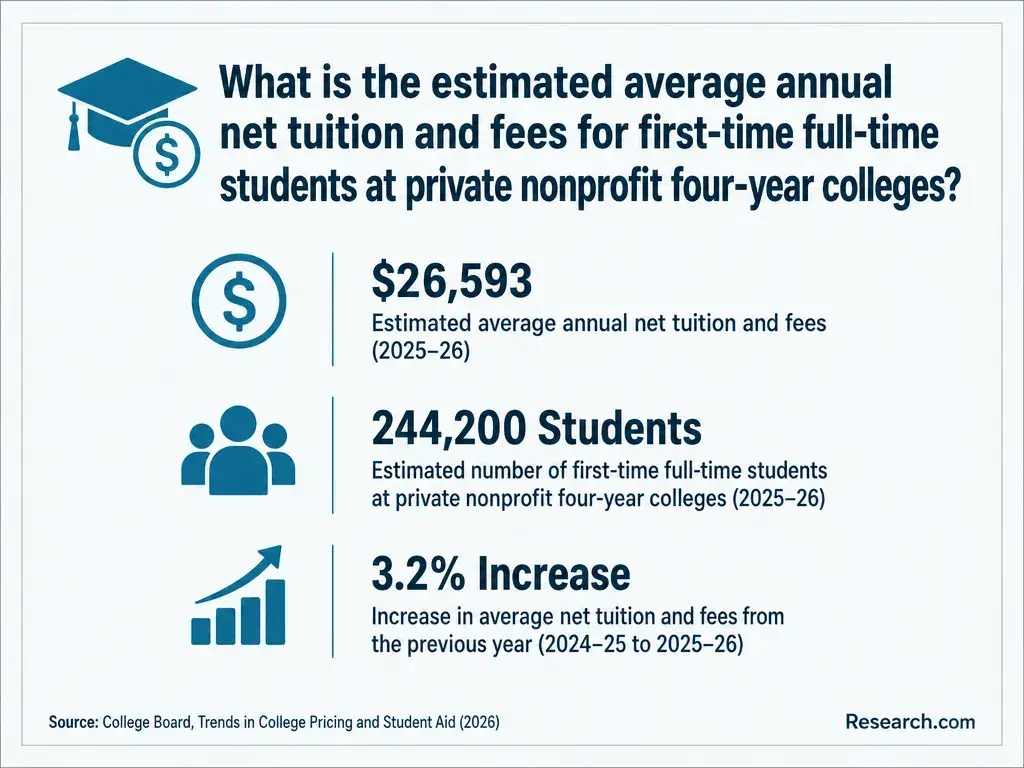
Calculate the cost to finish, not the advertised price of a degree. Add tuition for remaining required courses, mandatory fees, books and software, possible travel, and borrowing costs. Then account for the agency work you would decline or delegate to make study time available. Compare those figures against a narrower training option and the value of having a bachelor's degree for jobs you might pursue if the agency changes direction. Business administration degrees for limited tuition budgets can provide a starting shortlist, but only an official credit evaluation and current school charges can establish your likely total.
First, verify that the institution holds recognized institutional accreditation and that the status covers the school offering the degree. Then check whether its business school or the relevant program has additional AACSB, ACBSP, or IACBE accreditation. These are different scopes of review: do not assume that an institution's accreditation means its business program has a particular business-school accreditation, or that a school-wide business claim covers every named degree.
Accreditation is an important screening step, not proof that the curriculum fits your agency or that graduates earn more. Confirm the exact BS program, delivery format, transfer policy, and accreditation scope with the institution and accreditor. Also verify aid eligibility and costs separately. For example, FAFSA-based aid for online project management undergraduates addresses a different degree pathway; its aid discussion should not be treated as a financial-aid offer for a business administration program.
For an agency founder, the degree's most immediate career use may be stronger operating judgment. It can also support a move into employed roles if independent work is no longer the goal. Marketing coordinator, account-support, operations, and research roles differ in their requirements; employers will assess relevant experience and work samples alongside education.
For a specific labor-market benchmark, the US Bureau of Labor Statistics reports a $78,760 median annual wage for market research analysts in May 2025 and projects 7% employment growth from 2025 to 2035. That is an occupation-wide median, not an expected starting salary for a business graduate or the income of an agency owner. Research roles also call for analytical skills that a general business curriculum may not develop in sufficient depth on its own.
Marketing management and general operations management are possible longer-term directions, but the degree does not make a new graduate a manager. If your career contingency is outside marketing - for example, procurement or logistics - compare the role's actual skill requirements with your planned coursework. Three-year-or-less supply chain degrees illustrate a more specialized alternative; choose one only if that function, rather than agency management, is the intended destination.
Is a business administration degree worth its opportunity cost for agency founders?
It is most likely worth considering when you want both stronger agency-management skills and the broader career option of holding a bachelor's degree. It is harder to justify solely as a way to learn one ad platform, write better proposals, or land your first client. Opportunity cost includes not only tuition but also the client work, business development, or rest displaced by coursework.
Make the decision against a concrete alternative. Identify the agency decision you struggle with, the courses or applied work that would address it, and the credits you still need. Compare the school's estimated net cost and feasible schedule with targeted training plus time spent serving clients.
If you already have substantial transfer credit, finishing a BS may be more attractive; if you already hold a bachelor's degree, a second one may add less than focused accounting, management, or marketing study. An accelerated business college program guide can help you find programs to investigate, but confirm credit applicability and workload before treating acceleration as a saving.
Ask the school for a written degree audit, a current cost estimate, and examples of required projects. Then decide whether the education would change important agency decisions enough to justify the time - or whether the better next step is to improve a specific service, hire expertise, or gain experience first.
Other Things You Should Know About Business Administration
Insurance needs depend on the services you provide, your contracts, and applicable rules. Ask a qualified insurance professional about relevant coverage, including professional liability and cyber risks, before accepting commitments you cannot comfortably absorb.
Yes, but calling someone a freelancer does not determine their legal classification. Have the working arrangement reviewed under applicable federal and state rules, and put deliverables, payment terms, and access to client information in writing.
Ownership depends on the contract and applicable intellectual-property law. Specify what the client receives, when rights transfer, and how third-party assets and portfolio use are handled; seek legal advice for consequential agreements.
Not without checking the client agreement, tool terms, and privacy requirements. Use public or fictional information when possible, and obtain permission before entering confidential client material into a third-party system.
- Chapter 5 - Advanced Degree or Exceptional Ability https://www.uscis.gov/policy-manual/volume-6-part-f-chapter-5
- Manage your business - Small Business Administration https://www.sba.gov/counseling/manage-your-business/
- Online Bachelor's Degree in Business Administration | Purdue Global https://www.purdueglobal.edu/degree-programs/business/bachelor-business-administration/
- What Jobs Can You Get With a Business Degree? | snhu.edu https://www.snhu.edu/about-us/newsroom/business/what-jobs-can-you-get-with-a-business-degree
- 10 Key Subjects Taught in a Bachelor of Business Administration Program | Carson-Newman University https://www.cn.edu/cps-blog/10-key-subjects-taught-in-a-bachelor-of-business-administration-program/
- What Can You Do with a Business Administration Degree? | American InterContinental University https://www.aiuniv.edu/blog/what-can-you-do-with-a-business-administration-degree
- Marketing Communications | What Are The Key Skills Employers Are Looking For In Marketing Professionals https://marketingcommunications.wvu.edu/professional-development/marketing-communications-today/marketing-communications-today-blog/2025/01/24/what-are-the-key-skills-employers-are-looking-for-in-marketing-professionals
- Top skills for marketing professionals | King's College London https://online.kcl.ac.uk/blog/top-skills-for-marketing-professionals
- What Can You Do With a Business Administration Degree? | American Military University https://www.amu.apus.edu/area-of-study/business-administration-and-management/resources/what-can-you-do-with-a-business-administration-degree-exploring-options/


