2027 Choosing a BS in Business Administration for Business Roles in Airport Operations
Audited and Verified:
Our Editorial and Data Verification Process
Research.com uses government datasets, official education statistics and primary institutional information to support its career and degree guides. Our review process checks factual accuracy, occupational definitions, source dates and the requirements associated with the credentials discussed.
How This Article Was Fact-Checked
Our editorial team verifies salary estimates, employment projections, education requirements and program information against original data providers and official organizations. Salary figures are checked against the relevant occupational definitions and reporting periods. Information about licensure, accreditation and required in-person training is reviewed separately.
Fact-checked and verified on:

Co-Founder and Chief Data Scientist
Airport operations depends on more than aircraft movements: someone must coordinate vendors, budgets, facilities, staff, and service disruptions. A BS in Business Administration can prepare you for those business responsibilities, but it does not replace airport-specific training or experience.
This guide is for students and employees considering airport-side roles rather than pilot or aircraft maintenance careers. It explains where a general business degree fits, which jobs offer realistic entry points, and what to verify before investing in a program.
Key Things You Should Know
- A BS in Business Administration is most useful for airport business functions such as contracts, budgeting, facilities coordination, and service management; airfield safety work requires separate operational training.
- Look for coursework in accounting, operations, analytics, and procurement, then seek airport experience through an internship, current job, or supervised project.
- The Bureau of Labor Statistics projects 5% employment growth for administrative services managers from 2025 to 2035, but that occupation-wide figure is not a forecast of jobs for new airport business graduates.
What is a BS in Business Administration for airport operations careers?
A BS in Business Administration is an undergraduate degree covering how organizations manage money, people, processes, and decisions. In an airport setting, those skills can support an airport operator's purchasing and facilities work, an airline's station operations, or a contractor's services. The degree is general business preparation, not an airport operations license or proof of airfield competence.
Start with the employer and function you want. If you want to coordinate contracts, budgets, or service delivery across teams, a broad business degree may offer useful flexibility.
If your goal is primarily freight movement or distribution, compare its operations courses with those in accelerated supply chain management bachelor's schools. If you want airfield inspections or emergency-response duties, examine aviation-specific training and the requirements in actual job postings before choosing a business major.
What airport operations jobs can you get with a business administration degree?
Job titles differ among airport authorities, airlines, fixed-base operators, and service contractors. The following distinctions help you identify positions where business coursework is relevant and where employers will expect additional experience.
| Role or function | Typical work | Likely starting position for a new graduate |
| Airport business or administrative coordination | Track invoices, contracts, reports, and departmental schedules | Assistant, coordinator, or analyst-support role |
| Vendor and procurement support | Help monitor purchasing, service agreements, and contractor performance | Purchasing assistant or contract coordinator |
| Facilities or terminal services | Coordinate work orders, customer-service issues, and service providers | Facilities or terminal operations coordinator |
| Airline or ground-service operations | Support staffing, turnaround coordination, and performance reporting | Station or operations support role, often with shift work |
| Airport operations management | Oversee teams, budgets, procedures, and responses to disruptions | Usually a later step after relevant operational responsibility |
A project coordinator role can be another route into airport facilities or technology work, although project work is not the same as managing daily airfield operations. If that function is your primary target, compare business coursework with affordable online project management degrees and check which employers actually recruit for the role.
What education and experience do airport operations managers need?
There is no single degree that qualifies someone to manage every airport operation. Employers may seek a bachelor's degree in business, aviation management, public administration, or another relevant field, alongside experience appropriate to the assignment. Managing contracts and terminal services calls for different preparation than directing airfield inspections or coordinating an incident response.
For an early-career applicant, the practical path is usually to build responsibility in a coordinator, analyst-support, customer-service, facilities, or operational role. Document the decisions you helped make: a schedule you maintained, a vendor issue you escalated, or a report you used to identify a service problem.
Leadership coursework can help you understand supervision, but it does not substitute for a record of judgment under airport procedures. Employees seeking a broader supervisory education can compare leadership bachelor's degrees with accelerated pacing against business programs with stronger budgeting and operations content.
Before applying, separate the job posting's required qualifications from preferred ones. Ask whether the position involves airfield access, regulatory compliance, emergency duties, public procurement, or irregular shifts; those details can matter more than the degree title.
Choose courses by the work you expect to perform, not by an airport-themed elective alone. A useful business plan combines managerial accounting and finance for budgets; operations and supply chain courses for service flow and vendors; statistics and spreadsheets for performance reporting; and organizational behavior and business communication for coordinating teams.
Where available, add electives in procurement, project management, risk, information systems, or public-sector administration. Check prerequisite chains and whether the electives are actually offered before graduation.
A supply chain concentration may provide more depth for cargo or purchasing work, but it may add courses that do little for a terminal-services goal. Comparing economical supply chain study timelines can help you test whether that specialization changes both your preparation and completion plan.
Use an assignment to demonstrate a specific skill—for example, a process map of a publicly observable passenger-service step or an analysis using published airport reports. Do not present a classroom proposal as an implemented airport improvement or use internal operational data without permission.
Either format can teach the business core. The consequential difference for an airport career is access: campus study may make local employer events and internships easier to reach, while online study may let an employee continue working rotating shifts. Neither format guarantees an airport placement, and online does not necessarily mean self-paced.
When you compare ranked online business schools in America, look beyond delivery labels. Confirm live-class attendance, group-project meeting times, exam rules, course availability, and whether an internship or capstone can be completed with an approved airport employer.
For campus options, ask the same placement questions and calculate travel and schedule conflicts. The better format is the one you can finish while gaining relevant experience.
Verify that the institution holds recognized institutional accreditation, then check whether any advertised business accreditation covers the school or specific program you would enter. AACSB, ACBSP, and IACBE have distinct accreditation scopes; a school's claim should not be treated as proof that every degree it offers is covered. Accreditation also does not establish airport hiring eligibility or guarantee an internship.
Ask the school for its exact degree name, accreditor, and program coverage, then confirm those details with the accreditor's directory. Apply the same check to alternatives: if project coordination is your target, estimate the cost of accredited project management study while comparing its curriculum and credential scope with the business degree.
Requirements vary by school and by entry route. First-year applicants generally submit evidence of secondary-school completion; transfer applicants typically provide college transcripts. Some schools admit students directly to business, while others require later entry to the major or completion of prerequisite courses such as mathematics, accounting, or economics.
If you already have credits, request an official evaluation showing which courses satisfy general education, the business core, electives, and any residency requirement. Accepted credits are not automatically applied credits.
When reviewing ranked US colleges for faster business degree completion, ask each school what remains after its own evaluation rather than relying on an advertised timeline. An adviser or registrar can identify missing prerequisites and course sequences before you commit.
A traditional full-time bachelor's path commonly spans four academic years; transfer credit, part-time study, prerequisite gaps, and course schedules can change the time remaining. Compare programs using a written degree audit and a term-by-term course plan, not the shortest advertised completion claim.
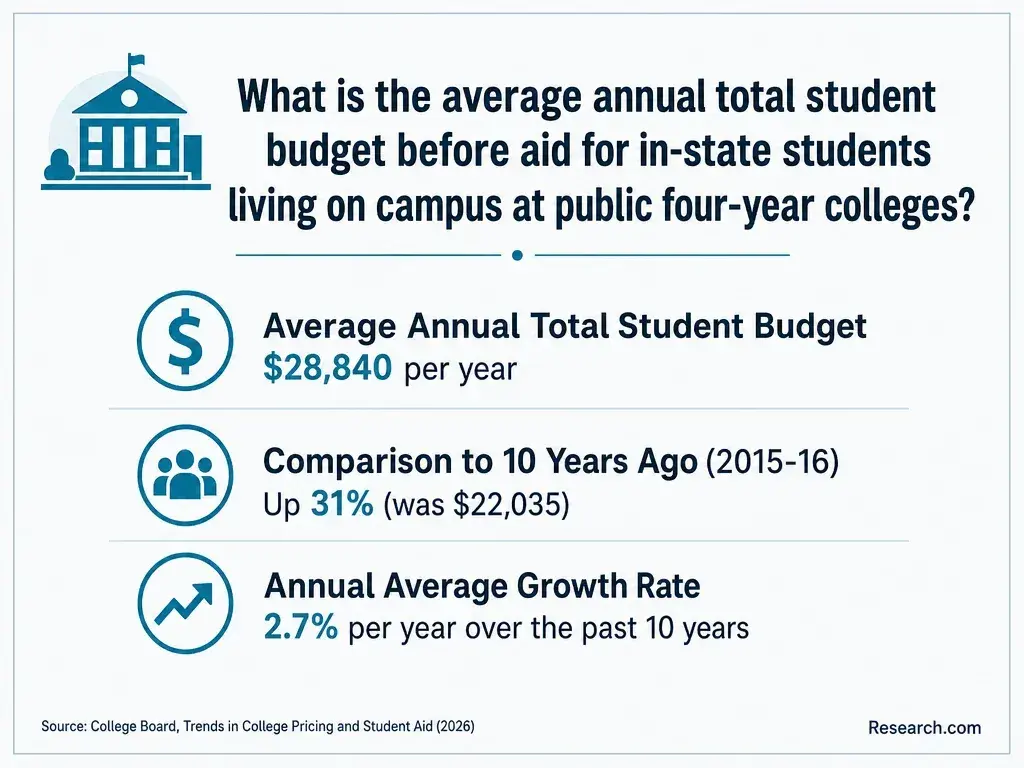
For cost, separate tuition from required fees, books, software, travel, and any lost work hours. Then calculate the charges for remaining required courses, accounting for when employer reimbursement arrives and whether you qualify for aid.
Resources on financial aid planning for low-cost business administration degrees can help frame questions, but only a school's current offer and your aid information can establish your likely cost.
Compare the degree's cost with a more direct route if you already hold a bachelor's degree or have substantial airport experience. Targeted courses or employer training may address a narrow skills gap without another full undergraduate program.
Choose a credential for a defined responsibility, not as a substitute for experience. Airport-focused professional development offered through airport industry organizations may be relevant to employees moving toward airport management; eligibility, examinations, and recognition should be checked with the issuing organization and target employer.
Project management or supply chain credentials may be more useful for facilities projects or purchasing than for airfield duties. Required employer training and access authorization are separate from voluntary certifications.
Ask a supervisor or hiring manager which credential appears in postings for the next role and whether your current duties meet its eligibility rules. If you are deciding between another degree and shorter training, compare the full program cost, including online business colleges with competitive costs, with the specific skill or credential you still need.
What salaries and job outlook can airport operations graduates expect?
There is no reliable national salary figure for "BS in Business Administration graduates working in airport operations." Pay depends on the employer, location, shifts, job scope, and prior experience.
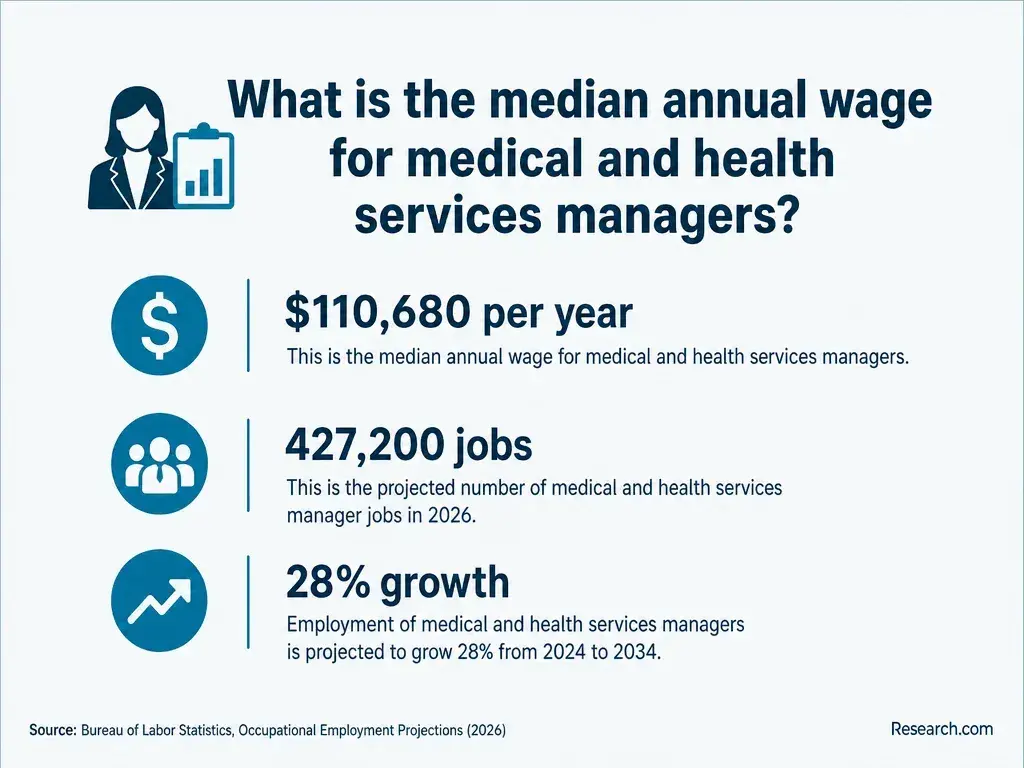
As a broad reference, the U.S. Bureau of Labor Statistics reports a May 2025 median annual wage of $114,130 for administrative services managers. That occupation covers many industries and established managers; it is not a starting salary or an airport-specific estimate.
BLS projects 5% employment growth for that occupation from 2025 to 2035. Use that as context, not a prediction of openings at a particular airport. To judge your return on education, compare local postings for reachable entry roles with your remaining degree cost and the experience you can gain while studying.
Low-cost shorter business administration programs may deserve consideration, but verify that a faster schedule leaves room for the airport experience employers value.
Other Things You Should Know About Business Administration Programs
No. Budgeting, contracts, facilities coordination, and customer-service administration are distinct from piloting. Check the duties of each opening rather than assuming every airport job requires flight training.
No. An airport or employer determines whether a role requires access authorization and arranges the applicable process. A degree does not grant access to restricted areas.
Yes, particularly for terminal-service or airline-station support roles. Show evidence of handling disruptions, communicating across teams, and following procedures; identify any airport-specific training the employer still requires.
Possibly, with faculty approval and any required employer permission. Use public or authorized information, remove sensitive details, and distinguish your recommendations from changes the employer actually implemented.
- 4 Entry-Level Aviation and Airport Jobs That Can Start Your Career | aerotek.com https://www.aerotek.com/en/insights/top-4-entry-level-aviation-and-airport-operations-jobs
- Part 139 Airport Certification | Federal Aviation Administration https://www.faa.gov/airports/airport_safety/part139_cert
- Bachelor of Science in Aviation Business Administration | erau.edu https://erau.edu/degrees/bachelor/aviation-business-administration
- Concentrations | Berkeley College https://berkeleycollege.edu/catalogs/undergraduate-2025-2026/academics-programs/management/concentrations/index.html
- Aviation Management | Henderson State University https://hsu.edu/academics/graduate-studies/master-of-business-administration/aviation-management/
- Bachelor's in Business Administration Concentrations | Purdue Global https://www.purdueglobal.edu/degree-programs/business/business-administration-concentrations/
- Aviation Internships and Co-ops https://aviation.osu.edu/aviation-internships-and-co-ops
- Airport management | College of Aviation | Western Michigan University https://wmich.edu/aviation/airportmgmt
- What Can You Do With a Business Administration Degree? | snhu.edu https://www.snhu.edu/about-us/newsroom/business/what-can-you-do-with-a-business-administration-degree