2027 BS in Business Administration Curriculum: How to Evaluate Preparation in Insurance Operations
Audited and Verified:
Our Editorial and Data Verification Process
Research.com uses government datasets, official education statistics and primary institutional information to support its career and degree guides. Our review process checks factual accuracy, occupational definitions, source dates and the requirements associated with the credentials discussed.
How This Article Was Fact-Checked
Our editorial team verifies salary estimates, employment projections, education requirements and program information against original data providers and official organizations. Salary figures are checked against the relevant occupational definitions and reporting periods. Information about licensure, accreditation and required in-person training is reviewed separately.
Fact-checked and verified on:

Co-Founder and Chief Data Scientist
A business administration degree can teach the finance, analytics, and process skills used in insurance operations, but its course title alone says little about job preparation.
If you are choosing a program or planning electives, you need to know whether its assignments connect business concepts to policy servicing, claims workflows, underwriting support, and regulated customer data.
This guide shows you what to look for in the curriculum, how to judge practical experience, and where a general business degree may need to be supplemented by insurance-specific training.
Key Things You Should Know
- Favor programs that connect accounting, operations, analytics, and business law to documented insurance workflows, not just programs that offer an insurance elective.
- Look for supervised work samples using appropriately permitted data; a simulation can demonstrate analysis, but it is not insurance-industry experience.
- A degree does not replace a state-required license. The BLS reports a $102,320 median annual wage for project management specialists, but that occupation-wide figure is not an entry-level insurance salary.
What Is a Business Administration Degree for Insurance Operations?
A BS in Business Administration is a broad undergraduate business degree. For insurance operations, its value lies in applying general business methods to the work that keeps an insurer, agency, or brokerage functioning: processing applications and policy changes, coordinating claims, monitoring service quality, maintaining records, and improving workflows. It is not, by itself, an insurance license or a specialized actuarial qualification.
Degree names do not reliably reveal depth. A BS, BBA, or business degree with insurance electives may differ in quantitative requirements, available projects, and whether insurance is an official concentration.
Compare the catalog and required assignments rather than relying on the label. If speed is a deciding factor, quick-completion business degree pathways are worth comparing, but a shorter schedule is useful only if it leaves room for the courses and experience your target role needs.
How Does Accreditation Affect Insurance Operations Career Preparation?
Start by confirming that the institution holds recognized institutional accreditation, then check whether any advertised AACSB, ACBSP, or IACBE accreditation actually covers the business school or program you would enter.
Institutional and business-program accreditation have different scopes; neither proves that a curriculum teaches insurance operations or that graduates obtain insurance jobs.
Ask for the current catalog, course descriptions, and examples of approved applied assignments. Check who teaches insurance-related courses, whether required electives run often enough for your schedule, and whether internship support includes insurance employers.
You can compare no-fee college applications while screening schools, but an application-fee policy should not substitute for checking accreditation scope and curriculum.
What Coursework Should a BS in Business Administration Include?
A strong curriculum combines a business core with opportunities to apply it to insurance decisions. The table separates broadly useful courses from the insurance-specific application you should seek in descriptions, electives, or assessed projects:
| Curriculum area | Insurance-operations application to look for |
| Accounting and finance | Reading financial statements, tracking operating costs, and distinguishing premium revenue from claims expenses. |
| Statistics and analytics | Interpreting service volumes, turnaround times, and data limitations without treating a correlation as proof of cause. |
| Operations and information systems | Mapping policy or claims workflows, identifying handoffs, and evaluating controls for accurate records. |
| Business law and ethics | Recognizing contracts, compliance responsibilities, privacy concerns, and when a question needs specialist review. |
| Management and communication | Documenting procedures, explaining exceptions, and coordinating with customers and internal teams. |
Ask which courses are required, which are electives, and whether prerequisites or infrequent offerings could keep you from taking the relevant courses. If your goal is primarily distribution, procurement, or another logistics function rather than insurance servicing, compare economical supply chain study timelines against the broader business route.
The strongest evidence of preparation is an assessed task resembling the work, not a list of topics covered. A suitable student project might map a hypothetical policy-change process, define a turnaround-time measure, identify where errors could occur, and propose a control.
Its conclusions should state assumptions and limitations; a classroom proposal is not a verified improvement at an insurer.
Look for practice in spreadsheet checks, clear case notes, process mapping, escalation decisions, and explaining results to nontechnical colleagues.
Projects using an employer's customer, claims, or personnel records require permission and appropriate data protections; students should not assume they can place such records in a portfolio. If coordinating complex initiatives is your main goal, online degree options in project management at lower cost may offer more targeted training than a general business elective sequence.
Either format can teach the relevant business core. Online study may fit an existing insurance job, while campus study may make scheduled collaboration and local employer contact easier. Neither format guarantees an internship, and online does not necessarily mean self-paced.
Before enrolling, check live-session times, group-work expectations, exam rules, software access, internship eligibility, and whether insurance-relevant electives are offered in your preferred format. Compare the full cost of each option, including technology, travel, and time away from work.
A specialized alternative may have different charges; an accredited online project management tuition guide can help frame that comparison without assuming the programs teach the same insurance skills.
Requirements vary by institution and by whether you enter as a first-year or transfer student. Schools commonly request prior academic transcripts; a business major may also have its own entry or progression rules. Mathematics, statistics, accounting, or economics may be prerequisites at one school and courses taken after admission at another.
If you have college credit, request an official evaluation showing which courses satisfy the business core, general education, electives, and any concentration. Credit accepted by the institution does not necessarily replace a required course.
This matters when comparing a general business degree with another path: credit mapping for online project management programs may produce a different completion plan from the same transcript. Get each school's evaluation before relying on a projected graduation date.
A bachelor's degree commonly takes about four years of full-time study from the beginning, but transfer credit, course sequencing, enrollment pace, and residency requirements determine an individual student's timeline. An insurance elective offered infrequently can delay completion even when most degree requirements are finished.
Compare programs using the credits still required after an official evaluation, the tuition and fees charged for those credits, books and software, and any lost earnings or travel.
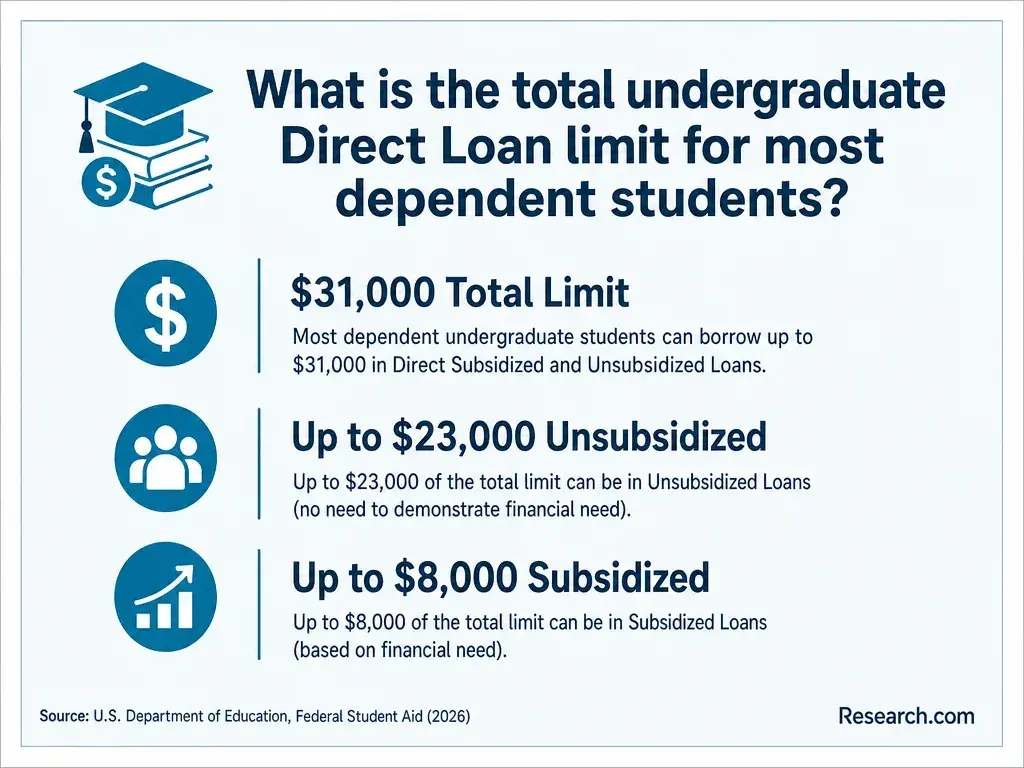
Then ask financial-aid staff about eligibility and borrowing before calculating what you can afford. For a starting point on comparing aid and published costs, see financial aid planning for low-cost business administration degrees. An advertised low tuition rate is not a verified total completion cost.
Potential starting points include policy-service representative, claims support specialist, underwriting assistant, operations coordinator, and insurance agency operations staff.
Employers define these titles differently. Review postings for the actual tasks, required experience, software, and any licensing condition rather than assuming a degree qualifies you for every opening.
Applicants with customer service or administrative experience can strengthen a transition by showing accurate documentation, exception handling, spreadsheet work, and communication under deadlines.
Insurers also employ HR staff, but that is a separate function: online HR bachelor's programs accepting transfer credits may be a better fit if employee operations, not policies or claims, is your target. Supervisory and specialist responsibilities generally require evidence beyond graduation.
There is no single salary or growth rate for "insurance operations graduates." Job title, employer, location, experience, and license requirements matter.
The U.S. Bureau of Labor Statistics reports a May 2025 median annual wage of $102,320 for project management specialists and projects 7% employment growth for that occupation from 2025 to 2035. Those figures cover workers across industries and experience levels; they should not be read as an expected starting wage or an insurance-specific forecast.
For a useful return-on-investment comparison, collect pay ranges from local postings for roles you could plausibly enter, then compare them with your remaining degree costs and likely time in school.
If you are also considering a specialized project-management degree, compare its full aid offer, not just tuition, using guidance on financial aid packages for online project management bachelor's students. Neither degree alone establishes a salary increase.
Which Insurance Licenses and Certifications May Graduates Need?
Licensing depends on the duties and state. Activities such as selling, soliciting, or negotiating insurance may require a state insurance producer license; other roles can have different state rules.
Ask the employer which duties the position includes and confirm requirements with the relevant state insurance regulator before paying for a course or exam. A BS in Business Administration does not itself confer a license.
Insurance designations and employer training can deepen role-specific knowledge, but their prerequisites and value vary. A student seeking an operations support role may benefit more initially from an internship or supervised insurance work than from pursuing a credential without a target job.
Likewise, accelerated organizational leadership college programs may shorten a degree path for some students, but they do not bypass insurance licensing rules or replace relevant experience.
Other Things You Should Know About Business Administration
No. Relevant core courses, insurance electives, and supervised experience can be a strong combination. Confirm whether a concentration adds useful coursework or is only a designation on the transcript.
Possibly, but only if the school approves the duties, supervision, learning objectives, and assessment. Employment alone does not award internship credit.
Request the current degree map, descriptions of relevant assignments, an elective schedule, and the rules for internships or workplace projects. Transfer students should also request an official credit evaluation.
Use it only with the data owner's permission and the required privacy protections. A public, synthetic, or properly approved dataset is safer when you cannot establish the right to use internal records.
- Skills Gaps: A Review of Underlying Concepts and Evidence | congress.gov https://www.congress.gov/crs-product/R47059
- 31 CFR Part 1025 -- Rules for Insurance Companies | ecfr.gov https://www.ecfr.gov/current/title-31/subtitle-B/chapter-X/part-1025
- Experiential Learning | nyu.edu https://www.nyu.edu/students/student-information-and-resources/career-development-and-jobs/find-a-job-or-internship/experiential-learning.html
- Bachelor of Science in Business Administration (BSBA) | Curry College Catalog https://catalog.curry.edu/program/buscsci-programs/businessadmin-bsba
- Business Administration - Risk Management, B.S. - Academics | Indiana Tech https://academics.indianatech.edu/program/ba-risk-management-bs/
- What is Business Analytics? | Michigan Technological University https://www.mtu.edu/business/undergraduate/business-analytics/what-is/
- Your Guide to Entry-Level Insurance Jobs: Opportunities, Skills, and Growth - LU Career Center - Resource Hub https://blogs.lawrence.edu/careercenter/2025/02/your-guide-to-entry-level-insurance-jobs-opportunities-skills-and-growth.html
- Major in Risk Management & Insurance (Bachelor's) | CU Denver Business School https://business.ucdenver.edu/bsba/risk-management-and-insurance
- Business Analytics Concentration - Academic Catalog https://catalog.ocean.edu/areas-study/business/business-administration-data-analytics-as/
- Risk Management and Insurance, Bachelor of Science | St. John's University https://www.stjohns.edu/academics/programs/risk-management-and-insurance-bachelor-science