2027 Should You Choose a BS in Business Administration or A Property Management Certificate for Your Next Career Step?
Audited and Verified:
Our Editorial and Data Verification Process
Research.com uses government datasets, official education statistics and primary institutional information to support its career and degree guides. Our review process checks factual accuracy, occupational definitions, source dates and the requirements associated with the credentials discussed.
How This Article Was Fact-Checked
Our editorial team verifies salary estimates, employment projections, education requirements and program information against original data providers and official organizations. Salary figures are checked against the relevant occupational definitions and reporting periods. Information about licensure, accreditation and required in-person training is reviewed separately.
Fact-checked and verified on:

Co-Founder and Chief Data Scientist
If you want to work in property management, a business bachelor's degree and a property management certificate can both help - but they solve different problems. The degree offers broader preparation and may satisfy a bachelor's requirement for future roles; the certificate concentrates on work you may need to learn sooner, such as leasing and property operations.
Neither automatically qualifies you for a job or replaces a state-required license. This comparison will help you weigh your existing experience, target role, budget, and timeline before committing to either pathway.
Key Things You Should Know
- Choose a property management certificate when your immediate gap is rental-industry knowledge; choose a BS in Business Administration when you also need a bachelor's degree or want broader career options.
- A full bachelor's degree commonly takes about four academic years; certificate length varies widely. Prior college credit can change your remaining degree timeline, but only an official evaluation can confirm how it applies.
- Neither credential overrides state real estate licensing rules. Check the duties you will perform - especially leasing and transactions for other owners - before paying for a program.
What is the difference between a business administration degree and a property management certificate?
A BS in Business Administration is an undergraduate degree spanning several business functions. A property management certificate is a narrower course of study focused on operating rental property or serving owners and residents. Certificates differ in who awards them: a college may award an academic certificate, while a professional association or training provider may offer a separate industry credential. Check the exact award before comparing programs.
The difference matters most when an employer specifies a bachelor's degree or when you want to move beyond rental operations. A certificate may address a leasing knowledge gap more directly, but it generally does not substitute for a bachelor's requirement. Conversely, a business degree does not establish that you know local landlord-tenant rules or property software. If the degree route fits your longer-term goal, you can compare nationally ranked online business programs, then inspect each curriculum rather than assuming all BS programs teach real estate.
Which credential is better for starting a career in property management?
For an immediate move into leasing or assistant property management, a relevant certificate plus supervised experience is often the more direct option. That is particularly true if you already have a bachelor's degree or transferable customer service, bookkeeping, maintenance-coordination, or administrative experience. Look for entry roles where you can document resident communication, work-order follow-up, recordkeeping, and compliance practices.
Choose the BS when you lack a bachelor's degree and the roles or later advancement you want commonly call for one - or when you want the flexibility to pursue business work outside real estate. If your goal is supervising teams across industries rather than managing buildings, undergraduate leadership programs with shorter timelines are another comparison worth making. For many readers, the answer is sequential rather than either-or: start gaining property experience, then pursue a degree if a specific opportunity makes its broader value clear.
What education and licensing requirements apply to property managers?
There is no single nationwide property manager license. Requirements depend on the state, the activities performed, whose property is managed, and whether a licensed broker must supervise the work. Leasing, negotiating rental terms, collecting rent, or managing property for another owner may trigger real estate licensing rules; other duties may be treated differently. A certificate or business degree does not grant a real estate license.
Before enrolling, describe your intended tasks to the relevant state real estate regulator and ask what license, supervision, education, and examination rules apply. Check employer requirements separately: a company can prefer a degree, experience, or an industry designation even when state law does not require it. If your actual goal is coordinating renovation projects rather than leasing and rental operations, lower-tuition online programs for project management may be more relevant - but they do not satisfy real estate licensing rules.
A business administration degree typically builds foundations in accounting, finance, management, marketing, operations, and quantitative decision-making. In property management, those subjects can help you interpret operating budgets, communicate with owners, supervise processes, and assess costs. The depth of real estate coursework varies by school; an elective is not necessarily a formal concentration.
A property management certificate is more likely to concentrate on leasing, resident relations, maintenance coordination, property accounting, fair housing, and applicable legal practices. Review its actual syllabus: a short course introducing these subjects is different from assessed practice with leases, budgets, and realistic scenarios. If hiring and employee relations interest you more than tenant operations, college pathways into human resources may provide a closer academic fit.
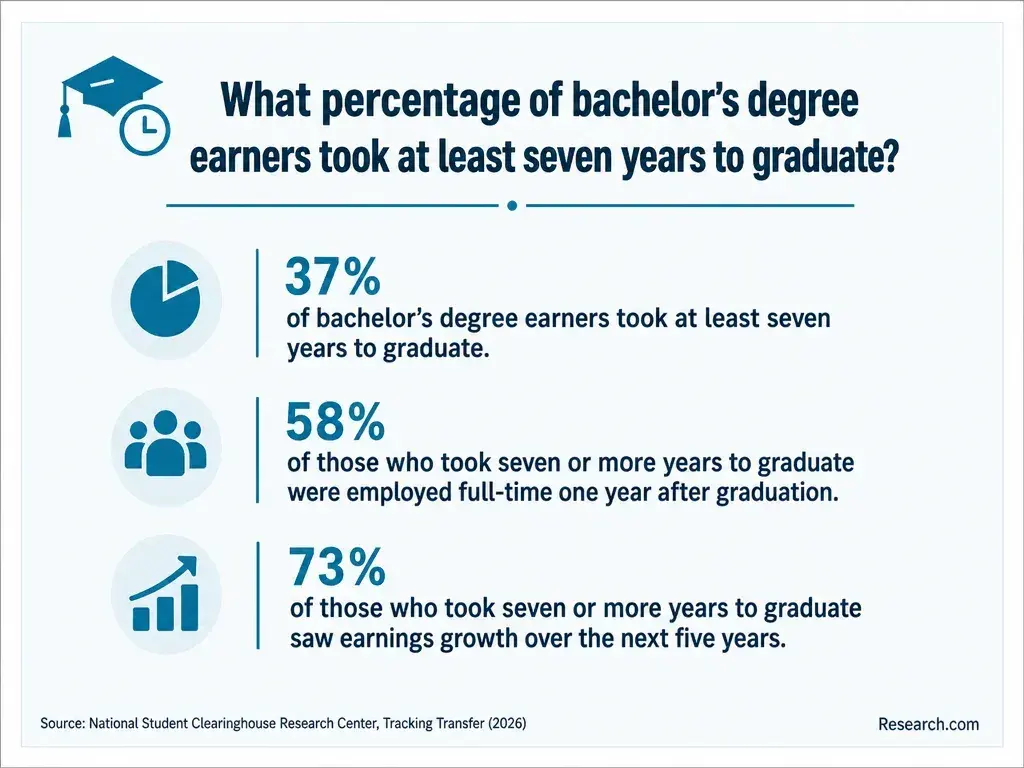
A full-time bachelor's pathway commonly spans about four academic years. A transfer or returning student may finish sooner, but accepted credits do not necessarily satisfy business-core, upper-level, or residency requirements. Ask for an official degree audit and a schedule showing when remaining required courses are offered before relying on an advertised completion date.
Certificate timelines vary from brief training to programs with multiple courses or experience requirements. Distinguish the time needed to finish classes from any additional time needed to earn a professional designation. If short academic sessions would help you schedule a degree around work, examine online bachelor's programs with short sessions; shorter terms can mean a heavier weekly workload, not fewer requirements.
There is no dependable single price for either option without choosing a provider and, for a degree, knowing how many requirements remain. A bachelor's budget should include tuition, mandatory fees, books or software, and any travel or lost work time. A certificate budget may also include materials, examinations, association membership, renewal charges, or separate licensing costs. Compare the total cost to reach your intended credential, not just the advertised course price.
Ask a degree program for a written remaining-course plan and an itemized estimate; ask a certificate provider exactly which fees its quote excludes. Federal student aid depends on the student's and program's eligibility, so do not assume every certificate qualifies. For degree options, cheaper business administration study with FAFSA-based aid can provide a starting point, but confirm your own aid offer and borrowing costs before comparing net prices.
Online study can reduce travel and make coursework easier to combine with a job, but it is not necessarily self-paced. Confirm live attendance, exam times, group projects, deadlines, and any campus visits. In a business degree, also check whether required courses and any internship or capstone are available in the format you plan to use.
Campus instruction may be useful if you want scheduled practice, local employer contact, or direct help with unfamiliar accounting and quantitative coursework. For property management training, either format can teach concepts; neither replaces practice with residents, vendors, records, and applicable rules. If speed matters, compare online business study with accelerated terms against the weekly hours you can actually commit, not just the advertised calendar length.
Business bachelor's applicants generally need to meet the institution's undergraduate admission rules; transfer applicants must also submit prior college records for evaluation. Admission to the university, admission to the business major, and application of transfer credits to degree requirements can be separate decisions. Ask about any mathematics, accounting, or other prerequisites in the specific curriculum.
Certificate entry rules vary more. Some programs admit beginners, while others are designed for working property professionals or attach experience requirements to a later designation. Verify whether the program requires a license, employer sponsorship, or prior education, and whether completing its courses is sufficient to receive the named award. If you already have college credit and are reconsidering an HR rather than property career, transfer pathways into online human resources programs offer a more relevant admission comparison.
Property-related entry routes include leasing consultant, property administrator, and assistant property manager. Their duties may involve tours, resident inquiries, records, payments, and service coordination. Greater responsibility for budgets, staff, owners, and compliance usually calls for demonstrated experience; neither credential makes someone a manager upon completion.
Pay varies by location, property type, duties, and experience. For salary research, use the U.S. Bureau of Labor Statistics occupation property, real estate, and community association managers and local postings for the specific role you want; do not treat the occupation-wide median as a starting salary. The BS also supports applications outside property management, but those occupations have different qualifications. For example, BLS reports a May 2025 median annual wage of $114,130 for administrative services managers and projects 5% employment growth from 2025 to 2035. Those are occupation-wide figures for an experience-dependent role, not expected earnings or growth for new property managers or business graduates.
If rental operations no longer match your goal and logistics does, compare shorter online supply chain bachelor's pathways against the broader BS before enrolling.
How can you evaluate an accredited and reputable program?
For a degree, verify the institution's recognized accreditation and the exact program name. AACSB, ACBSP, or IACBE recognition, where present, has its own scope; do not assume it covers a particular degree without checking. For a certificate, identify the awarding organization, what the certificate represents, whether employers you target recognize it, and whether it carries any continuing requirements. Accreditation of a college does not itself make its certificate a state license.
Then request evidence that bears on your decision: a course list, sample schedule, full cost estimate, transfer evaluation if applicable, and details of career support or supervised practice. Ask prospective employers which credential they value for the role you seek. To compare degree offers consistently, compare business administration tuition and completion time using your own remaining requirements rather than a program's best-case timeline. Enroll when the credential closes an identified gap - not simply because its name sounds relevant.
Other Things You Should Know About Business Administration
Yes, if an employer hires you for duties you are legally permitted to perform. Relevant work can strengthen your résumé, but ask your school whether it can count toward any required internship; employment alone does not award academic credit.
Only if the receiving college evaluates and accepts the learning for credit - and then applies that credit to your degree requirements. Get a written evaluation before budgeting for a shorter degree path.
No. They may have different issuers and requirements. Check the exact award, including any experience, examination, membership, or renewal conditions.
Start by comparing your existing skills with target job postings. A focused certificate and relevant work experience may address the gap more efficiently than a second bachelor's degree, unless employers specifically require additional degree-level preparation.
- General Schedule Qualification Policies | U.S. Office of Personnel Management https://www.opm.gov/policy-data-oversight/classification-qualifications/general-schedule-qualification-policies/
- Colorado Transfer https://cdhe.colorado.gov/students/attending-college/colorado-transfer
- Property Management | Ohio Department of Commerce https://com.ohio.gov/divisions-and-programs/real-estate-and-professional-licensing/salespersons-and-brokers/guides-and-resources/property-management
- Business Management vs. Business Administration: Which Degree Is Right for You? | Cal Lutheran https://www.callutheran.edu/programs/articles/business-management-vs-business-administration/
- How to Go from an Associate's Degree to a Bachelor's Degree | George Fox University https://www.georgefox.edu/adult-degree/articles/associate-to-bachelor-degree.html
- BBA vs. BS in Business Administration | National University https://www.nu.edu/blog/bba-vs-bs-business-administration/
- Business Administration Certificate: Curriculum, Cost & Careers | America EDU https://america.edu/programs/business-administration/certificate/
- How to Become a Property Manager: Step-by-Step Guide | University of San Diego https://pce.sandiego.edu/how-to-become-a-property-manager/
- Labor market information | Metro State University https://www.metrostate.edu/students/support/career/finding-a-path/labor-market
- Applied Management vs Business Administration | Missouri Baptist University (Mobap) https://www.mobap.edu/news/applied-management-vs-business-administration/