2027 Is an Online BS in Business Administration the Right Next Step for Community Program Managers?
Audited and Verified:
Our Editorial and Data Verification Process
Research.com uses government datasets, official education statistics and primary institutional information to support its career and degree guides. Our review process checks factual accuracy, occupational definitions, source dates and the requirements associated with the credentials discussed.
How This Article Was Fact-Checked
Our editorial team verifies salary estimates, employment projections, education requirements and program information against original data providers and official organizations. Salary figures are checked against the relevant occupational definitions and reporting periods. Information about licensure, accreditation and required in-person training is reviewed separately.
Fact-checked and verified on:

Co-Founder and Chief Data Scientist
Community program managers often learn to coordinate staff, partners, and services on the job. A move into larger budgets, operations leadership, or a new sector may expose gaps in formal business training - or reveal a bachelor's-degree requirement. An online BS in Business Administration could help, but it is a substantial commitment, and its value depends on the role you want next.
This guide helps nonprofit and public-sector professionals weigh the degree against more targeted options, then check whether a particular program fits their work, schedule, and finances.
Key Things You Should Know
- An online BS in Business Administration is most useful when your target role calls for a bachelor's degree and broader budgeting, operations, or management skills; it does not guarantee a promotion.
- Compare the school's official degree audit, remaining cost, and actual attendance requirements - not just its advertised transfer policy or "flexible" label.
- The U.S. Bureau of Labor Statistics reports a May 2025 median wage of $102,320 for project management specialists, but that occupation-wide figure is not an expected salary for community program managers who earn a business degree.
Is an online BS in Business Administration right for community program managers?
It can be the right next step if a bachelor's degree is blocking advancement and you need business skills that extend beyond your current program duties. Community program managers may already supervise schedules, coordinate partnerships, report to funders, and solve service-delivery problems. A BS in Business Administration adds a broader foundation in accounting, finance, operations, management, and analysis; the value lies in applying that foundation to a specific next role.
Start with the job description, not the degree advertisement. If you want responsibility for organization-wide operations, vendor contracts, staffing, or multi-program budgets, a general business degree may address several gaps at once. If your immediate goal is better grant reporting, a particular software skill, or stronger fundraising, a course, certificate, or workplace mentorship may be faster and less costly. A public administration or public health program may fit better when government policy, population health, or service-system expertise - not general business practice - is the main gap.
Online delivery may let you remain employed while studying, but it does not eliminate deadlines or group work. When comparing flexible business administration programs for career progression, ask whether required classes and assessments can be completed around evening events, staffing shortages, and reporting cycles.
What careers can community program managers pursue with a business administration degree?
The most credible next move usually builds on responsibility you can already demonstrate. A program manager who has managed vendor relationships and spending, for example, may be better positioned for operations work than for an unrelated finance specialist role. The table separates plausible directions by the evidence employers may seek; none is an automatic outcome of graduation.
| Direction | Relevant community-program experience | Likely additional evidence needed |
| Nonprofit or public-sector operations | Coordinating staff, services, vendors, and budgets | Broader financial responsibility, procurement knowledge, and measurable process improvements |
| Program or project management | Managing timelines, partners, deliverables, and reports | Documented project scope, risk management, and results; sector-specific requirements may apply |
| Administrative or HR operations | Scheduling, onboarding support, and team coordination | Employment-practice knowledge and experience with the target function |
| Business or management analysis | Tracking service measures and recommending changes | Stronger quantitative analysis and evidence of implementing recommendations |
A move into project work does not necessarily require a general business degree. Compare the content and total cost of low-cost project management degree options if your target postings emphasize project planning more than broad organizational administration. For any path, collect work samples that you are permitted to share, such as a redacted process map or a summary of your own responsibilities, and compare them with actual job requirements.
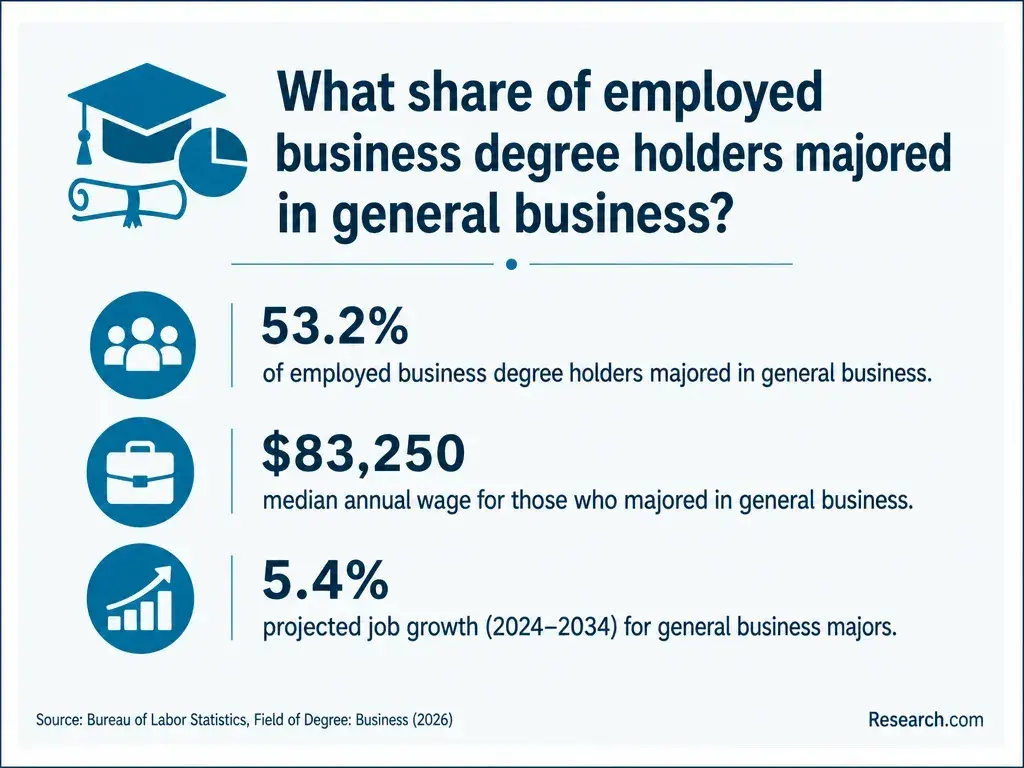
How can community program managers choose an accredited online business degree?
First, confirm that the institution holds recognized institutional accreditation and that the online BS is an authorized program of that institution. AACSB, ACBSP, and IACBE accreditation concerns business education at a defined scope; it is distinct from institutional accreditation. If a school advertises business accreditation, check the accreditor's listing to see whether the relevant school or program is covered.
Next, request a written evaluation of previous coursework and an official plan showing which credits satisfy general education, the business core, electives, and any residency requirement. Accepted transfer credit is not necessarily credit toward a required business course. Ask about access to faculty and advisers, required course availability, career support for nonprofit or government work, and completion outcomes for students with a background like yours. If a school promotes speed, use comparisons of American colleges offering fast-track business bachelor's as a starting point, then verify its current catalog and your individual degree audit before relying on a completion estimate.
Programs vary, but the business core commonly introduces financial and managerial accounting, finance, marketing, management, economics, operations, statistics, and business law or ethics. For a community program manager, the question is how much usable depth each course offers. Managerial accounting can inform program-cost discussions; operations can help examine service bottlenecks; statistics can help distinguish a meaningful pattern from incomplete participant data.
Look closely at electives and any official concentration. Nonprofit management, HR, analytics, or project-focused coursework may be useful, but an elective cluster is not necessarily a transcripted concentration. A supply-chain focus might suit someone moving into purchasing or distribution; in that case, compare a general BS with shorter online supply chain degree pathways rather than assuming either curriculum covers the same skills.
Ask whether a capstone can examine an approved workplace problem, such as a service-intake process. Faculty approval, employer permission, and privacy safeguards matter: access to participant records or confidential budgets should never be assumed, and a proposed improvement is not a measured result.
Requirements depend on whether you apply as a first-time student, transfer student, or returning student. Schools generally ask for records of prior education; a business major may have separate admission or progression rules, including prerequisites in mathematics, accounting, economics, or statistics. Professional experience can strengthen an application without automatically replacing required courses.
If you have an associate degree or earlier college study, send official transcripts and ask for a program-specific evaluation before committing. Request clarification on course equivalencies, minimum grades, course recency, and whether an accepted credit fills a requirement or only an elective slot. A manager considering an HR-focused alternative can compare HR bachelor's completion with transferred coursework, but only the receiving institution can determine how those credits apply to its degree.
Completion time depends chiefly on applicable prior credit, remaining required courses, enrollment pace, and how often those courses run. A transfer student with substantial general education credit may still need a sequence of business-core classes; an accounting prerequisite or a capstone offered infrequently can set the earliest possible graduation term.
Ask an adviser to map every remaining requirement onto actual future course offerings, then test that plan against your busiest work periods. Accelerated study schedules for business majors may shorten calendar time, but compressed courses can increase weekly demands. Check policies for part-time enrollment, breaks, and reentry before choosing an aggressive pace.
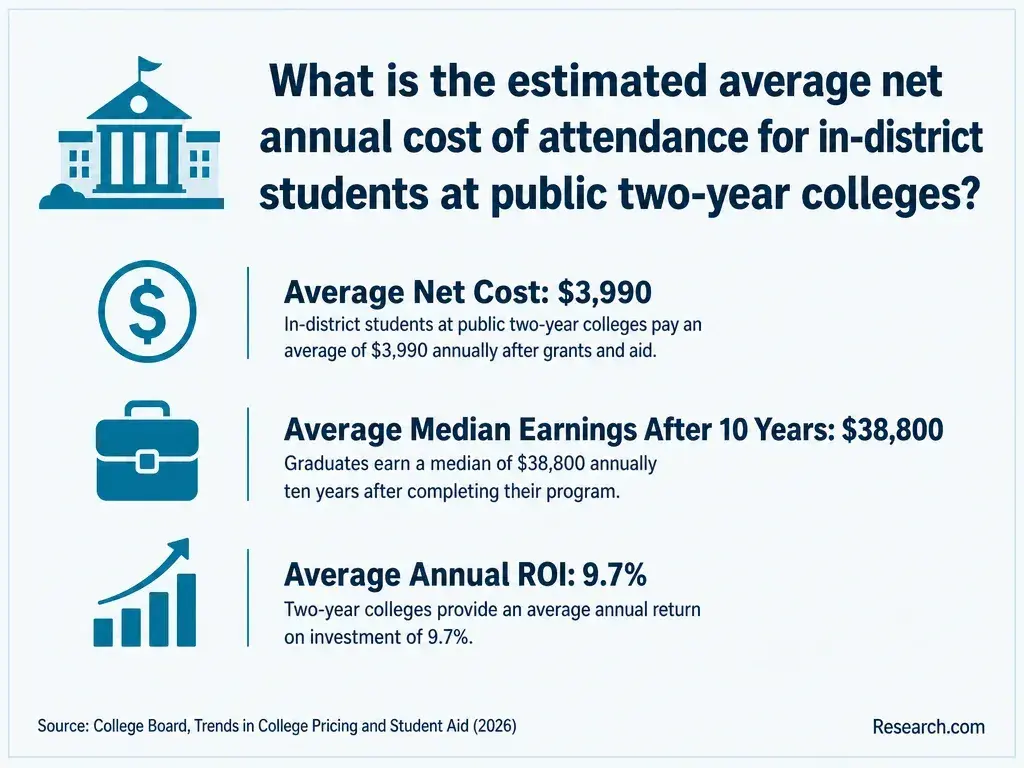
There is no responsible single price without a school, an enrollment plan, and a final credit evaluation. Calculate the cost of remaining required credits, not the advertised tuition rate alone. Add mandatory fees, books, software, technology or proctoring charges, and any travel. Then consider loan interest, time away from paid work, and whether employer tuition assistance is paid upfront or reimbursed after a course is completed.
Compare the degree with the least expensive credible route to your target job - not simply with another institution's sticker price. If project management is the alternative, comparisons of project management college costs after financial aid can help frame the question, but your aid offer and approved transfer evaluation determine your own net cost. Ask the financial-aid office how enrollment pace and extra courses affect eligibility, and get employer-benefit terms in writing.
At the same institution, an online and campus-based degree may share academic requirements, but their learning and scheduling demands can differ. Online study can reduce commuting and make it easier to keep a full-time community-program job. Campus study may offer more predictable in-person access to classmates, faculty, and local recruiting. Neither format is inherently more flexible for a manager who regularly works evenings.
Before choosing, ask each program about live sessions, group presentations, proctored exams, internship rules, campus visits, accessibility support, and the availability of required courses in your preferred format. If leadership rather than general business is your goal, fast-track online colleges for leadership majors provide another format and curriculum comparison. Judge both options by the weekly commitments you can actually sustain, not by the word "online."
No degree-specific salary can be inferred from the credential alone. Pay depends on the role, employer, location, budget responsibility, and prior experience. As one comparison point, the U.S. Bureau of Labor Statistics reports a May 2025 median annual wage of $102,320 for project management specialists. That is the midpoint for people employed in that occupation across experience levels and industries - not an offer to a community program manager or a predicted return from a BS.
For a realistic financial decision, compare local postings for roles you could qualify for now with those requiring the degree, and note the experience each also demands. If you plan to borrow, include likely borrowing and repayment in that comparison. Resources on project management bachelor's aid application planning may be useful when that specialized path is under consideration, but aid eligibility and future wages must be evaluated separately.
Do community program managers need certifications or licenses?
Community program management generally has no single universal license. Requirements arise from the actual duties and setting: a particular employer or regulated service may impose its own qualifications, while specialized finance or counseling work can require credentials that a business BS does not provide. Check the target job posting and, where applicable, the responsible state authority.
Voluntary project management, HR, or fundraising credentials may help demonstrate a specific skill, but each has its own eligibility and examination rules. Compare those requirements with the skill gap you need to close. If a targeted credential would address that gap, compare its full cost and time commitment with lower-tuition online business administration programs before deciding that another bachelor's degree is necessary.
Other Things You Should Know About Business Administration
It may improve your budgeting and planning, but grant writing is not guaranteed coursework. Check the syllabus and consider grant-specific training and supervised proposal work if that is your immediate goal.
Only if your organization and school permit the proposed use and you meet applicable privacy requirements. A hypothetical or properly approved, de-identified example is often safer than exporting service records.
Possibly. Compare the MBA's admission requirements, cost, and advanced coursework with the specific gaps in your target role; a second bachelor's is not automatically the better route.
It can support budgeting and operations roles, but jobs requiring public health methods, clinical qualifications, or specialized program knowledge may call for different preparation. Check the duties and qualifications of the roles you want.
- Accreditation in the U.S. | ed.gov http://www.ed.gov/laws-and-policy/higher-education-laws-and-policy/college-accreditation/accreditation-in-the-us
- Undergraduate and Graduate Tuition and Fees | Purdue Global https://www.purdueglobal.edu/tuition-financial-aid/undergraduate-graduate-tuition-and-fees/
- Undergraduate majors in public administration and competitor fields | JSTOR https://www.jstor.org/stable/48547095
- What Do You Study in Business School? | CTU Online https://www.coloradotech.edu/degrees/studies/business-and-management/articles/what-can-you-learn-in-business-school
- Nonprofit Program Manager: Salary and Job Description | North Carolina Central University https://online.nccu.edu/blog/non-profit-program-manager-salary/
- Tuition and Financial Aid Online Program Fees | UC News https://www.online.uc.edu/tuition-finances/program-fees.html
- How to Choose an Accredited Online MBA Program | University of Fairfax https://ufairfax.edu/how-to-choose-an-accredited-online-mba/
- Master's in Nonprofit Management vs. Public Administration | Northeastern University Graduate Programs https://graduate.northeastern.edu/knowledge-hub/nonprofit-management-vs-public-administration/
- Credit for Prior Learning - Wayne State College Nebraska https://www.wsc.edu/records-registration/credit-prior-learning
- Bachelor's of Business Administration Online: Is it Right for Me? | ECPI University https://www.ecpi.edu/blog/is-earning-a-bachelors-of-business-admin-online-right-for-me