2027 Online BS in Business Administration Admissions with A Prior Bachelor's Degree in Another Field: What to Check
Audited and Verified:
Our Editorial and Data Verification Process
Research.com uses government datasets, official education statistics and primary institutional information to support its career and degree guides. Our review process checks factual accuracy, occupational definitions, source dates and the requirements associated with the credentials discussed.
How This Article Was Fact-Checked
Our editorial team verifies salary estimates, employment projections, education requirements and program information against original data providers and official organizations. Salary figures are checked against the relevant occupational definitions and reporting periods. Information about licensure, accreditation and required in-person training is reviewed separately.
Fact-checked and verified on:

Co-Founder and Chief Data Scientist
A bachelor's degree in another field may qualify you to apply for an online BS in Business Administration, but it does not tell you how much of the new degree remains. Schools set different second-degree rules, and accepted credits may not satisfy business requirements.
If you are changing careers or adding business skills to your current work, this guide will help you check admission eligibility, obtain a usable credit evaluation, and compare the time and cost of a second bachelor's with more direct alternatives.
Key Things You Should Know
- A prior non-business bachelor's usually does not bar admission, but a school may restrict second bachelor's applicants or require separate admission to its business major.
- Ask for an official degree audit: credits accepted from your first degree may count only as electives, leaving business prerequisites, core courses, and residency credits unfinished.
- Compare the remaining requirements and total cost with your target job, not just the advertised program length. A certificate, specialized degree, or graduate program may be a better fit.
What Is an Online BS in Business Administration for Second-Degree Students?
It is an undergraduate business degree earned after a bachelor's in another subject. The curriculum generally combines business fundamentals with general education and, sometimes, a concentration. "Online" describes delivery, not a separate academic level or a guarantee that classes are self-paced.
For a second-degree student, the important distinction is between completing another bachelor's and adding specific business knowledge. A healthcare worker moving into operations might benefit from accounting, finance, and management courses.
Someone seeking a narrowly defined project role might instead compare targeted training and the full cost of specialized study, including comparing project management tuition and mandatory fees.
A BS in Business Administration, BBA, and BS in Management can overlap substantially. Compare their actual requirements and the skills your intended role calls for rather than assuming their titles are interchangeable.
Can You Earn an Online Business Administration Degree After Another Bachelor's?
A completed bachelor's in English, nursing, engineering, sociology, or another field can provide useful preparation in writing, quantitative reasoning, research, or workplace problem-solving. It does not necessarily meet business-major prerequisites, however. The receiving school decides whether it admits second-degree students and how it applies their prior study.
Before applying, ask admissions whether second-bachelor's applicants enter directly, apply first as transfer students, or need separate approval from the business school. Also ask whether the program offers the entire remaining sequence online.
If application costs affect which schools you can reasonably compare, you can apply to accredited online colleges for free where the listed option and its current application policy fit your needs.
Admission is only the first decision. It does not establish how many credits will apply to the degree, which courses must be repeated, or when you can graduate.
What Are the Admission Requirements for a Second Bachelor's in Business?
Expect the school to request official transcripts from each college attended and to review its published GPA, good-standing, and second-degree policies. Some programs also assess readiness for college algebra, statistics, accounting, or economics. These may be admission prerequisites, requirements completed after admission, or recommended preparation; the distinction matters if you have never studied business.
The following checks separate eligibility from the additional evidence that may strengthen an application:
- Admissions office: Confirm the applicant category, transcript rules, deadlines, and treatment of older or pass-fail coursework.
- Business department: Confirm whether major admission is separate and when any math, accounting, or economics prerequisite must be completed.
- Transfer office or registrar: Request a course-by-course evaluation when an old syllabus, unusual course title, or prior college policy makes equivalence uncertain.
If your goal is specifically HR, compare business admission with transfer admission options for human resources majors. A specialized program may accept you under different rules and assign your prior credits differently; neither outcome should be assumed before evaluation.
Check institutional accreditation for the college awarding the degree and the accreditor's current recognition and coverage of that institution.
Then check whether the business school or specific program has additional accreditation from AACSB, ACBSP, or IACBE, if that distinction matters to you. The scope of a business accreditor's approval varies; a school-wide claim alone does not establish that its online BS is covered.
Use the institution's accreditation disclosures and the accreditor's directory to match the school's legal name, degree level, and applicable business unit. Ask the program which academic catalog and accreditation status will apply to your enrollment. Accreditation supports a baseline check, but it does not prove that your credits will transfer, that aid is available to you, or that graduates obtain particular jobs.
If federal assistance is part of your plan, separately confirm the institution's aid participation and your own eligibility. A list of business administration colleges participating in federal aid programs can help you identify schools to investigate, but it cannot determine your individual award.
A school may accept coursework from your first degree while applying only some of it to the new BS. General education may be fulfilled by the completed credential or reviewed course by course.
A statistics class might meet a quantitative requirement, while a science elective might transfer without replacing any business-core course. Policies on upper-division credits, course age, minimum grades, and credits earned at the degree-granting school can further change the result.
Ask for a written audit that separates these outcomes. This comparison shows why a headline transfer-credit total is insufficient:
| Audit category | What it tells you |
| Accepted credits | Prior work recognized by the college; not necessarily requirements fulfilled |
| Requirements satisfied | General education, prerequisites, business core, concentration, or electives completed |
| Credits still required | Unfinished courses, including any upper-division or institutional residency requirement |
Provide official transcripts and, for disputed equivalencies, course descriptions or syllabi. Ask the registrar or transfer office about an appeal and the business adviser about a substitution; an adviser's informal estimate is not a final degree audit. If substantial prior work is in logistics, you may also compare online colleges with accelerated supply chain bachelor's study, but seek an audit from each school before comparing completion times.
Common requirements include financial and managerial accounting, economics, statistics, finance, marketing, organizational behavior, operations, business law, and a strategy or capstone course. The exact mix and depth depend on the catalog. For someone with a prior non-business degree, introductory courses may be essential building blocks rather than redundant undergraduate work.
Check the sequence, not merely the course names. Accounting or statistics may precede finance and analytics; a capstone may require most of the core first. An official concentration can add required courses and affect how quickly you finish, whereas a few related electives may not appear as a concentration on your record.
For an HR career goal, compare human resources degree pathways against the business core and any formal HR concentration. Examine coursework in employment practices and data handling alongside opportunities to demonstrate those skills. A course or concentration alone does not award an HR certification.
There is no reliable universal second-degree timeline. Your remaining business courses, prerequisite sequence, transfer evaluation, course rotation, enrollment pace, and residency requirement determine it. A program may accept most of your first degree yet still require a long sequence of upper-division business courses offered only in particular terms.
Build a personal cost estimate from the official audit: remaining credits multiplied by the applicable tuition rate, plus mandatory fees, books, software, proctoring, and any travel.
Then account for terms when a required course is unavailable and for earnings you might forgo by reducing work hours. Use a business degree tuition comparison guide to find candidates, but request each school's charges for your actual credit load and student status before choosing.
Ask the financial-aid office how having a prior bachelor's affects your eligibility, loan limits, enrollment requirements, and satisfactory academic progress. Employer reimbursement, if offered, may arrive after you pay tuition and may depend on grades or continued employment. Compare immediate cash flow as well as eventual net cost.
Online study can reduce commuting and expand your school choices, but it is better only if its actual schedule and support fit your circumstances. An asynchronous course can still impose weekly deadlines.
Group presentations, proctored exams, internships, or a capstone may require coordinated hours. Campus study may offer easier in-person access to recruiting and classmates, while online study may make it possible to remain employed.
Before enrolling, request a recent course schedule and ask about live attendance, exam windows, group work, campus visits, technology requirements, and leave or part-time policies.
For a realistic account of the trade-offs, consider how students balance employment and business administration college study. Compare the time you can consistently give each week with the program's actual obligations, not its "flexible" description.
Your first degree and work history matter as much as the second credential. A teacher with scheduling experience might pursue training coordination; a healthcare employee with purchasing responsibilities might target procurement or operations support.
Other possible routes include marketing coordination, HR support, sales operations, and project coordination. Moving directly into management or a specialist role usually depends on relevant experience and employer requirements, not the degree alone.
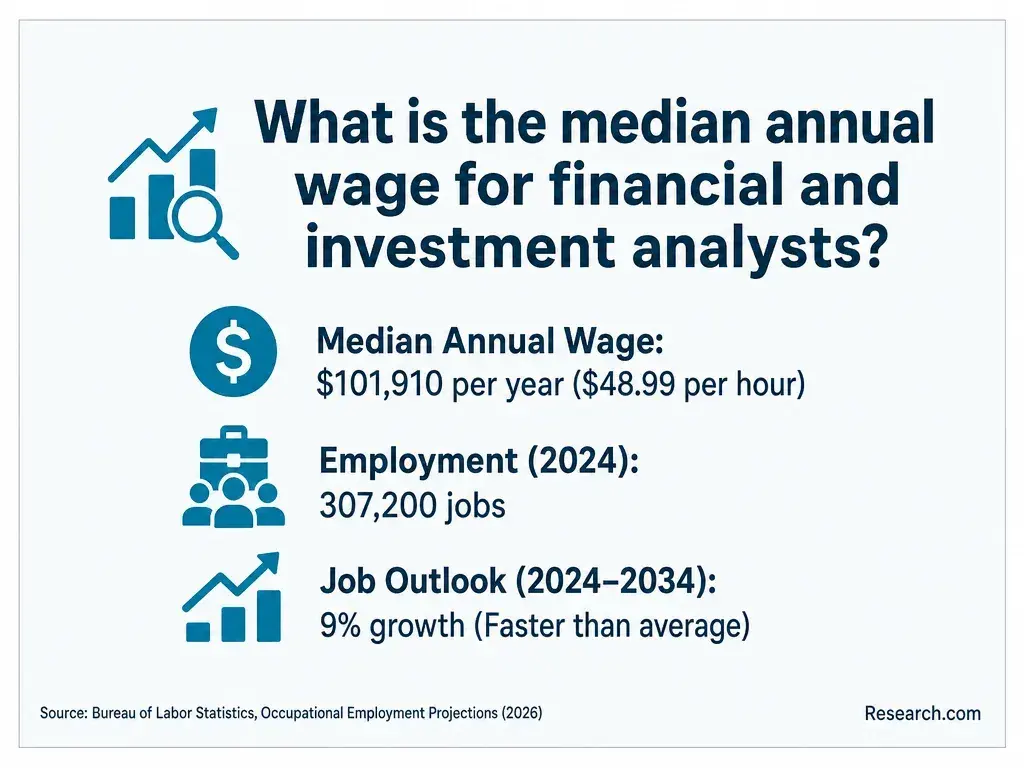
For context, the U.S. Bureau of Labor Statistics reports a May 2025 median annual wage of $75,940 for human resources specialists. That occupation-wide median includes experienced workers and is not an expected starting salary for a new business graduate. Use occupation data alongside local job postings to identify required skills, then seek coursework, supervised projects, or work experience that provides credible evidence of them.
If your existing experience is in purchasing or distribution, compare general business study with supply chain college costs versus potential career outcomes. A specialized path may better match the work you want, but neither program title nor published occupation wages establish your personal return.
Do Business Administration Graduates Need Licenses or Certifications?
There is no general license required simply to hold a BS in Business Administration or work in many business-support roles. Specific occupations are different: accounting licensure, certain financial-services activities, and other regulated work have requirements set by the relevant authority. Voluntary HR or project-management certifications have their own eligibility and examination rules. A business course does not automatically meet them.
Start with the target job description and, where applicable, the licensing board or certifying organization's requirements. If your objective is project work, compare the cost and eligibility of a relevant credential or employer training with another full degree.
Comparing project management tuition and mandatory fees is useful only after you establish that a project-management degree, not a narrower qualification, is needed for your goal. If the goal is broad supervisory preparation, undergraduate leadership programs with shorter timelines can be an option.
Other Things You Should Know About Business Administration Programs
Possibly. Ask whether the school permits non-degree enrollment, whether you meet the course prerequisites, and whether the course would later apply to the BS. Taking it does not guarantee admission.
That depends on the institution. Ask for its diploma and transcript policies rather than assuming the delivery format will or will not be shown.
Yes, if you meet the program's admission expectations and want graduate-level business study. Compare prerequisite preparation, curriculum, cost, and your career goal; an MBA is not a substitute for every undergraduate foundation course.
Find out which state agency or records custodian holds its transcripts, then ask the receiving school what documentation it will accept. Do this before relying on an estimated credit award.
- Guidelines for Second Bachelor's Degree | towson.edu https://catalog.towson.edu/undergraduate/admissions/undergraduate-admissions/guidelines-second-bachelors-degree/
- Admission Requirements | Undergraduate Admissions https://admissions.oregonstate.edu/admission-requirements
- Required Materials | Undergraduate Admissions https://admissions.northeastern.edu/application-information/required-materials/
- Undergraduate Transfer Credit and Credit for Prior Learning | charlotte.edu https://provost.charlotte.edu/policies-procedures/academic-policies-and-procedures/undergraduate-transfer-credit-credit-for-prior-learning/
- Course Equivalencies - UF Warrington College of Business https://warrington.ufl.edu/current-students/undergraduate/advising/course-equivalencies/
- Second Bachelor's - UF Online - University of Florida https://ufonline.ufl.edu/apply/admissions-requirements/second-bachelors/
- Second baccalaureate - UC Admissions - University of California https://admission.universityofcalifornia.edu/counselors/preparing-transfer-students/second-baccalaureate.html
- Admissions and Related Matters | University of South Florida https://usf.edu/undergrad-catalog-admissions-and-related-matters
- Transfer Credit Guidelines | Undergraduate Admissions https://admissions.uconn.edu/apply/transfer/transfer-credit-guidelines/