2027 Can a BS in Business Administration Prepare You for a Construction Project Administrator Role? Skills and Entry Requirements
Audited and Verified:
Our Editorial and Data Verification Process
Research.com uses government datasets, official education statistics and primary institutional information to support its career and degree guides. Our review process checks factual accuracy, occupational definitions, source dates and the requirements associated with the credentials discussed.
How This Article Was Fact-Checked
Our editorial team verifies salary estimates, employment projections, education requirements and program information against original data providers and official organizations. Salary figures are checked against the relevant occupational definitions and reporting periods. Information about licensure, accreditation and required in-person training is reviewed separately.
Fact-checked and verified on:

Co-Founder and Chief Data Scientist
A construction project administrator keeps documents, deadlines, purchases, and communication organized while a building project moves forward. A BS in Business Administration can build many of those skills, but it may leave a graduate without the construction knowledge employers expect. This guide is for students and career changers weighing that degree against a more specialized route. It explains what the job involves, where business coursework helps, how to gain relevant experience, and what to check before spending time and money on a bachelor's degree.
Key Things You Should Know
- A BS in Business Administration can prepare you for the coordination and financial-support side of construction projects, but construction documents, terminology, and software usually require additional learning.
- Entry requirements vary by employer; relevant office or construction experience may matter more than a particular degree title for an administrator opening.
- The BLS reports a $102,320 May 2025 median for project management specialists, with 7% projected employment growth from 2025 to 2035. That broader occupation is not an entry-level construction project administrator salary benchmark.
Can a BS in Business Administration prepare you for a construction project administrator role?
Yes - particularly for the administrative side of the role. A construction project administrator typically supports a project manager or site team by tracking contracts and change orders, routing submittals, organizing meeting records, following up on invoices, and keeping stakeholders informed. The administrator helps maintain an accurate record; they do not necessarily approve design changes, direct trades, or own the project budget.
Business administration coursework can provide a foundation in accounting, operations, purchasing, communication, and project coordination. Its main limitation is industry depth: a general business program may never teach how construction drawings, requests for information (RFIs), submittals, or change orders move through a project.
If your primary interest is materials flow or purchasing, explore fast-track supply chain bachelor's programs as a more focused alternative. Compare the actual courses and remaining credits rather than assuming either degree leads directly to a job.
What skills do construction project administrators need to succeed?
The most valuable skill is reliable document control: knowing which version is current, who must respond, and when an unanswered item could delay work. Administrators also need spreadsheet fluency, careful data entry, professional email writing, calendar management, and the judgment to escalate a discrepancy rather than quietly changing a record.
Construction adds a distinct vocabulary and workflow. Learn the purpose of drawings, specifications, RFIs, submittals, change orders, purchase orders, and closeout documents. Familiarity with a prospective employer's project platform can help, but employers use different systems; understanding how records are reviewed and approved is more portable than memorizing one interface.
Strong coordination is not the same as authority to supervise a jobsite. Readers aiming for that later responsibility can compare accelerated organizational leadership degrees, while recognizing that leadership study does not replace construction experience.
What education and experience are required for construction project administration?
There is no single nationwide degree requirement for this job title. Employers may consider candidates with administrative experience, an associate degree, a business bachelor's, or a construction-related degree. A contractor handling complex commercial projects may place greater weight on prior construction-office experience than a smaller firm hiring for general coordination support.
If you already work in an office, translate your experience into evidence: maintained records, reconciled invoices, tracked deadlines, or coordinated vendors. If you are new to both office work and construction, look for project assistant, document control assistant, or contractor-office opportunities while studying.
For students who need a bachelor's for broader career options, fast-track business degree options may be worth comparing - but ask employers whether a degree is necessary for the openings you want before choosing the fastest path.
Prioritize courses by the work you expect to perform, not by a concentration label alone. Financial and managerial accounting support invoice review and cost awareness; operations and project management address schedules and handoffs; business law introduces contract concepts; and information systems or analytics courses strengthen spreadsheet and reporting skills.
Communication courses matter because an unclear status update can create avoidable rework. Check whether electives allow an applied construction-related assignment, such as a sample document log or purchasing workflow using fictional data.
A classroom exercise is useful evidence of learning, not proof that you have managed a live project. If an accelerated schedule appeals to you, US rankings for accelerated business bachelor's degrees can start a shortlist; inspect each current catalog to see whether the courses you need are offered and whether faster pacing limits elective choices.
It can be, especially if work hours make campus attendance difficult. Online delivery does not guarantee self-paced study, though. Ask about live sessions, group assignments, exam arrangements, course availability, and any internship or campus requirements.
For a construction career, also ask whether you can arrange a relevant local placement or approved workplace project; online lectures alone will not provide exposure to a contractor's document workflow.
When comparing online colleges offering accelerated bachelor's, separate calendar speed from career preparation. A program you can finish sooner may be a poor fit if its schedule prevents you from taking a construction-office job or internship.
The administrative role generally does not carry a universal professional license. An employer may prefer training in its document-management platform, construction safety, or project processes, but those preferences are not interchangeable with a legal licensing requirement. Requirements can change if a position also involves regulated design, inspection, or other specialized work; read the actual job description and applicable state rules.
Voluntary project-management credentials may become useful as your responsibilities grow. Check a credential provider's current eligibility rules before paying for preparation: a business degree or one project-management course does not automatically qualify you.
If you are considering a separate project-management bachelor's instead of a short course or employer training, an online project management undergraduate funding guide can help frame the financing questions, but the better choice depends on the skills your target employers request.
A bachelor's is commonly planned as four years of full-time study from entry, but transfer credit, part-time enrollment, required course sequencing, and school policies can change the finish date. An accepted transfer course may count only as an elective rather than satisfy a business-core requirement, so request a degree audit before relying on a completion estimate.
Compare the cost of the remaining requirements, not just advertised tuition. Include mandatory fees, books and software, travel or placement costs, borrowing, and any work hours you would give up.
An employer benefit may lower your eventual cost while still requiring you to pay tuition upfront. Affordable school choices for online business students can provide comparison candidates; obtain each school's current charges and credit evaluation before deciding which is least expensive for you.
Requirements depend on the institution and whether you apply as a first-year or transfer student. Schools commonly request secondary-school or prior-college transcripts; some business majors have separate entry conditions or require preparatory mathematics, accounting, or economics coursework. Admission to a university does not necessarily mean admission to its business major, and admission does not settle how previous credits apply.
Before applying, gather transcripts and ask admissions which requirements apply to your background. Ask the business department when any prerequisites must be completed, and ask the transfer office for an evaluation of prior coursework. The business administration degree admissions requirements guide offers a broader checklist, but the institution's current policy and official evaluation control your application.
Experience in project records and coordination can support moves into project coordinator, document control specialist, purchasing coordinator, contract administrator, or assistant project manager roles. These jobs are not identical: purchasing centers on suppliers and orders; document control centers on accurate records; and assistant project management generally demands broader responsibility for schedules, costs, and delivery.
Advancement depends on the work you have actually handled. Keep examples of permitted, nonconfidential work products and document whether you tracked deadlines, resolved discrepancies, or supported cost reporting.
If coordinating people rather than construction projects becomes your goal, HR degree requirements and job opportunities describe a different specialization; construction administration experience alone does not establish HR qualifications.
What salary and job outlook can construction project administrators expect?
The Bureau of Labor Statistics does not publish a single national wage series specifically for "construction project administrator." Titles and duties vary too much to treat one adjacent occupation's median as an expected offer.
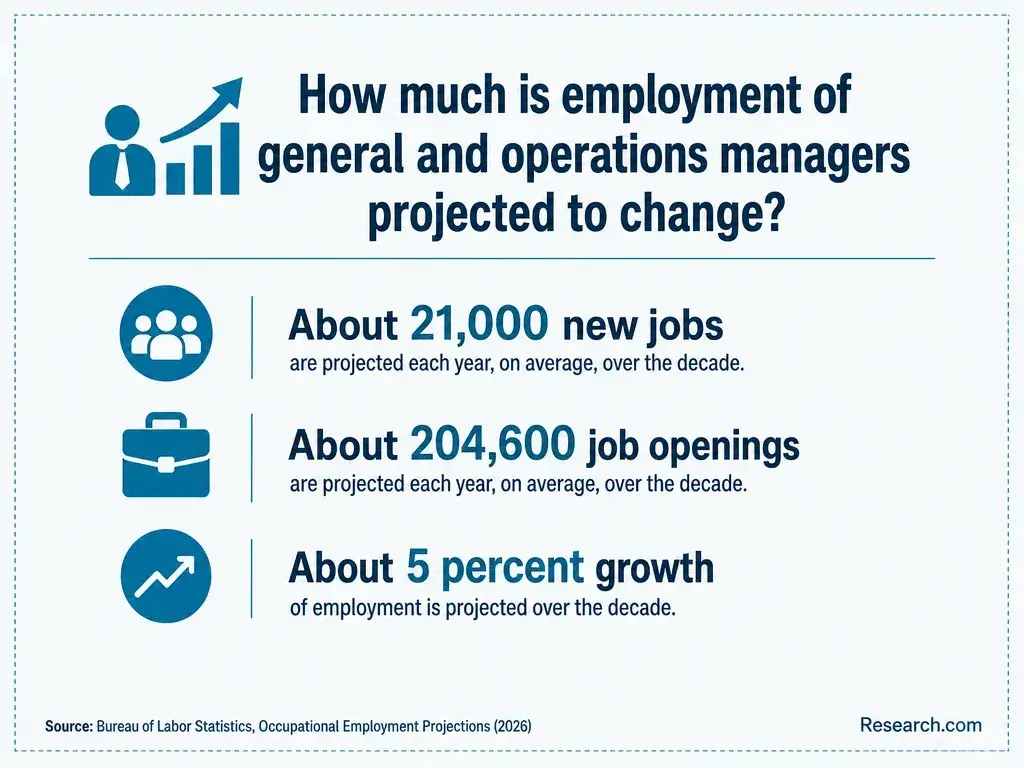
For context, BLS reports a May 2025 median annual wage of $102,320 for project management specialists and projects 7% employment growth for that occupation from 2025 to 2035. Those figures cover a broader, more experienced occupation across industries - not entry-level construction administration.
For a realistic pay decision, compare local postings with similar duties, required experience, and employer type. Weigh those offers against the cost of additional schooling.
If purchasing or logistics roles also interest you, economical study options for supply chain careers offer another path to evaluate; compare actual job requirements and likely costs rather than relying on an occupation-wide median to predict your return.
Other Things You Should Know About Business Administration
Yes. Records management, invoice processing, vendor communication, and deadline tracking can transfer. Be ready to show those skills and explain how you are learning construction terminology.
Basic drawing literacy can help you identify documents and route questions correctly. An administrator should still leave technical interpretation and approvals to authorized project professionals.
Only with the necessary employer permission and academic approval. Otherwise, use public or fictional materials and do not expose client information, pricing, or proprietary plans.
Ask which records you will maintain, which software the team uses, who approves changes, and how the role divides time between the office and jobsites. Those answers reveal the training you will need.
- Safety & Health Fundamentals Certificate Program for Construction | Occupational Safety and Health Administration http://www.osha.gov/training/certificate/construction
- 10 Key Business Administration Skills for Every Role | University of the Cumberlands https://www.ucumberlands.edu/blog/business-administration-skills-for-every-role
- 6 BS in Business Skills Employers Seek | University of Bridgeport https://www.bridgeport.edu/news/bs-in-business-administration-skills-employers-seek/
- Business Management: 7 essential skills you develop in a business administration course. | ESEG College https://eseg.edu.br/en/blog/business-management-7-essential-skills-you-develop-in-a-business-administration-course/
- Project Management Career Paths | GW School of Business https://business.gwu.edu/articles/career-path-project-management
- Transferable Skills in Business Administration Across Industries | The College of Westchester https://www.cw.edu/blog/how-business-administration-courses-build-transferable-skills-across-multiple-industries/
- Best Entry-Level Construction Project Management Jobs 2026 | CourseCareers https://coursecareers.com/blog-posts/construction-project-coordination-roles-for-beginners
- RFIs: A Contractor's Guide to Requests for Information | Procore https://www.procore.com/library/rfi-construction
- Construction Administration vs. Construction Management | Infotech https://www.infotechinc.com/construction-administration-vs-construction-management/
- What Is a Change Order in Construction? The Complete Guide | constructioncoverage.com https://constructioncoverage.com/glossary/change-order