2027 Communication Disorders Degree Levels Explained: Bachelor's vs Master's vs Doctorate

Co-Founder and Chief Data Scientist

Reviewed by Rhea Paul, PhD
SLP Education & Research Expert
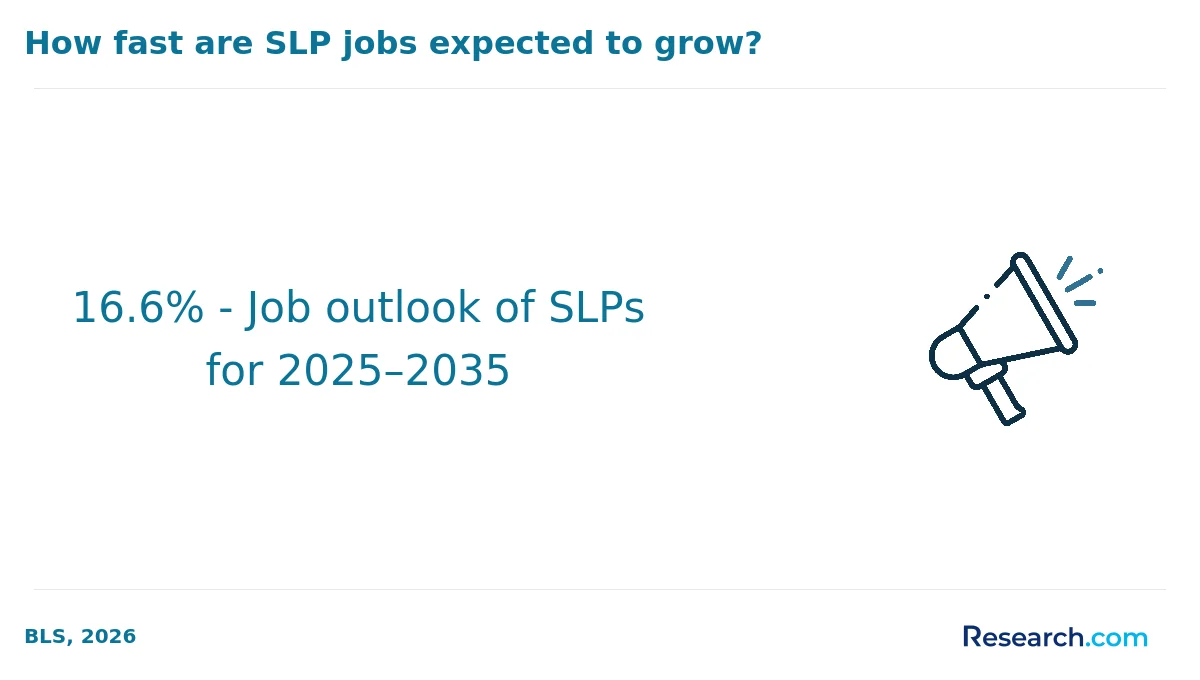
Choosing among a bachelor’s, master’s, or doctorate in communication disorders is not just an academic decision. It determines whether you can enter the field in a support role, qualify for clinical licensure, pursue advanced specialization, or move into research and leadership. The choice matters even more as the U. S. Bureau of Labor Statistics projects a 17% growth in speech-language pathology jobs through 2035.
A bachelor’s degree usually builds the foundation in speech, language, hearing, and human development. A master’s degree is the standard path for becoming a licensed speech-language pathologist in many settings. Doctoral study supports advanced clinical practice, audiology preparation, university teaching, research, administration, or policy work, depending on the degree type.
This guide compares communication disorders degree levels by curriculum, admissions, completion time, cost, financial aid, career paths, and salary expectations so you can choose the level that fits your goals, timeline, and budget.
Key Things to Know About Communication Disorders Degree Levels
- Bachelor's degrees provide foundational knowledge with broad career options, master's focus on advanced clinical skills, and doctorates emphasize research, leadership, and specialized expertise in communication disorders.
- Graduates with master's often pursue clinical roles, doctorates qualify for leadership or academic positions, while bachelor's holders typically enter support roles or continue education.
- Bachelor's generally take 4 years, master's an additional 2 years, and doctorates require 3-5 years more, reflecting increased financial and time commitments for advanced degrees.
How Are Communication Disorders Degree Levels Structured Academically?
Communication disorders programs become more specialized, clinically demanding, and research-intensive as students move from bachelor’s to master’s to doctoral study. The right level depends on whether you want foundational preparation, eligibility for clinical practice, or advanced research and leadership training.
| Degree Level | Academic Focus | Typical Learning Outcome |
| Bachelor’s | Foundations in speech, language, hearing, anatomy, phonetics, development, and disorders | Prepares students for assistant-level roles, related human services work, or graduate school prerequisites |
| Master’s | Advanced clinical coursework, assessment, intervention, supervised practice, and professional standards | Prepares students for speech-language pathology practice where licensure and certification requirements are met |
| Doctorate | Original research, advanced clinical expertise, university-level scholarship, leadership, or specialized practice | Prepares graduates for research, teaching, clinical leadership, audiology practice, or high-level specialization depending on the degree |
At the bachelor’s level, coursework is broad and introductory. Students learn how communication develops, how disorders are classified, and how professionals assess and support people with speech, language, hearing, or swallowing needs. Clinical exposure may be limited to observation, labs, or introductory field experiences.
Master’s programs shift from learning the field to applying it. Students complete more intensive coursework in assessment, treatment planning, ethics, evidence-based practice, and supervised clinical work. These programs are often designed around professional preparation, so applicants should review accreditation, clinical placement support, and state licensure alignment before enrolling. Students comparing flexible graduate options may also want to review online speech language pathology programs as part of their planning.
Doctoral programs require the greatest independence. Research-focused doctorates emphasize theory, methodology, publication, and dissertation work. Professional or clinical doctorates focus on advanced practice, leadership, and specialized clinical competence. In either case, students are expected to manage complex projects, synthesize evidence, and contribute to the profession beyond entry-level practice.
What Do You Learn in a Bachelor's Degree in Communication Disorders?
A bachelor’s degree in communication disorders introduces students to how people produce, process, understand, and use speech, language, and hearing. It is usually the starting point for students who want to become speech-language pathologists, audiologists, speech-language pathology assistants, or graduate students in a related health or education field.
Core academic areas
- Speech and language development: Students study how communication skills emerge across childhood and how delays or disorders may appear.
- Phonetics and speech science: Coursework often covers speech sounds, articulation, acoustics, and transcription, which are essential for later assessment and intervention training.
- Anatomy and physiology: Students learn the structures involved in speech, voice, respiration, swallowing, and hearing.
- Hearing and auditory science: Programs introduce hearing mechanisms, hearing loss, screening concepts, and the relationship between hearing and communication.
- Disorders overview: Students are introduced to fluency, voice, articulation, language, cognitive-communication, hearing, and swallowing disorders.
Skills students build
Undergraduate communication disorders coursework helps students develop observation, documentation, communication, ethical reasoning, and culturally responsive practice skills. Many programs include labs, guided clinical observations, service learning, or internships, but students should understand that a bachelor’s degree alone does not usually qualify them for independent clinical practice.
Where the degree can lead
Graduates may pursue assistant-level or aide positions where permitted by state rules, work in education or rehabilitation support settings, or apply to graduate programs. Students who are still exploring adjacent helping professions can compare communication disorders with accelerated social work programs to understand how each path serves individuals and families with different needs.
What Specializations Are Available in a Communication Disorders Master's Degree?
Master’s programs in communication disorders often allow students to build deeper competence in specific populations, disorder areas, or clinical settings. The most important point is that specialization should support the type of work you want to do after graduation, not simply sound impressive on a transcript.
- Speech-language pathology: This is the central clinical pathway for students preparing to assess and treat speech, language, cognitive-communication, voice, fluency, and swallowing disorders. Coursework commonly includes linguistics, phonetics, diagnostics, intervention methods, professional issues, and supervised clinical practice.
- Audiology-related study: Some master’s-level programs include coursework in hearing science, aural rehabilitation, amplification concepts, and auditory disorders. Students planning to become licensed audiologists should carefully review degree requirements, because clinical audiology preparation is commonly tied to doctoral-level study.
- Fluency and voice disorders: This area focuses on stuttering, cluttering, vocal quality, resonance, vocal hygiene, and therapy approaches for children and adults. It can be valuable for students interested in schools, medical settings, private practice, or work with professional voice users.
- Swallowing disorders (dysphagia): This specialization emphasizes assessment and intervention for swallowing difficulties, often in hospitals, rehabilitation centers, skilled nursing facilities, and other medical environments.
Other concentration areas may include early intervention, autism-related communication needs, augmentative and alternative communication, bilingual service delivery, neurogenic communication disorders, or school-based practice. Before choosing a program, compare its clinical placements, faculty expertise, simulation or lab resources, and whether the curriculum aligns with your preferred employment setting.
Doctoral degrees in communication disorders serve different purposes. Some are designed for advanced clinical practice, while others prepare students to produce original research, teach at the university level, or lead programs and policy initiatives. With fewer than 10% of graduate students pursuing doctorates in this field, applicants should be clear about why the doctorate is necessary for their goals.
| Doctoral Type | Best Fit | Main Emphasis |
| Professional doctorate | Clinicians seeking advanced practice, leadership, or specialized professional preparation | Clinical application, service delivery, ethics, supervision, and leadership |
| Research-focused doctorate | Students aiming for university faculty roles, research careers, or scholarly leadership | Research design, theory, statistics, publication, grant work, and dissertation research |
| Specialized or interdisciplinary doctorate | Students connecting communication disorders with fields such as neuroscience, education, or public health | Cross-disciplinary research, policy, complex clinical questions, or specialized populations |
Professional doctorates include degrees such as the Doctor of Audiology or clinical doctorates in speech-language pathology. These programs tend to focus on patient care, clinical decision-making, supervision, program management, and advanced service delivery.
Research-focused doctorates, often PhD programs, center on original scholarship. Students typically complete advanced research methods, statistics, theory, and dissertation work. These programs are a better fit for applicants who want to publish, teach, run labs, secure research funding, or influence the evidence base of the field.
Specialized or interdisciplinary doctoral tracks combine communication disorders with related areas such as neuroscience, education, linguistics, psychology, rehabilitation science, or public health. These programs can be useful for students who want to solve complex problems that do not fit neatly within one discipline.
One graduate of a communication disorders doctorate program described the experience as "both intense and rewarding." He recalled the challenge of balancing clinical hours with rigorous research demands, noting, "It felt like I was always switching gears between being a practitioner and a scientist." He said that defending his dissertation while maintaining clinical competencies shaped his professional identity and made him more adaptable.
Admission requirements become more selective as students move into graduate and doctoral study. Bachelor’s programs usually evaluate academic readiness, while master’s and doctoral programs look more closely at prerequisites, clinical exposure, research interests, recommendations, and professional fit.
Bachelor's
- Education: Applicants must complete high school or an equivalent credential. Many programs prefer a competitive GPA, usually above 3.0.
- Standardized tests: Some institutions request SAT or ACT scores, while others use test-optional policies.
- Recommended preparation: Courses in biology, psychology, statistics, English, communication, or social sciences can help students transition into the major.
- Application materials: Depending on the institution, students may submit transcripts, essays, recommendations, and extracurricular or volunteer experience.
Master's
- Degree requirement: Applicants need a completed bachelor’s degree and a strong academic record, often with relevant coursework in communication sciences and disorders or a related field.
- Prerequisite coursework: Programs commonly expect courses such as anatomy, linguistics, speech and hearing science, phonetics, language development, or audiology.
- Experience: Volunteer, clinical observation, school, healthcare, or research experience can strengthen an application by showing informed commitment to the field.
- Recommendations: Faculty or professional letters should speak to academic ability, communication skills, maturity, reliability, and readiness for graduate clinical training.
- Standardized tests: GRE scores may be required, although this requirement is increasingly waived.
- Personal statement: Strong essays usually explain career goals, relevant experience, fit with the program, and readiness for supervised clinical work.
Doctorate
- Academic credentials: Applicants generally need a master’s degree in communication disorders or a closely related discipline with a high GPA.
- Research and clinical background: Extensive research experience, clinical practice, or both can demonstrate readiness for doctoral-level expectations.
- Recommendations: Strong letters should address scholarly potential, independence, professional judgment, and fit for the degree type.
- Supplemental materials: Programs may require personal statements, research proposals, writing samples, curriculum vitae, and interviews.
- Faculty fit: For research doctorates, alignment with a faculty mentor’s expertise is often a major factor in admission decisions.
A bachelor’s degree in communication disorders generally requires about four years of full-time study. A master’s program typically adds two more years, sometimes longer if students need prerequisite courses or enroll part time. Doctoral programs usually extend three to five years beyond the master’s, with an average of 4.7 years in related health sciences according to the National Center for Education Statistics.
| Degree Level | Common Full-Time Timeline | What Can Extend the Timeline |
| Bachelor’s | About four years | Changing majors, part-time enrollment, transfer credit issues, or added prerequisites |
| Master’s | Typically two more years | Clinical placement timing, prerequisite gaps, thesis requirements, part-time study, or licensure-related requirements |
| Doctorate | Usually three to five years beyond the master’s | Dissertation progress, research demands, clinical requirements, funding, assistantships, and faculty availability |
Several practical factors affect the actual timeline:
- Enrollment status: Full-time students generally finish sooner, while part-time students may need more terms to complete coursework and clinical requirements.
- Credit transfer: Accepted transfer credits or completed prerequisites can shorten the path, especially for students entering from related majors.
- Prior experience: Professional background or certifications may help with readiness, though programs still must meet academic and clinical standards.
- Program format: Online, hybrid, and in-person programs may differ in pacing, clinical placement logistics, and course sequencing.
- Clinical and research milestones: Practicum hours, externships, comprehensive exams, theses, dissertations, and capstone projects can shape completion time.
A graduate of an online master’s communication disorders program said balancing coursework with a full-time job was challenging but worthwhile. She emphasized that flexible scheduling helped her manage clinical placements and thesis research. "It wasn't just about the years on paper; it was how I adapted to unexpected hurdles and stayed motivated," she said. Her experience shows why students should evaluate not only program length, but also workload, placement expectations, and support services.
The cost of a communication disorders degree depends on tuition, fees, program length, clinical requirements, location, and enrollment format. Students should compare the total cost of attendance rather than tuition alone, because books, technology, transportation, background checks, clinical materials, and lost work time can change the real price of a degree.
- Tuition per credit: Bachelor’s programs often have lower per-credit tuition than graduate programs. Master’s and doctoral tuition can be higher because of advanced coursework, clinical training, and specialized faculty involvement.
- Total program cost: The full cost depends on required credits, semesters enrolled, and whether students attend a public, private, in-state, out-of-state, online, hybrid, or campus-based program.
- Mandatory fees: Registration, technology, laboratory, health, student services, and clinical placement fees can add to the bill at every level.
- Additional expenses: Students may need textbooks, assessment materials, software, liability insurance, background checks, immunizations, travel to clinical sites, or research-related expenses.
- Enrollment status: Full-time study may shorten the calendar timeline but increase immediate semester costs. Part-time study can spread payments over time, but it may also extend fees and delay full-time earnings.
- Opportunity cost: Graduate and doctoral students should consider reduced work hours, relocation, commuting, and unpaid clinical or research requirements when estimating affordability.
Students comparing the cost of communication disorders programs may also review allied fields such as an online masters in marriage and family therapy to understand how tuition, licensure paths, and career outcomes differ across helping professions.
The best financial decision is not always the cheapest program. A lower-cost degree may be a poor fit if it lacks required accreditation, clinical placement support, or alignment with licensure goals. Likewise, a higher-cost program should be evaluated against placement quality, graduation support, professional outcomes, and your long-term career plan.
Financial aid can make communication disorders degrees more accessible, but students need to understand which aid must be repaid and which aid reduces the actual cost. Nearly 84% of full-time undergraduate students received some form of financial aid in 2020-21, with an average aid amount of approximately $14,560.
- Grants: Grants are usually need-based or merit-based and generally do not require repayment. Undergraduate students often have broader grant access than graduate students, but options vary by school and state.
- Scholarships: Scholarships may be offered by universities, departments, foundations, professional organizations, or community groups. Communication disorders students should look for awards tied to clinical service, research interests, underserved populations, or academic achievement.
- Federal student loans: Federal loans may include subsidized and unsubsidized options depending on degree level and eligibility. They often provide more structured borrower protections than private loans.
- Private loans: Private loans can fill funding gaps, but they may carry higher interest rates, fewer repayment protections, and credit-based approval requirements.
- Work-study programs: Work-study provides part-time employment to help students cover personal and educational expenses. It may be useful, but students should avoid taking on work hours that interfere with clinical or academic performance.
- Employer tuition assistance: Working professionals may receive partial tuition support from employers, especially when the degree supports service delivery, school-based roles, healthcare staffing, or advancement within the organization.
- Military education benefits: Programs like the GI Bill can provide significant support for veterans, active service members, and eligible family members pursuing communication disorders degrees.
- Assistantships and fellowships: Graduate and doctoral students should ask about teaching assistantships, research assistantships, tuition remission, stipends, and departmental fellowships.
Students should complete financial aid applications early, compare net price rather than sticker price, and ask programs whether aid continues during clinical placements, internships, summer terms, or dissertation work. To put education costs in a broader career context, students may also compare communication disorders with degrees that make the most money.
Career options in communication disorders depend heavily on degree level and licensure rules. A bachelor’s degree can open support roles, a master’s degree is commonly required for independent speech-language pathology practice, and a doctorate can lead to advanced clinical, audiology, academic, research, or leadership positions.
Bachelor's Degree
- Speech-language pathology assistant: In states and settings where this role is recognized, graduates may support licensed speech-language pathologists by helping implement treatment plans, preparing materials, documenting sessions, and assisting with screenings under supervision.
- Audiology aide or assistant: Some graduates work in hearing clinics or related settings, supporting licensed professionals with administrative, screening, or equipment-related tasks as allowed by regulations.
- Rehabilitation or education support roles: Graduates may work in schools, clinics, early intervention programs, disability services, or human services organizations.
- Graduate school pathway: Many students use the bachelor’s degree as preparation for master’s or doctoral study, especially if they want independent clinical practice.
Master's Degree
- Speech-language pathologist: A master’s degree is the key academic credential for many speech-language pathology roles, provided the graduate also meets state licensure, certification, supervised experience, and examination requirements.
- School-based clinician: Graduates may work with children on articulation, language, fluency, voice, social communication, literacy-related communication, or assistive communication needs.
- Medical or rehabilitation clinician: Some master’s graduates work in hospitals, outpatient clinics, rehabilitation centers, skilled nursing facilities, or home health settings, depending on training and credentialing.
- Research or program coordination: Graduates may support research projects, clinical programs, community initiatives, or service delivery teams.
Doctorate Degree
- University faculty or researcher: PhD graduates often teach, mentor students, publish research, and lead studies that shape clinical practice and policy.
- Audiologist: Clinical doctoral preparation such as the Doctor of Audiology supports specialized practice in hearing and balance care where licensure requirements are met.
- Clinical specialist or consultant: Doctoral-level professionals may focus on complex cases, advanced diagnostics, program development, supervision, or interprofessional consultation.
- Leadership and policy roles: Graduates may move into healthcare administration, education leadership, research administration, advocacy, or policy development.
Students who are still comparing degree investment, difficulty, and earnings may also review the easiest online degrees that pay well for a broader view of education-to-career trade-offs.
Salary potential generally rises with higher degree levels because advanced credentials can qualify graduates for independent practice, specialized clinical work, leadership, research, or academic roles. However, pay still varies by location, employer, setting, licensure status, experience, and job responsibilities.
| Degree Level | Common Salary Range | Typical Role Type |
| Bachelor’s | $30,000 and $45,000 annually | Support roles such as rehabilitation assistants, speech-language pathology assistants, or aides |
| Master’s | $60,000 to $80,000 per year | Clinical speech-language pathology roles and related professional positions |
| Doctorate | $80,000 and $110,000 annually | Clinical research, academia, audiology, leadership, or advanced specialty roles |
A bachelor’s degree can provide entry into the field, but advancement may be limited without graduate study. A master’s degree often produces the clearest clinical return for students pursuing speech-language pathology. A doctorate may increase earning potential for some professionals, but it also requires more time and financial investment, so students should weigh salary gains against tuition, funding, career goals, and the type of doctoral role they want.
What Graduates Say About Their Communication Disorders Degree Level
- Dina: "Choosing to pursue a bachelor's degree in communication disorders was a transformative decision for me. Although the average cost of attendance hovered around $25,000 per year, I saw it as an investment in my future, which has since paid off by opening doors to rewarding clinical roles. I am grateful every day for the knowledge and confidence this degree has given me in helping others."
- Massimo: "Pursuing a master's degree in communication disorders was a reflective journey that balanced both passion and pragmatism. The program cost approximately $40,000 total, which initially felt daunting, but the advanced skills and credibility it provided have significantly elevated my career opportunities. Completing the degree truly reshaped my approach to therapy and research in meaningful ways."
- Gela: "My decision to earn a doctorate in Communication Disorders was driven by a professional desire to contribute at the highest academic and clinical levels. Although the financial commitment was substantial, often exceeding $50,000, the investment yielded immense returns through leadership roles and cutting-edge research contributions. This achievement has cemented my role as an expert in the field."
Other Things You Should Know About Communication Disorders Degrees
A bachelor's degree in communication disorders primarily prepares graduates for support roles, such as a speech-language pathology assistant (SLPA) or audiology assistant. Entry-level positions in related fields like healthcare administration or market research are also possibilities. However, a master's degree is essential for becoming a licensed speech-language pathologist.
Yes, graduates with a master's degree in communication disorders generally must pass the Praxis Examination in Speech-Language Pathology to obtain certification from the American Speech-Language-Hearing Association (ASHA). Meeting clinical fellowship requirements and state licensure standards are also necessary steps before independent practice.
Admission to a master's program in communication disorders in 2027 typically requires a bachelor's degree in a related field, a minimum GPA of 3.0, GRE scores, and prerequisite courses in linguistics and audiology. Some programs may also require clinical experience or an interview process.
- U.S. Bureau of Labor Statistics - Speech-Language Pathologists https://www.bls.gov/ooh/healthcare/speech-language-pathologists.htm
- ASHA EdFind - Accredited Speech-Language Pathology Programs https://find.asha.org/ed/
- Audiology and Speech-Language Pathology Interstate Compact https://aslpcompact.com/compact-map/
- Pepperdine University - Master of Science in Speech-Language Pathology https://healthscience.pepperdine.edu/online-masters-in-speech-language-pathology/
- California State University-East Bay - Online Master of Science in Speech-Language Pathology https://ce.csueastbay.edu/programs/speech-language-pathology/
- New England Institute of Technology - Master of Science in Speech Language Pathology https://www.neit.edu/academics/graduate-degrees/speech-language-pathology-ms
- Baylor University - Master of Science in Speech-Language Pathology (Online) https://csd.robbins.baylor.edu/graduate/online-csd-graduate-program
- Auburn University, Montgomery - Master of Science in Speech-Language Pathology https://www.aum.edu/degree/ms-speech-language-pathology/