2027 Online Behavioral Health Management Degrees With Scholarships for Adult Learners

Co-Founder and Chief Data Scientist
Choosing an online behavioral health management degree is a high-stakes decision for adults balancing work, family, tuition, and career change. SAMHSA's latest national survey reports that more than 59 million U. S. adults experienced mental illness in a recent year, keeping demand high for organized, ethical, data-informed behavioral health services.
This guide explains degree types, accreditation, costs, scholarships, online formats, careers, and salary outlook so you can decide whether this path fits your goals before you enroll.
Key Things You Should Know
- Behavioral health management degrees are best for adults who want leadership, operations, compliance, case coordination, or program administration roles; they usually do not qualify graduates for independent counseling licensure unless the curriculum meets a state-approved clinical pathway.
- Cost varies widely by school and residency, but the College Board's 2024-25 benchmark shows average published tuition and fees of $11,610 at public four-year in-state institutions and $43,350 at private nonprofit four-year institutions, before aid.
- The U.S. labor market is favorable for related leadership roles: BLS projects medical and health services managers to grow 23% from 2024 to 2034, much faster than the average for all occupations.
What is an online behavioral health management degree and how does it prepare adult learners?
An online behavioral health management degree prepares students to coordinate, supervise, and improve services for people receiving mental health, substance use, crisis intervention, and community support care. It blends behavioral health knowledge with management skills such as budgeting, quality improvement, health policy, ethics, staff supervision, health informatics, and program evaluation.
For adult learners, the value is usually practical rather than purely academic. Many students already work as case managers, peer support specialists, medical assistants, residential program staff, human services coordinators, or healthcare administrators and want a credential that can help them move into supervisory or program-management responsibilities.
The degree can appear under several names, and the best fit depends on your career target. This table compares common options so you can avoid choosing a program that sounds relevant but does not match your intended role.
| Program type | Common degree level | Best fit | Important limitation |
| Behavioral health management | Bachelor's or master's | Students seeking operations, care coordination, program leadership, or behavioral health administration roles | Usually not a direct independent therapy licensure route |
| Healthcare administration with behavioral health courses | Bachelor's, master's, or certificate | Adults who want broader healthcare management roles and may work in hospitals, clinics, or integrated care systems | May offer less behavioral health depth than a specialized program |
| Counseling, social work, or psychology | Usually master's for licensure-oriented careers | Students who want clinical assessment, therapy, or licensed practice roles | Requires careful state licensure review before enrollment |
| Human services or community services management | Associate, bachelor's, or master's | Students focused on nonprofit, social service, housing, crisis response, or community-based agencies | May be less healthcare-system focused |
Adult learners who want a shorter management credential before committing to a full degree may also compare a healthcare management certificate, especially if they already have a degree and need targeted skills in finance, regulation, or healthcare operations.
How do online behavioral health management programs compare to campus-based options for working adults?
Online and campus-based behavioral health management programs can lead to similar academic credentials when the institution is properly accredited, but they create different trade-offs for working adults. The strongest online programs are designed around asynchronous coursework, local fieldwork options, employer partnerships, and flexible pacing rather than simply moving campus lectures onto a learning platform.
The comparison below highlights practical differences that affect schedule, networking, cost, and support. Use it to identify which format fits your current life rather than assuming online is automatically easier or campus is automatically stronger.
| Factor | Online program | Campus-based program | Best choice when |
| Schedule | Often asynchronous or hybrid, with weekly deadlines | Fixed class times and commute requirements | Online is better for shift workers, caregivers, and students outside commuting distance |
| Field experience | May allow local internships or projects near the student | Often uses established local agency relationships | Campus can be better if you need intensive placement support in the school's region |
| Networking | Relies on virtual discussions, residencies, alumni groups, and employer connections | More informal face-to-face contact with faculty and peers | Campus can help students who learn best through frequent in-person interaction |
| Cost structure | May reduce commuting and relocation costs, but technology fees can apply | May include campus fees, parking, housing, or lost work hours | Online often works better if staying employed is central to affordability |
| Learning style | Requires self-direction, writing skills, and comfort with digital tools | Provides more physical routine and immediate classroom presence | Campus may suit students who need structured in-person accountability |
Online learning is a strong fit when you can study independently, communicate clearly in writing, and schedule weekly academic time. It may be a poor fit if you need immediate in-person support, have unreliable internet, or are entering a licensure pathway that requires specific campus-based clinical placements.
Some adults comparing behavioral health management are really looking for a broader operational leadership credential. If your goal is to manage budgets, schedules, teams, and cross-functional projects outside healthcare, a project management degree online fast may be a better match than a behavioral health-specific program.
Which accreditation standards should behavioral health management degrees meet for U.S. careers and licensure?
Accreditation is one of the most important checks for an online behavioral health management degree because it affects transfer credit, financial aid eligibility, employer recognition, and graduate school options. At minimum, the institution should hold recognized institutional accreditation from an accreditor accepted by the U.S. Department of Education or the Council for Higher Education Accreditation.
Programmatic accreditation depends on the degree's purpose. A management-focused behavioral health program may not have a single required programmatic accreditor, but adjacent professional pathways do. Students should check the relevant standard before enrolling, especially if they might later pursue licensure.
| Career goal | Accreditation or approval to check | Why it matters |
| Behavioral health administration or program management | Recognized institutional accreditation; healthcare administration programs may also reference CAHME at the graduate level | Supports employer confidence, aid eligibility, and graduate transfer options |
| Licensed professional counseling | State board requirements; many states recognize or prefer CACREP-aligned preparation for counseling pathways | Licensure rules are state-specific and can determine whether supervised hours count |
| Licensed social work | CSWE accreditation for social work degree programs | Often required for social work licensure eligibility |
| Psychology licensure | State psychology board requirements; APA accreditation is central for many doctoral psychology pathways | Management degrees generally do not substitute for psychology licensure education |
| Addiction counseling or substance use disorder credentials | State credentialing board, approved coursework, supervised experience, and exam requirements | Requirements vary substantially by state and credential level |
The safest approach is to work backward from the role you want. Before enrolling, confirm whether the program meets employer expectations, graduate admission requirements, and any state licensing or certification rules that apply to your intended career.
Adult learners should be especially careful with programs that use counseling language in marketing but do not clearly state whether graduates are eligible for a licensure track. A management degree can be valuable, but it should not be mistaken for a clinical counseling degree unless the curriculum, supervised practice, and state approval align.
What admission requirements and prior experience do online behavioral health management programs typically expect?
Admission requirements vary by degree level, but online behavioral health management programs often evaluate both academic readiness and professional maturity. Adult learners may benefit from transfer credit, prior college coursework, military training, healthcare employment, or volunteer experience in human services.
The table below summarizes typical expectations by level. Schools can set stricter rules, so applicants should verify requirements directly with admissions and the academic department.
| Degree level | Typical admission requirements | Helpful prior experience | What adult learners should ask |
| Associate degree | High school diploma or equivalent, placement assessment, basic application materials | Entry-level healthcare, community service, peer support, or caregiving experience | Will credits transfer into a bachelor's program later? |
| Bachelor's degree | High school transcript or prior college transcript, minimum GPA, transfer review, sometimes personal statement | Case support, direct care, administrative work, crisis line volunteering, military health services experience | How many credits can transfer, and are there limits on older credits? |
| Master's degree | Accredited bachelor's degree, minimum GPA, resume, statement of purpose, recommendations, sometimes statistics or health-related prerequisites | Healthcare administration, human services, behavioral health support, nonprofit management, public health, or supervisory experience | Does the program require fieldwork, a capstone, or in-person residency? |
| Graduate certificate | Bachelor's degree, professional resume, and targeted application materials | Current healthcare, social services, HR, or operations role | Can certificate credits apply to a future master's degree? |
Prior experience can strengthen an application, but it does not replace every academic requirement. If you have been away from school for years, ask whether the program offers writing support, statistics refreshers, academic coaching, and online library orientation.
Applicants should prepare a concise career statement that connects their experience to behavioral health management. A strong statement explains the population you want to serve, the type of organization you hope to work in, and the management skills you need to develop.
How long do online behavioral health management degrees take and what do they cost?
Completion time depends on the degree level, transfer credit, enrollment intensity, and whether the program uses traditional semesters, accelerated terms, or competency-based pacing. Adult learners should compare total time to completion, not just advertised program length, because part-time enrollment can stretch a degree but may protect your income and reduce borrowing.
The table below summarizes common timelines and credit loads. These are typical academic structures, not promises that every school follows the same design.
| Credential | Typical credits | Common full-time timeline | Common adult-learner timeline |
| Associate degree | About 60 credits | About 2 years | 2 to 4 years if part time |
| Bachelor's degree | About 120 credits | About 4 years from the start | 1 to 4 years depending on transfer credits |
| Master's degree | About 30 to 45 credits | About 1 to 2 years | 2 to 3 years if working full time |
| Graduate certificate | About 12 to 18 credits | Several months to 1 year | 1 year or longer if taken slowly |
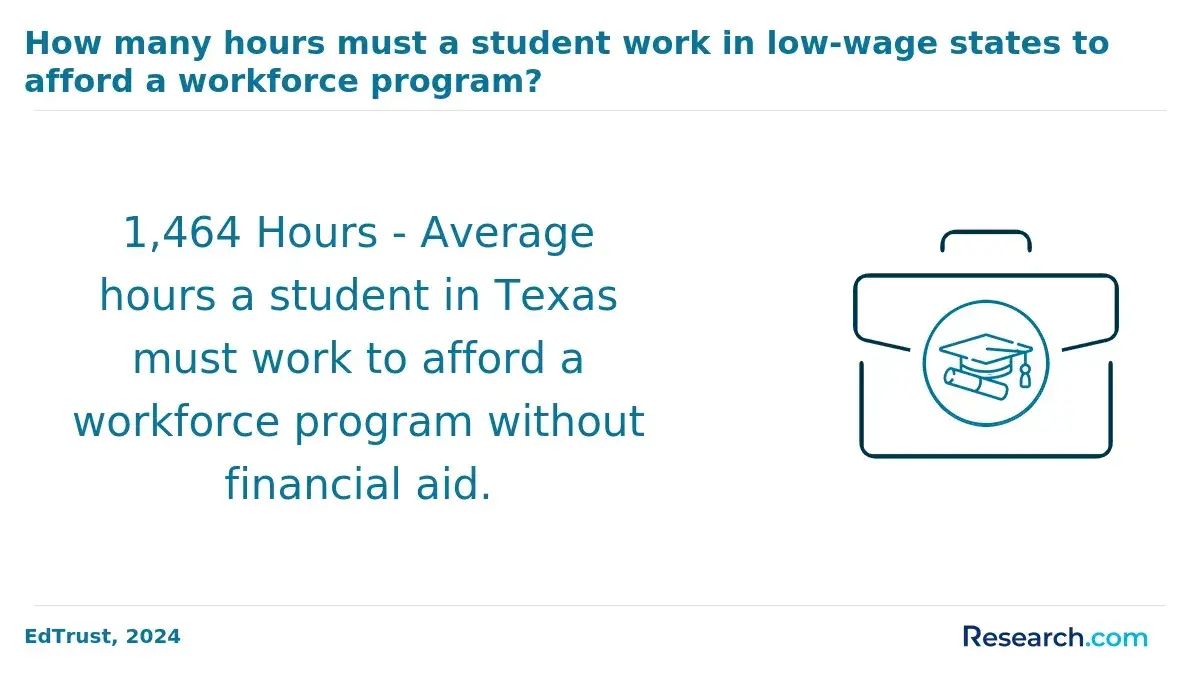
Cost should be evaluated as a full attendance budget rather than tuition alone. The College Board's 2024-25 figures give a useful benchmark for published tuition and fees, although online programs may price differently and scholarships can reduce the net amount.
- Public four-year, in-state average published tuition and fees: $11,610 for 2024-25.
- Public four-year, out-of-state average published tuition and fees: $30,780 for 2024-25.
- Private nonprofit four-year average published tuition and fees: $43,350 for 2024-25.
Those figures are not behavioral health-specific program prices, but they help frame the range of possible costs. For online students, the most important cost questions are whether the school charges per credit, whether online learners pay campus fees, whether transfer credits reduce total credits, and whether fieldwork creates unpaid time away from work.
To estimate your real cost, calculate tuition, mandatory fees, books, technology, background checks, practicum costs, travel for any residencies, and lost wages if you must reduce work hours. Then subtract grants, scholarships, employer tuition benefits, military benefits, and transfer-credit savings.
What scholarships, tuition discounts, and employer benefits can adult learners use for these programs?
Scholarships and tuition benefits can change whether an online behavioral health management degree is financially realistic. Adult learners should combine multiple funding sources because no single award usually covers the full cost of a degree.
The most useful options fall into several categories. Review each one early, because some require FAFSA filing, employer approval, membership status, or enrollment in a specific number of credits.
- Federal grants: Eligible undergraduate students may qualify for the Federal Pell Grant; the maximum award has been $7,395 in recent award years, but the amount depends on financial need, enrollment status, and federal rules.
- State grants: Many states offer need-based, workforce, or adult-learner grants that can apply to public institutions and sometimes approved private colleges.
- School scholarships: Universities may offer transfer scholarships, returning-adult awards, online student grants, public service scholarships, or behavioral health workforce awards.
- Employer tuition assistance: Employers can provide up to $5,250 per year in tax-free educational assistance under current federal tax rules when the plan qualifies.
- Healthcare workforce incentives: Hospitals, community mental health centers, county agencies, and nonprofit providers may offer tuition reimbursement, paid training, or loan repayment support for hard-to-fill roles.
- Military and veteran benefits: Eligible students may use GI Bill benefits, tuition assistance, Yellow Ribbon participation, or military-affiliated scholarships.
- Professional association scholarships: Behavioral health, addiction services, healthcare administration, public health, and human services associations sometimes fund students preparing for service roles.
A practical funding strategy starts before admission. Ask each school for a net price estimate, transfer-credit evaluation, scholarship deadline list, employer billing policy, and satisfactory academic progress rules for aid renewal.
Adult learners should also watch for financial red flags. Be cautious if a school pressures you to borrow immediately, avoids giving a written cost breakdown, will not explain fees, or makes employment and salary outcomes sound guaranteed.
What core courses and concentration areas are included in behavioral health management curricula?
Behavioral health management curricula are interdisciplinary. Students typically learn enough behavioral health context to understand service delivery, but the management portion is what distinguishes the degree from a counseling, psychology, or social work program.
The table below shows common courses and what each area helps students do in the workplace. Exact course names vary, but reputable programs should clearly connect coursework to practical behavioral health operations.
| Curriculum area | Common course topics | Workplace application |
| Behavioral health foundations | Mental health systems, substance use disorders, trauma-informed care, crisis response | Understand client needs, service models, and ethical boundaries |
| Healthcare and human services management | Leadership, budgeting, staffing, organizational behavior, strategic planning | Supervise teams, manage programs, and allocate resources |
| Law, ethics, and compliance | HIPAA, confidentiality, mandated reporting, risk management, documentation standards | Reduce compliance risk and protect clients and organizations |
| Quality improvement and evaluation | Outcome measurement, program evaluation, evidence-based practice, performance dashboards | Improve service quality and demonstrate program impact |
| Health informatics | Electronic health records, data privacy, reporting tools, telehealth workflows | Support digital care coordination and administrative reporting |
| Community and population health | Social determinants of health, care coordination, public health partnerships, prevention | Connect clients with services and design community-based programs |
Concentrations can help adult learners align the degree with a specific career direction. Before choosing one, compare it with job postings in your state and with your current employer's advancement requirements.
- Substance use disorder services: Useful for students interested in addiction treatment programs, recovery services, prevention, or state credentialing pathways.
- Healthcare administration: Useful for students who want broader clinic, hospital, payer, or integrated care management roles.
- Community mental health: Useful for students interested in nonprofits, county agencies, crisis services, housing support, or case management systems.
- Health informatics or data analytics: Useful for students who want to work with electronic records, outcome reporting, compliance dashboards, or quality improvement.
- Human services leadership: Useful for students who want supervisory roles in social service agencies, residential programs, or community-based organizations.
Students drawn to prevention, risk reduction, and compliance beyond behavioral health may also compare best online environmental health and safety programs, particularly if they want to work at the intersection of worker well-being, safety culture, and organizational policy.
What careers can graduates in behavioral health management pursue, and in which work settings?
Graduates can pursue roles in behavioral health administration, community services, care coordination, compliance, quality improvement, and program leadership. The exact role depends on degree level, experience, licensure, state rules, and employer requirements.
This table summarizes common career directions and work settings. It is meant to clarify fit, not to imply that every role is open with the same credential.
| Career direction | Typical responsibilities | Common work settings | Credential considerations |
| Behavioral health program coordinator | Coordinate services, track referrals, support staff schedules, monitor program documentation | Community mental health centers, nonprofits, clinics, county agencies | Bachelor's degree and related experience are commonly valued |
| Case management supervisor | Supervise case managers, review service plans, ensure documentation quality, support client navigation | Human services agencies, hospitals, managed care organizations, residential programs | Some employers prefer prior direct-service experience |
| Behavioral health operations manager | Manage workflows, staffing, budgets, quality metrics, compliance processes, and vendor relationships | Outpatient clinics, integrated care practices, telehealth providers, treatment centers | Management experience and a bachelor's or master's degree may be preferred |
| Quality improvement or compliance analyst | Review records, monitor outcomes, prepare audits, support regulatory reporting | Healthcare systems, behavioral health networks, insurance organizations, government contractors | Data, compliance, and health record experience can be important |
| Substance use services administrator | Oversee recovery programs, coordinate prevention initiatives, manage grants, support accreditation standards | Treatment centers, recovery nonprofits, correctional reentry programs, public agencies | State substance use credential requirements may apply for some roles |
| Licensed clinician in a leadership role | Provide clinical supervision or lead service teams while managing programs | Clinics, hospitals, private group practices, community agencies | Requires a separate licensure-eligible clinical degree and state license |
The degree may be worth it if you want to move from direct support into leadership, understand healthcare systems better, or qualify for roles requiring a bachelor's or master's credential. It may not be the right investment if your main goal is independent therapy practice, because you may need a licensure-oriented counseling, social work, marriage and family therapy, or psychology pathway instead.
Career mobility is often strongest when students combine the degree with field experience. Adult learners already working in behavioral health should ask supervisors about internal promotion requirements, tuition reimbursement, and projects that build management evidence, such as scheduling redesign, quality audits, grant reporting, or team training.
What salary ranges and job outlook can behavioral health management professionals expect in the U.S.?
Salary outcomes vary by state, employer, degree level, licensure, and years of experience. Behavioral health management graduates may work in roles that the Bureau of Labor Statistics classifies under healthcare management, community services management, counseling, or related categories.
The table below uses BLS national data to give a grounded salary and outlook reference. Use these figures as labor-market context, not as a promise of what a specific graduate will earn.
| Related BLS occupation | May 2024 median annual wage | 2024-34 projected job growth | How it relates to behavioral health management |
| Medical and health services managers | $117,960 | 23% | Relevant to clinic, healthcare operations, integrated care, and behavioral health administration roles |
| Social and community service managers | $78,240 | 8% | Relevant to nonprofit, public agency, community mental health, and human services leadership roles |
| Substance abuse, behavioral disorder, and mental health counselors | $59,190 | 17% | Relevant only when the graduate also meets counseling or state credentialing requirements |
The strongest wage potential generally appears in roles with budget responsibility, staff supervision, regulatory accountability, and healthcare operations complexity. Entry-level coordinators may earn less than national management medians, while experienced administrators in large healthcare systems may compete for higher-paying roles.
Technology is also changing the field. Employers increasingly expect managers to understand electronic health records, telehealth workflows, privacy rules, outcome dashboards, and AI-assisted documentation risks. The best programs teach students how to use data responsibly rather than treating technology as a replacement for ethical human judgment.
For adult learners, ROI depends on more than salary. Compare the program's total net cost with the roles you realistically qualify for now, the roles you could pursue after graduation, and whether the degree fills a clear gap in your resume.
How can students evaluate and choose a reputable online behavioral health management program?
Choosing a reputable online behavioral health management program requires more than scanning tuition and rankings. The right program should match your career target, protect your licensure options if relevant, fit your schedule, and provide transparent costs and student support.
Use the following steps before applying. They are designed to help adult learners avoid expensive mismatches and compare programs on evidence rather than marketing language.
- Define the role you want after graduation, such as program coordinator, operations manager, case management supervisor, compliance analyst, or clinical leader.
- Check institutional accreditation through recognized U.S. accreditation sources and confirm whether any programmatic accreditation matters for your intended pathway.
- If licensure or certification might matter, contact the appropriate state board before enrolling and ask whether the degree meets education requirements.
- Request a written transfer-credit evaluation before you commit, especially if you have prior college credits, military training, or professional certifications.
- Ask for a full cost sheet that includes tuition, fees, books, technology charges, background checks, fieldwork costs, and residency travel if applicable.
- Review the online format carefully, including synchronous meeting times, weekly workload, exam proctoring, group projects, and field placement expectations.
- Ask for student outcome information that is specific to the program, such as completion support, career services, employer partnerships, and internship placement help.
- Compare faculty experience in behavioral health systems, healthcare administration, compliance, addiction services, community mental health, and data-driven quality improvement.
Common mistakes include choosing a program because it is fast, assuming online means easy, ignoring state licensure rules, overlooking fees, and enrolling without understanding fieldwork requirements. Another major red flag is a school that cannot clearly explain what jobs the degree is designed for.
If you discover that your real interest is outside behavioral health, compare adjacent fields before enrolling. For example, adults who prefer site operations, contractor coordination, and physical project delivery may find a best 2 year construction management degree online search more aligned with their goals than a behavioral health program.
Other Things You Should Know About Behavioral Health Management
Some programs require internships, practicums, applied projects, or capstones, while others rely on coursework only. If you already work in the field, ask whether your job site can be used for approved projects or supervised experience.
Yes, many online behavioral health management programs in 2027 are designed to accommodate working professionals. They often offer flexible schedules, allowing students to balance full-time employment with their academic commitments, making it feasible to continue working while earning the degree.
Students benefit from comfort with learning management systems, video meetings, spreadsheets, online research databases, electronic document sharing, and basic data interpretation. You do not need to be a programmer, but digital organization is important for online success.
References
- Health and Human Services: Campus & Online Degrees and Careers https://www.publichealthonline.org/human-services/online-degree-programs/
- 9 Mental Health Careers You Can Pursue with a BA https://www.nec.edu/news/9-mental-health-careers-you-can-pursue-with-a-ba
- Healthcare Management Online https://www.elms.edu/academics/online-ce/healthcare-management-online/
- Core Curriculum Healthcare Education Integration - Substance Use | SAMHSA https://www.samhsa.gov/substance-use/treatment/resources/provider-support/core-curriculum
- Scholarships for Adult Learners https://www.dean.edu/news-events/dean-college-blog/story/unlocking-opportunities-scholarships-adult-learner/
- 2025 Best Health Care Management Degrees Online https://www.onlineu.com/degrees/healthcare-management
- Guide to Behavioral Health Assessment Software https://www.proemhealth.com/guide-to-behavioral-health-assessment-software-improving-assessments-and-patient-outcomes
- Behavioral Health Accreditation - NCQA https://www.ncqa.org/programs/health-plans/behavioral-health-accreditation/
- Online vs On-Campus HIM Programs: How to Choose | Health Information Management Programs https://healthinformationmanagementprograms.com/guides/online-vs-campus-him-programs/
- How to Pay for College as an Adult Learner | SoFi https://www.sofi.com/learn/content/pay-for-college-as-an-adult-learner/