2027 Best Online Behavioral Health Management Degrees for Working Adults

Co-Founder and Chief Data Scientist
Choosing an online behavioral health management degree is really a decision about career direction, time, cost, and credential fit. Demand is strong: the U.S. Bureau of Labor Statistics projects medical and health services manager jobs to grow 23% from 2024 to 2034, far faster than average.
This guide is for working adults who want to move into behavioral health operations, program leadership, compliance, case management supervision, or healthcare administration. You will learn how programs work, what they cost, how accreditation affects value, and how to choose a degree that matches your career goal.
Key Things You Should Know
- For many working adults, the best online behavioral health management degree is not necessarily the fastest one; it is the accredited program that matches the intended role, whether that is operations management, human services leadership, compliance, or a future licensed clinical pathway.
- Career outcomes vary by role; BLS data shows medical and health services managers had a May 2024 median salary of $117,960, while social and community service managers had a median salary of $78,240, so the degree's return depends heavily on job target and experience.
- Licensure is the biggest decision point; a behavioral health management degree can support administrative careers, but counseling, social work, psychology, and substance use disorder clinical roles may require specific state-approved degrees, supervised hours, exams, or separate credentials.
What is an online behavioral health management degree and who is it best for?
An online behavioral health management degree prepares students to lead, coordinate, and improve services for people receiving mental health, substance use, developmental disability, crisis response, or community-based support. It sits at the intersection of healthcare administration, public health, human services, psychology, and nonprofit management.
Unlike a clinical counseling degree, it usually focuses less on providing therapy and more on managing programs, budgets, staff, quality improvement, compliance, client access, and care coordination.
This degree is often best for working adults who already have experience in healthcare, behavioral health, social services, corrections, veteran services, case management, peer support, or nonprofit programs and want to move into supervisory or administrative roles.
It can also fit career changers who want to enter behavioral health from business, public administration, or community service backgrounds.
It may not be the right first choice if your primary goal is to become a licensed therapist, licensed clinical social worker, psychologist, or psychiatric provider. Those pathways usually require a degree with specific clinical accreditation, supervised practice, and state-board approval.
If your goal is broader healthcare leadership rather than behavioral health specifically, you may also want to compare related options such as an MBA in healthcare management, especially if you are aiming for executive, finance, strategy, or hospital administration roles.
The most useful way to think about fit is to connect the degree to the work you want to do after graduation. The table below compares common goals and the type of behavioral health management path that may support them:
| Career goal | Best-fit academic direction | Important caution |
| Move from direct support or case management into program supervision | Bachelor's or master's in behavioral health management, human services administration, or healthcare administration with behavioral health coursework | Employers may still require field experience managing teams or grants |
| Lead a mental health or substance use program | Master's in behavioral health administration, public health, healthcare administration, or nonprofit management | Clinical director roles may require a separate clinical license |
| Become a licensed counselor or therapist | Counseling, social work, marriage and family therapy, or psychology degree that meets state licensure requirements | A management-focused degree alone usually is not enough |
| Work in compliance, quality, utilization review, or care coordination | Healthcare administration or behavioral health management degree with policy, ethics, data, and quality improvement courses | Some roles prefer certification or prior payer/provider experience |
How do online behavioral health management programs work for busy working adults?
Online behavioral health management programs are usually designed around asynchronous courses, meaning students can complete weekly readings, discussions, assignments, and exams outside fixed class times. Some programs add synchronous evening sessions, short residencies, internships, or capstone presentations.
For working adults, the key is not whether the program is online, but whether its schedule, pacing, support services, and field requirements are realistic alongside a job.
A practical online program should make expectations clear before you enroll. Use the following steps to test whether a program is truly adult-friendly rather than simply marketed as flexible:
- Ask whether courses are asynchronous, synchronous, or mixed, and confirm how often live attendance is required.
- Check the weekly workload per course, especially if the program uses accelerated 5-week, 7-week, or 8-week terms.
- Confirm whether internships, practicums, or field projects can be completed at your current workplace or in your local area.
- Review transfer credit, credit for prior learning, military credit, and employer tuition assistance policies before estimating total cost.
- Ask how online students access advising, tutoring, disability services, library resources, career coaching, and faculty office hours.
Accelerated online schedules can help students finish sooner, but they can also compress major papers, group projects, and exams into short windows. If you travel for work, care for family members, or have unpredictable shifts, a part-time plan may be more sustainable than the fastest advertised completion time.
This is the same kind of schedule scrutiny adults should use when comparing any accelerated management degree, including a fast track construction management degree, because speed only helps if the workload is manageable.
Technology is also changing how these programs operate. Many behavioral health organizations now use telehealth platforms, electronic health records, data dashboards, remote supervision tools, and AI-assisted documentation review.
Strong programs do not just teach management theory; they help students understand privacy, documentation quality, data ethics, digital access, and how technology affects care delivery.
What types of behavioral health management degrees can you earn online?
Online behavioral health management is available at several academic levels, but program names vary. You may see behavioral health administration, behavioral health leadership, human services management, healthcare administration with a behavioral health concentration, public health with mental health coursework, or nonprofit management with human services electives. The best degree level depends on your current education and the roles you want to qualify for next.
The table below summarizes common online options and how they typically function for working adults. Use it to decide whether you need a full degree, a shorter credential, or a graduate pathway:
| Credential type | Typical student profile | Common purpose | Decision factor |
| Certificate | Working professional with some college or a degree | Add focused knowledge in behavioral health, case management, compliance, or nonprofit operations | Best when you need targeted skills but not a new degree |
| Associate degree | Student seeking entry-level human services or support roles | Build foundation in psychology, social services, and client support systems | May have limited advancement value without a bachelor's degree |
| Bachelor's degree | Adult learner entering or advancing in behavioral health, human services, or healthcare operations | Qualify for coordinator, case management, program support, or supervisory-track roles | Transfer credits can strongly affect time and cost |
| Master's degree | Professional aiming for management, director, policy, compliance, or advanced administrative roles | Develop leadership, finance, quality improvement, and strategic planning skills | Check whether the curriculum is administrative, clinical, or hybrid |
| Doctoral degree | Experienced leader, educator, consultant, or policy professional | Prepare for executive leadership, teaching, applied research, or systems improvement | Often requires a major applied project or dissertation |
A bachelor's degree can be a strong option if you do not yet have a four-year credential and want broader mobility. A master's degree tends to make more sense if you already work in the field and need leadership, budgeting, analytics, and policy preparation for advancement. A certificate can be efficient if your employer values specialized training but does not require another degree.
How can you compare online vs campus-based behavioral health management programs?
Online and campus-based behavioral health management programs can lead to similar academic credentials when they come from accredited institutions, but the student experience can differ substantially. Working adults should compare delivery format, support, networking, field placement flexibility, and total cost rather than assuming one format is automatically better.
The comparison below highlights the most important trade-offs. It can help you decide whether online learning fits your responsibilities and learning style:
| Factor | Online program | Campus-based program | Best choice when |
| Schedule | Often asynchronous or evening-based | Usually tied to fixed class times | Online is better if work hours or caregiving duties are difficult to change |
| Peer interaction | Discussion boards, video meetings, group projects, virtual networking | Face-to-face classes, campus events, local networking | Campus may be better if you learn best through in-person discussion |
| Field experience | May allow local placements or workplace-based projects | Often tied to regional employer partnerships | Online works if the school supports placements in your state |
| Cost | May reduce commuting and relocation costs, but technology and distance fees may apply | May include transportation, parking, housing, or schedule-related work trade-offs | Compare total cost, not just tuition |
| Career services | Virtual advising, job boards, resume support, online employer events | In-person advising and regional employer access | Choose the format with stronger support for your target market |
If you are comparing behavioral health management with adjacent healthcare leadership degrees, reviewing the best schools for healthcare administration online can help you understand how accelerated formats, accreditation, and adult-student support are evaluated in related programs.
Common mistakes in this comparison include choosing a school only because it is nearby, assuming online means easier, or focusing on tuition without considering work schedule disruption. A better approach is to create a short list of programs that meet your credential goal, then compare format, accreditation, transfer policy, field requirements, and career support side by side.
What accreditation should behavioral health management programs have and how do you verify it?
Accreditation matters because it affects financial aid eligibility, credit transfer, graduate admission, employer recognition, and sometimes licensure. At minimum, the institution should hold recognized institutional accreditation from an accreditor approved by the U.S. Department of Education or the Council for Higher Education Accreditation. For behavioral health management, programmatic accreditation depends on the degree's focus.
Not every quality management program has specialized behavioral health accreditation, but certain career goals require closer review. The table below shows what to look for based on program type:
| Program focus | Accreditation or approval to check | Why it matters |
| Healthcare administration or health services management | Institutional accreditation; CAHME may be relevant for some graduate healthcare management programs | Can affect employer perception and preparation for administrative leadership |
| Counseling pathway | CACREP or state-board-recognized counseling education requirements | Often important for professional counseling licensure |
| Social work pathway | CSWE accreditation | Typically required for social work licensure eligibility |
| Public health pathway | CEPH accreditation may be relevant | Useful for population health, policy, prevention, and public health roles |
| Human services or nonprofit leadership | Institutional accreditation; field-specific recognition may vary | Employers may focus more on experience, internships, and management skills |
Before applying, verify accreditation directly rather than relying only on marketing language. Here's how:
- Search the institution in the U.S. Department of Education's accreditation database or the accreditor's own directory.
- Ask the program to identify the exact accrediting body and whether accreditation applies to the institution, college, department, or degree.
- If licensure is part of your plan, contact your state licensing board and ask whether the program meets education requirements.
- Request written documentation from the school about licensure alignment, internship expectations, and state authorization for online students.
- Check whether credits are transferable to graduate programs you may want later.
A red flag is vague language such as "accredited curriculum" without naming the accreditor. Another is a program that suggests it prepares students for licensed clinical work but does not clearly identify state-board eligibility, supervised hour requirements, or required exams.
What courses and specializations are included in behavioral health management curricula?
Behavioral health management curricula usually combine leadership, behavioral health systems, finance, ethics, law, data, and program evaluation. The goal is to prepare students to manage services responsibly in settings where quality, access, privacy, reimbursement, and client outcomes all matter.
The table below shows common course areas and why they matter in real workplace decisions. Course names vary by school, but strong programs usually cover several of these domains:
| Curriculum area | What students study | Why it matters at work |
| Behavioral health systems | Mental health delivery, substance use services, crisis systems, community care, integrated care | Helps managers understand how clients move through complex service networks |
| Healthcare finance and reimbursement | Budgets, billing, payer systems, Medicaid, grants, value-based care concepts | Supports sustainable program planning and resource allocation |
| Law, ethics, and compliance | HIPAA, confidentiality, informed consent, mandated reporting, documentation standards | Reduces organizational risk and protects clients |
| Leadership and workforce management | Supervision, conflict resolution, staff development, trauma-informed leadership | Prepares graduates to manage teams in high-stress service environments |
| Quality improvement and data | Program evaluation, outcomes measurement, dashboards, performance improvement | Helps leaders use evidence instead of intuition alone |
| Diversity, equity, and community practice | Cultural humility, access barriers, rural and underserved populations, social determinants of health | Improves service design for communities with different needs |
Specializations can make a program more relevant to your career goal. Before choosing one, ask whether the specialization changes your transcript, adds field experience, or simply consists of electives:
- Substance use disorder services management, for students interested in treatment programs, recovery services, and compliance-heavy care settings.
- Community mental health administration, for students who want to work with nonprofits, public agencies, crisis programs, or integrated community care.
- Healthcare quality and compliance, for students aiming at utilization review, accreditation readiness, risk management, or performance improvement.
- Public health and prevention, for students interested in population-level mental health, grant-funded programs, outreach, and policy.
- Nonprofit and human services leadership, for students seeking director, program manager, or agency operations roles.
Because behavioral health organizations increasingly rely on electronic records, telehealth workflows, and data reporting, technology literacy is becoming a practical differentiator. A program that includes data-informed decision-making, privacy, and digital service delivery may better reflect current workplace expectations than one focused only on traditional management theory.
What are typical admission requirements for online behavioral health management degrees?
Admission requirements depend on the degree level and school, but online programs for working adults often look for evidence that you can handle college-level writing, manage time independently, and connect the degree to a realistic goal. Selective programs may also consider healthcare or human services experience, especially at the graduate level.
Use the list below to prepare early and avoid delays. Requirements vary, so confirm details with each school before submitting an application:
- Associate or bachelor's applicants typically need a high school diploma or GED, official transcripts, and sometimes placement assessments or prior college records.
- Bachelor's completion applicants usually submit transcripts from all colleges attended and may need a minimum number of transferable credits.
- Master's applicants typically need a bachelor's degree, official transcripts, a statement of purpose, resume, letters of recommendation, and sometimes a minimum GPA.
- Doctoral applicants may need a master's degree, leadership experience, writing samples, interviews, or a proposed applied research interest.
- International or multilingual applicants may need proof of English proficiency, depending on the institution.
Working adults should pay special attention to transfer and prior learning policies. A school that accepts relevant credits, military training, professional certifications, or documented work-based learning may shorten your path. However, do not assume all prior credits will transfer into major requirements; some may count only as electives.
Admissions red flags include pressure to enroll immediately, unclear transfer evaluations, refusal to provide a degree plan before commitment, or vague answers about practicum requirements. A stronger admissions process gives you a written estimate of accepted credits, remaining courses, expected timeline, and total program cost.
How long do online behavioral health management programs take and what do they cost?
Program length depends on degree level, transfer credits, enrollment intensity, and term structure. A certificate may take a few months to a year, an associate degree commonly takes about two years of full-time study, a bachelor's degree usually requires about four years without transfer credit, and a master's degree often takes one to three years depending on pace. For working adults, part-time enrollment is common and may be the healthier choice if the program includes major projects or fieldwork.
Tuition varies widely, so use national pricing data only as a baseline. College Board's 2024 Trends in College Pricing report lists average published tuition and fees for 2024-25 as follows:
- $11,610 for in-state students at public four-year institutions.
- $30,780 for out-of-state students at public four-year institutions.
- $43,350 for students at private nonprofit four-year institutions.
Those figures are not online-specific and do not include every fee, but they show why institution type, residency rules, and transfer credit can dramatically change affordability. Online students should calculate total cost using tuition, fees, textbooks, technology charges, background checks, field placement costs, graduation fees, and lost work hours if courses require live attendance.
The table below summarizes common time-and-cost trade-offs. It can help you decide whether a faster program is worth the added intensity:
| Program choice | Potential advantage | Potential trade-off | Best fit |
| Full-time online study | Faster completion | Harder to balance with full-time work | Students with flexible jobs, strong support systems, or urgent career goals |
| Part-time online study | More manageable workload | Longer time to completion | Working adults with fixed schedules or caregiving responsibilities |
| Accelerated terms | Courses finish quickly | Assignments move fast and breaks may be short | Students with strong time management and fewer weekly conflicts |
| Transfer-friendly bachelor's completion | Can reduce credits remaining | Requires careful transcript evaluation | Adults with prior college credit |
| Employer-supported program | May reduce out-of-pocket cost | May require repayment if you leave the employer | Students whose employers offer tuition assistance |
When comparing tuition models, use the same total-cost method you would use for other online professional degrees, including a construction management masters: multiply credits by tuition, add mandatory fees, subtract confirmed aid, and then consider how the schedule affects your income and time.
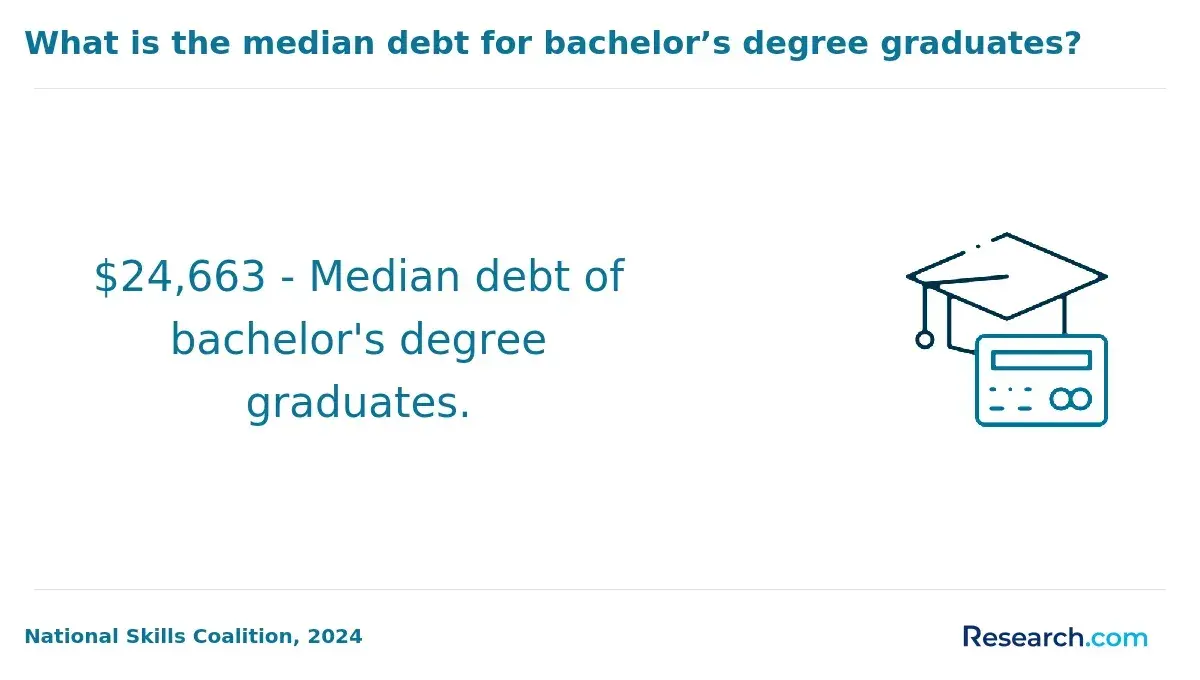
To reduce cost, start with transfer evaluation, complete the FAFSA if eligible, ask about employer tuition assistance, compare public in-state online options, and avoid borrowing more than the career path can reasonably support. A degree can be worth it, but only when the credential, price, and target role line up.
What careers, salaries, and job outlook can a behavioral health management degree support?
A behavioral health management degree can support careers in behavioral health agencies, hospitals, community mental health centers, substance use treatment programs, health plans, government agencies, correctional health, schools, veteran services, nonprofits, and integrated care organizations. The strongest outcomes usually come from combining the degree with relevant work experience, supervisory responsibility, data skills, and knowledge of compliance or reimbursement.
The salary picture differs by role. The table below uses BLS May 2024 median wage data and 2024 to 2034 occupational projections where available, but these figures describe occupations nationally rather than outcomes for a specific degree program:
| Role or career direction | Typical responsibilities | Relevant BLS median salary or outlook | Degree-use note |
| Medical and health services manager | Manage departments, operations, budgets, staffing, compliance, and quality improvement | Median salary of $117,960; projected job growth of 23% | Behavioral health management can be relevant when paired with healthcare operations experience |
| Social and community service manager | Lead community programs, supervise staff, manage grants, evaluate services, coordinate outreach | Median salary of $78,240; projected job growth of 8% | A common fit for human services and behavioral health leadership roles |
| Substance abuse, behavioral disorder, and mental health counselor | Provide counseling, treatment planning, client support, and recovery services | Median salary of $59,190; projected job growth of 17% | Requires careful licensure review; a management degree alone may not qualify |
Common job titles may include behavioral health program manager, clinical operations coordinator, case management supervisor, mental health program director, utilization management coordinator, compliance specialist, quality improvement analyst, residential services manager, crisis services coordinator, or community services director. Some roles are administrative, while others require clinical credentials or supervised experience.
To improve career value while enrolled, choose projects that produce work samples. For example, build a quality improvement plan, analyze a staffing workflow, evaluate a grant-funded program, design a compliance training module, or create a dashboard proposal. These artifacts can help show employers that you can apply management skills to real behavioral health settings.
AI and automation are more likely to change tasks than eliminate the need for behavioral health leaders. Managers increasingly need to understand automated documentation tools, risk scoring, claims analytics, telehealth access, and privacy risks. Human judgment remains central because behavioral health work involves ethics, trust, crisis response, workforce burnout, and community relationships.
How do licensing, certification, and state requirements affect behavioral health management pathways?
Licensing is the area where behavioral health degree decisions can become complicated. A management-focused degree may be excellent for administrative roles, but it may not meet education requirements for counseling, social work, psychology, marriage and family therapy, psychiatric nursing, or substance use disorder clinical licensure. Requirements vary by state, credential, and scope of practice.
Before enrolling, separate three categories: administrative jobs, credentialed support roles, and licensed clinical roles. The table below shows why this distinction matters:
| Pathway | Typical requirement pattern | Why students must verify |
| Administrative or management roles | Degree, experience, leadership skills, compliance knowledge, and sometimes employer-preferred certifications | Licensure may not be required, but employers may prefer behavioral health experience |
| Credentialed support or substance use roles | State-specific education, training hours, supervised experience, exams, or certification levels | Requirements differ widely by state and job title |
| Licensed clinical roles | Specific accredited degree, supervised clinical hours, state exam, background check, and continuing education | A nonclinical management degree may not satisfy licensing education rules |
Certifications can help in some administrative careers, but they are not substitutes for licensure when licensure is required. Depending on your role, employers may value credentials related to healthcare quality, compliance, case management, addiction services, project management, or nonprofit leadership. The best certification is the one recognized by employers in your target setting.
Use this checklist before choosing a program if any licensed or credentialed role is part of your plan:
- Identify the exact job title you want, not just the general field of behavioral health.
- Find the state board or credentialing body that regulates that title in the state where you plan to work.
- Compare the board's education requirements with the program's curriculum, accreditation, practicum, and supervised experience structure.
- Ask the school for a written licensure disclosure for your state.
- Confirm whether online coursework, remote supervision, and out-of-state field placements are accepted.
- Recheck requirements before graduation because state rules and employer expectations can change.
The safest rule is simple: if a role involves diagnosing, therapy, independent clinical practice, or protected professional titles, do not assume a behavioral health management degree is enough. If the role involves operations, program leadership, compliance, staffing, budgets, or service coordination, a management-focused degree may be well aligned.
Other Things You Should Know About Behavioral Health Management
Yes, especially if the program includes healthcare operations, compliance, data, privacy, and quality improvement. Telehealth employers may look for knowledge of scheduling workflows, documentation standards, patient access, payer rules, and remote team supervision.
Not always. Bachelor's programs may admit students without field experience, while master's programs may prefer applicants with healthcare, human services, nonprofit, or supervisory backgrounds. Experience can make coursework more practical and may strengthen job prospects after graduation.
Employers are more likely to respect an online degree when it comes from an accredited institution, has a credible curriculum, includes applied projects or fieldwork, and matches the job requirements. The word "online" is usually less important than accreditation, skills, experience, and role fit.
In 2027, some of the best online behavioral health management degrees for working adults include Arizona State University’s Master of Science in Behavioral Health and Walden University’s Master of Science in Clinical Mental Health Counseling. These programs balance flexible schedules with rigorous curriculum tailored for working professionals.
References
- 9 Mental Health Careers You Can Pursue with a BA https://www.nec.edu/news/9-mental-health-careers-you-can-pursue-with-a-ba
- Online vs. On-Campus: Which Mode of Learning Is Best for You? https://www.onlinemastersdegrees.org/student-resources/which-mode-of-learning-is-best/
- Achieving Excellence: Behavioral Health Accreditation - Haven Health Management https://havenhealthmgmt.org/achieving-excellence-behavioral-health-accreditation/
- Job Outlook and Salaries for Population Health Management | CUNE https://www.cune.edu/news/population-health-jobs
- Understanding Behavioral Health Licensure Compacts: Insights for Governors and Other State Leaders https://www.nga.org/publications/understanding-behavioral-health-compacts/
- What's Behavioral Health Management? | Horizon Health https://horizonhealth.com/blog/behavioral-health-management/
- 2025 Best Health Care Management Degrees Online https://www.onlineu.com/degrees/healthcare-management
- Online vs Hybrid vs Campus Learning in Healthcare: Which Is Right for You? https://www.edumed.org/articles/online-vs-hybrid-vs-campus/
- Managed Behavioral Health Organization Accreditation - NCQA https://www.ncqa.org/employers/ncqa-programs-of-interest-to-employers/managed-behavioral-health-organization-accreditation/