2027 Online Engineering Management Degrees With the Best Support for Transfer Students

Co-Founder and Chief Data Scientist
Transferring into an online engineering management degree can shorten your path to a leadership-focused technical career, but only if the program accepts the right credits. The stakes are real: the U. S. Bureau of Labor Statistics reported a May 2024 median annual wage of $167,740 for architectural and engineering managers, making program choice and transfer efficiency especially important. This guide is for students with prior college, military, or technical credits who want to compare online options, avoid transfer-credit surprises, and choose a degree that fits their budget, timeline, and career goals.
Key Things You Should Know
- Strong transfer-friendly programs usually publish maximum transferable credits, offer preliminary credit reviews, and map prior math, science, engineering, business, military, or technical coursework to degree requirements before enrollment.
- College Board's 2024-25 national tuition benchmarks list average published tuition and fees at $11,610 for in-state public four-year institutions and $43,350 for private nonprofit four-year institutions, so accepted transfer credits can materially change total cost.
- The BLS reported a May 2024 median annual wage of $167,740 for architectural and engineering managers, but outcomes vary by industry, region, experience, technical depth, and whether the graduate moves into true management responsibility.
What is an online engineering management degree and how does it work for transfer students?
An online engineering management degree combines engineering fundamentals with business, operations, project leadership, analytics, quality, finance, and organizational decision-making. At the bachelor's level, it is often designed for students who want to supervise technical teams, improve production systems, manage engineering projects, or bridge communication between engineers and executives.
At the master's level, it is commonly aimed at engineers or technical professionals who already hold a bachelor's degree and want management preparation without leaving the workforce.
For transfer students, the degree works best when the school treats prior learning as part of the academic plan rather than as an afterthought. A strong transfer process evaluates completed credits, determines which courses meet general education or major requirements, and shows how many credits remain before you commit financially.
This matters because two schools may both accept 60 credits, but one may apply most of them toward graduation while another may count many as electives.
The table below shows how common student backgrounds usually fit into an online engineering management pathway. Use it to identify which credits are most likely to help and which credits may require closer review.
| Transfer background | Credits that often help | Credits that may need review | Best-fit program feature |
| Community college engineering or pre-engineering | Calculus, physics, chemistry, composition, social science, introductory computing | Engineering graphics, statics, circuits, materials, lab-based courses | Published articulation pathways and course equivalency tools |
| Engineering technology or manufacturing technology | CAD, quality, safety, manufacturing processes, technical communication | Upper-division engineering science and advanced math | Engineering technology-friendly curriculum or applied management track |
| Business, management, or project coordination | Accounting, economics, management, statistics, communication | Technical prerequisites for engineering-focused courses | Bridge courses in math, science, or engineering fundamentals |
| Military, workforce, or industry training | Leadership, logistics, maintenance, electronics, operations, safety | Training that lacks college-credit recommendations or documentation | Credit for prior learning, ACE credit review, and veteran support |
Students who are more interested in scheduling, budgeting, risk control, and stakeholder coordination than technical systems leadership may also compare this pathway with a project management bachelor degree. The difference is that engineering management usually expects stronger technical literacy, while project management can apply across more nontechnical industries.
Which online engineering management programs offer the strongest support for transfer credit?
The online engineering management programs with the strongest transfer-credit support are not always the most heavily advertised. They are the programs that make transfer decisions transparent, evaluate credits early, and help students avoid paying for courses they have already completed. For current transfer applicants, the best-supported options usually fall into a few recognizable categories.
The table below summarizes the program features that matter most when comparing support for transfer credit. These indicators are more useful than a simple "best" label because transfer results depend on your transcript, course grades, institution type, and intended degree plan.
| Support feature | Why it matters for transfer students | What a strong program provides |
| Pre-enrollment credit evaluation | Prevents surprises after admission or deposit | A written estimate showing accepted credits, degree requirements met, and remaining courses |
| Generous but clearly limited transfer maximum | Shows how much prior college work can reduce time to completion | A published maximum, often different for lower-division, upper-division, and residency credits |
| Course equivalency database | Helps students from community colleges plan before applying | Searchable equivalencies for common sending institutions and prerequisite courses |
| Articulation agreements | Improves predictability for associate degree holders | Formal pathways from partner community colleges or technical colleges |
| Prior learning and military credit review | Can help experienced technicians, veterans, and working adults | ACE, JST, portfolio, certification, or employer-training review where academically appropriate |
| Dedicated transfer advising | Connects credit evaluation to scheduling and graduation planning | An advisor who understands engineering prerequisites, course sequencing, and online availability |
When comparing schools, ask admissions for a degree audit, not just a verbal estimate. A verbal promise that "most credits transfer" is weaker than a document showing whether calculus satisfies the math requirement, whether physics includes the required lab, and whether upper-division engineering management courses still must be taken at the receiving institution.
Common red flags include transfer policies hidden behind enrollment deposits, schools that will not review syllabi for technical courses, unclear residency requirements, and programs that accept many credits only as electives. Elective credit is not useless, but it may not shorten the degree if the major still requires a fixed sequence of technical and management courses.
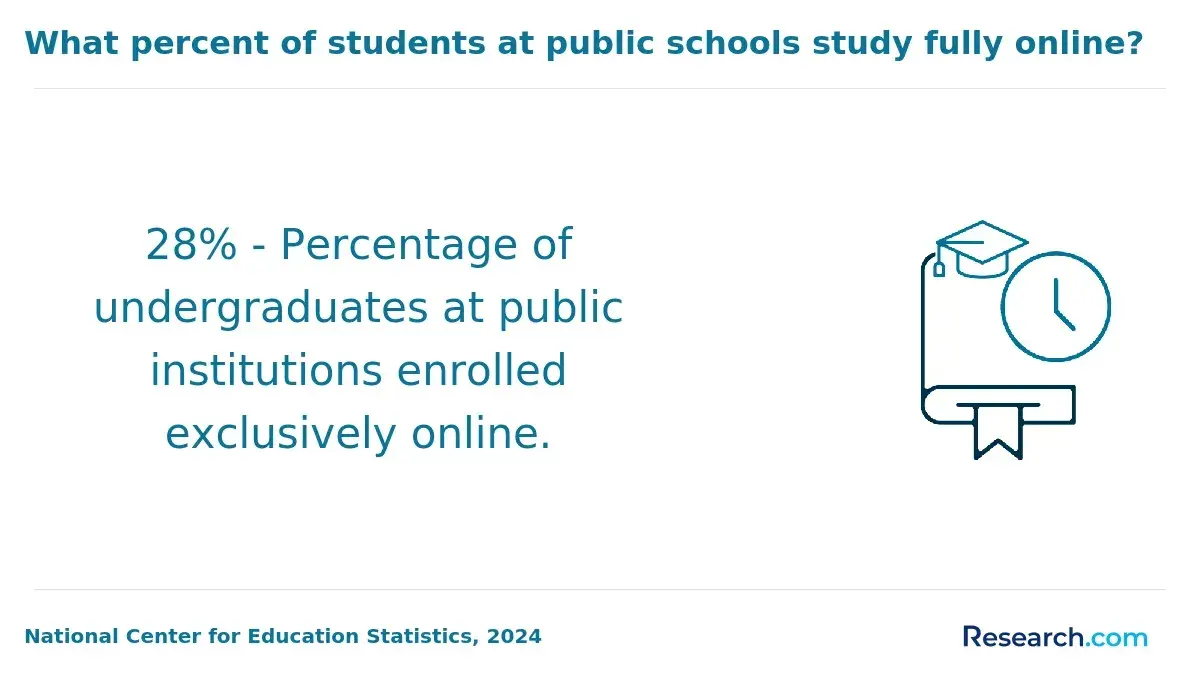
How can I compare online and campus-based engineering management degrees as a transfer student?
Online and campus-based engineering management degrees can both be credible, but they solve different problems for transfer students. Online programs are often better for working adults who need schedule flexibility, while campus programs may offer more hands-on labs, design facilities, student organizations, and in-person recruiting. The right choice depends on how much technical coursework you still need, whether you can relocate, and how predictable the remaining course sequence is.
The table below compares practical differences that affect transfer students specifically. Focus on the categories that could delay graduation or increase cost, not only on convenience.
| Comparison factor | Online engineering management | Campus-based engineering management | Transfer-student decision point |
| Scheduling | Often asynchronous or evening-friendly | More likely to follow fixed daytime schedules | Online may be better if you work full time or have family obligations |
| Technical labs | May use simulations, remote labs, local arrangements, or limited lab requirements | Usually easier access to physical labs and equipment | Campus may be stronger if many engineering science or lab courses remain |
| Transfer planning | May be designed for adult learners and associate degree holders | May be optimized for first-time freshmen progression | Online can be more transfer-friendly if it publishes degree-completion plans |
| Networking | Often built through virtual teams, employer projects, and online career services | Often supported by in-person clubs, labs, fairs, and faculty interaction | Campus may help more if you need internships or local employer access |
| Cost structure | May charge online program fees or a flat online rate | May include commuting, housing, parking, or campus fees | Compare total cost after transfer credit, not sticker tuition alone |
If your long-term goal is to become a licensed engineer or enter a design-intensive engineering role, compare engineering management carefully with a discipline-specific option such as a mechanical engineering online degree. Engineering management is usually the better fit for operations leadership and technical project coordination, while discipline-specific engineering is often stronger for design, analysis, and licensure-oriented paths.
A practical way to compare formats is to request two graduation plans: one online and one campus-based. Then compare remaining credits, course availability by term, total program fees, required labs, internship expectations, and career services for online students. The best format is the one that gets you to a credible credential without creating avoidable delays.
What accreditation should online engineering management programs have, and how do I verify it?
Accreditation is one of the most important checks for any online engineering management degree because it affects credit transfer, graduate school eligibility, employer confidence, and, in some cases, licensure-related pathways. At minimum, the institution should hold recognized institutional accreditation from an accreditor accepted by the U.S. Department of Education or the Council for Higher Education Accreditation.
Programmatic accreditation is more nuanced. Some bachelor's programs in engineering or engineering technology hold ABET accreditation, which can be especially important for students who want a stronger technical engineering identity or may later explore professional engineering licensure.
Many engineering management degrees, especially business-oriented or graduate-level programs, may not be ABET-accredited but can still be legitimate if the institution is properly accredited and the curriculum fits your goals.
Use the following steps before applying or transferring credits. These checks help you separate recognized programs from schools that use vague or misleading accreditation language.
- Confirm the institution's accreditation status in the U.S. Department of Education Database of Accredited Postsecondary Institutions and Programs or through CHEA-recognized resources.
- If the program claims ABET accreditation, verify the exact degree title, campus or online designation, and accreditation commission in ABET's official program search.
- Ask whether the online version is covered under the same accreditation status as the campus version, especially if the school offers both formats.
- Check whether future goals such as graduate school, employer tuition reimbursement, government hiring, or licensure require a specific accreditation type.
- Save written documentation from admissions or the registrar if accreditation status affects your transfer or career decision.
A common mistake is assuming that institutional accreditation and programmatic accreditation are interchangeable. Institutional accreditation says the college or university meets broad quality standards; programmatic accreditation evaluates a specific academic program.
For engineering management, the importance of programmatic accreditation depends on whether you need a technical engineering credential, a management credential, or a hybrid of both.
What admission requirements and transfer policies do online engineering management programs use?
Admission requirements vary by degree level, but transfer applicants are usually evaluated on completed college credits, cumulative GPA, prerequisite readiness, and whether prior coursework aligns with the engineering management curriculum. Bachelor's programs may accept students with an associate degree, a minimum number of transferable credits, or a mix of college and military training.
Master's programs typically require a bachelor's degree and may prefer applicants with engineering, technology, computer science, math, business analytics, or related technical backgrounds.
The most important transfer policies are not always the headline policies. A school may advertise a high transfer maximum but still require a certain number of upper-division credits, major courses, or final credits to be completed in residence. This is why the official degree audit matters more than the admissions brochure.
Most transfer applicants should prepare the following materials before requesting an evaluation. Having these ready can speed up review and improve the accuracy of the school's decision.
- Official transcripts from every college previously attended, including dual-enrollment or community college coursework.
- Course descriptions or syllabi for technical courses such as calculus, physics, circuits, statics, CAD, programming, manufacturing, or quality control.
- Military Joint Services Transcript, ACE recommendations, certification records, or employer training documentation if applicable.
- A current resume if the program considers professional experience or prior learning.
- A list of target start terms and preferred course load so the advisor can build a realistic completion plan.
Before enrolling, ask the school how it handles repeated courses, old technical credits, quarter-to-semester conversion, pass/fail grades, international transcripts, and credits from nationally accredited or nontraditional providers. Also ask whether accepted credits satisfy specific requirements or only count toward free electives. That distinction can determine whether your prior work actually saves time.
What core courses and concentrations are typical in online engineering management programs?
Online engineering management programs usually blend technical literacy with management decision-making. The exact balance varies: some programs feel closer to industrial engineering, some resemble technology management, and others emphasize business leadership for technical organizations. Transfer students should compare course lists carefully because a program's title may not reveal how quantitative, technical, or business-focused it really is.
The table below summarizes common curriculum areas. Use it to see whether a program matches your current credits and future career direction.
| Curriculum area | Typical courses | Why it matters |
| Engineering and technical foundations | Calculus, statistics, physics, materials, systems, computing, engineering economics | Builds the technical fluency needed to manage engineers, technicians, and production systems |
| Operations and quality | Lean systems, Six Sigma concepts, supply chain, quality assurance, process improvement | Prepares students for manufacturing, logistics, reliability, and continuous improvement roles |
| Project and program management | Scheduling, cost control, risk management, stakeholder communication, team leadership | Supports technical project coordination and cross-functional leadership |
| Business and finance | Accounting, budgeting, managerial economics, organizational behavior, strategy | Helps graduates connect technical decisions to business outcomes |
| Analytics and decision support | Data analysis, forecasting, simulation, optimization, dashboards | Reflects employer demand for managers who can interpret operational and engineering data |
| Capstone or applied project | Process redesign, product launch plan, systems improvement, employer-based project | Lets students demonstrate integrated technical and management skills |
Common concentrations include operations management, manufacturing systems, supply chain, quality management, project management, systems engineering, product development, construction, technology management, data analytics, and sustainability. If your interest is primarily in jobsite delivery, estimating, contracts, and built-environment project execution, compare engineering management with online construction management programs before deciding.
Transfer students should pay close attention to prerequisites. A management course may be available every term, while a technical course such as calculus-based physics or engineering statistics may be offered less often or may require a sequence. Missing one prerequisite can add a semester even if you transfer many credits.
How long does it take to finish an online engineering management degree with transfer credits?
The time to finish an online engineering management degree depends on the number of credits accepted, how those credits apply, how many courses you can take each term, and whether the program uses eight-week, semester, quarter, or competency-based pacing. For bachelor's students, transfer credits can create the biggest time savings when they satisfy general education, math, science, and lower-division technical requirements.
The table below gives a realistic planning framework. It is not a guarantee because schools apply credits differently, but it helps you estimate the range of possible timelines before speaking with an advisor.
| Transfer status | Typical remaining work | Likely planning issue | Best course-load strategy |
| Few or no transferable credits | Most general education, math, science, business, and major courses | Longer sequencing and more prerequisites | Start with math, writing, and prerequisite planning |
| About one year of transferable credits | General education plus most technical and management courses | Some credits may apply as electives only | Balance quantitative courses with writing or business courses |
| Associate degree or roughly two years of credits | Upper-division major courses, prerequisites not covered, capstone | Residency and upper-division requirements | Request a term-by-term plan before enrolling |
| Large credit total with mixed technical background | Major requirements and missing prerequisite sequences | High credit count may not equal degree progress | Prioritize requirement completion over credit accumulation |
To avoid unnecessary delays, take the following steps before your first term. These actions are especially important for students trying to finish quickly while working.
- Ask for a written transfer audit that separates accepted credits from credits applied to the major.
- Identify every remaining prerequisite and the terms in which each course is offered.
- Confirm whether upper-division engineering management courses must be completed at the receiving school.
- Check whether accelerated sessions overlap with difficult quantitative courses, since faster calendars are not always easier.
- Build a backup plan for courses that are canceled, full, or offered only once per year.
Full-time enrollment may be faster, but part-time enrollment can be more sustainable for working adults. The better option is the one you can complete consistently without withdrawing from key prerequisite courses, because withdrawals can reduce financial aid progress and extend the degree.
What does an online engineering management degree cost, and how do transfer credits save money?
The cost of an online engineering management degree depends on tuition, fees, credit requirements, transfer acceptance, books or software, technology fees, lab requirements, and whether the school charges different rates for online, in-state, out-of-state, or military-affiliated students. Transfer credits save money when they reduce the number of credits you must pay for at the receiving institution.
College Board's 2024-25 tuition benchmarks provide useful context for comparing sticker prices before school-specific discounts or aid. These figures are averages, so your actual cost may be higher or lower depending on the institution and your residency status.
- Average published tuition and fees at public four-year in-state institutions: $11,610.
- Average published tuition and fees at public four-year out-of-state institutions: $30,780.
- Average published tuition and fees at private nonprofit four-year institutions: $43,350.
The table below shows the cost factors transfer students should compare beyond tuition. These items often explain why one program with a lower per-credit rate can still cost more overall.
| Cost factor | Why it affects total cost | Question to ask |
| Accepted credits applied to degree | Only degree-applicable credits reduce remaining tuition | How many accepted credits satisfy specific requirements? |
| Residency requirement | Schools may require a minimum number of credits taken through them | What is the minimum number of credits I must complete here? |
| Online program fees | Technology or distance-learning fees can add to tuition | Are online fees charged per credit, per course, or per term? |
| Software and materials | Engineering, analytics, or simulation tools may carry costs | Which software is required, and is it included in tuition? |
| Course availability | Delayed courses can add terms and living costs | Are required courses offered every term or only once per year? |
| Financial aid eligibility | Aid rules may depend on enrollment intensity and satisfactory academic progress | How will my transfer credits affect aid status and remaining eligibility? |
A simple savings formula is to multiply the number of degree-applicable transfer credits by the receiving school's per-credit tuition, then subtract any added evaluation, technology, or residency costs. For example, 30 accepted credits can be valuable, but the true savings depends on whether those credits replace required courses rather than simply increasing elective totals.
The biggest cost mistake is choosing the lowest tuition without checking transfer fit. A slightly higher-tuition program that accepts more major-applicable credits may cost less in the end than a cheaper program that forces you to retake prerequisites or complete extra electives.
What careers, job titles, and industries can graduates of engineering management programs pursue?
Engineering management graduates commonly pursue roles that sit between technical teams and business leadership. They may coordinate engineering projects, improve production systems, supervise technical staff, manage budgets, analyze performance data, support product launches, or translate customer and executive requirements into operational plans.
The degree is especially useful for people who already have technical experience and want to move toward leadership without leaving engineering-related work entirely.
The table below summarizes common job directions. Titles vary widely by employer, so focus on responsibilities and required technical depth rather than title alone.
| Career direction | Common job titles | Typical responsibilities | Industries that hire |
| Technical project leadership | Engineering project coordinator, project engineer, technical project manager | Track schedules, coordinate teams, manage risk, communicate with stakeholders | Manufacturing, aerospace, energy, technology, defense, infrastructure |
| Operations and process improvement | Operations analyst, process improvement specialist, continuous improvement manager | Analyze workflows, reduce waste, improve quality, support lean initiatives | Manufacturing, logistics, healthcare operations, distribution, industrial services |
| Quality and reliability | Quality engineer, quality manager, reliability coordinator | Monitor defects, investigate failures, document compliance, improve systems | Automotive, medical devices, electronics, consumer products, regulated manufacturing |
| Product and systems coordination | Product operations manager, systems coordinator, technical program analyst | Connect engineering, customers, vendors, finance, and production teams | Software-enabled hardware, robotics, energy systems, equipment manufacturing |
| Engineering management | Engineering supervisor, engineering manager, plant engineering manager | Lead technical employees, allocate resources, approve project plans, manage performance | Engineering services, manufacturing, utilities, construction-related firms, R&D organizations |
Current workplace trends make hybrid technical-management skills more valuable. Employers increasingly expect managers to understand data dashboards, automation, AI-assisted planning tools, cybersecurity concerns in operational technology, supply chain risk, and sustainability reporting. The degree can help if it includes applied analytics and systems thinking, not just general management theory.
Engineering management is not the best fit for every student. If you want clinical data governance, healthcare coding systems, privacy compliance, and medical information workflows rather than engineered systems or technical operations, a health information management degree may align better with your target roles.
What salary ranges and job outlook can engineering management graduates expect in the U.S.?
Salary expectations for engineering management graduates should be treated as a range influenced by experience, industry, region, technical specialization, and actual management responsibility. The most relevant national benchmark is the BLS category for architectural and engineering managers, which reported a May 2024 median annual wage of $167,740. That figure is not an entry-level guarantee; it reflects workers already in management roles, many of whom have years of engineering or technical experience.
The BLS projects employment for architectural and engineering managers to grow 4% from 2024 to 2034. For readers, this means the occupation is expected to keep growing, but competition for management roles can still be significant because employers often prefer candidates who combine a degree with proven technical performance, leadership experience, and industry knowledge.
The table below shows how to interpret salary potential by career stage without assuming that every graduate moves directly into a manager role.
| Career stage | Likely salary context | What usually matters most |
| Early career or recent transfer graduate | Often below engineering manager median if the role is coordinator, analyst, or specialist-level | Technical foundation, internship or work experience, software tools, communication skills |
| Experienced technical professional moving into leadership | May approach management-level compensation sooner if supervising projects, budgets, or teams | Prior engineering or operations results, team leadership, project delivery, employer trust |
| Established engineering manager | Most comparable to the BLS architectural and engineering managers benchmark | Staff responsibility, budget ownership, industry complexity, location, and performance outcomes |
| Senior technical operations leader | Can vary widely based on company size, sector, and executive scope | Strategic planning, cross-functional leadership, profit-and-loss exposure, regulatory risk |
To improve return on investment, choose a program that supports your next promotion, not just your first post-degree job. Look for capstone projects tied to employer problems, analytics coursework, quality or lean exposure, project management preparation, and career services that include online students.
Avoid assuming the degree alone will create a management outcome; employers usually look for evidence that you can lead people, budgets, systems, and decisions.
Other Things You Should Know About Engineering Management
It is both, but the balance varies by school. Some programs lean toward industrial systems and quantitative analysis, while others emphasize leadership, finance, and project execution. Review the required courses before applying.
Many students do, especially in asynchronous or part-time programs. The main challenge is scheduling quantitative courses, team projects, and capstone work around job responsibilities, so a realistic term-by-term plan is essential.
Yes. Many programs review military transcripts and prior learning portfolios for transfer credit, usually with a limit of 30 semester credits or about 50% of the degree. Schools often require official ACE or JST documentation and a course-by-course evaluation before credit is applied.
Useful tools often include spreadsheet modeling, project scheduling software, data visualization, basic statistics tools, CAD familiarity, enterprise resource planning exposure, and collaboration platforms. The best choices depend on your target industry.
References
- Accredited Masters in Engineering Management: Your Guide to Top Programs https://engineeringmanagement.org/accredited-mem-programs/
- Find Programs - ABET https://www.abet.org/accreditation/find-programs/
- Master of Engineering Management (online) | Faculty of Engineering https://www.uottawa.ca/faculty-engineering/online-programs/master-engineering-management
- Best Online Master’s Programs in Engineering Management https://www.onlinemastersdegrees.org/best-programs/engineering/engineering-management/
- Engineering Management Career | MEMPC https://www.mempc.org/engineering-management-career/
- Engineering Management Degrees Online (MSEM, MEM) https://www.onlineengineeringprograms.com/management
- Masters in Engineering Management Requirements: Everything You Need to Know https://authory.com/ErinCates/a/Masters-in-Engineering-Management-Requirements-Everything-You-Need-to-Know-a042e88d7bca1448f933a87eb4d386d43
- 2025 Most Affordable Online Master's Degrees in Engineering Management https://www.onlineu.com/most-affordable-colleges/engineering-management-masters-degrees
- What are the job opportunities after a Master’s in Engineering Management in the USA? https://mentr-me.com/question/what-are-the-job-opportunities-after-a-masters-in-enginee
- Online Master of Science in Engineering Management | LSU New Orleans https://www.lsuneworleans.edu/academics/coe/engineering-management