2027 Online Communication Disorders Degree Programs for Veterans: GI Bill Benefits, Costs & Top Considerations

Co-Founder and Chief Data Scientist

Reviewed by Rhea Paul, PhD
SLP Education & Research Expert
Choosing an online communication disorders degree as a veteran is not just a school search. It is a benefits, accreditation, career, and licensure decision. The right program can help you use GI Bill funding efficiently, avoid unnecessary out-of-pocket costs, and stay on track for roles in speech-language pathology, audiology support, rehabilitation, education, or related communication services.
Nearly 45% of veterans pursuing these degrees use the GI Bill to cover tuition and housing, yet many still run into practical questions: Is the school VA-approved? Will online enrollment reduce the housing allowance? Does military training count for credit? Will the degree meet certification or licensure expectations after graduation?
With a 78% employment rate for veterans graduating from accredited online communication disorders programs, program quality matters. This guide explains who qualifies for veteran education benefits, how online programs work, what accreditation to verify, how costs and GI Bill benefits interact, and what career outcomes veterans can reasonably evaluate before enrolling.
Key Benefits of Online Communication Disorders Degree Programs for Veterans
- The GI Bill often covers full tuition for eligible veterans in online communication disorders programs, making advanced education more accessible without added financial burdens.
- Online communication disorders degrees offer flexible schedules, allowing veterans to balance education with work or family commitments, crucial for military-connected students.
- Career services tailored for veterans, including job placement and networking, support 85% of online graduates in communication disorders programs in securing relevant employment post-graduation.
Who Qualifies as a Veteran for Online Communication Disorders Degree Programs?
For online communication disorders degree programs, “veteran” status usually matters in two ways: admissions support and education-benefit eligibility. Schools may offer veteran services broadly, but GI Bill payments depend on specific service history, discharge status, and VA rules. According to recent education data, about 1.6 million veterans accessed education benefits, so confirming eligibility early can prevent delays after admission.
Common eligibility categories include:
- Service status: Veterans generally must have served at least 90 continuous days on active duty to qualify for GI Bill benefits that can be applied to communication disorders programs.
- Discharge classification: Eligibility usually requires an honorable or general discharge. Applicants with dishonorable discharges are typically excluded from these education benefits.
- Reservists and National Guard members: Reservists and National Guard members may qualify if they were called to active duty under specific conditions, such as deployment for operations like Desert Storm.
- Spouses and dependents: Spouses and dependents may be able to use benefits through programs such as the Fry Scholarship or Transfer of Entitlement, depending on the service member’s status and benefit history.
Before applying, veterans should review their Certificate of Eligibility, discharge documentation, prior college transcripts, and any military education records. A school’s veterans certifying official can confirm whether the institution participates in VA benefit processing, but the VA makes the final eligibility determination.
If you are still comparing fields outside communication disorders, use the same benefits checklist when reviewing other options, including affordable online artificial intelligence degree programs. The key is to verify VA approval, accreditation, transfer-credit policy, and total net cost before committing.
Do Online Communication Disorders Degree Programs Accept Military Training for College Credit?
Many online communication disorders programs review military training for possible college credit, but acceptance is not automatic. Credit decisions depend on the school’s transfer policy, degree requirements, accreditation expectations, and whether military coursework matches general education, elective, or major-related requirements. According to the Council for Adult and Experiential Learning, nearly 90% of colleges accept some form of prior learning assessment (PLA), making this an important savings opportunity for veterans.
Schools commonly evaluate military learning through:
- Joint Services Transcripts: These transcripts document military coursework, occupations, and training. Colleges use them to determine whether any learning can apply to a communication disorders curriculum.
- ACE credit recommendations: The American Council on Education (ACE) provides credit recommendations for many types of military training. Schools may use these recommendations, but they decide how much credit to award.
- Competency-based assessments: Some institutions allow students to demonstrate knowledge or skills through assessments, portfolios, or exams. This can be useful when military experience aligns with communication, health, education, or leadership competencies.
- Institutional credit limits: Programs often cap how many credits can transfer into a degree. Major courses in communication disorders may be harder to replace than electives or general education requirements.
The best approach is to request an unofficial transfer review before enrollment. Ask which credits will count toward graduation, not just how many credits the school accepts. A large transfer-credit award is less valuable if most credits do not apply to required courses.
Veterans comparing cost and transfer policies across technical fields can use similar questions when reviewing affordable online engineering programs: What credits apply to the major, what must be retaken, and how does the transfer decision affect GI Bill usage?
How Do Online Communication Disorders Degree Programs Work for Veterans?
Online communication disorders programs usually combine remote coursework with structured academic advising and, at some levels, fieldwork or clinical requirements. For veterans, the main advantage is scheduling flexibility, but the program still requires careful planning around benefits, practicum placements, technology requirements, and weekly study time.
Key features veterans should evaluate include:
- Asynchronous learning: Many online courses let students review lectures, complete assignments, and participate in discussions on their own schedule. This helps veterans balancing work, family, medical appointments, or reserve obligations.
- Flexible enrollment pace: Full-time study may shorten the degree timeline, while part-time study may be more realistic for students working or managing transition responsibilities. Enrollment intensity can also affect housing allowance calculations.
- Veteran-informed advising: Strong programs connect veterans with advisors who understand GI Bill certification, transfer credit, withdrawal consequences, and course-load planning.
- GI Bill coordination: VA-approved schools typically have a certifying official who submits enrollment information to the VA. Veterans should confirm certification deadlines, covered charges, and how schedule changes may affect payments.
- Student support services: Tutoring, online library access, writing help, counseling, and career services are especially important in programs that require science courses, clinical terminology, and preparation for graduate study or professional pathways.
- Clinical or field requirements: Some communication disorders pathways, especially those leading toward speech-language pathology, may require in-person clinical experiences at approved sites. Veterans should ask whether placements can be completed near home.
One veteran enrolled in an online communication disorders program described the early adjustment as difficult because coursework, shifts, and family responsibilities all competed for time. The turning point was choosing a program with asynchronous classes and veteran-specific advising. That combination made it easier to plan assignments, submit GI Bill paperwork correctly, and understand how the degree connected to civilian career options.
For veterans, the practical question is not simply whether a program is online. It is whether the online format is organized enough to support consistent progress without creating avoidable benefits, scheduling, or clinical-placement problems.
Veterans should verify accreditation before applying because it affects financial aid, GI Bill eligibility, credit transfer, graduate admission, certification pathways, licensure, and employer recognition. An online format does not weaken a degree by itself, but attending an unaccredited or poorly matched program can limit what the degree can do after graduation.
There are two accreditation checks to make:
- Institutional accreditation: This applies to the college or university as a whole. VA-approved schools must have institutional accreditation recognized by the Council for Higher Education Accreditation (CHEA) and the U.S. Department of Education to qualify for GI Bill funding.
- Programmatic accreditation: This applies to a specific professional program. In communication disorders and speech-language pathology, the Council on Academic Accreditation (CAA) is especially important for graduate-level clinical preparation.
The American Speech-Language-Hearing Association (ASHA) requires graduation from a CAA-accredited program for certification eligibility in the relevant clinical pathway. This is especially important for students planning to become speech-language pathologists, because state licensure and employer requirements often depend on completing the appropriate accredited graduate training.
Accreditation also affects long-term value. Studies reveal over 90% of employers prefer candidates with degrees from regionally accredited institutions. Veterans should therefore confirm both VA approval and the accreditation needed for their intended credential before using benefits. If comparing speech-language pathology pathways by cost and format, reviewing slp programs online can help frame the accreditation and affordability questions to ask.
The sticker price of an online communication disorders program can be misleading. Veterans should estimate the full net cost after GI Bill payments, fees, housing allowance rules, books, technology, transfer credits, and any travel required for clinical or field experiences. Average tuition can range broadly, with master’s degrees sometimes exceeding $30,000 in tuition alone.
Important cost factors include:
- Tuition per credit: Tuition typically ranges from $300 to $700 per credit hour depending on residency status and institutional policy. Public universities may charge different rates for in-state, out-of-state, and online students.
- Total program cost: Some programs can reach $30,000 or more in tuition. Veterans should compare the total number of required credits, not just the per-credit rate.
- Mandatory fees: Technology, student services, clinical placement, graduation, and administrative fees can add several hundred to over a thousand dollars annually. Not all fees are handled the same way under GI Bill payments.
- Housing allowance: Veterans using the Post-9/11 GI Bill for online courses receive a housing allowance based on half the national average rent for less than full-time attendance, often lower than on-campus rates. Enrollment level can also affect the amount received.
- Out-of-pocket expenses: Books, supplies, required software, background checks, clinical documentation, and travel to practicums can remain the student’s responsibility. The U.S. Department of Veterans Affairs reports these costs average about $1,500 annually.
A practical cost comparison should answer three questions: How much will the VA pay directly to the school? How much cash flow will the student need each term? How much GI Bill entitlement will remain after completing the program?
Veterans evaluating graduate-level return on investment can use the same net-cost framework when comparing other professional degrees, such as affordable online executive MBA programs, where tuition, fees, schedule flexibility, and career payoff must be considered together.
GI Bill benefits can make an online communication disorders degree significantly more affordable, but the exact value depends on the veteran’s eligibility percentage, the school’s VA approval status, enrollment intensity, program type, and whether courses are certified correctly. More than 600,000 veterans have utilized these benefits recently, showing how central they are to post-service education planning.
Key GI Bill supports include:
- Tuition and fee coverage: The Post-9/11 GI Bill pays up to 100% of tuition and institutional fees for approved programs, depending on eligibility level and applicable limits.
- Housing allowance adjustments: Online learners are treated differently from students attending in-person classes. Unlike traditional on-campus courses, online learners receive a Monthly Housing Allowance set at 50% of the national average, which can affect monthly budgeting.
- Book and supply stipend: Eligible veterans can claim up to $1,000 annually for textbooks and required educational materials.
- Eligibility percentage: Benefit levels depend on service length, discharge status, and other VA rules. A veteran with partial eligibility may still have out-of-pocket costs.
- Enrollment certification: Schools must certify the student’s enrollment to the VA. Dropping, withdrawing from, or changing courses can create payment adjustments or debts, so veterans should talk with the certifying official before making schedule changes.
One veteran who completed an online communication disorders degree described the GI Bill process as confusing at first, especially while balancing family responsibilities and the transition to civilian life. Working with veteran support staff helped her understand forms, deadlines, and payment timing. “The financial support took a lot of pressure off, letting me focus on learning instead of worrying about bills,” she said.
The lesson for prospective students is clear: GI Bill benefits are valuable, but they work best when paired with a VA-approved school, a clear course plan, and early communication with the veterans certifying official.
Strong veteran support services can make a measurable difference in persistence, planning, and confidence. Veterans pursuing online communication disorders degrees often benefit from tailored support services that address their distinct challenges, contributing to a 15% higher retention rate among those who engage with these resources.
Look for programs that offer:
- Academic advising: Advisors should help veterans map degree requirements, sequence prerequisite courses, understand GPA expectations, and plan around work or family obligations.
- Benefits counseling: A veterans certifying official or benefits counselor can explain GI Bill certification, housing allowance implications, payment timelines, and the consequences of schedule changes.
- Mental health resources: Virtual counseling, crisis support, wellness programming, and peer groups can help veterans manage stress, transition challenges, or service-related concerns while studying online.
- Career services: Career staff should help translate military experience into civilian language, prepare resumes, identify relevant employers, and explain credentialing steps for communication disorders roles.
- Peer support: Veteran networks, online cohorts, mentoring, and student organizations can reduce isolation and create accountability for remote learners.
- Accessibility and disability services: Veterans with documented disabilities should ask about accommodations, assistive technology, testing adjustments, and clinical-placement support where applicable.
Before enrolling, ask whether these services are available to fully online students or only to campus-based students. A program may advertise veteran support broadly, but online access, evening availability, and staff familiarity with communication disorders requirements are what make the support useful in practice.
Completion time depends on degree level, transfer credits, enrollment status, course availability, and whether the program includes clinical or fieldwork requirements. Veterans should also consider how program length affects GI Bill entitlement, monthly housing payments, and the timing of entry into the workforce.
Several factors shape the timeline:
- Enrollment status: Full-time students typically finish faster, while part-time students may need more terms but gain schedule flexibility. This is often the better fit for veterans working full time or managing family responsibilities.
- Credit transfer and military training: Prior college credits and approved military training can reduce the number of courses required. The value depends on whether credits apply to the degree plan rather than only appearing as electives.
- Course scheduling flexibility: Asynchronous classes, multiple start dates, and accelerated terms may help veterans progress steadily. However, accelerated courses can be demanding and may not fit every learner’s schedule.
- Program length variation: Degree level and design vary by institution. Bachelor’s programs usually take about four years full time, while master’s degrees often span two to three years.
- Benefit planning: The duration of study determines how long GI Bill housing allowances and tuition payments apply. Veterans should avoid taking unnecessary courses that consume entitlement without advancing graduation.
- Clinical or practicum timing: Programs that require field placements may take longer if approved sites are limited, background checks are delayed, or placements must align with school calendars.
The safest planning step is to request a term-by-term degree map before enrolling. It should show required courses, estimated graduation date, transfer credits applied, expected enrollment level, and any in-person or clinical requirements.
Veterans considering longer-term leadership or academic pathways can compare this timeline with advanced online options such as a doctorate in organizational leadership, where flexible scheduling may also be important for military-connected students.
An online communication disorders degree can support several career paths, but the exact job options depend heavily on degree level and credentialing. A bachelor’s degree may prepare graduates for support, assistant, education, or graduate-school pathways. Clinical speech-language pathologist roles typically require graduate education, supervised clinical experience, certification, and state licensure. The U.S. Bureau of Labor Statistics projects a 17% employment increase for speech-language pathologists through 2035, reflecting strong demand in the field.
Common roles and pathways include:
- Speech-language pathologist: Speech-language pathologists assess and treat speech, language, communication, and swallowing disorders in settings such as schools, hospitals, clinics, and rehabilitation facilities. Veterans’ experience with discipline, communication under pressure, and teamwork can be useful in patient-centered work.
- Audiologist assistant: Audiologist assistants support hearing assessments, device-related services, and rehabilitation activities under professional supervision. This role can fit veterans who value technical accuracy and structured procedures.
- Communication specialist: Communication specialists may work in educational, healthcare, nonprofit, or organizational settings to support communication strategies, training, and program coordination.
- Rehabilitation counselor: Veterans interested in helping individuals adjust to communication-related challenges may pursue rehabilitation-focused roles, though specific counseling positions may require additional credentials.
- Assistant or support roles: Depending on state rules, graduates may qualify for speech-language pathology assistant or related support positions. Requirements vary, so students should check state regulations before assuming eligibility.
- Graduate-school pathway: Many students use an undergraduate communication disorders degree as preparation for a master’s program in speech-language pathology or a related field.
Credentials matter. The Certificate of Clinical Competence (CCC) is critical for many clinical speech-language pathology roles, and state licensure requirements can differ. Veterans should choose programs that clearly explain the credential pathway for their intended state and career goal.
Veterans who want to broaden employment options can also review online certificate programs that pay well, especially if they need complementary skills in healthcare administration, education technology, counseling support, or data-informed service delivery.
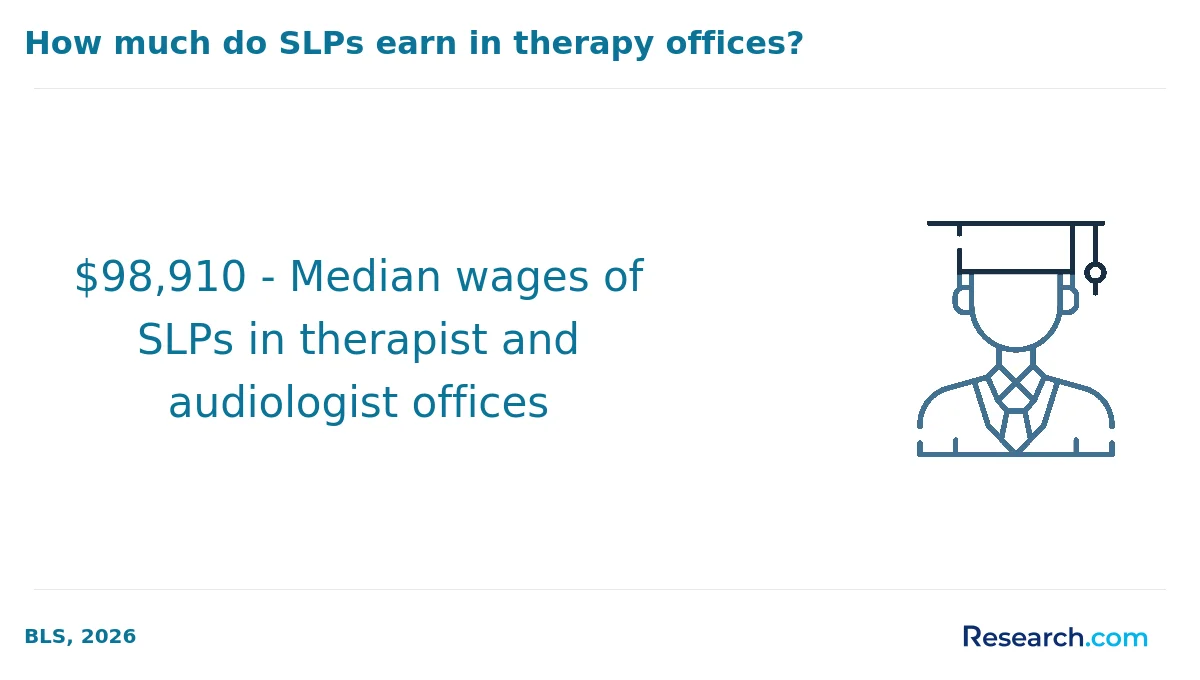
Salary outcomes vary by role, credential, employer, location, and experience. Recent data from the U.S. Bureau of Labor Statistics reports that speech-language pathologists typically earn a median yearly wage near $79,000. Veterans should use that figure as a reference point, not a guaranteed starting salary, because many graduates enter different roles depending on degree level and licensure status.
Important salary factors include:
- Industry: Healthcare settings often pay differently from schools, early intervention programs, rehabilitation centers, or private practices.
- Role: Licensed speech-language pathologists, assistants, communication specialists, and rehabilitation-related professionals may have different pay ranges and advancement paths.
- Location: Regional demand, cost of living, state funding, and employer type can significantly affect compensation.
- Experience: Clinical experience, specialized training, supervisory responsibility, and advanced credentials can support higher earnings over time.
- Military skills: Leadership, documentation discipline, teamwork, cultural awareness, and resilience can help veterans stand out, especially in healthcare, school, and rehabilitation settings.
To evaluate return on investment, compare expected earnings with the true net cost of the degree after GI Bill benefits. Also consider whether the program leads directly to the credential you need or whether additional graduate study, supervised hours, exams, or licensure fees will be required before reaching your target role.
What Graduates Say About Their Online Communication Disorders Degree for Veterans
- : "Choosing to pursue an online communication disorders degree felt like the perfect way to balance my military commitments with education. The flexibility allowed me to maintain structure in my life while easing my transition to civilian roles. Completing the program has profoundly impacted my career, equipping me with vital skills that are in high demand in healthcare settings. Stephen"
- : "After years of service, going back to school was daunting, but the online communication disorders degree made it accessible and manageable. I often reflected on how the average cost of attendance was reasonable compared to traditional programs, which helped justify my choice. This degree has opened doors I never thought possible, giving me confidence to thrive as a speech-language pathologist. Raymond"
- : "The decision to enroll in an online communication disorders degree was strategic; I needed a program that respected my veteran schedule and commitments. Transitioning out of military life is challenging, yet this program provided a supportive and flexible environment that helped me adapt. Professionally, earning this degree has allowed me to bring a unique perspective to my practice, serving diverse populations with empathy and expertise. Maria"
Other Things You Should Know About Communication Disorders Degrees
Yes, clinical practicum components are required in many online communication disorders degree programs for veterans. These components provide essential hands-on experience, and programs often facilitate local placements to accommodate veterans' locations. This practical training ensures graduates meet certification and licensure requirements.
No. For veterans to use education benefits, the program must be approved for VA education payments, usually through the GI Bill and listed in VA-approved school records. Unapproved online programs are not payable, even if they lead to a communication disorders degree.
- U.S. Bureau of Labor Statistics - Speech-Language Pathologists https://www.bls.gov/ooh/healthcare/speech-language-pathologists.htm
- ASHA EdFind - Accredited Speech-Language Pathology Programs https://find.asha.org/ed/
- O*NET OnLine - Speech-Language Pathologists https://www.onetonline.org/link/summary/29-1127.00
- Emerson College - Master of Science (M.S.) in Communication Disorders (Speech@Emerson, online) https://speech.emerson.edu/
- Idaho State University - Master of Science in Speech-Language Pathology (Online/Distance Education) https://www.isu.edu/slp/programs-offered/slp-graduate-program/
- Auburn University, Montgomery - Master of Science in Speech-Language Pathology https://www.aum.edu/degree/ms-speech-language-pathology/
- Baylor University - Master of Science in Speech-Language Pathology (Online) https://csd.robbins.baylor.edu/graduate/online-csd-graduate-program
- University of Wisconsin-Eau Claire - Master of Science in Speech-Language Pathology (Online) https://www.uwec.edu/speech-language-and-hearing-sciences-department/graduate-program/speech-language-pathology-online