2027 Fastest Online Communication Disorders Degree Programs You Can Finish in Under 2 Years

Co-Founder and Chief Data Scientist

Reviewed by Rhea Paul, PhD
SLP Education & Research Expert
Choosing a fast online communication disorders degree is usually a trade-off between speed, cost, academic workload, and career eligibility. For students who want to move into speech-language pathology, audiology support, rehabilitation, education, or graduate study, the right program can shorten the time to completion—but only if it is accredited, accepts the right transfer credits, and fits the student’s schedule.
The timing matters. According to the Bureau of Labor Statistics, the demand for speech-language pathologists is projected to grow 17% from 2025 to 2035, which makes efficient credential planning important for students who do not want to spend extra years repeating prerequisites or waiting for the next admission cycle.
Traditional programs often take three years or more, especially when students attend part time, transfer credits late, or need additional prerequisite courses. This guide explains which online communication disorders formats can be completed in under two years, what makes them accelerated, how admissions and transfer credits work, what the workload looks like, and how to judge whether a fast program is respected by employers.
Key Benefits of Online Communication Disorders Degree Programs You Can Finish in Under 2 Years
- Accelerated online communication disorders programs enable faster workforce entry, with 70% of graduates securing jobs within six months, meeting the growing demand for speech-language pathologists.
- Completing a degree in under two years reduces tuition and housing costs by approximately 30%, making education more affordable compared to traditional timelines.
- Online formats offer flexibility for working adults; with enrollment increasing 20% annually, these programs accommodate professionals balancing career, family, and studies.
What Features Make an Online Communication Disorders Program Accelerated?
An online communication disorders program is accelerated when it is intentionally designed to reduce time to completion without removing core academic requirements. The fastest programs usually combine shorter terms, year-round enrollment, flexible online delivery, and clear course sequencing so students can keep moving instead of waiting for the next semester.
According to the National Center for Education Statistics (NCES), accelerated online health-related programs graduate students 25% faster than traditional formats. For communication disorders students, that faster pace can be useful, but it also means less recovery time between assignments, exams, and clinical or observation-related requirements.
Key features that commonly make a program faster include:
- Compressed course terms: Instead of standard 15-week semesters, accelerated programs often use 6-8 week courses. Students cover material quickly, so weekly reading, writing, discussion, and assessment expectations are usually heavier.
- Higher allowable course loads: Some schools permit students to take more courses per term or stack courses across multiple short sessions. This can shorten the calendar time to graduation, but it works best for students with strong time management and limited outside obligations.
- Asynchronous online coursework: Many accelerated programs let students watch lectures, participate in discussions, and submit assignments on a weekly schedule rather than attending fixed class meetings. This flexibility helps working adults avoid delays caused by rigid class times.
- Year-round progression: Programs that use summer terms, intersessions, or rolling course starts can reduce the waiting periods that often extend a degree timeline.
- Planned prerequisite pathways: A strong accelerated program tells students early which prerequisite courses must be finished before advanced coursework begins. This prevents students from discovering late that one missing class will delay graduation.
Speed should not be the only priority. Students should confirm that the program’s curriculum supports their next step, whether that is graduate admission, a support role in healthcare or education, or a related certification pathway. Prospective students considering adjacent behavioral and educational fields may also compare requirements for BCBA programs.
What Are the Online Communication Disorders Degree Formats You Can Finish in Under 2 Years?
The format of the program determines how quickly students can realistically finish. A program advertised as “online” is not automatically fast; some online programs still follow traditional semester calendars. The fastest options use structures that reduce idle time and allow qualified students to complete requirements continuously.
Common online formats that may be completed in under two years include:
- Accelerated term-based programs: These programs divide the academic year into shorter sessions, often 6-8 weeks instead of the usual 15 weeks. Students can complete more courses per year if they can handle the compressed workload.
- Competency-based education (CBE): CBE programs measure demonstrated skills and knowledge rather than time spent in class. Students who already understand some content or learn quickly may progress faster, though availability in communication disorders can vary by institution.
- Full-time intensive tracks: These pathways require a heavy, year-round course load. They are best for students who can prioritize school and complete assignments consistently each week.
- Year-round enrollment models: Programs with summer courses, intersessions, or multiple start dates reduce long academic breaks. This structure can be especially helpful for transfer students who want to keep momentum.
According to data from the Lumina Foundation and EDUCAUSE, such formats reduce overall program duration by 25-50%. The main trade-off is intensity: a shorter program usually does not mean less work. It means the same or similar academic expectations are concentrated into a tighter schedule.
Students comparing online degrees across fields should look at course length, start dates, transfer policy, and total required credits rather than relying on marketing language alone. For example, someone comparing communication disorders with an engineering degree online would find that both fields can offer flexible delivery, but the pacing, prerequisites, and hands-on requirements may differ substantially.
What Are the Admission Requirements for Accelerated Online Communication Disorders Degrees?
Accelerated online communication disorders programs often expect applicants to be academically prepared before the first term begins. Because the pace is faster, students have less time to catch up on missing prerequisites, weak writing skills, or unfamiliar scientific terminology.
Common admission requirements include:
- Minimum GPA: Many programs expect a GPA of around 3.0 on a 4.0 scale. A stronger GPA may help applicants demonstrate readiness for condensed coursework.
- Prerequisite coursework: Programs may require previous classes in communication sciences, biology, psychology, linguistics, or related areas. These courses help students enter advanced material without needing remedial preparation.
- Standardized tests or placement exams: Some schools may request test scores or placement assessments, although requirements vary widely among institutions.
- Relevant work or volunteer experience: Experience in schools, clinics, healthcare settings, rehabilitation environments, or community service can strengthen an application by showing exposure to communication-related needs.
- Personal statement or recommendations: Accelerated programs may use essays and letters to evaluate whether applicants understand the workload and can manage the pace.
Applicants should ask admissions staff two practical questions before applying: which prerequisites must be completed before enrollment, and which can be completed during the program. This distinction can determine whether a student truly finishes in under two years.
Students considering long-term leadership, administration, or doctoral study may also compare advanced pathways such as an online PhD organizational leadership, particularly if their interests extend beyond direct communication disorders services.
Transfer credits can be one of the biggest time-saving factors in a fast online communication disorders degree. If a school accepts previous coursework, students may be able to skip general education, electives, or some foundational courses and move more quickly into major requirements. Data indicates that about 67% of online programs accept transfer credits, allowing many to transfer between 50% and 75% of required coursework.
Typical transfer policies include:
- Maximum transferable credits: Programs often cap accepted transfer credit at 30 to 45 semester hours. The cap protects the integrity of the degree while still rewarding prior college work.
- Course-by-course evaluation: Schools usually review transcripts, course descriptions, and sometimes syllabi to determine whether previous classes match current requirements.
- Credit currency rules: Many institutions prefer or require transfer credits to be recent, often earned within the past 5 to 10 years, especially for field-specific or science-related coursework.
- Minimum grade requirements: Programs may decline credits below a certain grade, even if the course title appears similar.
The strongest transfer applicants prepare early. Before applying, gather official transcripts, course descriptions, syllabi, lab details, and any documentation showing learning outcomes. This can reduce delays during the credit evaluation process.
Transfer credit is helpful, but it does not usually eliminate every requirement. Clinical practicums, capstones, and program-specific assessments generally must be completed through the degree-granting school to satisfy institutional and accreditation expectations.
When I asked a professional who earned his communication disorders degree fully online in less than two years about his experience, he emphasized the importance of transfer credits. “The transfer process was detailed and required patience,” he said, describing the uncertainty of waiting to see which courses would count.
He explained that the evaluation took several weeks, but “being able to bypass nearly half the coursework was a game changer.” His advice was straightforward: request transcripts early, save syllabi, and ask for a preliminary review before committing to a program.
Students in fast online communication disorders programs often take more than one class at a time, but the right course load depends on term length, job hours, family responsibilities, and the difficulty of each course. Taking too many classes can backfire if grades fall, assignments are late, or students need to repeat a requirement.
Several factors shape a realistic course load:
- Term length: In 5- to 8-week terms, two classes can feel like a full-time load because each course moves quickly. Students should review weekly assignment expectations before adding a third class.
- Course sequencing: Foundational courses usually come before advanced topics. If a prerequisite is missed, students may have to wait for the next offering, which can slow the entire plan.
- Pacing model: Some programs alternate heavier and lighter terms. This can help students manage demanding courses, projects, or observation requirements without pausing enrollment.
- Work and caregiving schedule: A student working full time may need a different plan than a student who can study during the day. The fastest plan is not always the best plan if it creates burnout.
Studies show that over 60% of students in accelerated online programs take three or more courses per term to stay on track. That approach can work, but students should build a weekly schedule before the term starts, including time for reading, lectures, discussion posts, exams, group work, and instructor communication.
Employers are generally more concerned with accreditation, competencies, clinical readiness, and professional fit than with whether a degree was completed online or on campus. However, an accelerated degree must come from a credible institution and show that the student completed rigorous, relevant training.
Recent data indicates a steady rise in acceptance, with a 2023 survey by the National Association of Colleges and Employers showing over 70% of recruiters are increasingly open to online degrees from accredited institutions.
Employers commonly evaluate accelerated online degrees based on the following:
- Accreditation: A degree from a regionally accredited school carries more credibility. For pathways tied to speech-language pathology or audiology, students should also verify whether program-specific accreditation or graduate-level accreditation will matter for their next credential.
- Curriculum depth: Employers may look for evidence that the program covered core areas such as speech and language development, anatomy and physiology, phonetics, assessment concepts, intervention principles, and ethics.
- Applied experience: Observation hours, internships, practica, or field-related experiences can help graduates show that they can apply classroom learning in real settings.
- Communication skills: In this field, written and spoken communication matter. Employers may use interviews, references, and work samples to assess professionalism and clarity.
- Licensure or certification pathway: For regulated roles, the degree must fit the credentialing pathway. A fast bachelor’s degree alone may not qualify someone to work as a licensed speech-language pathologist.
Completing an accelerated program can signal discipline and persistence, but speed is not a substitute for quality. Students should choose programs that clearly document learning outcomes, support field experience, and align with the requirements of their intended career path.
The cost of a fast online communication disorders degree depends on tuition rate, total credits, transfer credit, fees, and how long the student remains enrolled. Accelerated programs may reduce indirect costs by shortening the time in school, but they are not automatically cheaper.
Common cost factors include:
- Per-credit tuition: Rates generally fall between $300 and $700 per credit. Students should multiply the per-credit rate by the number of credits they still need after transfer evaluation.
- Total program cost: Depending on curriculum intensity and length, the full cost often ranges from $15,000 to $30,000. A shorter timeline may also reduce transportation, housing, or lost-income costs, depending on the student’s situation.
- Additional fees: Schools may charge technology, application, materials, graduation, or distance learning fees, sometimes adding $500 or more. Ask for a full fee schedule before enrolling.
- Books and course materials: Online programs may still require textbooks, software, testing platforms, or specialized materials.
- Financial aid and scholarships: Eligible students should compare federal aid, institutional scholarships, employer tuition assistance, grants, and payment plans. Aid availability can vary by enrollment status and program type.
A lower sticker price is helpful, but students should also consider completion risk. A program that is too intense may become more expensive if the student withdraws, repeats courses, or loses eligibility for aid.
When asked about her experience, a graduate of an accelerated online communication disorders degree said she controlled costs by choosing a fast-track program and applying early for scholarships aimed at online students. Finishing in under two years reduced living costs and minimized time away from full-time employment.
She said, “Balancing a rigorous schedule was tough, but completing the degree faster gave me a financial edge I wouldn’t have with a traditional timeline.” Her experience highlights a useful strategy: compare total cost to completion, not just tuition per credit.
A fast online communication disorders degree can support roles in healthcare, rehabilitation, education, and human services. The exact job options depend on the degree level, state rules, clinical preparation, and whether the graduate continues into a master’s program.
The U.S. Bureau of Labor Statistics projects a 17% job growth rate for speech-language pathologists between 2025 and 2035, highlighting strong demand in this profession. Students should note, however, that becoming a speech-language pathologist generally requires graduate education and applicable licensure or certification beyond many undergraduate communication disorders degrees.
Common career options include:
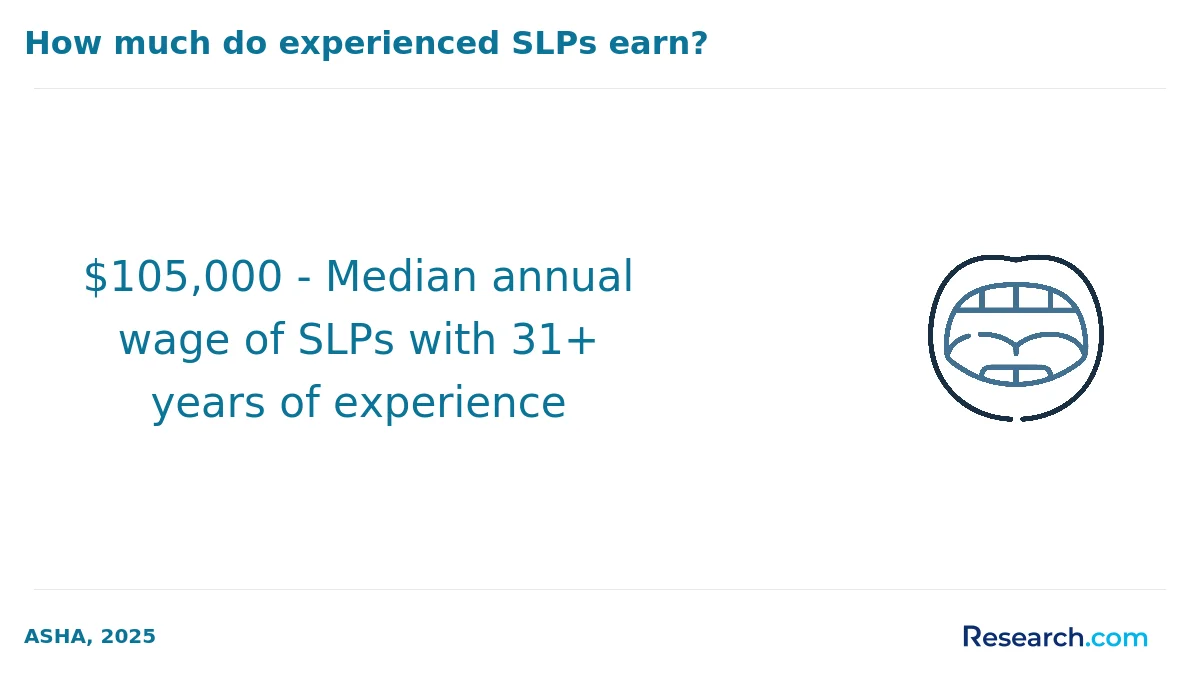
- Speech-Language Pathologist: These professionals assess and treat speech, language, swallowing, and communication disorders related to development, injury, illness, or disability. Median annual wages are approximately $97,870. Students aiming for this role should verify graduate admission, clinical hour, and licensure requirements before choosing a program.
- Audiology Assistant: Audiology assistants help prepare patients for hearing tests, maintain equipment, support documentation, and assist audiologists with routine tasks. Salaries typically range from $40,000 to $55,000 per year.
- Rehabilitation Aide: Rehabilitation aides support therapy teams by preparing treatment areas, assisting with administrative tasks, and helping patients during supervised activities. Average earnings are between $30,000 and $40,000 annually.
Students who plan to become speech-language pathologists should compare undergraduate preparation with graduate options, including slp online programs, to understand how a fast communication disorders degree fits into the full credentialing path.
For broader salary comparisons across fields, students may also review degrees that pay well and weigh earnings against licensure requirements, graduate school costs, and job availability.
Accelerated online communication disorders programs require dependable technology because missed lectures, poor audio, or late submissions can quickly affect performance in a compressed term. Students should set up their equipment before classes begin rather than troubleshooting during the first week.
Common technology requirements include:
- Reliable high-speed internet: A stable connection is essential for streaming lectures, uploading assignments, participating in live sessions, and completing assessments. Students in rural or shared-internet environments should have a backup plan.
- Learning management system access: The LMS is where students find syllabi, readings, quizzes, grades, announcements, discussions, and instructor feedback. Checking it daily can prevent missed deadlines.
- Video conferencing software: Live discussions, advising, presentations, and skills-based activities may require video participation. Students should test the platform, camera, microphone, and screen-sharing tools before the first meeting.
- Productivity software: Word processing, spreadsheet, presentation, citation, and file-sharing tools help students complete written assignments, research projects, and group work efficiently.
- Quality microphone and webcam: Clear audio and video are especially important in a communication-focused field. Poor sound can interfere with presentations, role-playing exercises, and instructor evaluation.
- Secure testing tools: Some programs use proctoring software or identity verification for exams. Students should confirm device compatibility and privacy requirements in advance.
Students exploring online degrees that pay well should treat technology readiness as part of academic readiness. In a fast program, a weak setup can create avoidable delays.
The best fast online communication disorders degree is not simply the shortest one. It is the program that helps a student graduate quickly while preserving academic quality, transfer value, financial aid eligibility, and career alignment.
Use these factors to compare programs:
- Program length: Look for programs designed for completion in under two years, but confirm whether that timeline assumes full-time enrollment, transfer credits, summer study, or a specific starting term.
- Curriculum structure: Review the course sequence, term length, prerequisite rules, and availability of required classes. A program can only be fast if required courses are offered often enough to prevent waiting.
- Accreditation: Prioritize regionally accredited schools. If the degree is part of a path toward speech-language pathology, audiology, or another regulated profession, ask how the program supports future certification, licensure, or graduate admission expectations. Look for accreditation from established agencies like the Council on Academic Accreditation (CAA), where applicable.
- Transfer credit policy: Ask how many credits can transfer, which grades qualify, whether credits expire, and how long the evaluation takes. A generous policy is only useful if the school applies credits to required courses.
- Cost: Compare total program cost, not just tuition per credit. Include fees, books, technology, transfer credits, financial aid, and the cost of extending enrollment if the pace becomes unmanageable.
- Student support: Accelerated students need responsive advising, tutoring, library access, technical support, and clear communication from faculty. Slow advising can delay even a well-designed program.
- Career outcomes: Review whether the program prepares students for graduate study, assistant-level roles, rehabilitation support, or other target jobs. If available, consider placement information, practicum access, alumni feedback, and employer connections.
Before enrolling, ask the school for a written degree plan showing every required course, transfer credits applied, projected graduation date, and estimated total cost. That document is often the clearest way to determine whether the advertised timeline is realistic.
What Graduates Say About Their Fastest Online Communication Disorders Degree Programs
- : "Choosing an accelerated online communication disorders program was the right fit for my schedule. I was able to complete the degree in under two years while continuing to work full time. The cost was reasonable compared with traditional options, and finishing quickly helped me move toward speech therapy work sooner. —Evelyn"
- : "When I compared communication disorders degrees, the fast-track online option stood out because of its pace and affordability. Completing the program in under two years saved time and money, and the intensity forced me to build stronger study habits. Those skills have helped in my current clinical specialist role. —Cristina"
- : "I chose an accelerated online communication disorders program because I needed career growth without spending several additional years in school. The cost was manageable, and the compressed format helped me reach my goals sooner. Earning the degree quickly opened opportunities that would have taken longer through a traditional schedule. —Emily"
Other Things You Should Know About Communication Disorders Degrees
Online communication disorders degrees completed in under two years in 2027 are typically recognized by certification boards like the American Speech-Language-Hearing Association (ASHA). However, students should ensure their chosen program meets the specific credentialing requirements by verifying accreditation and certification standards.
To enroll in a 2027 accelerated online communication disorders degree program, applicants typically need a bachelor's degree in a related field. Some programs may also require prerequisite courses such as statistics or anatomy, and a minimum GPA for admission. Always check specific program requirements.
Financial aid options including federal loans, grants, and scholarships are generally available for accelerated online communication disorders degrees. Students should verify eligibility with each institution's financial aid office, as aid availability may vary depending on program length and enrollment status.
- U.S. Bureau of Labor Statistics - Speech-Language Pathologists https://www.bls.gov/ooh/healthcare/speech-language-pathologists.htm
- ASHA EdFind - Accredited Speech-Language Pathology Programs https://find.asha.org/ed/
- ETS Praxis - Speech-Language Pathology (5331) https://praxis.ets.org/test/speech-language-pathology-5331.html
- University of Nebraska at Kearney - Speech-Language Pathology, Master of Science in Education (Online Track) https://www.unk.edu/online/degrees-programs/speech-language-pathology-online.php
- West Virginia University - Speech-Language Pathology, M.S. - Online https://medicine.hsc.wvu.edu/communications-sciences-and-disorders/speech-language-pathology-ms/future-students/curriculum/online-slp-program/
- Maryville University - Master of Science in Speech-Language Pathology https://www.maryville.edu/masters/speech-language-pathology/
- Delaware Valley University - Master of Science in Speech-Language Pathology (M.S.) https://delval.edu/programs/graduate-programs/speech-language-pathology
- Pennsylvania Western University - Master of Science in Speech-Language Pathology https://online.pennwest.edu/programs/speech-language-pathology-grad/index.php