2027 Online Engineering Management Degrees That Help Build Cross-Functional Collaboration Skills

Co-Founder and Chief Data Scientist
Choosing an online engineering management degree is really a decision about whether you want to lead technical work across engineering, product, operations, finance, and customer teams. The timing is strong: the U.S. Bureau of Labor Statistics reported a $167,740 median annual wage for architectural and engineering managers in 2024.
This guide is for engineers, technical specialists, and project leaders comparing graduate options. You'll learn how these programs work, what they cost, which skills matter, and how to choose a reputable program that supports real cross-functional leadership goals.
Key Things You Should Know
- Online engineering management master's programs commonly run about 30 to 36 credits, making them a practical fit for working engineers who need leadership training without leaving full-time employment.
- The strongest programs combine systems engineering, project management, finance, organizational leadership, data analysis, and communication so graduates can coordinate technical and nontechnical stakeholders.
- BLS data shows architectural and engineering managers had a 2024 median wage of $167,740, but outcomes vary by industry, location, prior engineering experience, and management scope.
What is an online engineering management degree and how does it support cross-functional collaboration?
An online engineering management degree is usually a graduate program that blends advanced technical decision-making with business, leadership, and operations training. It is different from a traditional engineering master's degree because the focus is not only on designing systems or solving technical problems; it is also on leading teams that must turn technical work into business results.
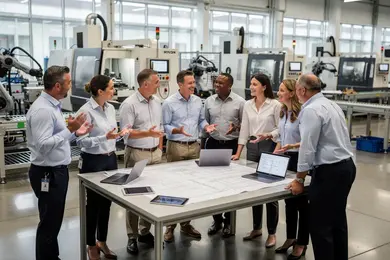
Cross-functional collaboration means working effectively across departments that have different priorities. In engineering environments, that may include software developers, mechanical engineers, quality teams, product managers, supply chain staff, finance analysts, sales leaders, legal teams, and customers.
A good engineering manager understands enough technical detail to make sound decisions while translating that detail into timelines, budgets, risks, and trade-offs that other teams can act on.
Online engineering management programs support this goal by using case studies, group projects, simulations, and capstone assignments that mirror real workplace coordination. The online format can actually strengthen collaboration practice when programs require students to manage remote teamwork, shared documents, virtual presentations, and asynchronous decision-making. Those are the same conditions many engineering organizations now operate under.
This degree tends to fit professionals who already have a technical foundation and want to move into roles such as engineering manager, technical program manager, operations leader, systems manager, product development lead, or project executive. It may be less useful for someone who wants a purely technical research career, a licensed professional engineering specialization, or an entry-level engineering credential without prior STEM preparation.
The main value of the degree is not that it replaces engineering expertise. Its value is that it helps technically trained professionals lead work that depends on multiple functions moving in the same direction.
How do online engineering management programs compare with campus-based options for working adults?
For working adults, the biggest difference between online and campus-based engineering management programs is not academic purpose; it is delivery. Both formats can cover leadership, systems thinking, decision analysis, quality management, and technology strategy. The better option depends on your schedule, learning style, employer support, and need for in-person networking.
The table below compares the practical trade-offs that matter most when choosing between online and campus study:
| Comparison factor | Online engineering management degree | Campus-based engineering management degree |
| Best fit | Working engineers, military students, remote professionals, and parents who need schedule flexibility | Students who can relocate, attend daytime classes, or want frequent face-to-face interaction |
| Collaboration practice | Often emphasizes virtual teamwork, distributed project planning, online presentations, and asynchronous communication | Often emphasizes in-person team meetings, labs, campus events, and live classroom discussion |
| Schedule structure | May offer asynchronous courses, evening sessions, short terms, or part-time pacing | Often follows fixed class times and a campus academic calendar |
| Networking | Can include national or global peer groups, online alumni events, and employer-connected projects | May provide easier access to campus recruiters, faculty offices, labs, and local industry events |
| Opportunity cost | Often allows students to keep earning while studying | May require reduced work hours, commuting, or relocation |
Online study makes the most sense if your main goal is to advance from a technical role while staying employed. Campus study may be better if you want immersive networking, research access, or a major career reset that benefits from being physically near faculty and employers.
A common mistake is assuming online means easier. Reputable online programs can be just as demanding as campus programs, especially when they require team deliverables, quantitative analysis, and applied management projects. Before enrolling, ask how often students work in teams, whether live attendance is required, and how faculty evaluate participation in collaborative assignments.
Which accreditation and quality standards should I look for in online engineering management degrees?
Accreditation is one of the most important quality checks for any online engineering management degree. At minimum, the college or university should hold institutional accreditation from an accreditor recognized by the U.S. Department of Education or the Council for Higher Education Accreditation. This affects credit transfer, employer recognition, federal financial aid eligibility, and the credibility of the degree.
Programmatic accreditation is more nuanced. ABET accreditation is common and important for many undergraduate engineering programs, but engineering management master's programs do not always carry ABET accreditation. That does not automatically make a program weak. Instead, you should look at whether the curriculum, faculty, assessment methods, and career outcomes fit the type of leadership work you want to pursue.
Use the following checks to evaluate program quality before you apply:
- Confirm institutional accreditation directly through the accreditor or federal database rather than relying only on marketing language.
- Review whether faculty have engineering, operations, technology management, or industry leadership experience relevant to your target field.
- Check whether the curriculum includes quantitative decision-making, project leadership, financial analysis, systems thinking, and organizational communication.
- Ask how online students access advising, tutoring, library resources, career services, employer events, and alumni networks.
- Look for transparent tuition, fees, graduation requirements, course rotation, and policies for transfer credits or waivers.
Red flags include vague accreditation claims, pressure-heavy admissions tactics, unclear total cost, limited faculty information, and programs that promise specific salaries or promotions. A reputable school can describe outcomes and support services, but it should not guarantee a career result.
What collaboration-focused courses and skills are typically taught in engineering management curricula?
Engineering management curricula are designed to help technical professionals make decisions with people who do not all speak the same professional language. That is why collaboration-focused courses usually combine technical systems, business strategy, and human leadership rather than treating management as a generic add-on.
The table below summarizes common course areas and the cross-functional skills they are meant to build:
| Course area | What students typically learn | Collaboration value |
| Systems engineering and systems thinking | How components, processes, people, and constraints interact in complex technical environments | Helps teams understand downstream effects before making design or process changes |
| Engineering project management | Scope, scheduling, risk, budgeting, stakeholder communication, and delivery methods | Creates a shared project language across engineering, finance, operations, and customers |
| Operations and supply chain management | Process flow, capacity, quality, sourcing, logistics, and continuous improvement | Connects technical design choices with production, procurement, and service realities |
| Technology strategy and innovation | Product roadmaps, R&D investment, market timing, and technology adoption | Links engineering work to business priorities and customer value |
| Leadership and organizational behavior | Team dynamics, conflict management, motivation, change leadership, and communication | Improves alignment when teams have competing goals or incentives |
| Decision analysis and data analytics | Quantitative modeling, trade-off analysis, forecasting, and performance metrics | Gives teams an evidence-based way to compare options and reduce bias |
Students who want deeper people-management preparation may also compare related leadership degrees, such as an online masters in human resource management, especially if their career goal is talent strategy rather than technical project delivery.
AI and automation are also changing what engineering managers need to know. Managers are increasingly expected to evaluate AI-assisted design tools, automated testing, predictive maintenance systems, and data dashboards. The best programs do not treat AI as a buzzword; they teach students how to assess risk, validate outputs, manage change, and communicate technology limits to nontechnical stakeholders.
When reviewing a curriculum, look for assignments that require team-based decision-making, not only individual exams. Collaboration is built through practice: negotiating priorities, documenting assumptions, presenting to mixed audiences, and defending recommendations with evidence.
What are the typical admission requirements for online engineering management master's programs?
Most online engineering management master's programs are built for applicants who already have a technical background. Requirements vary by school, but admissions teams usually want evidence that you can handle graduate-level quantitative work and contribute meaningfully to applied management discussions.
Common admission requirements include the following documents and qualifications:
- A bachelor's degree from an accredited institution, often in engineering, computer science, technology, mathematics, physical science, or a related STEM field
- Official transcripts showing prior coursework in calculus, statistics, physics, engineering fundamentals, or other quantitative subjects
- A resume that documents engineering, technical, operations, project, military, or management experience
- A statement of purpose explaining why engineering management fits your career goals
- Letters of recommendation from supervisors, faculty, or technical leaders who can speak to your readiness
- GRE or GMAT scores only if required, since many programs have test-optional or waiver policies for qualified applicants
- English proficiency scores for international applicants when required by the institution
Applicants without an engineering bachelor's degree are not always excluded, but they may need prerequisite courses. A software developer, data analyst, manufacturing supervisor, or military technical specialist may still be competitive if the program accepts related technical experience. However, someone with limited quantitative preparation should ask whether bridge courses are available before assuming the degree will be manageable.
A practical way to assess fit is to compare your background against the first-term courses. If the program starts with engineering economics, statistics, systems modeling, or operations analysis, you should be comfortable with quantitative reasoning. If you are not, taking a prerequisite course before enrolling can reduce the risk of falling behind.
How long do online engineering management degrees take and what do they cost?
Online engineering management master's degrees commonly take about one to three years, depending on credit load, term structure, transfer policy, and whether the student enrolls full time or part time. Programs with 30 to 36 credits can be completed faster when courses are offered in shorter terms, but acceleration can reduce flexibility for working professionals.
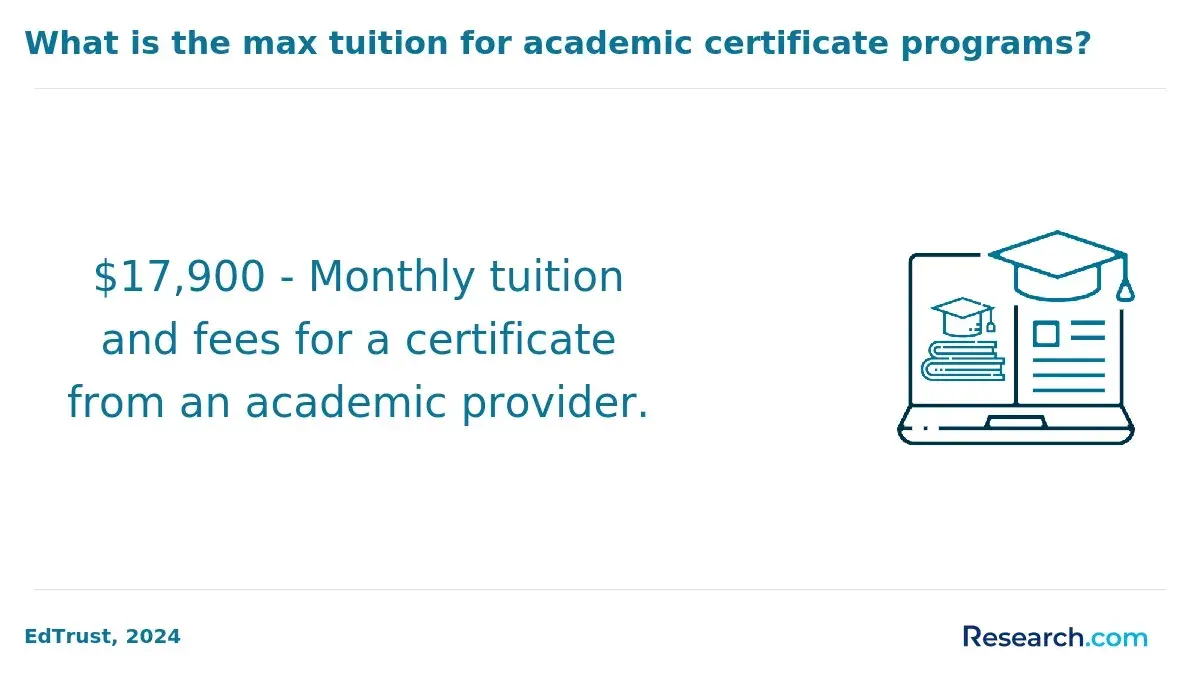
Cost is highly school-specific, so the most reliable comparison is total program cost rather than tuition per credit alone. Graduate students should also consider fees, textbooks, software, travel for any residency, and lost income if they reduce work hours.
Federal Student Aid lists the annual Direct Unsubsidized Loan limit for graduate and professional students at $20,500 for the current aid cycle, which is useful as a planning benchmark but may not cover the full cost of attendance at every institution.
The table below shows how timeline and cost trade-offs typically differ by enrollment pattern:
| Enrollment option | Typical timeline | Best for | Main trade-off |
| Full-time online | About 12 to 18 months in many accelerated formats | Students with flexible work schedules or strong employer support | Faster completion but heavier weekly workload |
| Part-time online | About two to three years | Working adults balancing job, family, and study | More manageable pace but longer time before completion |
| Executive or cohort-based | Often fixed by the school calendar | Experienced professionals who want structured peer networking | Less scheduling freedom if courses must be taken in sequence |
| Certificate-to-master's pathway | Varies by credit transfer policy | Students testing the field before committing to a full degree | Credits may not transfer unless approved in advance |
Students comparing engineering-adjacent leadership paths may also look at an accelerated construction management degree online if their goal is faster entry into construction project leadership rather than broader engineering management.
To control cost, ask schools for a full cost estimate before applying. The estimate should include tuition, mandatory fees, technology fees, books, residencies, and graduation fees. Also ask whether your employer offers tuition assistance, whether military benefits apply, whether previous graduate credits can transfer, and whether taking one additional course per term changes your total fees.
What engineering management careers rely on strong cross-functional collaboration skills?
Engineering management careers rely on collaboration because technical decisions rarely stay inside one department. A design change can affect procurement, manufacturing, quality, customer support, compliance, scheduling, and profit margins. Employers value managers who can coordinate those effects without losing technical credibility.
The table below outlines common career paths where engineering management training can be especially relevant:
| Career path | Typical responsibilities | Why collaboration matters |
| Engineering manager | Supervises engineers, prioritizes technical work, manages budgets, and coordinates delivery | Must align technical teams with business, product, and customer expectations |
| Technical program manager | Leads complex initiatives across multiple teams, vendors, schedules, and dependencies | Success depends on communication across engineering, product, operations, and executives |
| Product development manager | Guides new products from concept through design, testing, launch, and improvement | Connects customer needs, engineering feasibility, cost, quality, and market timing |
| Operations or manufacturing manager | Improves production systems, quality, throughput, maintenance, and workforce coordination | Requires cooperation among engineering, plant operations, supply chain, and safety teams |
| Systems engineering manager | Oversees complex technical architectures, requirements, integration, and verification | Coordinates specialists whose work must function as one integrated system |
| Construction engineering or infrastructure project leader | Manages technical, budget, schedule, contractor, and regulatory elements of built-environment projects | Requires coordination among engineers, architects, owners, contractors, and public agencies |
Professionals focused specifically on construction delivery may find an online masters in construction management more targeted than a general engineering management program, especially if their desired roles involve estimating, contracts, site operations, and construction project controls.
The degree is often most valuable when paired with prior technical experience. Employers usually do not hire someone into engineering leadership based on a management credential alone. They look for a pattern of technical judgment, communication, ownership, and the ability to influence people outside a direct reporting line.
Entry points can include project engineer, systems analyst, quality engineer, operations analyst, manufacturing engineer, or technical project coordinator. From there, professionals can move into team lead, project manager, program manager, engineering manager, director, or executive roles depending on industry and performance.
What salary ranges and earning potential can engineering management graduates expect in the U.S.?
Salary potential in engineering management is strong, but it varies widely by industry, region, employer size, technical specialty, and management level. A master's degree can support advancement, but it should not be treated as a salary guarantee. Prior experience, measurable project results, and the ability to lead complex work often matter as much as the credential.
The U.S. Bureau of Labor Statistics reported a 2024 median annual wage of $167,740 for architectural and engineering managers. For readers, that number is best used as a national benchmark for established management roles, not as an expected starting salary after graduation.
Many students first use the degree to move from individual contributor roles into team lead, project manager, or technical program roles before reaching senior management compensation.
The table below gives a practical way to interpret earning potential by career stage rather than assuming one degree produces one salary outcome:
| Career stage | Typical role pattern | How the degree may help |
| Early technical professional | Engineer, analyst, developer, project coordinator, or manufacturing specialist | Builds business and collaboration skills that may support lead assignments |
| Transitioning leader | Project engineer, technical lead, quality lead, or operations lead | Provides management language for budgets, risk, stakeholder communication, and delivery |
| Established manager | Engineering manager, program manager, systems manager, or product development manager | Can strengthen strategic decision-making and readiness for broader responsibility |
| Senior leader | Director, head of engineering, operations executive, or technology leader | May support enterprise-level thinking across finance, talent, technology, and market strategy |
To evaluate return on investment, compare the total cost of the degree against realistic career moves available in your field. The strongest ROI case usually exists when you are already in a technical role, your employer values graduate education, and the curriculum maps directly to promotions or leadership responsibilities you can pursue within the next few years.
Avoid programs that advertise salary outcomes without explaining the sample size, graduate background, industry mix, or geographic context. Averages can be misleading if they include students who already had senior roles before enrolling.
What is the job outlook for engineering managers and related leadership roles across industries?
The job outlook for engineering managers is tied to investment in infrastructure, advanced manufacturing, software systems, energy, defense, logistics, automation, and product innovation. Organizations need leaders who can manage technical complexity while coordinating cost, quality, safety, and speed.
The BLS projects employment for architectural and engineering managers to grow about as fast as the average for all occupations over the 2024 to 2034 period. For readers, the key takeaway is that demand is steady rather than automatic: the best opportunities are likely to go to professionals who combine engineering depth with project execution, communication, and technology adoption skills.
Several current trends are shaping employer expectations for engineering managers. These trends matter because they influence which electives, certificates, or work experiences may make a degree more useful.
- AI-assisted engineering workflows: Managers need to understand how AI tools affect design review, testing, documentation, forecasting, and risk control.
- Distributed technical teams: Remote and hybrid work make written communication, virtual facilitation, and asynchronous decision-making more important.
- Supply chain and resilience planning: Engineering leaders increasingly coordinate with procurement, logistics, and operations to reduce disruption risk.
- Sustainability and compliance pressure: Product and infrastructure decisions often require input from environmental, legal, safety, and public stakeholders.
- Faster product cycles: Employers value managers who can balance speed with quality, security, reliability, and customer requirements.
The outlook is strongest for candidates who can show evidence of cross-functional leadership before they formally hold a management title. Examples include leading a process improvement project, coordinating a product launch, managing a vendor issue, running a technical review, or presenting engineering trade-offs to executives.
How can I choose a reputable online engineering management program that fits my career goals?
Choosing a reputable online engineering management program starts with your career target. A program built for software product leaders may not be the best fit for manufacturing, infrastructure, systems engineering, or defense. Likewise, a highly quantitative program may not serve a student whose main goal is people operations or general business leadership.
Use this sequence to compare programs in a practical way:
- Define the role you want next, such as engineering manager, technical program manager, operations leader, systems manager, or product development lead.
- List the skills you are missing for that role, including budgeting, stakeholder communication, data analysis, project controls, people leadership, or systems thinking.
- Compare required courses and electives against those skill gaps rather than relying only on rankings.
- Verify institutional accreditation and ask whether the program has any specialized recognition relevant to your field.
- Request total program cost, course schedule, expected weekly workload, and any residency requirements in writing.
- Ask how online students complete group projects, access faculty, build portfolios, and connect with employers or alumni.
- Review admissions standards to confirm the program is rigorous enough to be credible but realistic for your background.
- Compare completion pace against your work and family responsibilities so you do not overcommit.
The table below highlights common mistakes and better alternatives when selecting an online program:
| Common mistake | Why it creates risk | Better approach |
| Choosing only the cheapest tuition | Low tuition may not offset weak support, poor course availability, or limited employer recognition | Compare total cost, curriculum fit, student services, and career relevance together |
| Ignoring accreditation | Unrecognized institutions can create problems with aid, transfer, and employer acceptance | Verify institutional accreditation before applying |
| Assuming all management degrees are interchangeable | An MBA, engineering management degree, construction management degree, and HR degree lead to different skill profiles | Match the degree type to the work you want to lead |
| Overlooking online delivery details | Live class times, group work, or residency requirements may conflict with your schedule | Ask for a sample course schedule and weekly workload estimate |
| Relying on advertised outcomes | Salary and promotion data can reflect students' prior experience rather than the degree alone | Ask how outcomes are measured and whether data is specific to online engineering management students |
If your interests are broader than engineering and lean toward service operations, guest experience, events, or travel-related business leadership, an online hospitality degree may align better than engineering management.
The best choice is the program that connects your current technical background to the leadership role you actually want. Before enrolling, speak with an admissions advisor, a faculty member, a current student if possible, and your employer or mentor. Their answers can help you separate attractive marketing from real career fit.
Other Things You Should Know About Engineering Management
Online engineering management programs in 2027 may or may not require a thesis, depending on the institution. Some programs offer a capstone project or practical experience initiative instead. Always check the specific program details to understand the requirements.
Many 2027 online engineering management degrees require a capstone instead of a thesis. Students usually complete a team-based project in the final term, often worth 3 to 6 credit hours, and present a written report plus a presentation to faculty or industry reviewers.
It depends on your gap. A PMP, Lean Six Sigma, Scrum, or systems engineering certification can be useful if your target role specifically asks for it. If you need broader leadership, finance, and strategy preparation, the degree may provide a stronger foundation and certifications can be added later.
References
- Where does an engineers salary usually max out? - Engineering Majors - College Confidential Forums https://talk.collegeconfidential.com/t/where-does-an-engineers-salary-usually-max-out/1791458
- Online Master of Science in Engineering Management | LSU New Orleans https://www.lsuneworleans.edu/academics/coe/engineering-management
- Masters in Engineering Management Requirements: Everything You Need to Know https://authory.com/ErinCates/a/Masters-in-Engineering-Management-Requirements-Everything-You-Need-to-Know-a042e88d7bca1448f933a87eb4d386d43
- Why Pursue an Online Engineering Management Degree? https://engineeringmanagement.org/online-engineering-management-degree/
- Engineering Management Master’s Degree https://www.marian.edu/blog/2026/07/how-engineers-are-moving-into-leadership-roles-with-an-engineering-management-masters-degree.php
- Engineering Manager Job Description: Complete Guide for 2026 | Wiz https://www.wiz.io/academy/cloud-careers/engineering-manager-job-description
- Master Cross-Functional Collaboration Skills: The PM's Guide to Career Acceleration https://www.aakashg.com/cross-functional-collaboration-skills/
- ASEM https://asem.org/Graduate-Program-Cert
- Cross-Functional Teams: Roles, Responsibilities & Examples – NIX United https://nix-united.com/blog/cross-functional-teams-in-software-development-principles-and-examples/
- Best Online Master’s Programs in Engineering Management https://www.onlinemastersdegrees.org/best-programs/engineering/engineering-management/