2027 Best Online Engineering Management Degrees for Technical Leaders

Co-Founder and Chief Data Scientist
Choosing an online engineering management degree is a high-stakes decision for engineers who want leadership roles without leaving full-time work. The payoff can be meaningful: BLS May 2024 wage data place median pay for architectural and engineering managers at $167,740. This guide is for technical professionals comparing accredited online programs, costs, admissions, curriculum, and career outcomes. You will learn how to evaluate program quality, avoid common enrollment mistakes, and decide whether this degree is the right investment for your next move into engineering, product, operations, or technology leadership.
Key Things You Should Know
- Online engineering management master's programs usually require 30 to 36 credits and are commonly designed for working engineers moving into project, product, operations, or technical leadership roles.
- BLS May 2024 data list $167,740 as the median annual wage for architectural and engineering managers, but outcomes vary by industry, experience, location, and prior technical background.
- The strongest programs combine institutional accreditation, quantitative management coursework, flexible online delivery, employer-relevant projects, and clear total-cost transparency before enrollment.
What is an online engineering management degree and who is it best suited for?
An online engineering management degree is usually a graduate program that blends advanced technical decision-making with business, operations, finance, analytics, and people leadership. It is not the same as a general MBA: an engineering management program is built around the realities of technical teams, systems, product development, manufacturing, infrastructure, software, quality, risk, and engineering project delivery.
The degree is best suited for engineers, technologists, technical project managers, systems analysts, product specialists, and operations professionals who want to lead without fully leaving the technical side of the business. It can also fit professionals who already manage small teams but need stronger skills in budgeting, strategy, systems thinking, and cross-functional communication.
The table below summarizes who usually benefits from this degree and who may be better served by another pathway. Use it to match the degree to your actual career target, not just the job title you hope to hold later.
| Reader profile | Fit for online engineering management | Why it matters |
| Working engineer moving into team leadership | Strong fit | The curriculum connects technical expertise with project finance, organizational behavior, and decision-making. |
| Software, product, or systems professional seeking technical management | Strong fit | Many programs include analytics, technology strategy, quality, and product-focused electives. |
| Early-career student without engineering or technical experience | Possible but less direct | Some programs expect prior quantitative coursework or professional context for management projects. |
| Professional seeking broad corporate leadership outside technical settings | MBA may fit better | An MBA usually covers broader finance, marketing, and organizational strategy across industries. |
| Professional focused only on construction field operations | Specialized alternative may fit better | Construction management programs can provide more direct coverage of estimating, contracts, scheduling, and site delivery. |
The degree makes the most sense when your goal is to translate technical expertise into leadership responsibility. It makes less sense if you are trying to enter engineering from scratch, need a professional engineering license, or want a purely finance, marketing, or human resources leadership path.
How do online engineering management programs compare to on-campus options for technical professionals?
Online engineering management programs are often built for working professionals, while on-campus programs may offer more in-person networking, labs, and recruiting access. The right choice depends on your schedule, employer support, learning style, and whether you need campus-based experiences such as research assistantships or local industry recruiting events.
The comparison below focuses on practical trade-offs that matter to technical professionals who are trying to study while maintaining income and career momentum.
| Factor | Online engineering management degree | On-campus engineering management degree |
| Schedule | Often asynchronous or evening-friendly, which helps full-time employees | May require daytime attendance or relocation |
| Networking | Usually depends on virtual cohorts, group projects, residencies, and alumni platforms | Often stronger for spontaneous campus networking and local recruiting |
| Learning format | Best for self-directed learners who can manage deadlines independently | Best for students who prefer face-to-face discussion and structured class routines |
| Cost structure | Can reduce relocation and commuting costs, though tuition varies widely | May provide assistantship access, but living and opportunity costs can be higher |
| Employer compatibility | Often easier to pair with tuition reimbursement and full-time work | May require reduced work hours or a career pause |
Online programs can be especially practical if your current role gives you access to real engineering problems you can use in class projects. On-campus programs may be better if you want a full-time academic reset, a new geographic labor market, or research-heavy preparation for doctoral study.
A common mistake is assuming online means easier. In reality, rigorous online programs can be demanding because they compress graduate-level quantitative work into formats designed for adults with limited time. If your goal is more construction-specific and speed is your top priority, it can also be worth comparing an engineering management degree with a fast track construction management degree before committing.
Which accredited schools offer the best online engineering management degrees in the United States?
The best online engineering management program is not the same for every student. A strong choice should be accredited, flexible enough for your schedule, aligned with your technical field, transparent about tuition, and supported by faculty or industry connections that match your goals.
The schools below are examples of reputable U.S. institutions that offer online or distance-accessible engineering management graduate options. This is a comparison starting point, not a substitute for confirming current admissions rules, tuition, delivery format, and state authorization directly with each university.
| School | Online engineering management option | Best fit for | Selection note |
| Penn State World Campus | Master of Engineering Management | Working engineers seeking a well-known public research university option | Designed for professionals balancing technical work and leadership development |
| Duke University | Master of Engineering Management | Professionals seeking a selective private university with innovation and product focus | Useful for students who value cohort interaction and leadership-oriented coursework |
| Johns Hopkins University | MS in Engineering Management through Engineering for Professionals | Technical professionals in systems, defense, technology, and applied engineering settings | Strong fit for students looking for advanced technical electives alongside management courses |
| University of Southern California | MS in Engineering Management via online engineering delivery | Students seeking a large engineering school with broad technical course access | May appeal to professionals in product, operations, analytics, or systems-oriented roles |
| Arizona State University | Online engineering management graduate program | Students prioritizing scale, accessibility, and flexible online learning | Often considered by working adults comparing public-university online options |
| University of Colorado Boulder | Online engineering management graduate pathway | Learners interested in modular study and applied technical leadership | Can be a practical option for professionals who want flexible pacing |
| Ohio University | Online Master of Engineering Management | Engineers seeking a management-focused public university program | Commonly positioned for working engineers moving toward management roles |
| University of Massachusetts Lowell | Online engineering management master's option | Professionals in manufacturing, quality, operations, or systems environments | Useful for students comparing applied public university programs |
| Stevens Institute of Technology | Online engineering management graduate program | Technology professionals seeking a private STEM-focused institution | May fit students targeting technology management, systems, or analytics-heavy roles |
| Old Dominion University | Online engineering management graduate option | Working adults seeking a public university with distance education experience | Worth comparing for flexibility, transfer rules, and applied coursework |
When you shortlist schools, do not rely on brand name alone. Ask whether the program offers electives in your field, whether online students receive the same academic support as campus students, how group projects are handled across time zones, and whether the final credential clearly states the degree earned.
What accreditation should an online engineering management program have to be considered reputable?
The first accreditation checkpoint is institutional accreditation from an agency recognized by the U.S. Department of Education or the Council for Higher Education Accreditation. This matters because it affects credit transfer, federal financial aid eligibility, employer recognition, and graduate school acceptance.
Programmatic accreditation is more nuanced. ABET accreditation is essential for many undergraduate engineering programs and can be important for licensure-related pathways, but many reputable engineering management master's programs are not separately ABET-accredited because they are professional management degrees rather than first professional engineering degrees. For an online master's in engineering management, institutional accreditation is usually the nonnegotiable baseline.
Before applying, verify these quality signals directly. They help you separate credible online programs from risky or poorly documented options.
- Confirm the institution's accreditation status through official accreditation databases rather than relying only on marketing language.
- Check whether the university is authorized to enroll online students in your state, especially if you live outside the school's home state.
- Ask whether online students receive the same transcript, diploma language, faculty access, library access, and career services as campus students.
- Review whether the curriculum is housed in an engineering school, business school, technology college, or interdisciplinary unit, because this affects course emphasis.
- Be cautious of programs that advertise vague accreditation, avoid publishing faculty credentials, pressure you to enroll immediately, or refuse to disclose total tuition and fees.
Licensure is another important distinction. An engineering management master's degree can support leadership advancement, but it does not automatically qualify someone for professional engineering licensure. If PE licensure matters in your field, confirm state board rules and undergraduate engineering requirements before enrolling.
What courses and specializations are typically included in an online engineering management curriculum?
Most online engineering management curricula are built around the intersection of technical systems and organizational decision-making. The goal is to help engineers evaluate trade-offs, manage risk, lead teams, control costs, and deliver complex projects in environments where technical and business decisions are connected.
The table below shows common course areas and why each matters for a technical leader. Exact course titles vary by school, but these categories appear frequently across reputable programs.
| Curriculum area | Typical course topics | Leadership value |
| Engineering project management | Scheduling, scope control, risk, stakeholder communication | Prepares students to lead technical projects with competing constraints |
| Systems engineering and decision analysis | Systems thinking, modeling, trade-off analysis, optimization | Supports leadership in complex products, infrastructure, and technology systems |
| Engineering economics and finance | Cost estimation, capital budgeting, financial analysis | Helps technical leaders justify investments and evaluate ROI |
| Operations and supply chain | Process improvement, logistics, production systems, quality | Fits manufacturing, technology operations, and service delivery environments |
| Leadership and organizational behavior | Team dynamics, communication, conflict, change management | Builds the people-management skills many engineers do not receive in technical training |
| Data analytics and technology strategy | Analytics, innovation, product strategy, digital transformation | Supports decision-making in AI-enabled, software-driven, and data-rich organizations |
Specializations may include product management, systems engineering, construction management, manufacturing, supply chain, data analytics, cybersecurity management, quality engineering, or technology innovation. If your goal is specifically construction leadership rather than broad technical management, compare engineering management curricula with a dedicated masters in construction management to see which one covers estimating, contracts, and field operations more directly.
AI and automation are also changing the curriculum. Strong programs increasingly emphasize data-informed decisions, digital transformation, model-based systems engineering, and responsible technology adoption. For students, the key is not just whether a course mentions AI, but whether it teaches how to evaluate technical risk, workforce impact, cost, and implementation constraints.
What are the usual admission requirements for online engineering management master's programs?
Admissions requirements vary, but most online engineering management master's programs are designed for applicants with a technical or quantitative background. Many schools prefer applicants with an engineering, computer science, mathematics, physics, technology, or closely related bachelor's degree, although some will consider business or science graduates who have sufficient quantitative preparation.
Applicants should expect to prepare a file that shows both academic readiness and leadership potential. The items below are commonly requested because they help admissions teams judge whether you can handle graduate-level technical management work.
- Bachelor's degree from an accredited institution, often in engineering, technology, computer science, mathematics, or a related field.
- Official transcripts showing prior coursework in calculus, statistics, physics, programming, or other quantitative subjects when required.
- Resume documenting technical, project, engineering, operations, product, or management experience.
- Statement of purpose explaining career goals and why engineering management fits those goals.
- Letters of recommendation from supervisors, faculty members, or technical leaders who can speak to your readiness.
- GRE or GMAT scores only if required, since many professional online programs now offer waivers or test-optional admissions.
- English language proficiency documentation for applicants whose prior education does not meet the school's language requirements.
To strengthen your application, be specific about the technical problems you have worked on and the leadership responsibilities you want to grow into. A statement that says "I want to be a manager" is weaker than one that explains how you plan to lead product development, improve manufacturing systems, manage infrastructure projects, or guide cross-functional engineering teams.
Common admission mistakes include applying without checking prerequisite math requirements, assuming professional experience can replace every academic requirement, overlooking application deadlines for employer tuition reimbursement, and failing to ask whether bridge courses are available for applicants from adjacent technical fields.
How long do online engineering management degrees take, and what do they cost?
Most online engineering management master's degrees require about 30 to 36 credits. Full-time students may finish in about one to two years, while part-time working professionals often take two to three years depending on course load, employer demands, and whether the program offers year-round terms.
Cost varies widely because universities price online graduate education differently. Published total tuition for online engineering management master's programs can range from comparatively low-cost public options to private university programs that exceed $70,000 before books, fees, travel, or financing costs. The most useful comparison is total program cost, not per-credit tuition alone.
The table below shows the main cost and time variables to check before applying. These are the factors that most often change the real price and completion timeline for working adults.
| Factor | What to check | Why it changes your decision |
| Credit requirement | Total credits needed for graduation | A lower per-credit rate may not be cheaper if the program requires more credits |
| Fees | Technology, online learning, graduation, course, or student service fees | Fees can materially raise the final bill beyond advertised tuition |
| Pacing | Full-time, part-time, accelerated, or self-paced options | Faster programs reduce time but may be harder to balance with engineering work |
| Residencies | Any required campus visits, travel, lodging, or intensive sessions | Travel can add cost and scheduling complexity |
| Employer support | Tuition reimbursement limits, grade requirements, and repayment clauses | Employer funding can improve ROI but may require staying with the company |
| Transfer or certificate stacking | Whether prior graduate credits or certificates apply | Accepted credits can reduce cost and shorten time to completion |
Financing costs deserve attention. Federal graduate Direct Unsubsidized Loans first disbursed for the 2024-2025 academic year carried an 8.08% fixed interest rate, which means borrowing can add significant cost over time. If you need loans, compare monthly payment scenarios before enrolling rather than treating tuition as the only price.
Use this practical sequence before committing to a program. It will help you compare options on total value rather than marketing claims.
- Request a written estimate of total tuition and mandatory fees for the entire degree.
- Ask how many courses you can realistically take while working full time.
- Confirm whether tuition is locked, cohort-based, or subject to annual increases.
- Check whether your employer reimburses graduate tuition and whether the program qualifies.
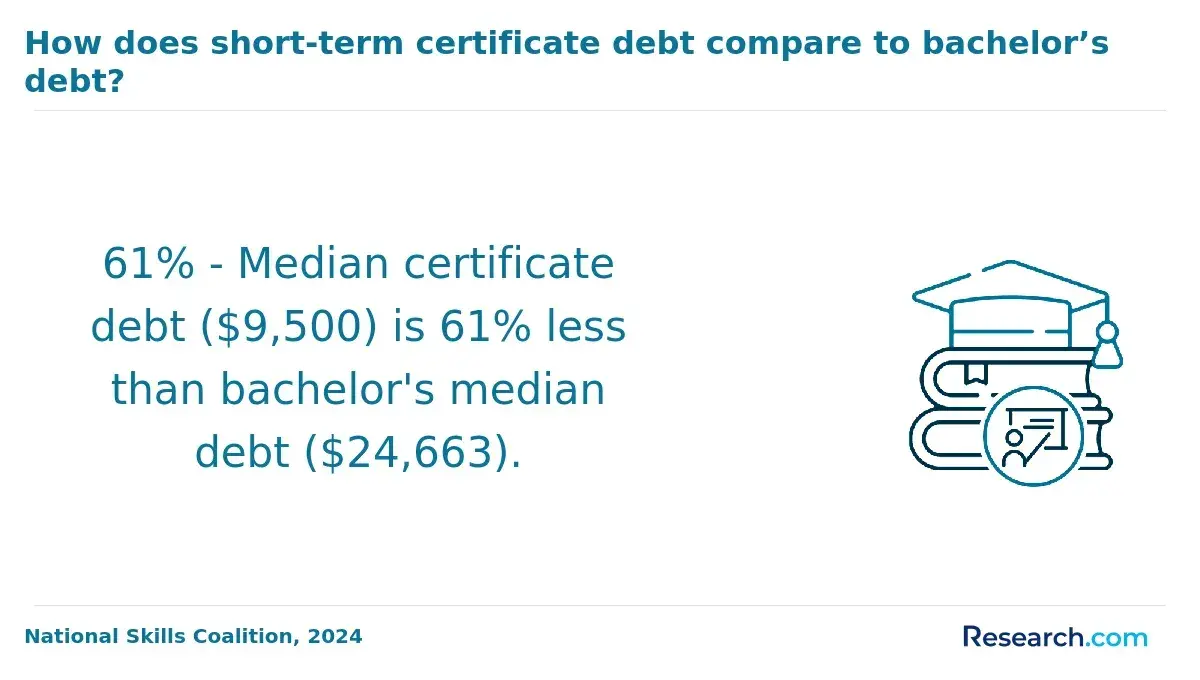
- Compare the degree with shorter certificates if your goal is a specific skill rather than a credential.
- Calculate opportunity cost, including time away from overtime, consulting, travel, or family responsibilities.
If your career target is construction leadership and you mainly need a faster credential tied to field delivery, scheduling, or contracts, compare this pathway with a fast track construction management degree before choosing a broader engineering management master's.
What careers can you pursue with an online engineering management degree?
An online engineering management degree can support advancement into roles that require both technical credibility and leadership judgment. It is most useful for professionals who already understand engineering or technology work and want to manage people, budgets, vendors, schedules, product roadmaps, or technical operations.
The table below summarizes common career paths. Titles vary by employer, so focus on responsibilities rather than the exact wording of the job posting.
| Career path | Typical responsibilities | Useful background |
| Engineering manager | Lead engineering teams, allocate resources, review technical plans, coordinate delivery | Engineering experience, project leadership, communication skills |
| Technical project manager | Manage scope, schedules, risk, vendors, budgets, and cross-functional deliverables | Project coordination, systems knowledge, stakeholder management |
| Product manager for technical products | Translate customer needs into technical requirements, prioritize roadmaps, align engineering and business teams | Software, hardware, data, systems, or product development experience |
| Operations or manufacturing manager | Improve processes, manage production systems, monitor quality, reduce waste | Industrial, mechanical, manufacturing, quality, or process engineering |
| Systems engineering lead | Coordinate complex technical systems, requirements, interfaces, and lifecycle planning | Systems engineering, defense, aerospace, infrastructure, or software systems |
| Technology strategy or innovation manager | Evaluate new technologies, build implementation plans, manage technical change | Analytics, IT, engineering, product, or enterprise technology experience |
Industries that commonly value engineering management skills include aerospace, defense, software, energy, manufacturing, transportation, construction, medical devices, telecommunications, utilities, and consulting. In healthcare technology settings, leaders may also need knowledge of clinical data, privacy, and digital records; professionals leaning in that direction may want to compare engineering management with a health information management online degree.
To turn the degree into a stronger career move, pair coursework with visible leadership experience. Good steps include volunteering for cross-functional projects, documenting measurable results, leading process improvements, learning budgeting language, and building a portfolio of technical decisions you influenced.
What salary can engineering managers expect and how does education impact earnings?
Salary potential is one reason many engineers consider this degree, but it should be evaluated carefully. BLS May 2024 data report a median annual wage of $167,740 for architectural and engineering managers. That figure reflects workers already in management roles, not a guaranteed outcome for every graduate of an engineering management program.
Education can affect earnings indirectly by helping professionals qualify for roles with larger teams, bigger budgets, more complex projects, or higher strategic responsibility. However, salary still depends heavily on prior experience, technical discipline, industry, region, employer size, and whether the role includes bonus or equity compensation.
The table below shows how different factors can influence the salary value of the degree. Use it to estimate fit rather than to predict a specific paycheck.
| Salary factor | Why it matters | How to evaluate it before enrolling |
| Technical field | Software, aerospace, energy, semiconductor, and defense roles may price leadership differently than smaller local firms | Review job postings in your target industry and region |
| Prior experience | A master's degree usually has more impact when paired with credible technical achievements | Assess whether you already have project ownership or team leadership examples |
| Employer type | Large corporations, federal contractors, startups, utilities, and manufacturers use different compensation structures | Compare base pay, bonus, equity, and promotion policies |
| Location | High-cost labor markets may pay more but also require higher living costs | Compare salary against cost of living and remote-work policies |
| Credential fit | The degree is most valuable when it matches the role's leadership and technical requirements | Look for job descriptions that request engineering management, systems, project, or technical leadership skills |
The smartest ROI question is not "Will this degree raise my salary?" but "Will this program help me qualify for the next role I can realistically pursue?" If your employer already has a technical leadership ladder, ask managers which credentials, accomplishments, and competencies matter for promotion before you enroll.
What is the job outlook for engineering management roles and leadership positions in tech?
The outlook for engineering management roles is steady but competitive. BLS projects employment for architectural and engineering managers to grow 4% from 2024 to 2034, which suggests ongoing demand but not unlimited openings. For readers, this means the degree should be paired with technical depth, leadership evidence, and industry-relevant skills rather than treated as a standalone ticket into management.
Several trends are shaping hiring for technical leaders. AI adoption is increasing the need for managers who can evaluate automation opportunities, govern technical risk, and lead teams through workflow change. At the same time, employers continue to value leaders who can manage budgets, coordinate distributed teams, improve quality, and communicate trade-offs to nontechnical executives.
To position yourself well, focus on capabilities employers can see and verify. These steps are more actionable than simply adding the degree name to a resume.
- Build a record of leading technical projects with measurable results, such as cost reduction, cycle-time improvement, quality gains, or successful product delivery.
- Develop fluency in data analysis, AI-enabled workflows, systems thinking, and risk management without losing your core engineering credibility.
- Practice executive communication by translating technical trade-offs into business impact, customer impact, and operational risk.
- Choose electives that match your target industry instead of selecting only the easiest or most familiar courses.
- Use capstone projects to solve real employer problems when allowed, because applied evidence can strengthen promotion conversations.
Some professionals eventually move beyond engineering management into executive operations, research leadership, digital health strategy, or doctoral-level administration. For example, technical leaders moving toward senior healthcare operations or academic leadership may compare this path with an online PhD in healthcare management, but that is a different investment and is usually unnecessary for standard engineering management roles.
Red flags to avoid include choosing a program only because it is fast, ignoring employer expectations, overlooking accreditation, assuming online degrees are automatically cheaper, and expecting the credential to compensate for limited technical experience. The strongest candidates combine education with proof that they can lead complex work under real constraints.
Other Things You Should Know About Engineering Management
Online engineering management degrees in 2027 offer technical leaders specialized education in project and team management, specific to engineering contexts. While MBAs provide broad business knowledge, engineering management degrees focus on innovation, technology integration, and leadership in engineering projects—ideal for leaders in technical fields.
Many professional online programs use a capstone, applied project, or portfolio instead of a thesis. Research-oriented programs may offer or require a thesis, so check the curriculum before applying.
Yes, but you should have technical experience and some evidence of project responsibility. Many students use the degree to move from individual contributor roles into lead engineer, project lead, or first-line management positions.
Many 2027 online engineering management master’s programs require a capstone project instead of a thesis. The capstone usually appears in the final term and combines engineering leadership, finance, operations, and systems decision-making into one applied project, often worth 3 to 6 credits.
References
- Masters in Engineering Management Requirements: Everything You Need to Know https://authory.com/ErinCates/a/Masters-in-Engineering-Management-Requirements-Everything-You-Need-to-Know-a042e88d7bca1448f933a87eb4d386d43
- Best Online Master’s Programs in Engineering Management https://www.onlinemastersdegrees.org/best-programs/engineering/engineering-management/
- Master of Engineering Management (online) | Faculty of Engineering https://www.uottawa.ca/faculty-engineering/online-programs/master-engineering-management
- Online Master of Science in Engineering Management | LSU New Orleans https://www.lsuneworleans.edu/academics/coe/engineering-management
- What you give up when moving into engineering management https://stackoverflow.blog/2022/02/23/what-you-give-up-when-moving-into-engineering-management/
- What are the top 50 universities for an MS in Engineering Management in the USA? https://mentr-me.com/question/what-are-the-top-50-universities-for-an-ms-in-engineering
- Engineering Management Degrees Online (MSEM, MEM) https://www.onlineengineeringprograms.com/management
- Engineering Management Jobs: Top Careers, Skills, and Salaries https://engineeringmanagement.org/engineering-management-jobs/