2027 Online Engineering Management Degrees With Product Development Management Focus

Co-Founder and Chief Data Scientist
Choosing an online engineering management degree is really a decision about career leverage, can the program help you move from technical execution into product, project, and innovation leadership? The stakes are meaningful because the U. S. Bureau of Labor Statistics reported a May 2024 median annual wage of $167,740 for architectural and engineering managers.
This guide is for engineers, technologists, and STEM graduates comparing online programs with a product development management focus. You will learn how programs differ, what they cost, what employers value, and how to choose a degree that fits your goals.
Key Things You Should Know
- Online engineering management programs with a product development focus commonly combine systems engineering, finance, project leadership, quality, innovation strategy, and product lifecycle management rather than pure design engineering alone.
- Many master's programs require about 30 to 36 graduate credits, so total cost depends heavily on per-credit tuition, fees, transfer credit, employer reimbursement, and whether the school charges online students in-state or flat-rate tuition.
- The BLS reported a May 2024 median annual wage of $167,740 for architectural and engineering managers, but product development outcomes vary by industry, technical depth, location, prior engineering experience, and leadership scope.
What is an online engineering management degree with a product development management focus?
An online engineering management degree with a product development management focus is usually a graduate-level program that prepares technical professionals to lead the process of turning ideas into market-ready products. It sits between engineering, business, operations, and product strategy. Students learn how to manage technical teams, evaluate design trade-offs, control cost and risk, coordinate suppliers, and align product decisions with customer needs.
The "product development management" focus matters because many engineering careers eventually move beyond individual technical contribution. A mechanical engineer may need to lead a new hardware platform, a software engineer may coordinate a cross-functional release, or a systems engineer may manage requirements across design, manufacturing, compliance, and launch. This degree is designed for that transition.
The table below summarizes how common degree options differ. It can help you decide whether an engineering management degree is the right fit or whether a different credential better matches your target role.
| Option | Best fit | Typical emphasis | When it may not fit |
| Master's in Engineering Management | Engineers moving into technical leadership | Engineering decision-making, project leadership, systems, cost, quality, product strategy | If you want deep specialization in one engineering discipline |
| MS in Product Management or Technology Management | Professionals targeting product manager roles in technology companies | Customer discovery, roadmaps, analytics, go-to-market coordination | If you need stronger engineering operations or systems coursework |
| MS in Systems Engineering | Professionals managing complex technical systems | Requirements, architecture, integration, verification, lifecycle risk | If your goal is broader business leadership |
| MBA with technical or operations electives | Professionals seeking general management mobility | Finance, strategy, marketing, operations, leadership | If you want an engineering-centered curriculum |
If your main interest is supply chains, process improvement, and enterprise operations rather than technical product design, it can also be useful to compare this path with an MBA operations management program.
How does an online engineering management program compare to a campus-based program?
Online and campus-based engineering management programs often cover similar academic content, but they differ in delivery, networking, scheduling, and hands-on collaboration. The best format depends less on prestige alone and more on how you learn, how much flexibility you need, and whether the program's projects match your career goals.
NCES distance education data released in 2024 show that online learning is now a mainstream part of U.S. higher education, with more than half of postsecondary students taking at least one distance education course in the most recent national reporting period. For working engineers, that shift means online delivery is no longer unusual, but program quality still varies widely.
The comparison below highlights the practical trade-offs that matter most before enrolling.
| Factor | Online program | Campus-based program | Decision point |
| Schedule | Often asynchronous or evening-based | More fixed class times | Online is usually better for full-time professionals |
| Team projects | Virtual collaboration with distributed teams | In-person labs, studios, or project meetings | Choose based on how the capstone is structured |
| Networking | May include online cohorts, residencies, or industry speakers | More spontaneous campus interaction | Ask how students connect with faculty and employers |
| Access to facilities | Limited unless residencies or local labs are included | Stronger access to labs and maker spaces | Important for hardware-heavy product development |
| Geographic flexibility | Can enroll without relocating | Requires commuting or moving | Online can reduce opportunity cost |
Online programs tend to work best for students who already have access to engineering workplaces, data, tools, or product teams where they can apply course projects. Campus programs may be stronger for students who need lab access, on-campus recruiting, or a more immersive academic environment.
If you are still at the undergraduate stage and wondering can you get an engineering degree online, compare bachelor's-level engineering options carefully because lab requirements and accreditation expectations can be different from those in graduate engineering management programs.
What admissions requirements do online engineering management programs typically have?
Admissions requirements vary by university, but online engineering management programs typically look for evidence that applicants can handle graduate quantitative work and contribute to technical leadership discussions. Some programs are built for practicing engineers, while others accept applicants from broader STEM or technology backgrounds.
Before applying, review the requirements below because missing prerequisites can delay admission or require bridge coursework.
- A bachelor's degree from a regionally accredited institution, often in engineering, computer science, mathematics, physics, technology, or a related STEM field.
- Official transcripts showing undergraduate preparation in calculus, statistics, engineering analysis, programming, or technical problem-solving, depending on the program.
- Professional resume documenting engineering, product, manufacturing, software, research, operations, or technical project experience.
- Statement of purpose explaining why the applicant wants engineering management training and how product development fits their career plan.
- Letters of recommendation from supervisors, faculty, technical leads, or project managers who can evaluate analytical ability and leadership potential.
- GRE or GMAT scores only if required, many online engineering management programs now offer test-optional or waiver pathways for experienced applicants.
- English proficiency scores for applicants whose prior education does not meet the school's language policy.
A common mistake is applying only to the most recognizable school without checking prerequisite fit. A strong program can still be a poor choice if you need multiple leveling courses, cannot access required software, or lack the work experience expected in team-based product development projects.
What core courses and specializations are included in product development-focused curricula?
Product development-focused engineering management curricula usually combine technical systems thinking with business decision-making. The goal is not to replace engineers with general managers; it is to prepare engineers and technical professionals to make better decisions across the product lifecycle.
The table below outlines common curriculum areas and why they matter in product development roles.
| Curriculum area | What students learn | Why it matters for product development |
| Engineering management foundations | Leadership, technical organizations, decision analysis, engineering economics | Helps students manage trade-offs among cost, schedule, quality, and performance |
| Product development and innovation | New product development, design process, customer needs, portfolio strategy | Connects engineering work to market demand and business goals |
| Project and program management | Scheduling, risk, scope, stakeholder communication, agile or hybrid methods | Supports launch discipline and cross-functional coordination |
| Systems engineering | Requirements, architecture, integration, verification, lifecycle planning | Reduces failure risk in complex products and platforms |
| Quality and reliability | Process control, testing, failure analysis, continuous improvement | Improves product performance and customer trust |
| Data and analytics | Forecasting, simulation, statistical analysis, product metrics | Helps managers make evidence-based roadmap and performance decisions |
| Finance and strategy | Budgeting, cost modeling, return analysis, competitive positioning | Connects technical decisions to investment priorities |
Specializations differ by school, so students should look beyond the degree title. A program may advertise engineering management but focus more on construction, systems, manufacturing, data analytics, technology commercialization, or operations. For product development leadership, the strongest fit usually includes several of the following elements.
- Product lifecycle management from concept through launch, iteration, support, and retirement.
- Human-centered design, customer discovery, or voice-of-customer methods.
- Agile, scrum, stage-gate, or hybrid development processes.
- Technology commercialization, intellectual property basics, or entrepreneurship.
- Capstone projects tied to real organizational problems rather than purely theoretical assignments.
- Electives in software, manufacturing, supply chain, quality, or systems engineering that match the student's industry.
AI and automation are also changing the curriculum conversation. Programs with stronger career relevance increasingly expose students to data-driven product decisions, digital twins, simulation, product analytics, generative design concepts, and ethical use of AI in engineering workflows. Students do not need every course to be AI-focused, but they should expect modern programs to address how technology changes product decisions and team coordination.
How long do online engineering management programs take and what do they cost?
Most online engineering management master's programs are designed for working adults, so they often offer part-time pacing. A full-time student may finish in about one to two years, while a part-time student commonly takes two to three years. Certificate pathways can be shorter, but they may not carry the same weight for leadership roles that prefer a master's degree.
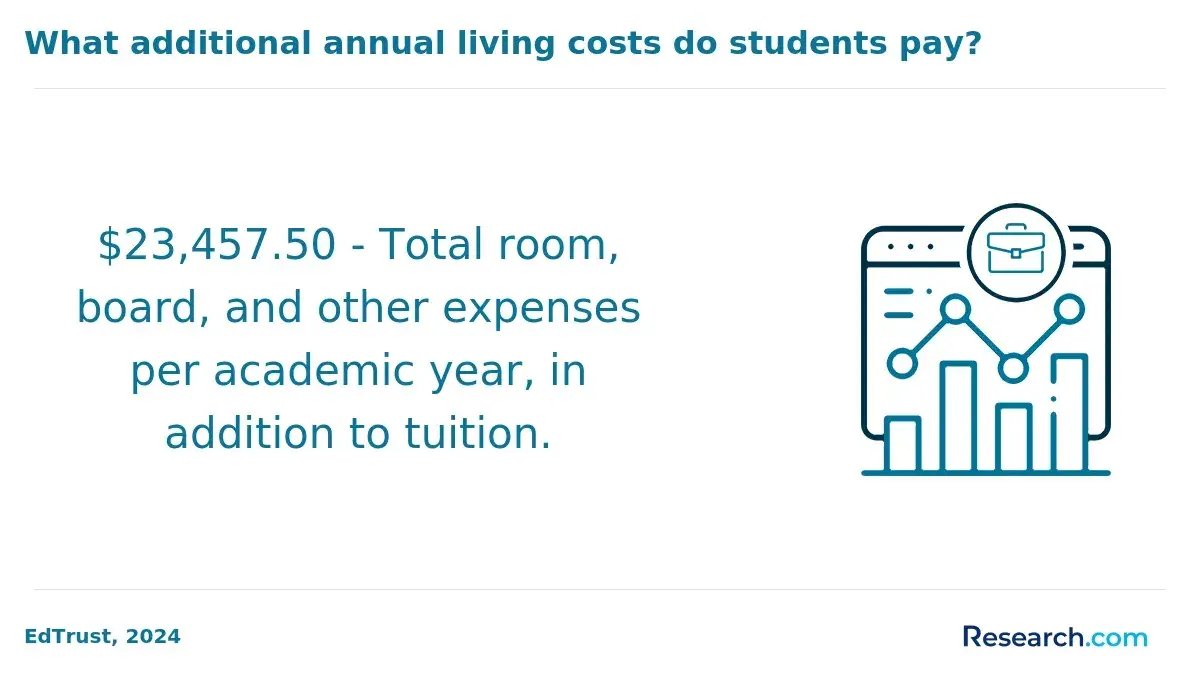
Cost varies more than duration. NCES data released in 2024 put average annual graduate tuition and required fees at roughly $12,600 at public institutions and roughly $30,000 at private nonprofit institutions. Those figures are broad averages, so students should calculate the actual program cost using credit requirements, tuition rules, and fees rather than relying on national averages alone.
The table below shows the main cost and time variables that can change the total investment.
| Factor | How it affects the student | What to verify |
| Total credits | More credits usually mean higher tuition and longer completion time | Whether the degree requires 30, 33, 36, or more credits |
| Per-credit tuition | Determines the largest direct cost | Whether online students pay in-state, out-of-state, or flat-rate tuition |
| Fees | Can add technology, distance learning, graduation, or course-specific charges | Whether fees are included in the published tuition estimate |
| Transfer or shared credits | May reduce time and cost if accepted | Limits on graduate transfer credits and certificate-to-master's pathways |
| Employer support | Can reduce out-of-pocket cost | Annual reimbursement caps, grade requirements, and repayment clauses |
| Pacing | Part-time study may protect income but extend the timeline | Maximum time allowed to finish the program |
Students comparing technical management degrees may also look at adjacent fields, and reviewing construction management degree online cost can provide a useful benchmark for how pricing varies across online management-oriented STEM programs.
To avoid underestimating the cost, ask each school for a written total-cost estimate before applying. Include tuition, fees, books, software, travel for any residency, exam fees, and the cost of reducing work hours if the program is intensive.
How can students verify accreditation and program quality for online engineering management degrees?
Accreditation is one of the most important quality checks for any online degree. At minimum, the university should hold institutional accreditation from an accreditor recognized by the U.S. Department of Education or the Council for Higher Education Accreditation. This affects credit transfer, employer acceptance, federal financial aid eligibility, and graduate school recognition.
Programmatic accreditation is more nuanced. ABET accreditation is highly relevant for many undergraduate engineering programs and some graduate programs, but many engineering management master's degrees are not ABET-accredited. That does not automatically make them weak. Instead, students should evaluate whether the program's accreditation status aligns with their goals, especially if they plan to pursue licensure, doctoral study, or employer-sponsored education.
Use the following steps to verify quality before enrolling.
- Confirm the institution's accreditation status directly through the U.S. Department of Education or CHEA-recognized accreditor databases, not only the school website.
- Check whether the specific online program is offered by the same academic department and faculty as the campus program, if a campus version exists.
- Review faculty profiles for engineering, product development, systems, operations, or industry leadership experience.
- Ask for recent student outcome information, including completion rates, career support, employer partnerships, and capstone examples.
- Confirm whether the diploma or transcript identifies the program as online, and ask whether that matters for your employer's reimbursement policy.
- Evaluate student support, including advising, library access, tutoring, career coaching, technical support, and online collaboration tools.
Red flags include unclear accreditation language, pressure to enroll immediately, vague tuition disclosures, limited faculty information, no clear curriculum map, and refusal to provide written policies on transfer credit or withdrawal. A legitimate online program should make these details easy to verify.
What career paths are available with an engineering management degree in product development?
An engineering management degree with a product development focus can support several career paths, especially for professionals who already have technical experience. The degree is most valuable when it helps the student move into roles that require both engineering judgment and business coordination.
The table below connects common roles with the kinds of responsibilities graduates may pursue. Job titles vary widely by company, so students should compare responsibilities rather than titles alone.
| Career path | Typical responsibilities | Best-fit background |
| Engineering manager | Lead engineering teams, allocate resources, review designs, manage technical risk | Engineering experience plus leadership readiness |
| Product development manager | Coordinate product concepts, requirements, design reviews, prototypes, and launch milestones | Engineering, manufacturing, software, or product operations experience |
| Technical product manager | Translate customer needs into technical roadmaps, prioritize features, work with engineering and business teams | Software, systems, data, or technology product experience |
| Program manager | Manage cross-functional timelines, budgets, dependencies, and stakeholders across multiple projects | Project leadership and technical coordination experience |
| Systems engineering manager | Oversee requirements, architecture, integration, testing, and lifecycle decisions | Systems, aerospace, defense, automotive, medical device, or complex product experience |
| Innovation or R&D manager | Guide research portfolios, evaluate technical feasibility, and connect prototypes to business strategy | Research, design, advanced engineering, or technology commercialization experience |
This degree is not usually the fastest route into an entry-level engineering job. It is better suited to professionals who already understand technical work and want to lead it. Students without engineering experience may still benefit, but they should choose programs with bridge support and realistic career services rather than assuming the degree alone will substitute for technical experience.
Strong candidates often build a portfolio of leadership evidence while studying. Useful examples include product requirement documents, capstone prototypes, risk registers, financial models, process improvement plans, customer discovery summaries, and cross-functional project documentation.
What salary ranges and earning potential can graduates in product development management expect?
Salary potential in product development management depends on role, industry, location, technical specialty, and management scope. The clearest national benchmark is the BLS category for architectural and engineering managers, which reported a May 2024 median annual wage of $167,740. This figure is useful because many product development leadership roles sit within or adjacent to engineering management, but it should not be treated as a guaranteed outcome for every graduate.
The table below provides practical salary context by role type rather than promising exact pay for a specific degree.
| Role type | Salary context | What can raise earning potential |
| Early technical lead or associate manager | Often below senior engineering management benchmarks, especially with limited supervisory experience | Documented project ownership, technical credibility, and cross-functional communication |
| Engineering manager | Most directly aligned with the BLS architectural and engineering managers benchmark | Team size, budget authority, regulated-industry experience, and advanced technical domain knowledge |
| Product development manager | Can vary substantially by hardware, software, manufacturing, medical device, aerospace, or consumer product sector | Launch experience, lifecycle cost control, supplier coordination, and customer insight |
| Technical product manager | May align more closely with technology company pay structures than traditional engineering management | Product analytics, platform knowledge, revenue impact, and stakeholder influence |
| Director-level technical leader | Typically requires significant experience beyond the degree | Portfolio ownership, strategic planning, hiring authority, and executive communication |
Students evaluating return on investment should compare likely career steps, not just median salaries. A lower-cost program that helps you secure a promotion at your current employer may offer better practical value than a higher-cost program with a stronger brand but limited relevance to your industry.
Be cautious with schools that imply a degree automatically leads to executive pay. Employers usually evaluate a combination of education, engineering experience, leadership performance, product outcomes, and business impact.
What is the job outlook for engineering managers working in product development roles?
The job outlook for engineering managers in product development is tied to the need for organizations to bring complex technical products to market efficiently. The BLS projected employment for architectural and engineering managers to grow 6% from 2023 to 2033 in its 2024 outlook cycle, which is faster than the average for all occupations in that projection set. For students, this suggests steady demand, but competition can still be strong for leadership roles.
Several current trends are shaping the market. AI-assisted design, simulation, automation, connected products, cybersecurity requirements, and supply chain resilience are increasing the need for managers who can coordinate technical and business decisions. In regulated sectors such as aerospace, defense, medical devices, energy, and transportation, product development leaders also need strong documentation, quality, and risk management habits.
Prospective students should prepare for the fact that "product development management" is not one uniform job market. Hiring expectations vary by industry. Software employers may prioritize agile delivery and product analytics, while manufacturing employers may care more about design for manufacturability, quality systems, supplier management, and cost reduction.
To improve career readiness while enrolled, students should focus on practical evidence employers can evaluate.
- Choose course projects connected to real product, process, customer, or technical-risk problems.
- Build fluency in project management tools, data visualization, requirements management, and collaborative product documentation.
- Develop examples of communicating with both engineers and nontechnical stakeholders.
- Seek roles or assignments that involve launch planning, design reviews, customer feedback, vendor coordination, or lifecycle cost analysis.
- Track measurable project outcomes, such as cycle-time reduction, defect reduction, cost savings, improved reliability, or schedule recovery, when available.
How should prospective students choose the best online engineering management program for their goals?
The best online engineering management program is the one that fits your target role, technical background, budget, and schedule. Rankings can be helpful, but they should not replace a careful match between curriculum and career goal.
Use the following process to compare programs before committing.
- Define your target role first, such as engineering manager, technical product manager, product development manager, systems manager, or R&D leader.
- Map each program's required courses and electives to that role, paying special attention to product lifecycle, systems, finance, analytics, quality, and leadership content.
- Calculate total cost using credits, tuition, fees, software, travel, books, and expected time to completion.
- Ask whether the program allows part-time pacing, leaves of absence, transfer credits, or stackable certificates.
- Review capstone requirements and confirm whether you can use a workplace-based product development problem.
- Check faculty experience, employer connections, alumni roles, career services, and access to product or engineering management communities.
- Verify accreditation, financial aid eligibility, refund policies, and employer tuition reimbursement compatibility before enrolling.
The table below summarizes common student profiles and the program features that usually matter most for each one.
| Student profile | Best program features | Possible mismatch to avoid |
| Working engineer seeking promotion | Part-time format, leadership courses, workplace capstone, employer reimbursement compatibility | A program with limited flexibility or little management content |
| Technical professional moving into product management | Product strategy, customer discovery, analytics, agile methods, roadmap planning | A curriculum focused only on traditional project management |
| Hardware or manufacturing professional | Quality, reliability, design for manufacturability, supply chain, systems engineering | A software-heavy program without manufacturing relevance |
| Early-career STEM graduate | Bridge support, internships or applied projects, strong advising, career coaching | An executive-style program built mainly for experienced managers |
| Cost-sensitive student | Public university tuition, transfer credits, flat-rate online tuition, employer support | Choosing only by sticker price without checking fees and completion time |
Also compare alternatives. A certificate may be enough if you need targeted skills in agile, quality, or project management. An MBA may fit better if your goal is broad business leadership. A specialized engineering master's may be better if you want deeper technical authority. Students exploring management careers outside engineering can use an online sports management bachelor's degree as an example of how industry-specific management degrees differ in audience, curriculum, and outcomes.
The biggest mistake is treating the degree title as proof of fit. Before applying, ask each admissions advisor for sample syllabi, a full cost sheet, recent capstone examples, and career support details. If the answers are vague, keep comparing.
Other Things You Should Know About Engineering Management
Most online master’s programs in engineering management require 30 to 36 credit hours, with product development courses often making up 9 to 12 of those credits. Many programs also require a capstone or applied project, and full-time students often finish in 18 to 24 months.
Usually no. Most engineering management and product development roles do not require a Professional Engineer license. However, licensure can matter in fields where work affects public safety or regulated engineering services, so students should check requirements for their state, industry, and target employer.
Yes, if the program includes product strategy, analytics, agile delivery, stakeholder communication, and technical decision-making. Software engineers should look for curricula with technology product electives or capstone options tied to software platforms, customer needs, or data-driven roadmaps.
References
- The Hard Truth About Product Management Salaries in 2026 https://productschool.com/blog/career-development/product-management-salaries-todays-economy
- Why Pursue an Online Engineering Management Degree? https://engineeringmanagement.org/online-engineering-management-degree/
- Product Manager Job Outlook https://www.nobledesktop.com/careers/product-manager/job-outlook
- What are the job opportunities after a Master’s in Engineering Management in the USA? https://mentr-me.com/question/what-are-the-job-opportunities-after-a-masters-in-enginee
- Accreditation processes for technical programs https://edquip.co/blog/accreditation-processes-for-technical-programs
- Review: Product Ideation, Design and Management Specialization by University of Maryland https://www.getbridged.co/course-review/maryland-product-design-management-specialization
- product manager https://www.randstadusa.com/job-seeker/career-advice/job-profiles/product-manager/
- Online Master of Science in Engineering Management | LSU New Orleans https://www.lsuneworleans.edu/academics/coe/engineering-management
- Learn About Product Design and Development | Pearl Academy https://www.pearlacademy.com/blog/product-design/learn-product-design-and-development
- Best Online Master’s Programs in Engineering Management https://www.onlinemastersdegrees.org/best-programs/engineering/engineering-management/