2027 Supply Chain Management and Logistics vs. Procurement for a Business Administration BS: Which Fits?
Audited and Verified:
Our Editorial and Data Verification Process
Research.com uses government datasets, official education statistics and primary institutional information to support its career and degree guides. Our review process checks factual accuracy, occupational definitions, source dates and the requirements associated with the credentials discussed.
How This Article Was Fact-Checked
Our editorial team verifies salary estimates, employment projections, education requirements and program information against original data providers and official organizations. Salary figures are checked against the relevant occupational definitions and reporting periods. Information about licensure, accreditation and required in-person training is reviewed separately.
Fact-checked and verified on:

Co-Founder and Chief Data Scientist
Choosing between supply chain management and logistics and procurement means deciding which business problems you want to solve. One path emphasizes coordinating goods, information, and delivery across a network; the other concentrates on selecting suppliers, negotiating purchases, and managing spending.
For Business Administration BS students and working adults considering a concentration, that distinction affects electives, projects, and the jobs you can credibly pursue. This guide compares the coursework and career paths, then shows what to check before committing time and tuition to either option.
Key Things You Should Know
- Choose supply chain management and logistics for planning, inventory, transportation, and distribution; choose procurement for sourcing, supplier evaluation, contracts, and purchasing decisions.
- The U.S. Bureau of Labor Statistics reports an $82,320 median annual wage for logisticians in May 2025, but that occupation-wide figure is not an expected starting salary for graduates.
- Compare the actual required courses and applied projects before choosing: a concentration title alone does not establish specialist skills or qualify you for a particular job.
What is the difference between supply chain management, logistics, and procurement?
Supply chain management coordinates how materials, products, information, and resources move from suppliers through production to customers. Logistics is a connected function focused more closely on movement, storage, inventory, and delivery. Procurement focuses on obtaining what an organization needs: defining requirements, assessing suppliers, negotiating terms, placing orders, and monitoring supplier performance.
The functions overlap. A procurement decision about a distant supplier can change shipping costs and delivery reliability; a logistics bottleneck can affect which supplier is practical. If you prefer improving an ongoing flow of goods, look toward supply chain and logistics.
If you prefer comparing offers, managing supplier relationships, and balancing price against quality and risk, look toward procurement. Managing a one-time implementation is different from either function; students drawn primarily to that work can also consider affordable pathways to study project management.
Which business administration BS concentration is best for your career goals?
The better concentration is the one whose required work resembles your target role - not necessarily the one with the broader title. Schools may combine these subjects, offer only electives, or award a specialized bachelor's degree instead of a formal Business Administration BS concentration.
This comparison links each option to the work a student should seek in courses and projects. Use it to assess a school's catalog rather than assuming every program covers these topics equally.
| Path | Best fit | Evidence to look for in the curriculum |
| Supply chain management and logistics | Inventory, transportation, distribution, or end-to-end planning | Demand forecasting, operations, inventory analysis, transportation, and a project using operational data |
| Procurement | Sourcing, purchasing, supplier relationships, or contract support | Supplier evaluation, cost analysis, negotiation, purchasing systems, and contract-related assignments |
| General business with targeted electives | Students still exploring functions or needing a broader completion route | Relevant electives and projects that fit without delaying graduation |
Procurement can be especially useful if you already handle budgets, vendors, or purchasing requests. Supply chain may be the stronger choice if you work with inventory, scheduling, fulfillment, or transportation. If your goal is hiring, employee relations, or workforce planning instead, compare human resources qualifications and degree routes rather than choosing an operations concentration by default.
What careers can you pursue with a supply chain, logistics, or procurement degree?
Relevant early-career titles include logistics coordinator, inventory analyst, transportation coordinator, purchasing assistant, buyer, and procurement analyst. Duties matter more than titles: a coordinator may track shipments and resolve delivery problems, while a buyer may compare bids, issue purchase orders, and follow up with suppliers. Analyst roles generally require stronger spreadsheet and data-interpretation skills.
A Business Administration BS can provide a foundation, but employers may also expect industry knowledge, experience with enterprise systems, or evidence that you have handled real operational constraints. Internships, supervised work, and appropriately authorized projects can help demonstrate readiness. Supply chain manager and purchasing manager positions ordinarily involve substantial responsibility beyond undergraduate coursework.
If the work you want is coordinating project schedules and deliverables rather than purchasing or product flow, compare that route with the cheapest accredited online project management options. A lower advertised price still needs to be weighed against remaining credits and the skills required by your target employers.
Both paths commonly build on a business core that may include accounting, economics, statistics, management, and information systems. Supply chain coursework may then address operations planning, forecasting, inventory, transportation, and analytics. Procurement-focused coursework may emphasize sourcing, supplier assessment, negotiation, cost analysis, and contract administration. Course names and depth vary by school.
Examine assignments as closely as titles. A useful supply chain project might require students to explain a forecast's assumptions and inventory trade-offs. A procurement project might compare suppliers against documented cost, quality, delivery, and risk criteria. Neither classroom exercise proves access to company data or professional purchasing authority.
Before planning a course sequence, check mathematics and business-core prerequisites and when required electives are offered. Students entering from another major can review qualifying for a business administration college program, then obtain the specific school's requirements and degree audit.
An online program can offer a credible education when the institution is appropriately accredited and the curriculum provides substantive instruction, feedback, and applied work. Delivery mode alone does not establish quality - or flexibility. Check whether courses require live meetings, group assignments, proctored exams, internships, or campus visits, and whether concentration electives are available online when you need them.
For employed students, a relevant workplace project may be valuable if faculty approve its academic scope and the employer permits the use of information. Otherwise, ask whether simulations or public-data cases offer a workable alternative. Compare those conditions with business administration programs for advancement while working; do not assume an online label means self-paced study.
First, confirm that the college holds recognized institutional accreditation. Then check whether its business school or program has applicable accreditation from AACSB, ACBSP, or IACBE - and verify that organization's scope covers the program under consideration. Institutional and business-specific accreditation answer different questions; neither guarantees employment or makes two concentrations interchangeable.
Check the school's accreditation disclosures and current catalog, especially when comparing an online concentration with a campus offering. Application fees are a separate cost consideration: a search for accredited online colleges without application fees can identify possibilities, but confirm both accreditation and current fees directly with each institution.
Admission requirements depend on the institution and whether you are entering as a first-year or transfer student. A school may require transcripts and completion of particular business or quantitative courses before upper-level study. Admission to the college does not necessarily mean immediate admission to every concentration.
A bachelor's degree generally includes general education, a business core, and major or concentration requirements. For transfer students, the decisive question is not how many credits a school accepts but how many satisfy remaining requirements, including prerequisites and residency rules. Request a written degree audit before relying on a projected graduation date.
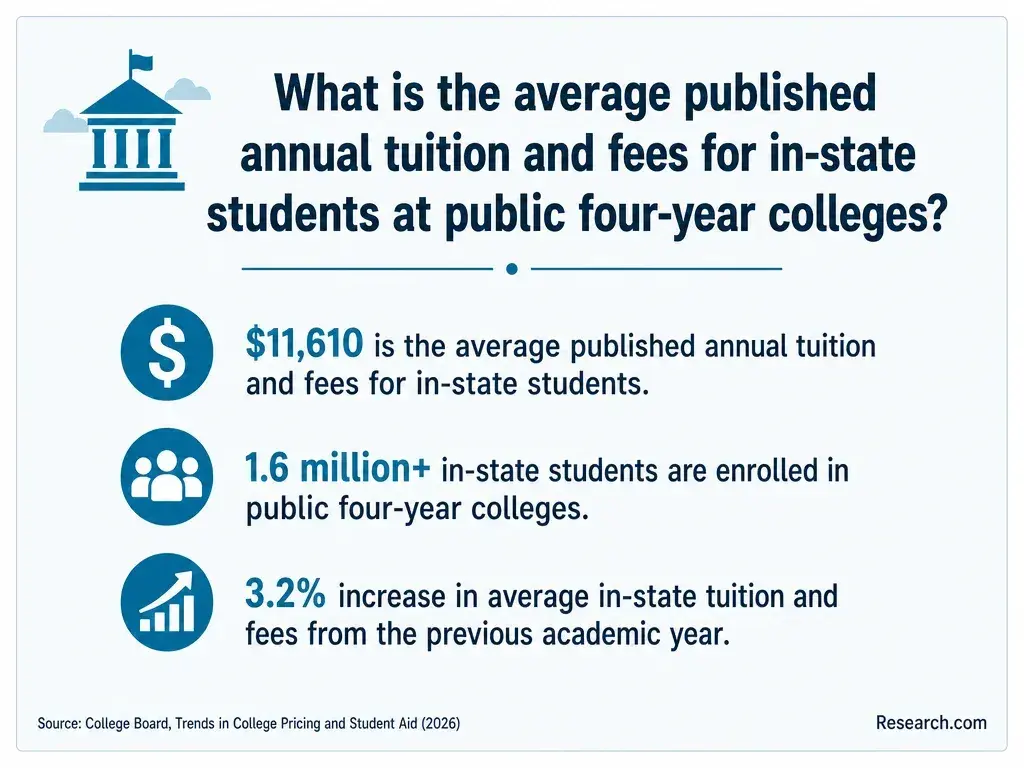
Compare total remaining tuition and mandatory fees alongside books, software, any travel, and the time needed to complete courses offered only in certain terms. An accelerated schedule may shorten the calendar but intensify the workload; compare fast-track business bachelor's schools against your actual degree audit, not an advertised minimum completion time. Ask financial-aid and employer-benefits offices which costs and enrollment patterns qualify before assuming assistance will cover them.
The U.S. Bureau of Labor Statistics reports a $82,320 median annual wage for logisticians in May 2025. That is the median for workers in the occupation across experience levels, not a starting offer or a wage attributable to a Business Administration BS. Location, industry, responsibilities, and prior experience can substantially change an individual's prospects.
Procurement jobs span purchasing support, buyer, analyst, and management responsibilities, so a logistician median should not be used as a proxy for all procurement pay. Compare postings for the specific role and market you seek, including required experience. If earnings are part of your education decision, weigh them against remaining tuition and time to completion; supply chain degree duration and salary considerations offer another way to frame that comparison without treating a salary figure as a guaranteed return.
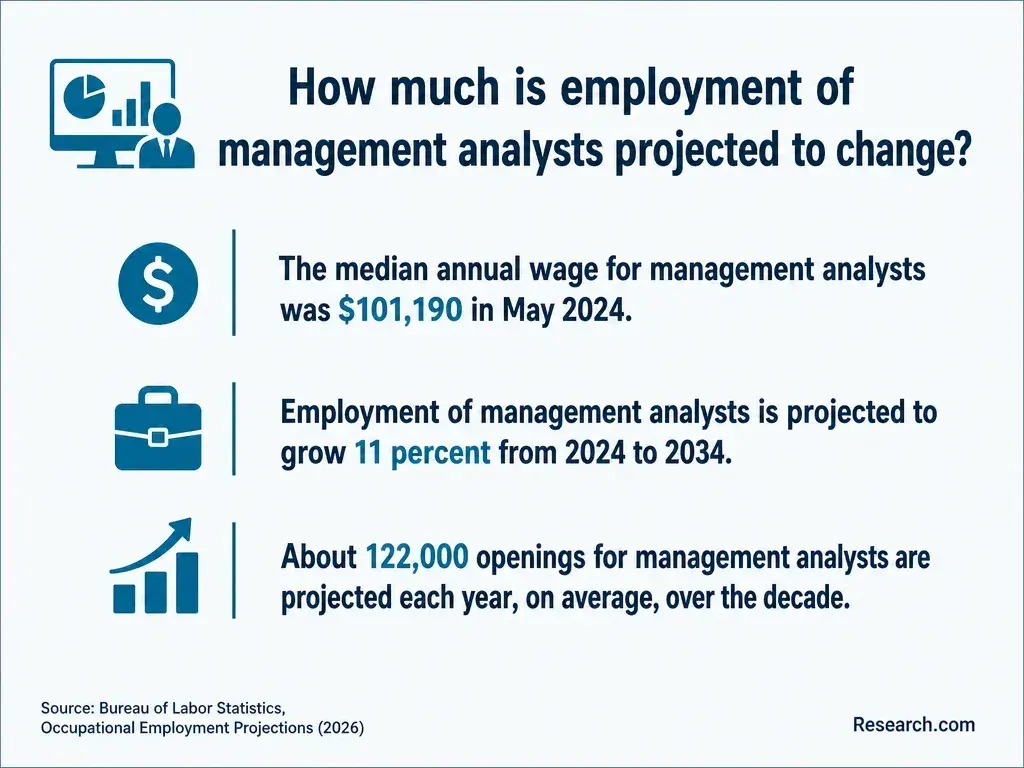
BLS projects 18% U.S. employment growth for logisticians from 2025 to 2035. That occupation-specific projection suggests continued demand for logistics capabilities, but it does not forecast openings for every graduate, procurement role, location, or industry. It also does not remove employers' requirements for relevant skills and experience.
Use the outlook to inform - not rush - your choice. Review local postings for recurring requirements such as inventory systems, data analysis, supplier communication, or contract support, then choose coursework and applied experience that address the gaps. If speed is important, examine accelerated study formats for bachelor's students alongside course availability and workload; faster study is useful only if it remains feasible and covers the preparation your target role needs.
Which certifications improve supply chain and procurement career prospects?
Voluntary credentials can help experienced workers document focused knowledge, but they are not substitutes for a degree when an employer requires one - or for experience when a role requires independent responsibility. Options to investigate include ASCM's supply chain credentials and ISM's procurement credentials. Check each issuing organization's current eligibility rules, exam content, fees, and renewal requirements before enrolling; completing related college courses does not automatically award a certification.
Choose the credential by target function: planning and inventory topics align more closely with supply chain roles, while sourcing and supplier-management topics align more closely with procurement. If you are still missing a required bachelor's degree, compare certification costs with a verified completion plan; students considering fast-track supply chain bachelor's programs should confirm transfer applicability and required course schedules before committing.
Other Things You Should Know About Business Administration
Often, but the school decides which completed courses will count under the new requirements. Ask for a revised degree audit before switching.
Not universally. Spreadsheet and business-system skills are common requirements; some analyst roles also request database or programming skills. Check postings for your intended role.
No universal requirement applies. Warehouse experience can be useful for certain roles, while transportation, planning, and analysis positions may value different experience.
Not for every position. A particular agency or contractor may impose clearance or other eligibility requirements, so check the individual posting.
- Bachelor's Degree in Supply Chain Management | The University of Kansas https://degrees.ku.edu/undergraduate/bachelors/supply-chain-management/
- Is a Bachelor's Degree in Supply Chain, Transportation and Logistics Management Worth It? | Bellevue University https://www.bellevue.edu/articles/is-a-bachelors-degree-in-supply-chain-transportation-and-logistics-management-worth-it/
- What to Know about College Career Outcomes | Champlain College https://www.champlain.edu/blog/stories/what-to-know-about-college-career-outcomes/
- Jobs and Career Paths in Supply Chain Management and Logistics - Global Supply Chain Institute https://haslam.utk.edu/gsci/news/supply-chain-management-career-path/
- Studying Supply Chain Management vs. Logistics Management | American Public University https://www.apu.apus.edu/area-of-study/business-and-management/resources/studying-supply-chain-management-vs-logistics-management/
- Procurement vs supply chain management: What's the difference? | Hull Online https://online.hull.ac.uk/blog/procurement-vs-supply-chain-management-whats-the-difference
- Supply Chain Management & Procurement | Zycus https://www.zycus.com/blog/procurement-technology/supply-chain-management-and-procurement
- Procurement vs. Supply Chain: Key Differences | ramp.com https://ramp.com/blog/supply-chain-vs-procurement
- Procurement vs Supply Chain Management | Procurify https://www.procurify.com/blog/difference-procurement-supply-chain-management/
- Procurement vs Supply Chain Management Explained | jaggaer.com https://www.jaggaer.com/blog/procurement-vs-supply-chain-management