2027 From Retail Supervisor to Corporate Operations: When Does a BS in Business Administration Make Sense?
Audited and Verified:
Our Editorial and Data Verification Process
Research.com uses government datasets, official education statistics and primary institutional information to support its career and degree guides. Our review process checks factual accuracy, occupational definitions, source dates and the requirements associated with the credentials discussed.
How This Article Was Fact-Checked
Our editorial team verifies salary estimates, employment projections, education requirements and program information against original data providers and official organizations. Salary figures are checked against the relevant occupational definitions and reporting periods. Information about licensure, accreditation and required in-person training is reviewed separately.
Fact-checked and verified on:

Co-Founder and Chief Data Scientist
Running a store gives you experience with staffing, inventory, customers, and daily performance. A corporate operations role may require you to apply those skills across multiple locations - and demonstrate stronger analytical, financial, and cross-functional judgment.
This article is for retail supervisors deciding whether a BS in Business Administration will help them make that move. It explains which roles are realistic next steps, when a degree removes a hiring barrier, when experience or targeted training may work better, and what to verify before committing your time and money.
Key Things You Should Know
- A BS in Business Administration makes the strongest case when target corporate roles require or prefer a bachelor's degree and your store-level experience needs broader analytical and financial support.
- A transfer into field operations, inventory, or operations coordination may be possible without a new degree; a diploma alone does not qualify you to manage a corporate function.
- U.S. employment of logisticians is projected to grow 18% from 2025 to 2035, according to the Bureau of Labor Statistics, but that occupation has distinct skills and hiring requirements.
What Is a Business Administration Bachelor's Degree?
A BS in Business Administration is an undergraduate degree covering several business functions, typically including accounting, finance, management, marketing, operations, and quantitative decision-making. Its exact curriculum depends on the school. A BS may emphasize quantitative coursework, but the degree title alone does not establish more analytical depth than a BBA or BA in Business; compare required courses.
For a retail supervisor, the degree's potential value is translating store experience into decisions about budgets, processes, and performance across an organization. If your goal is primarily supervising and developing teams, compare the curriculum with organizational leadership degrees with faster completion options. A leadership-focused program may fit that goal, while a broad business degree may provide more exposure to finance and operations.
When Does a BS in Business Administration Make Sense?
It makes sense when the degree addresses a specific barrier: your target employer screens for a bachelor's degree, you need skills not developed in store supervision, and you can complete the program without taking on costs that outweigh its likely value to you. Check actual postings and internal promotion criteria rather than assuming every corporate role has the same requirements.
The alternatives below serve different goals. Compare them against the work you want to do, not just the credential you would earn.
| Path | Best fit | Main limitation |
| BS in Business Administration | Broad preparation for operations, finance, and cross-functional work when a bachelor's degree matters | Requires substantial time and expense; does not replace relevant experience |
| Internal transfer and employer training | An adjacent role where your company values store knowledge and offers a development route | May not clear a degree requirement or fill major analytical gaps |
| Targeted courses or a specialized degree | A clearly defined gap in analytics, supply chain, or project work | Narrow training may not meet a bachelor's-degree requirement |
A project-focused credential is worth comparing if postings repeatedly emphasize schedules, budgets, and implementation rather than broad business oversight. Include tuition and aid in that comparison; project management tuition fees and financial aid can differ from those of a general business program.
Can a Retail Supervisor Advance Into Corporate Operations?
Yes, particularly through roles connected to store execution: field operations support, inventory coordination, workforce scheduling, purchasing support, or process improvement. The move from one store to headquarters is not simply a change of location. Corporate teams may analyze results across locations, develop standards, work with finance and technology teams, and recommend changes they do not directly control.
Start by documenting the scope of work you already own: scheduling decisions, inventory controls, training, vendor coordination, and the measures used to assess them. Then identify a gap you can address at work, such as presenting a clear comparison of an existing store process and a proposed change. Use only data you are authorized to access, and distinguish a proposal from an implemented result.
Inventory work can be a bridge, but corporate supply chain positions may require forecasting, procurement, or systems experience beyond store-level stock management. If those functions are your main goal, compare a general business degree with fast-track supply chain bachelor's programs before deciding.
The most plausible next roles depend on the responsibilities you have already held. An operations coordinator may track processes, reports, and deadlines. A field operations specialist may support store rollouts and communicate procedures. An inventory or procurement coordinator may reconcile stock information or support purchasing. A project coordinator may maintain schedules and follow up with teams. These are possible routes, not automatic outcomes of earning a degree.
Later moves into operations management, logistics, or management analysis usually require evidence of broader responsibility and function-specific skills. The Bureau of Labor Statistics projects 18% U.S. employment growth for logisticians from 2025 to 2035. That outlook describes an occupation, not the hiring prospects of business administration graduates or a promise that store supervision qualifies someone for a logistician role.
If project coordination is your preferred route, compare its job requirements with your existing experience before choosing a degree. Financing may also differ between paths; information on FAFSA-based aid for online project management undergraduates can help you evaluate a specialized option alongside business administration.
For the store-to-corporate transition, look beyond a catalog's course titles. Accounting and finance should help you interpret costs and budgets; statistics and spreadsheets should support comparisons across locations; operations coursework should address processes, capacity, and supply chains. Communication and organizational behavior matter when a recommendation must work for store teams as well as headquarters.
Ask what students actually produce: a spreadsheet model, process analysis, presentation, or capstone, for example. An assignment based on your workplace could be useful, but academic approval does not grant permission to use confidential employer information. When comparing affordable school choices for online business students, check whether relevant courses and projects are required, available in your schedule, and supported by faculty feedback - not merely listed as electives.
Choose the format that lets you complete the required work while keeping your job. Online study can remove a commute, but it may still involve live sessions, group meetings, proctored exams, and fixed deadlines. Campus study may offer easier access to in-person recruiting or classmates, but travel and class times can conflict with retail shifts.
Request sample course schedules and assessment rules, especially if your shifts change weekly or peak-season hours are unpredictable. Check whether required upper-level courses run often enough for your planned pace. Use leading US colleges for online business study as a starting point for research, then verify each program's current delivery requirements and career support directly with the school.
Requirements vary by institution and by whether you apply as a first-year, transfer, or returning student. Schools generally review prior academic records; some business majors have additional GPA or prerequisite rules. If you have previous college coursework, ask for an official evaluation showing both credits accepted and requirements satisfied. Credits counted as electives may not replace accounting, statistics, or business-core courses.
Gather transcripts from every prior college and ask admissions and an academic adviser which requirements remain, whether quantitative courses have prerequisites, and when you can enter the major. For a closer look at possible entry conditions for prospective business administration students, use the school's current catalog and your written degree audit as the final authorities.
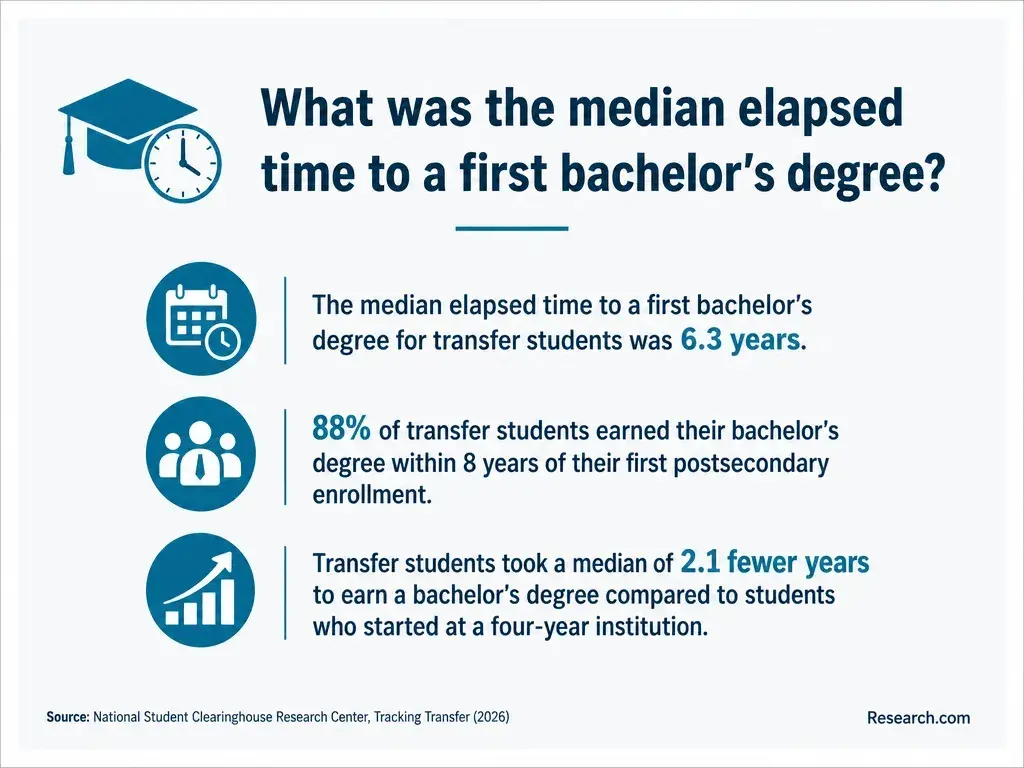
A bachelor's degree commonly takes about four years of full-time study from the start, but a working supervisor's remaining time depends on applicable transfer credit, course sequencing, and enrollment pace. Do not treat a preliminary credit estimate as a completion date. Ask for a term-by-term plan that includes courses offered only in particular terms.
Calculate remaining cost, not just advertised tuition: required credits, fees, books or software, travel or proctoring, and any income you would give up to study. Compare aid eligibility and your employer's tuition-assistance rules, including reimbursement timing and grade conditions. Resources on cheaper business administration study with FAFSA-based aid can help identify options, but only a school-specific aid offer and degree audit can establish your likely out-of-pocket cost.
Confirm that the institution holds recognized institutional accreditation, then check any claimed AACSB, ACBSP, or IACBE business accreditation with the accreditor. Determine its exact scope: accreditation of a business school or selected programs should not be assumed to cover every degree or location.
Quality for this career move also means access to the courses, advising, and employer-facing opportunities you need. Ask how often required operations and analytics courses run, whether working students can complete applied assignments, and what career services do for experienced applicants. Treat online undergraduate business rankings for shorter study paths as a shortlist, not proof that your transfer credits will apply or that a program will lead to a corporate job.
Do Business Administration Careers Require Licenses or Certifications?
General corporate operations roles typically do not have a universal professional license. Employers may instead request experience with particular systems, analytical tools, or processes. Some specialized work has separate credential rules: a business administration degree does not itself confer accounting licensure, a financial-services license, or project-management certification.
Read the requirements of your target postings before paying for a certificate. If you need one identifiable tool or method, targeted training may be faster than a bachelor's degree; if a degree is a hiring requirement and your knowledge gaps span several functions, compare the broader business administration tuition time commitment and career value. In either case, pair education with documented work that shows what you can do.
Other Things You Should Know About Business Administration
If the relationship is supportive, ask which internal teams work with stores and what evidence they seek in candidates. You can discuss career development without committing to a degree first.
Follow your employer's confidentiality rules. Describe your responsibilities and methods without sharing restricted financial, employee, customer, or operational information.
It depends on openings and hiring criteria. Your current employer already knows its stores and your performance; another retailer may offer more openings but require you to establish that context from scratch.
An MBA is a graduate degree and generally requires a prior bachelor's degree. If you already have one, compare the MBA's admissions requirements, cost, and career relevance with targeted training or an internal move before enrolling.
- Bachelor's Degree Credit Hour Requirements Explained | American InterContinental University https://www.aiuniv.edu/degrees/business/articles/how-many-credits-do-you-need-for-a-bachelors-degree
- 11 Types of Business Degrees and Career Pathways | National University https://www.nu.edu/blog/types-of-business-degrees/
- Business Management vs. Business Administration: Which Degree Is Right for You? | Cal Lutheran https://www.callutheran.edu/programs/articles/business-management-vs-business-administration/
- BS in Business Administration | Online Bachelor's Degree | Capella University https://www.capella.edu/online-business-degrees/bs-business-program/bachelors-business-administration/
- Operations Management Career Path | Roles, Skills & Salary | YSU https://online.ysu.edu/degrees/undergraduate/bsba/management/operations-manager-career-path/
- Careers in Business Administration | CHASS Student Academic Affairs https://chassstudentaffairs.ucr.edu/pre-business-program/careers-in-business-administration
- How Long Does it Take to Get a Business Degree Online? | stevenson.edu https://www.stevenson.edu/online/about-us/news/how-long-does-it-take-to-get-a-business-degree-online/
- 10 Key Subjects Taught in a Bachelor of Business Administration Program | Carson-Newman University https://www.cn.edu/cps-blog/10-key-subjects-taught-in-a-bachelor-of-business-administration-program/
- Online Bachelor's Degree in Business Administration | Purdue Global https://www.purdueglobal.edu/degree-programs/business/bachelor-business-administration/
- Operations Analyst (General) - NC State Online https://online-distance.ncsu.edu/career/operations-analyst-general/