2027 BS in Business Administration: Comparing a Business Degree with Remaining Self-Employed
Audited and Verified:
Our Editorial and Data Verification Process
Research.com uses government datasets, official education statistics and primary institutional information to support its career and degree guides. Our review process checks factual accuracy, occupational definitions, source dates and the requirements associated with the credentials discussed.
How This Article Was Fact-Checked
Our editorial team verifies salary estimates, employment projections, education requirements and program information against original data providers and official organizations. Salary figures are checked against the relevant occupational definitions and reporting periods. Information about licensure, accreditation and required in-person training is reviewed separately.
Fact-checked and verified on:

Co-Founder and Chief Data Scientist
If you already earn a living from your own business, a bachelor's degree has to justify more than its tuition: it also takes time you could spend serving customers or growing revenue. A BS in Business Administration may help you strengthen weak areas or qualify for jobs outside your business, but it is not a prerequisite for entrepreneurship. This guide compares those paths for self-employed professionals who want to make a deliberate choice. You'll learn how to assess the degree's practical value, full cost, career possibilities, and fit with the work you cannot put on hold.
Key Things You Should Know
- Stay self-employed without a degree if your immediate goal is a specific business improvement that targeted training, a mentor, or professional advice can address faster and at lower cost.
- Consider a BS in Business Administration when you need broad business skills or a bachelor's credential for a defined career move - and can complete it without putting essential business income at risk.
- Compare the degree's net cost and hours away from clients with realistic alternatives, not an assumed salary increase; the U.S. Bureau of Labor Statistics reports a $78,760 May 2025 median for market research analysts, but that occupation-wide figure is not a new graduate's expected pay.
What Is a BS in Business Administration, and Is It Worth It?
A BS in Business Administration is an undergraduate degree covering several business functions rather than training for one occupation. Depending on the school, its requirements may include accounting, finance, marketing, management, operations, analytics, general education, and a capstone. A BBA or specialized bachelor's degree may overlap with that curriculum, but its requirements can differ.
For a business owner, the degree is worth considering when both its learning and its credential have a use. You might need better financial and operational judgment to manage a growing company, while also wanting access to roles whose employers require a bachelor's degree. If your only goal is to improve one sales process or understand bookkeeping, a focused course and hands-on guidance may be more direct.
Do not equate a shorter advertised calendar with a better return. Compare required courses, transfer-credit decisions, and actual scheduling before using online undergraduate business rankings for shorter study paths as a starting point. The degree's value depends on what you can complete and apply, not how quickly a program is advertised to finish.
How Does a Business Degree Compare With Remaining Self-Employed?
These are not necessarily opposing choices: you may be able to study while keeping your business open. The decision is whether a degree is a better use of limited money and working hours than investing those resources directly in the enterprise - or preparing for a specific job transition.
The comparison below separates the outcomes that are often bundled into a vague promise of "career growth." It can help you identify which benefit you actually need.
| Decision factor | BS while self-employed | Remain self-employed without the degree |
| Business skill gaps | Broad, structured study; application to your business depends on assignments and access to usable information. | Targeted training or advice can address an urgent gap, but may leave other weaknesses untouched. |
| Outside employment | May satisfy a bachelor's requirement; hiring still depends on relevant skills, experience, and openings. | Business results can demonstrate ability, but some employers will screen for a degree. |
| Time and cash flow | Tuition, study hours, and missed client work create costs, even if the business remains open. | Preserves study time and tuition funds for the business, without eliminating its operating risks. |
| Evidence of ability | Offers academic work that can complement documented business results. | Relies on evidence such as budgets managed, processes improved, or customers served. |
Use your actual business records to compare options. Separate revenue from profit, and ask how many hours of owner-dependent work would be displaced each term. Then identify the degree requirements a future employer would recognize and the business problems coursework could help you solve. If keeping the business open is essential, examine flexible business administration programs for career progression against your real client schedule rather than assuming online enrollment will fit.
What Careers Can You Pursue With a BS in Business Administration?
Your self-employment history matters as much as the degree. Managing vendor orders, tracking customer demand, supervising contractors, or maintaining budgets can provide relevant evidence for operations, purchasing, marketing, or project-coordination roles. Translate that work into specific responsibilities and outcomes on your résumé; a business-owner title alone does not tell an employer what you can do.
Entry routes may include operations coordinator, marketing coordinator, procurement assistant, or human resources assistant roles, depending on your experience and the employer's requirements. Analyst and specialist positions may require stronger quantitative or function-specific skills. Management roles generally require demonstrated responsibility beyond introductory coursework.
Choose coursework and work samples around the job you want. For project-oriented roles, for example, an organized schedule, documented risks, and stakeholder updates may be more persuasive than an unsupported claim that you "managed projects." If that is your primary career goal, compare the general business curriculum with value-focused project management degree choices before committing to either path.
Most programs combine general education with a business core, but the exact courses and their depth vary. Accounting can help an owner read financial statements; managerial finance and operations can support pricing, purchasing, and capacity decisions; marketing can inform customer research; and statistics or analytics can help evaluate results without confusing a promising pattern with proof of causation.
Look beyond course titles. Ask whether assignments let you examine a real business question using information you are authorized to share, and whether the school offers an official concentration rather than merely a few related electives. A supply-chain-focused owner, for instance, should check for substantive logistics and procurement coursework; accelerated degree planning for supply chain undergraduates is a separate comparison if that function - not general management - is the goal.
Client, employee, and financial records may be confidential. Obtain any required business and faculty approvals before using them in a class project, and ask how sensitive material can be removed from a portfolio. Running a business does not automatically turn its work into approved academic credit.
A full-time student starting without college credit commonly plans for about four academic years; a self-employed student studying part time may take longer. Prior coursework can shorten the path only if the institution accepts it and applies it to requirements. A preliminary estimate is not a final degree audit.
Build a completion-cost estimate from the courses you would actually have left, not a headline tuition rate. Include mandatory fees, books or software, financing costs, and any travel or proctored-exam expenses. Most importantly, estimate the contribution to your business that you might lose when coursework displaces billable work or management time. Compare cheapest online business administration degrees using total remaining cost, course availability, and a workable pace - not tuition alone.
Ask each school for a written transfer evaluation and a term-by-term course plan. Then test whether the plan still works during your busiest business season. Financial aid or employer assistance, if available, may reduce your payment but does not erase lost working time or guarantee a financial return.
An online BS can serve the same academic purpose as a campus program when it comes from an appropriately accredited institution and offers the coursework, feedback, and support you need. Delivery mode alone does not establish quality. For a self-employed student, the decisive difference is often whether required activities fit around customer commitments.
Check live-session attendance, group meetings, presentation times, exam proctoring, weekly deadlines, and any campus or internship requirements. Also ask whether required courses are offered when you need them and what happens if business demands force a lighter term. Online degrees with accelerated terms may compress the calendar without reducing the work in a course; that trade-off can be costly during a peak sales period.
Schools typically ask first-year applicants for evidence of secondary-school completion and transfer applicants for transcripts from prior colleges. Requirements for grades, mathematics preparation, and admission to the business major differ by institution. Owning a business may strengthen an application, but experience does not automatically replace required coursework or earn credit.
Before applying, request the current catalog requirements and ask admissions whether the business major has a separate entry process. If you have prior college work, send official transcripts for an evaluation that shows where credits apply. Review required credits before entering business administration study, then confirm the rules with the school you intend to attend; eligibility to enroll and progress toward graduation are different questions.
Verify the institution's recognized accreditation with the accreditor and the U.S. Department of Education's accreditation information, then confirm the status and scope with the school. If a program advertises AACSB, ACBSP, or IACBE accreditation, check the accreditor's listing to see precisely which business programs are covered. Institution-level accreditation and business-program accreditation are different claims.
Quality also depends on whether the school can help you finish. Ask for the current course rotation, advising arrangements, career support for working adults, and policies on transfer credit and approved workplace projects. A waived application fee can make it easier to compare candidates, but it is not a quality signal: use fee-free applications for online college to identify options, then verify each institution independently.
Many general business and owner-operator activities do not require a license tied to a business administration degree. Requirements depend instead on the work and location. Regulated accounting services, certain financial activities, and particular industries may have separate licensing rules. Voluntary credentials in human resources or project management have their own eligibility standards; a business course does not award them.
If you intend to move from self-employment into a specialized role, check job postings and the relevant licensing board or credentialing organization before choosing electives. For a project-management goal, compare the degree's courses with any credential requirements and with transfer-friendly project management bachelor's degrees if you already have college credit. None of those pathways substitutes automatically for documented project experience.
What Salary and Job Outlook Can Business Administration Graduates Expect?
There is no single salary for a BS in Business Administration graduate. Pay depends on the occupation, location, industry, experience, and responsibilities. U.S. Bureau of Labor Statistics figures describe everyone employed in an occupation - not graduates of one degree or people entering from self-employment.
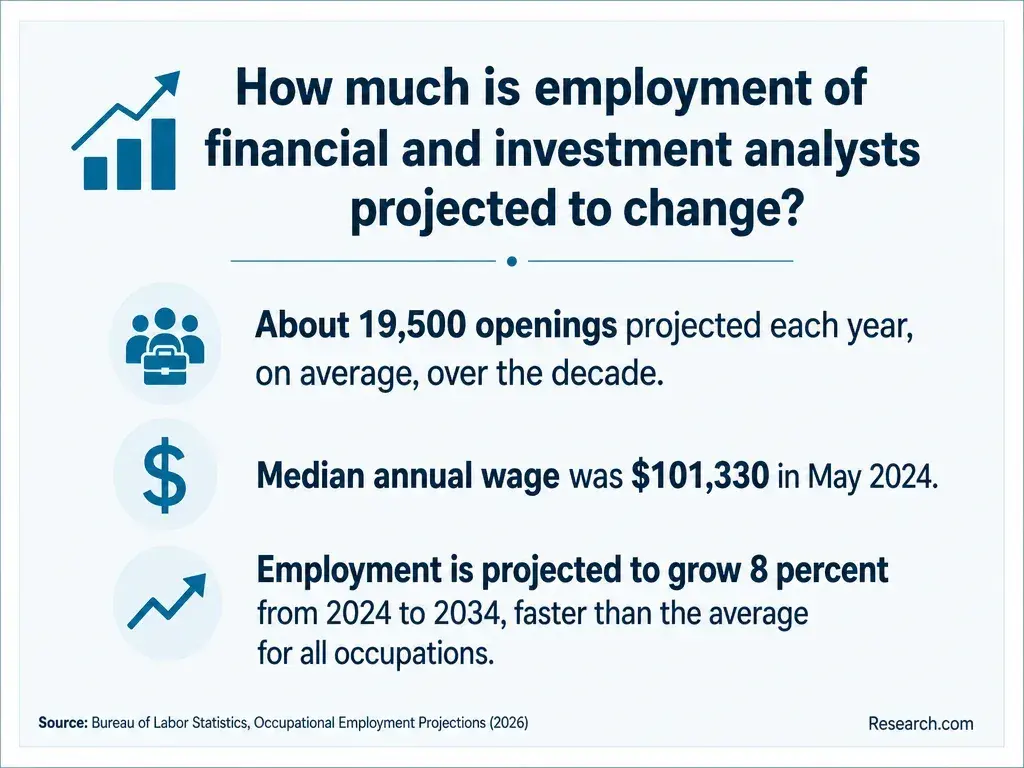
For one possible transition, BLS reports a May 2025 median annual wage of $78,760 for market research analysts and projects 7% employment growth from 2025 to 2035. That outlook may be relevant if your business experience includes customer research and you can demonstrate analytical skills; it is not a salary offer or evidence that the degree alone qualifies you. Compare openings you could realistically pursue with your current business income, benefits, and the cost of leaving or reducing your enterprise. For additional context, review business administration college costs and potential career outcomes while keeping occupation-wide figures separate from your personal earnings forecast.
Other Things You Should Know About Business Administration
Possibly, but only if the program approves the activity under its supervision, learning, and assessment rules. Ask the internship coordinator before assuming your existing work qualifies.
No. Some students remain self-employed while studying. Whether that is feasible depends on course obligations, who can cover client work, and how much income the business must continue to produce.
Do not assume so. U.S. tax treatment depends on your circumstances and the applicable education-expense rules. Ask a qualified tax professional before including tuition in a business deduction estimate.
Use the target job's requirements to select relevant examples. Describe the work you personally performed, the decisions you owned, and results you can substantiate without disclosing confidential customer or financial information.
- Small Business and Entrepreneurship in the Post-COVID Expansion | U.S. Department of the Treasury https://home.treasury.gov/policy-issues/economic-policy/economic-policy-archive/news/small-business-and-entrepreneurship-in-the-post-covid-expansion
- Your financial path to graduation | consumerfinance.gov https://www.consumerfinance.gov/paying-for-college/your-financial-path-to-graduation/
- Self-employment over the business cycle in the USA - PMC https://pmc.ncbi.nlm.nih.gov/articles/PMC7387264/
- Annual Earnings by Educational Attainment - COE https://nces.ed.gov/programs/coe/indicator/cba/annual-earnings
- Manage your business - Small Business Administration https://www.sba.gov/counseling/manage-your-business/
- Opportunities With a Business Administration Degree | Saint Mary's University of Minnesota https://www.smumn.edu/blog/what-doors-can-a-business-administration-degree-open/
- 10 Key Business Administration Skills for Every Role | University of the Cumberlands https://www.ucumberlands.edu/blog/business-administration-skills-for-every-role
- Entrepreneurship vs. Business Degree: Key Differences | American Public University https://www.apu.apus.edu/area-of-study/business-and-management/resources/entrepreneurship-vs-business-degree/
- How a Business Administration Degree Can Prepare You for Entrepreneurship - Missouri Baptist University (Mobap) https://www.mobap.edu/news/how-a-business-administration-degree-can-prepare-you-for-entrepreneurship/
- How Can a Bachelor's Degree in Business Administration Help Me? | University of Wisconsin Flexible Option https://flex.wisconsin.edu/stories-news/how-can-a-bachelors-degree-in-business-administration-help-me/