2027 Choosing a BS in Business Administration for Business Roles in Technology Startups
Audited and Verified:
Our Editorial and Data Verification Process
Research.com uses government datasets, official education statistics and primary institutional information to support its career and degree guides. Our review process checks factual accuracy, occupational definitions, source dates and the requirements associated with the credentials discussed.
How This Article Was Fact-Checked
Our editorial team verifies salary estimates, employment projections, education requirements and program information against original data providers and official organizations. Salary figures are checked against the relevant occupational definitions and reporting periods. Information about licensure, accreditation and required in-person training is reviewed separately.
Fact-checked and verified on:

Co-Founder and Chief Data Scientist
A technology startup may need someone to understand customers, track spending, improve a process, and explain the results - all before it has a department for each task. A BS in Business Administration can prepare you for that breadth, but the degree's value depends on its courses, applied opportunities, and fit with your target role.
This guide helps prospective students and early-career workers compare programs, build evidence of startup-ready skills, and decide when a more specialized or less expensive path makes better sense.
Key Things You Should Know
- Choose a business program for the startup function you want to enter - not for an entrepreneurship label alone. Relevant projects and experience matter alongside the degree.
- Check institutional accreditation, the actual curriculum, access to applied work, and your remaining cost and time before enrolling.
- For salary context, the U.S. median for market research analysts was $78,760 in May 2025; that occupation-wide figure is not a starting salary or a startup-specific offer.
What is a business administration degree, and is it useful for technology startup roles?
A BS in Business Administration is an undergraduate degree covering several business functions, typically including accounting, finance, marketing, management, operations, and quantitative analysis. Its breadth can suit a startup business role where responsibilities cross departmental lines. A BS, BBA, and specialized business degree may cover similar ground, but their requirements differ by school; compare curricula rather than relying on the degree title.
The degree is most useful when it supplies knowledge you lack and opportunities to apply it. A student targeting customer operations, for example, should be able to study service processes and data interpretation, then show how they investigated a customer problem. Someone who already has a bachelor's degree and relevant work experience may be better served by targeted coursework, mentorship, or a function-specific credential. If earning a bachelor's is necessary but a conventional schedule is not feasible, compare online colleges offering accelerated bachelor's against the actual business courses and workload you need.
Neither a general business degree nor an entrepreneurship course makes a graduate a founder, product manager, or executive. Startup employers still assess what an applicant has done and can do.
Which business roles can graduates pursue in technology startups?
Startup titles vary, so evaluate job postings by duties rather than title. The following entry routes show how business coursework can connect to work a newer graduate might reasonably pursue.
| Possible entry route | Typical work | Useful evidence of readiness |
| Revenue or sales operations coordinator | Maintain customer records, track pipeline measures, and support sales processes | Clean spreadsheet analysis and accurate customer-record workflows |
| Marketing or growth coordinator | Research audiences, help run campaigns, and report results | A documented campaign analysis that separates observations from assumptions |
| Customer success or business operations associate | Coordinate onboarding, resolve process problems, and report customer feedback | Service experience and a clearly explained process improvement |
| Finance or project coordinator | Track budgets, invoices, deadlines, or project status under supervision | Accounting fundamentals and a reliable budget or project tracker |
Specialist roles may demand deeper preparation. Human resources work, for instance, involves employment practices and confidential records beyond general management coursework; a prospective applicant can compare that route with a guide to studying human resources. Product management and senior operations roles commonly require evidence of substantial product, technical, or organizational responsibility. A small company's broad job description does not eliminate those skill requirements.
What should you look for in an accredited business administration program?
Start by confirming recognized institutional accreditation and the exact degree awarded. Then check whether the business school or program holds AACSB, ACBSP, or IACBE accreditation and whether that recognition covers the program you would attend. Business-specific accreditation can be a useful quality signal, but it does not prove startup placement or replace scrutiny of the curriculum.
Ask for the current catalog and course schedule. Look for accessible analytics, entrepreneurship, marketing, operations, and information-systems courses; faculty feedback on applied assignments; and career support that reaches smaller employers, not just large-company recruiters. Verify whether a claimed startup partnership yields supervised projects or merely guest speakers. If comparing online options, use online business degree rankings for US college applicants as a starting list, then confirm each school's accreditation, course availability, and outcomes directly.
Request the definition behind any published employment rate: which graduates were counted, when they were surveyed, and how many responded? An impressive headline cannot tell you whether graduates entered technology startups.
Prioritize courses that let you make and defend decisions with incomplete information. Financial and managerial accounting help you read statements and understand costs; statistics and spreadsheets help you assess uncertain results; marketing research tests assumptions about customers; and operations and information systems explain how work moves through a company. Business law and ethics add context for contracts, privacy, and responsible use of data.
Match electives to a function. A prospective growth coordinator might combine marketing research with analytics and a campaign project. An operations candidate might pair process analysis with project management and an approved workflow study. If supply chain is the clear goal, compare the depth of a general BS with specialized options such as online colleges with accelerated supply chain bachelor's study; the faster advertised path still needs a realistic credit evaluation.
Check prerequisites and course rotation before declaring a concentration. An official concentration appears on a school's academic record under its rules; a few related electives do not automatically create one. Prefer an assignment that produces a defensible analysis over a startup pitch that makes unsupported revenue claims.
Choose the format that lets you complete demanding work and build professional relationships. Online study may fit employment or caregiving, while campus study may make team meetings and local employer events easier. Neither format guarantees startup access: ask where students find projects, how teams collaborate, and whether internships can be completed near you.
Before selecting an online program, confirm live-session times, weekly deadlines, proctored exams, presentation requirements, group-project scheduling, and any campus visits. An asynchronous lecture can still come with fixed team meetings. For a comparison focused on maintaining employment, review business administration education for employed professionals, then test the schedule against your actual work hours. Choose campus study when its local recruiting and in-person collaboration outweigh commuting and scheduling costs for you.
Requirements vary by institution and entry route. First-year applicants generally submit secondary-school records; transfer applicants submit prior college transcripts. Some schools admit students directly to business, while others require later entry to the major or completion of specified coursework. Tests, minimum grades, mathematics preparation, and deadlines must be checked with the individual school rather than assumed.
If you have previous college study, request a written evaluation showing which credits satisfy general education, the business core, electives, and residency requirements. Accepted credits do not necessarily shorten the major. Ask admissions and the business adviser whether accounting, statistics, economics, or mathematics courses must be completed before upper-level work. For a fuller preparation checklist, see what to check before applying for a business administration degree. Keep the resulting degree audit: it is more useful for planning than a preliminary estimate of total transfer credits.
A bachelor's is commonly planned as four years of full-time study, but transfer credit, course sequencing, part-time enrollment, and repeat requirements can change your completion date. Do not infer a shorter path from credits accepted alone: ask which required courses remain and when each is offered.
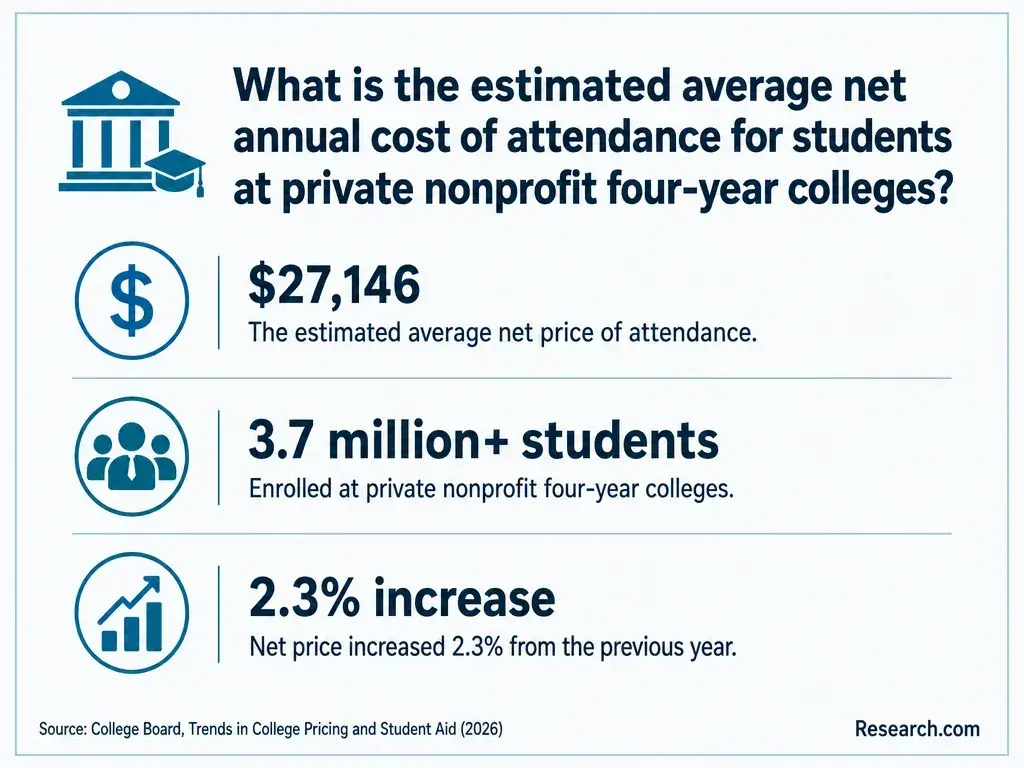
Compare schools using your projected cost to finish, not a headline tuition rate. Include remaining credits, mandatory fees, books and software, possible travel or proctoring, and any income you would give up. Request a school-specific aid estimate and distinguish grants from loans. Compare shorter business administration college programs only after checking whether the same credits apply at each school; speed may not lower total cost if a program accepts fewer of your courses.
For a startup career, weigh that remaining investment against realistic entry roles - not a manager's salary or an unverified future equity payout. A lower-cost degree plus relevant work experience may be more valuable than paying substantially more for a program with no demonstrable difference in access to applied learning.
Startup-ready business graduates can turn an ambiguous request into a defined task, identify a useful measure, communicate findings, and adjust when priorities change. The practical foundation includes spreadsheet accuracy, basic financial literacy, customer awareness, clear writing, and reliable follow-through. Tool names on a résumé matter less than a work sample showing what you measured, what you concluded, and what you could not establish.
Build evidence through relevant employment, an internship, or an approved class project. For example, a project tracker can demonstrate how you define owners, deadlines, risks, and status without claiming you managed an entire company initiative. If project coordination is your target, compare the business curriculum with project management degrees with prior-credit pathways before committing to a broad major.
Use only data you are authorized to access. Obtain employer and faculty approval where required, remove confidential details from portfolio samples, and distinguish a proposed improvement from one the organization actually implemented.
There is no reliable single salary for "a startup business graduate." Pay depends on function, location, employer funding, responsibilities, and prior experience. National occupation figures provide context, but they combine employers and career stages rather than isolating new graduates or startups.
These U.S. Bureau of Labor Statistics figures illustrate two distinct career tracks. Use them to identify relevant occupations for further research, not to predict an offer.
| Occupation | U.S. median annual pay, May 2025 | Projected U.S. employment growth, 2025-2035 |
| Market research analyst | $78,760 | 7% |
| Project management specialist | $102,320 | 7% |
The project-management figure reflects occupation-wide pay, including experienced workers; a new project coordinator should not treat it as an expected starting salary. Both occupations' projected growth exceeds the approximately 3.5% national average, but growth does not guarantee an opening at a particular startup. Compare actual postings for the role and location you seek, including base pay and benefits. If education cost is the deciding constraint, explore economical online business administration college programs and obtain an individualized cost-to-finish estimate before borrowing.
What certifications can strengthen a business graduate's startup career?
Choose a credential only after identifying a specific hiring requirement or skill gap. A reputable analytics or customer-relationship-management platform certificate can help demonstrate tool knowledge for a relevant role; project-management credentials may be useful for coordinators seeking a structured method. Verify the issuing organization's eligibility rules, assessment, fees, renewal requirements, and whether local job postings actually request it. A course-completion badge is not the same as professional certification or proof of workplace results.
Certificates complement, rather than substitute for, a bachelor's when an employer requires the degree. Conversely, someone who already meets degree requirements may get more immediate value from supervised experience and focused training. If a bachelor's is the remaining barrier, check business administration colleges participating in federal aid programs while confirming each program's accreditation, aid eligibility, and remaining degree requirements directly. Do not purchase a certification - or enroll in a degree - before checking which qualification your target jobs actually value.
Other Things You Should Know About Business Administration
No. Options may never produce a payout. Compare the guaranteed base pay and benefits with your living costs, and review vesting, exercise terms, and potential tax consequences before assigning value to equity.
Ask about the company's customers, funding or revenue model, near-term priorities, and how the role will be supported. You may not receive private financial statements, but unclear answers about responsibilities or compensation warrant caution.
It can. Describe the company's stage and your actual responsibilities rather than relying on the word "startup." Specific work and documented results are more informative to employers than funding status alone.
Not automatically. Explain what you personally planned, delivered, measured, and supervised, if anything. Employers may value the initiative while still requiring experience managing people, budgets, or operations.
- Benefits of experiential learning in graduate business education | D'Amore-McKim School of Business https://damore-mckim.northeastern.edu/resources/cc-transform-your-career/
- 11 Types of Business Degrees You Can Pursue in 2026 | University of North Dakota https://und.edu/blog/types-of-business-degrees.html
- Entrepreneurship Specialized Internship Programs | uchicago.edu https://careeradvancement.uchicago.edu/student-opportunities/internships/internship-programs/entrepreneurship-specialized-internship-programs/
- What Can You Do With a Business Degree? | Carson-Newman University https://www.cn.edu/cps-blog/what-you-can-do-with-the-least-regretted-degree/
- Online Bachelor's of Business Administration (Completion) | Aspen University https://www.aspen.edu/business-technology/bachelors-business-administration-completion/
- What Do Students Want From Business Programs? | AACSB https://www.aacsb.edu/insights/articles/2024/05/what-do-students-want-from-business-programs
- What Do You Study in Business School? | CTU Online https://www.coloradotech.edu/degrees/studies/business-and-management/articles/what-can-you-learn-in-business-school
- What Should I Major in If I Want to Start My Own Business? | Southeast Missouri State University https://semo.edu/blog/blog-posts/what-should-i-major-in-if-i-want-to-start-my-own-business
- Do You Need a Degree to Start a Business? | Touro University Worldwide https://www.tuw.edu/business/do-you-need-a-degree-to-start-a-business/
- Why Startups are Great for Project-Based Experiential Learning - Stevens Industry Capstone Program https://icp.stevens.edu/startups/