2027 A Second BS in Business Administration After a Bachelor's in Dental Hygiene: Credits, Cost, and Alternatives
Audited and Verified:
Our Editorial and Data Verification Process
Research.com uses government datasets, official education statistics and primary institutional information to support its career and degree guides. Our review process checks factual accuracy, occupational definitions, source dates and the requirements associated with the credentials discussed.
How This Article Was Fact-Checked
Our editorial team verifies salary estimates, employment projections, education requirements and program information against original data providers and official organizations. Salary figures are checked against the relevant occupational definitions and reporting periods. Information about licensure, accreditation and required in-person training is reviewed separately.
Fact-checked and verified on:

Co-Founder and Chief Data Scientist
A bachelor's in dental hygiene gives you clinical expertise, but it may not cover the budgeting, operations, or marketing skills needed for the business role you want next. A second BS in Business Administration could fill those gaps - or require more coursework than the career change warrants.
This guide is for dental hygienists weighing a move into practice operations, healthcare business, or another business function. It explains how schools assess your prior credits, what determines cost and completion time, and when a shorter or more specialized path may serve you better.
Key Things You Should Know
- A completed dental hygiene bachelor's does not automatically satisfy a second business major: the decisive number is the credits remaining after an official degree audit, not the credits a school accepts.
- Compare programs by remaining required credits, tuition and fees, course availability, and income you may give up while studying; a shorter advertised timeline does not establish a lower total cost.
- A second BS is most defensible when your target role calls for broad business preparation and the degree fills a documented gap. For a narrower goal, targeted coursework or relevant work experience may be more direct.
Is a second bachelor's degree in business administration worth pursuing after dental hygiene?
It can be worth pursuing if you want a substantial transition into business work and need a structured foundation in accounting, finance, operations, marketing, and management. Dental hygiene experience already offers valuable context: you understand patient communication, appointment flow, clinical teams, and the constraints of a dental setting. A business degree may help you analyze the financial and organizational decisions behind those activities.
Start with a target role rather than the degree title. For practice operations, compare job postings with your experience in scheduling, inventory, staff coordination, and reporting. For marketing, finance, or human resources, identify the function-specific skills employers seek. If you can acquire those skills through approved responsibilities at work and a few courses, another full bachelor's may have limited additional value.
The decision turns on the remaining requirements and the opportunities the program provides to build evidence of business competence. When comparing schools, evaluate price, duration, and outcomes of business administration degrees against the same target role. Neither a BS in Business Administration nor a BBA automatically qualifies a clinician to manage a practice or receive a promotion.
How many credits transfer from a dental hygiene bachelor's degree to business administration?
There is no reliable universal number. A receiving institution may accept substantial prior coursework while applying much less of it to the second degree. Your general education requirements might already be met, but clinical courses may count only as electives, and the business core, upper-level requirements, and institutional residency may remain.
The distinction below is the key to interpreting a transfer evaluation. An accepted course reduces your workload only if it satisfies a requirement you would otherwise have to complete.
| Prior coursework | Possible application to a business degree | What remains uncertain |
| Writing, communication, and general education | General education or second-degree requirements | Whether the school waives requirements for prior bachelor's graduates |
| Statistics or quantitative coursework | Business statistics or a quantitative prerequisite | Content equivalency, grading rules, and any recency policy |
| Dental hygiene and clinical sciences | Open electives or a healthcare-related elective, if permitted | Whether elective space remains after other transfer credit is applied |
| Business courses taken previously | Business prerequisites or core courses | Equivalency, upper-level rules, and concentration requirements |
Request an official second-degree audit showing accepted credits, where each credit applies, and every remaining course. Send transcripts and, when requested, syllabi for statistics or previous business classes. Ask the transfer office about equivalencies and the business adviser about major requirements; obtain written decisions on substitutions. If human resources is your intended function, comparing how schools apply prior college coursework toward an HR bachelor's can also show whether a specialized program uses your credits more effectively.
How much does a second bachelor's degree in business administration cost?
Without a school-specific audit and tuition schedule, a credible total cannot be quoted. Calculate the cost from the courses still required, not from the credits on your dental hygiene transcript. Check whether the school bills per credit, per term, or through another structure, and whether part-time enrollment changes the rate.
This cost framework separates charges you will pay from costs that depend on your schedule. Use it to compare offers on equivalent assumptions.
| Cost component | Information to obtain | Why it matters |
| Tuition and mandatory fees | Rate and fees for every remaining requirement | Extra prerequisites or residency courses can change the estimate |
| Course expenses | Books, software, proctoring, and any campus-visit costs | Online delivery does not eliminate these charges |
| Financing | Aid offer, loan terms, and employer reimbursement conditions | Sticker price differs from your net cost and immediate cash needs |
| Work and time | Expected schedule changes and course availability | Reduced clinical hours or a delayed required course can raise the effective cost |
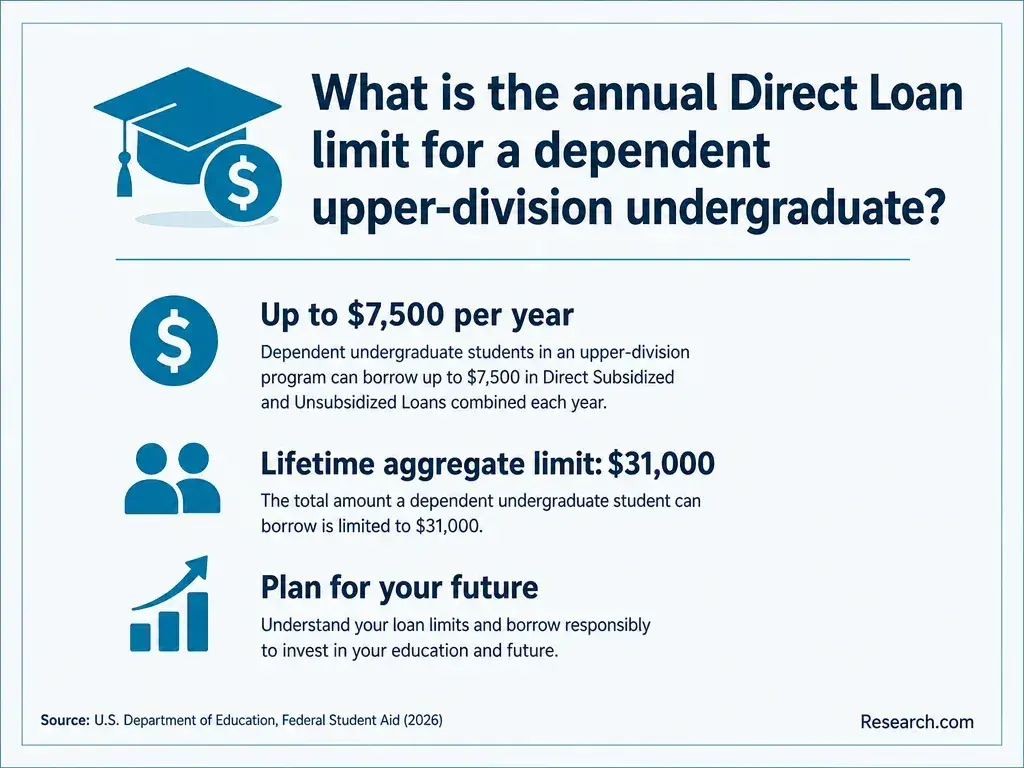
A prior bachelor's can affect eligibility for some aid programs; ask the financial-aid office what applies to you rather than assuming your first-degree package will continue. If your employer offers tuition assistance, confirm reimbursement timing, covered courses, grade rules, and any obligation to remain employed. Compare an itemized estimate with lower-priced college options for business majors, then recalculate each option using its own official credit audit.
Schools generally need official records of your prior college work, but second-degree admission rules differ. Confirm whether you apply to the university first and the business major separately, whether there is a minimum academic-standing requirement, and whether particular business or quantitative courses must be finished before entering the major. A non-business bachelor's does not, by itself, make you ineligible.
Ask admissions to identify requirements for second-degree applicants specifically, including application deadlines and any limits on enrolling in a second bachelor's program. Then ask the business department which missing courses are admission prerequisites and which can be completed after admission. Those are different decisions from whether prior courses earn credit.
If application expense matters while you compare schools, you can review online college options without an application fee. Verify the current fee and second-degree policy with each institution before applying; a waived application fee says nothing about the eventual cost of attendance.
Online study may be easier to fit around patient appointments, especially if lectures are asynchronous. It is not necessarily self-paced: group projects, live presentations, fixed exam windows, and weekly deadlines can still conflict with clinical shifts. Campus study may offer scheduled face-to-face collaboration and local employer contacts, but commuting and daytime course availability can add constraints.
Compare the actual sections you would need, not just the program's delivery label. Ask about live attendance, proctored exams, internships, campus visits, accessibility, and whether upper-level business courses run often enough for your intended pace. If you hope to use your dental workplace for a class assignment, confirm academic rules and employer permission before planning around it.
Use ranked online business schools in America as a starting set of programs to investigate, not as a substitute for checking course schedules, recognized institutional accreditation, and the scope of any advertised business-school accreditation.
Requirements vary by school and degree title. A BS in Business Administration commonly centers on accounting, economics, finance, marketing, management, operations, and quantitative decision-making, with electives or a formal concentration. Your prior bachelor's may satisfy general education rules without replacing these business courses.
For a dental hygienist aiming at practice operations, managerial accounting, budgeting, operations, and organizational behavior may be especially useful. For a move into HR or marketing, check whether the school offers sufficient upper-level work in that function. An elective cluster is not necessarily an officially awarded concentration, and introductory coursework is not proof of specialist expertise.
Look closely at course sequencing: accounting or statistics may precede upper-level finance or analytics, and a capstone may have its own prerequisites. Compare the catalog with guidance on college coursework required for business administration entry, then have your adviser mark which requirements your existing transcript actually fulfills.
Completion time depends on the official remaining-course list, prerequisite order, course frequency, and how many classes you can manage alongside clinical work. A student with general education waived may still need a substantial sequence of business courses. Conversely, relevant prior business classes may shorten the path if the school applies them to the major.
Ask an adviser for a term-by-term plan through graduation, including summer availability and the last term in which a required course is offered. Test that plan against your work schedule before accepting an accelerated timeline. Taking more courses at once can shorten the calendar without reducing required coursework, and a missed prerequisite can delay several later classes.
You can compare American fast-paced business bachelor's degrees, but use your individualized audit - not a published fastest-completion claim - to estimate your own finish date.
The strongest initial fit is often a role that uses your dental-sector knowledge while adding business responsibility: dental practice operations coordinator, patient-services supervisor, dental group administrative staff member, or a business-support role with a dental supplier or insurer. The duties matter more than the title. Look for evidence that you can improve a workflow, explain a budget, coordinate stakeholders, or interpret operational information.
Moving into a different function may require a more deliberate entry route. HR, marketing, project coordination, and financial analysis each have distinct tools and employer expectations. For example, the Bureau of Labor Statistics projects 6% employment growth for human resources specialists from 2025 to 2035; that occupation-wide projection indicates demand, not that a new business degree qualifies you for a particular HR opening.
If project work is your goal, compare business administration with project management bachelor's completion using existing credits. Then review actual job descriptions and seek a supervised project or relevant workplace assignment. A class project can demonstrate learning, but it does not replace employer-required experience.
There is no dependable salary figure for the combination of these two degrees. Pay depends on the occupation, location, employer, responsibilities, and experience. National occupation medians are useful for comparing directions, but they include experienced workers and are not starting-salary estimates for dental hygienists changing careers.
The following Bureau of Labor Statistics medians are for all U.S. workers in each occupation in May 2025. They provide context for two possible business functions, not a predicted return on a second bachelor's.
| Occupation | Median annual pay | Important qualification |
| Human resources specialist | $75,940 | HR duties and employer requirements differ from dental clinical work |
| Project management specialist | $102,320 | The median includes workers with project experience |
For a personal return-on-investment estimate, compare pay ranges in job postings you could realistically pursue with your current qualifications, then with the proposed coursework and experience. Set that potential change against tuition, borrowing, and any clinical income you would forgo. Before enrolling, explore ways to reduce tuition spending on an online business administration degree without assuming that a lower advertised price means fewer remaining requirements.
What alternatives to a second business degree can advance a dental hygiene career?
Choose the smallest credible pathway that closes the gap between your experience and your target role. If you want to run a specific practice process, employer-supported training and a documented improvement assignment may be more relevant than another general degree. If you want to change functions, targeted accounting, HR, marketing, or project coursework can help you test the transition before committing to a full program.
A specialized bachelor's may be preferable when your target function is clear and its curriculum uses more of your prior credits. Graduate business study is another possibility for a bachelor's holder, but compare admission requirements, foundational coursework, cost, and the experience expected for your intended jobs; an MBA is not automatically the faster or better choice.
For a project-focused path, investigate the curriculum and financial aid at low-cost project management schools alongside shorter training options. Whichever route you favor, obtain a degree audit or written course plan, an itemized cost estimate, and several relevant job descriptions before paying an enrollment deposit.
Other Things You Should Know About Business Administration
No. A business degree is separate from dental hygiene licensure. Check your state dental board's renewal and continuing-education rules if you plan to keep practicing while studying or after changing roles.
Some programs consider applicants from other majors. Check each program's admissions standards and whether it requires or recommends foundational business coursework.
It does not override state rules on dental practice ownership, clinical supervision, or professional licensure. Verify the rules for your proposed ownership or management arrangement with the relevant state regulator.
Possibly. Ask whether the school permits nondegree enrollment and whether a course taken that way could later count toward the specific degree you are considering. Obtain the answer in writing before enrolling.
- Price of Attending an Undergraduate Institution - COE https://nces.ed.gov/programs/coe/indicator/cua/price-of-attending-an-undergraduate-institution
- Tuition and Fees Data - Texas Higher Education Coordinating Board https://www.highered.texas.gov/legislative-appropriations-overviews/tuition-and-fees-data/
- Student Eligibility for Pell Grants | ed.gov https://fsapartners.ed.gov/knowledge-center/fsa-handbook/2024-2025/vol7/ch1-student-eligibility-pell-grants
- Admission and Certification Requirements | Herbert Wertheim College of Business https://wertheim.fsu.edu/undergraduate/admission-and-certification-requirements
- What kind of aid am I eligible for as a second-degree student? | unc.edu https://studentaid.unc.edu/faq/what-kind-of-aid-am-i-eligible-for-as-a-second-degree-student/
- Eligibility Requirements - Office of Student Financial Aid https://financialaid.iastate.edu/getting-started/qualifying-for-aid/eligibility-requirements/
- Undergraduate Degree and Program Requirements | CSUSB https://catalog.csusb.edu/undergraduate-degree-programs/undergraduate-degree-program-requirements/
- Dental Hygiene | Prerequisite Coursework Evaluation https://admissions.osu.edu/standards/standard.aspx
- Senior Residence Requirement (30-Credit Rule) | L&S Undergraduate Academic Deans' Services https://deans.ls.wisc.edu/policies-forms/residence-requirement-30-credit-rule/
- Degree Completion (BS) | umich.edu https://dent.umich.edu/education/academic-programs/dental-hygiene-programs/degree-completion-bs