2027 BS in Business Administration and Real Estate: Choosing Courses for Your First Related Job
Audited and Verified:
Our Editorial and Data Verification Process
Research.com uses government datasets, official education statistics and primary institutional information to support its career and degree guides. Our review process checks factual accuracy, occupational definitions, source dates and the requirements associated with the credentials discussed.
How This Article Was Fact-Checked
Our editorial team verifies salary estimates, employment projections, education requirements and program information against original data providers and official organizations. Salary figures are checked against the relevant occupational definitions and reporting periods. Information about licensure, accreditation and required in-person training is reviewed separately.
Fact-checked and verified on:

Co-Founder and Chief Data Scientist
A real estate concentration can sound like a direct route to a job, but the best courses depend on whether you want to work in leasing, property operations, sales, or investment analysis. If you are choosing electives in a BS in Business Administration, or comparing programs, this guide connects coursework to entry-level tasks and work samples.
This article also explains where internships, state licensing, and program costs change the decision, so you can choose classes that help you apply for a specific first role rather than simply collect a real estate label.
Key Things You Should Know
- For leasing or property operations, prioritize accounting, business communication, real estate law, and property management; for analyst roles, add finance, statistics, and spreadsheet modeling.
- A real estate concentration is not a license. State regulators decide whether particular coursework counts toward agent or broker education requirements.
- Related occupation-wide wages are not starting salaries, the U.S. Bureau of Labor Statistics reports a May 2025 median of $78,760 for market research analysts, a broader occupation that can include work outside real estate.
What is a BS in Business Administration and Real Estate?
It is typically a bachelor's degree with a general business core and real estate-focused study. The core may cover accounting, finance, marketing, management, and quantitative methods; the real estate portion may address property markets, transactions, valuation, law, or management. Schools may call that portion a concentration, emphasis, minor, or set of electives. Those labels are not interchangeable: confirm what appears on the transcript and whether the courses are guaranteed to be offered during your enrollment.
A broad business degree can be useful if you are still choosing between property work and another business function. A specialized real estate degree may offer more property-specific courses or industry access, but its title alone does not establish better job placement. When comparing formats and curricula, online business school comparisons across the United States can help you identify programs to investigate; use each school's current catalog to verify the actual real estate offering.
What careers can a business administration and real estate degree prepare you for?
Start with the work you want to do, not the most senior-sounding title. An entry-level leasing assistant may handle inquiries, tours, records, and customer follow-up. A property operations assistant may track service requests, invoices, and vendor communication. A research or analyst assistant may clean market data and support reports. An agent's work centers on transactions and generally requires a state license. Property manager, broker, and investment decision-making roles often require experience or additional credentials.
Industry focus matters, too. If your interest is moving goods through warehouses rather than leasing or managing the buildings, supply chain may be the closer fit; you can compare supply chain degrees by cost and length before committing real estate electives to that goal.
Which courses best prepare you for your first real estate-related job?
Choose a course sequence that produces evidence of the tasks in your target job posting. The table connects common subjects to entry-level work; course titles and depth vary, so inspect syllabi and prerequisites rather than relying on the concentration name.
| Target first role | Most useful coursework | Skill to demonstrate |
| Leasing or sales support | Business communication, marketing, real estate principles, business law | Accurate property descriptions, customer follow-up, and understanding of transaction boundaries |
| Property operations assistant | Financial accounting, property management, operations, spreadsheet applications | Organized expense tracking, service-request records, and vendor coordination |
| Research or analyst assistant | Statistics, finance, economics, real estate valuation, spreadsheet modeling | Clearly labeled assumptions and defensible comparisons of market or property data |
| Development or construction project support | Project management, finance, contracts, operations | Schedules, budget tracking, and stakeholder updates under supervision |
If course space is limited, take accounting and spreadsheet work before an advanced valuation elective: you need to interpret costs, income, and assumptions before building a credible property model. Pair the most relevant course with an internship, supervised job, or permitted class project. A sample analysis using public data can show your method; do not present it as an employer-approved valuation or disclose tenant or company records.
If construction scheduling is your actual goal and you have previous college credit, project management degrees with prior-credit pathways may be worth comparing with real estate electives. Ask which credits satisfy major requirements, not just which credits transfer.
Requirements depend on the school and whether you apply as a first-year or transfer student. Expect the institution to review prior transcripts; some business schools have a separate admission step or require mathematics, economics, or accounting before upper-level courses. A real estate concentration may have no separate application, but that must be checked in the catalog for your intended term.
Before applying, request an evaluation showing where previous courses fit in the general education, business core, and real estate requirements. Accepted elective credit is not the same as satisfying a required course. For a closer look at common quantitative and core-course questions, use business administration degree prerequisite planning, then confirm decisions with the admissions office and business adviser.
A bachelor's degree commonly takes about four years of full-time study from the start of college; transfer credit, part-time enrollment, and course scheduling can change that substantially. The key question for this concentration is whether foundational accounting or finance must precede real estate finance or valuation - and whether those upper-level classes run often enough to fit your graduation plan.
Request a term-by-term plan that includes remaining general education, prerequisites, real estate electives, and any internship or capstone. Fast-track bachelor's degree options may shorten the calendar, but only if required courses are available in the needed order and the workload fits your schedule.
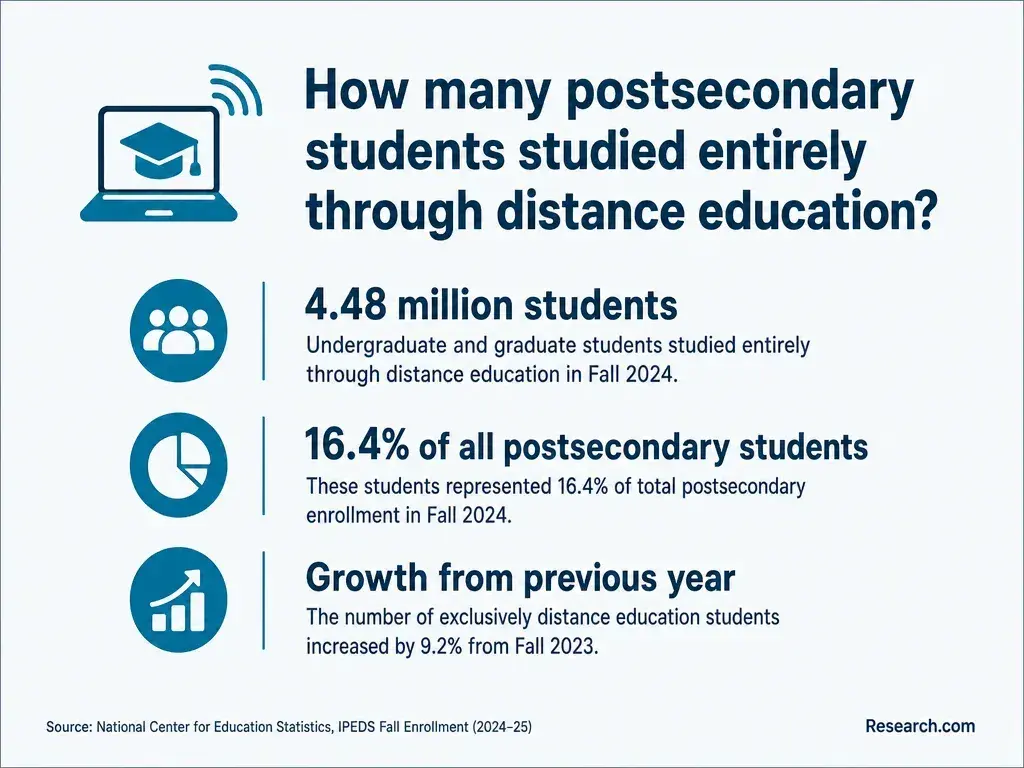
Online study can reduce commuting and expand course choices, while campus study may make local employer events, site visits, and faculty contact easier to use. Neither format automatically provides an internship or a flexible schedule. Ask whether real estate electives are online every term, whether exams or group work require live attendance, and how students access local property professionals.
For someone already employed in a property office, an online program may make it easier to connect class assignments to work - but employer permission and faculty approval still matter. Guidance on how to earn a business administration degree while keeping your job can help frame scheduling questions before you enroll.
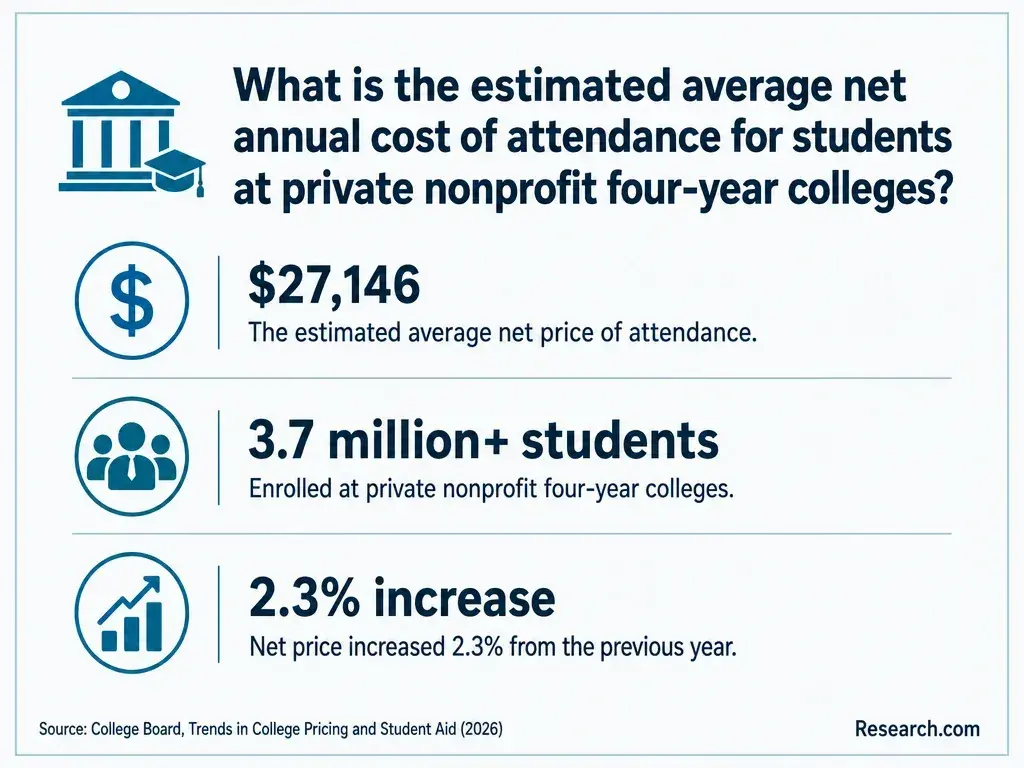
There is no reliable single price for this degree. Compare the tuition and mandatory fees for the courses you still need, then include books, software, travel, and any internship-related costs. An online program may save commuting costs but still charge technology fees; a delayed real estate elective can add another term of living expenses or fees. Ask the financial-aid office for an aid estimate based on your actual enrollment plan, and check when any employer reimbursement would arrive.
If you are comparing real estate with a project-focused degree, apply the same net-cost method to both. Resources on FAFSA grants and scholarships for project management students can inform that alternative comparison, but aid eligibility and awards must be confirmed for your own program and circumstances.
Not by itself. Real estate agent and broker licensing is governed by the state where you intend to practice. Required education, approved providers, examinations, applications, and broker-supervision rules vary. A university real estate course counts toward a state's prelicensing requirement only if that regulator accepts the specific course or provider; a bachelor's degree does not replace the licensing process.
If you want project coordination rather than licensed sales, compare the cost of that pathway with the degree-plus-license route. You can find project management programs with lower total costs to investigate, but a project management degree also does not confer a real estate license. Check the state regulator's requirements before paying for any course advertised as license preparation.
First, verify that the institution holds recognized institutional accreditation. Then check whether any claimed AACSB, ACBSP, or IACBE business accreditation covers the school or program you are considering; its scope is different from institutional accreditation. Neither form of accreditation means a real estate elective is state-approved licensing education or guarantees a job.
Accreditation is a starting filter, not the final choice. Compare required courses, access to real estate electives, transfer-credit application, and total completion cost. If you are also considering a general business degree, compare low-cost online business administration pathways against those same criteria rather than choosing on advertised tuition alone.
What salary and job outlook can graduates expect?
There is no single salary or outlook for graduates of this concentration: leasing, licensed sales, property operations, and analysis have different pay structures and experience requirements. For one related occupation, the U.S. Bureau of Labor Statistics reports a May 2025 median annual wage of $78,760 for market research analysts and projects 7% employment growth from 2025 to 2035. Those are occupation-wide figures across industries - not an expected offer for a new real estate research assistant.
Use local postings for your intended first role to assess pay, licensing, and software requirements. Then compare those requirements with the courses and experience you can realistically obtain. If the job calls for broad business skills rather than a real estate concentration, affordable colleges for online business degrees may offer another cost comparison; verify that any cheaper program still supports your target work.
Other Things You Should Know About Business Administration
Choose the concentration if its required courses closely match your target role and fit your graduation plan. A few electives may be more efficient if you need room for finance, analytics, or another skill your target employers request.
Yes. A carefully documented analysis using public information can demonstrate spreadsheet and communication skills. Label assumptions and limitations, and do not imply that a company commissioned or approved the work.
It can be valuable for analyst-track roles, but check its accounting and finance prerequisites. For leasing or operations support, strong accounting, communication, and spreadsheet skills may be more immediately useful.
Ask which entry-level tasks take the most training, what software the team uses, and whether the role involves licensed activity. Compare the answers with course syllabi and any supervised experience available to you.
- Bachelor of Business Administration in Real Estate | FIU College of Business https://business.fiu.edu/academics/undergraduate/bba-real-estate/
- Real Estate Postings on Handshake - Zicklin School of Business - CUNY https://zicklin.baruch.cuny.edu/academic-programs/graduate/student-experience/gcmc-graduate-career-management-center/real-estate-postings-on-handshake/
- Undergraduate Real Estate Finance Concentration | Naveen Jindal School of Management https://fin.utdallas.edu/real-estate/undergraduate-concentration/
- For College Students: Kickstart Your Real Estate Career with an Internship https://careers.kogod.american.edu/blog/2025/04/29/for-college-students-kickstart-your-real-estate-career-with-an-internship/
- Real Estate Program Guide | fsu.edu https://academic-guide.fsu.edu/node/906
- Internships | Alvarez College of Business | UT San Antonio https://business.utsa.edu/students/professional-development/internships.html
- Real Estate - Barry S. Miller College of Business https://business.ucf.edu/degree/real-estate/
- Career Paths in Real Estate Finance | Orfalea College of Business https://orfalea.calpoly.edu/student-services/career-readiness/career-paths/career-paths-in-ref
- Everything You Want To Know About Real Estate Degrees | indeed.com https://www.indeed.com/career-advice/career-development/real-estate-degree
- Real Estate Development Degree: Courses, Careers & Cost | assessment.com https://www.assessment.com/degrees/architecture-and-related-services/real-estate-development