2027 BS in Business Administration: Comparing Student Loan Cost with a Realistic Education Budget
Audited and Verified:
Our Editorial and Data Verification Process
Research.com uses government datasets, official education statistics and primary institutional information to support its career and degree guides. Our review process checks factual accuracy, occupational definitions, source dates and the requirements associated with the credentials discussed.
How This Article Was Fact-Checked
Our editorial team verifies salary estimates, employment projections, education requirements and program information against original data providers and official organizations. Salary figures are checked against the relevant occupational definitions and reporting periods. Information about licensure, accreditation and required in-person training is reviewed separately.
Fact-checked and verified on:

Co-Founder and Chief Data Scientist
A business degree can fit your career plans and still strain your finances if you budget only for tuition. Before committing to a BS in Business Administration, you need to know what you will pay while enrolled, how much you may need to borrow, and what repayment could cost afterward.
This guide helps prospective and returning US students compare programs using the same cost assumptions, account for work and living expenses, and identify the figures to verify before accepting a loan.
Key Things You Should Know
- Compare each school's estimated net education cost - not its advertised tuition - and include fees, required materials, living expenses, and any income you expect to lose.
- Borrowing need and loan cost are different figures: record the amount borrowed, interest rate, fees, repayment term, and estimated monthly payment before choosing a program.
- A shorter or cheaper-looking program may cost more if transfer credits do not satisfy degree requirements or required courses delay completion.
What Is a BS in Business Administration?
A BS in Business Administration is an undergraduate degree covering how organizations manage money, people, operations, and decisions. Its exact curriculum varies by school. Some programs offer formal concentrations; others offer only electives. A BBA or a specialized business bachelor's may overlap with a BS but have different requirements and costs.
Choose the degree that meets your actual goal at a price you can sustain. For example, a student aiming specifically for HR may want to compare the business core with transfer admission options for human resources majors. A specialized pathway is worthwhile only if its remaining requirements and career preparation justify its cost.
How Much Does a BS in Business Administration Cost?
There is no reliable single price for this degree. Schools may charge by credit, course, term, or subscription period; public-school residency status and enrollment pace can also change the bill. Ask each institution for an estimate based on your remaining requirements, not the price of a standard first-year schedule.
The table separates expenses that appear on a school bill from those you still need to finance. Include each category for the full expected time to graduation.
| Budget category | What to check | Why it matters |
| Tuition and mandatory fees | Charge basis, enrollment level, annual increases, and required course fees | These determine the direct billed cost. |
| Books and required technology | Textbooks, software, equipment, and online assessment costs | Some expenses arrive outside the tuition bill. |
| Housing, food, and transportation | Expenses you will actually incur, including commuting or campus visits | Living costs can create borrowing needs even when tuition is covered. |
| Work and caregiving | Reduced earnings, childcare, and scheduling changes | These affect affordability without appearing on a tuition statement. |
| Extra terms or courses | Unapplied transfer credit, prerequisites, and course availability | A longer path adds costs and may postpone full-time earnings. |
Subtract confirmed grants and scholarships from eligible expenses, but keep loans separate: a loan pays a bill now rather than reducing its cost. Compare aid offers alongside financial aid planning for low-cost business administration degrees. Confirm award conditions and future-year eligibility with each financial-aid office.
How Can You Compare Student Loan Costs With Your Education Budget?
Build two budgets for each program: a while-enrolled cash-flow budget and an after-graduation repayment budget. A school's cost-of-attendance estimate is useful for financial-aid purposes, but your rent, dependents, wages, and travel costs may differ. Use your own monthly spending alongside the school's published charges and aid offer.
Use the following sequence to compare options consistently. Keep uncertain amounts, especially transfer credit and future aid, visible rather than treating them as savings already secured.
- Request a degree audit showing remaining courses and estimate the terms needed at a pace you can maintain.
- Total tuition, fees, required supplies, and relevant living expenses across those terms; account separately for wages you expect to give up.
- Subtract confirmed grants, scholarships, savings, and employer payments you can actually access when bills are due.
- Estimate borrowing by loan type and disbursement, then use the applicable lender or Federal Student Aid calculator to test interest, fees, and repayment terms.
- Compare the estimated monthly payment with a conservative post-school budget that includes taxes, housing, existing debt, and savings.
Example method: If an added required course extends enrollment into another term, add that term's tuition and fees, any additional living-cost shortfall, and interest on the resulting borrowing. This shows why an apparently lower per-credit price may not produce a lower total cost. Compare schools' quoted prices, duration, and outcomes using the same assumptions; a guide to evaluate price duration and outcomes of business administration degrees can help you organize that comparison.
For federal loans, check the applicable award year's interest rates, loan limits, and repayment options. For private loans, examine whether the rate is fixed or variable, whether a cosigner is required, and what protections may be unavailable. Do not use an occupation's median wage as your expected starting salary when deciding whether a payment is manageable.
Confirm that the institution holds recognized institutional accreditation and that the status covers the campus or online operation where you will enroll. This matters for federal aid eligibility and can affect credit transfer, although receiving schools make their own transfer decisions.
Business-school accreditation from AACSB, ACBSP, or IACBE is a separate consideration. Verify the accreditor's current listing and whether its scope includes the particular business program; do not infer coverage from a school-wide claim. Accreditation establishes a quality-review framework, not a guaranteed job or low borrowing cost. When using US online business education program comparisons, check accreditation directly with the institution and accreditor before treating a program as an affordable option.
Programs commonly combine accounting, economics, finance, marketing, management, operations, statistics, and business communication. The financially important question is which courses you still need and whether prerequisites force a particular sequence. An elective that sounds relevant to your career may not satisfy a required business-core course.
Look for assignments that let you demonstrate useful skills - such as interpreting a budget, analyzing customer information, or improving a process - without assuming classroom work qualifies you for a specialist role. If project work is your main objective, compare the general business curriculum with affordable pathways to study project management; then check which option requires fewer additional credits and provides the depth you need.
Schools may ask for secondary-school or prior college transcripts and may set separate requirements for entry into the business major. Transfer applicants should distinguish admission from credit applicability: a school can accept a course as elective credit without counting it toward accounting, statistics, or another degree requirement.
Before paying an enrollment deposit, ask for a written evaluation of prior coursework and a degree audit showing remaining requirements. Confirm whether prerequisites, minimum grades, course recency rules, or residency credits apply. Returning students considering a guide to accelerated bachelor's study should also ask whether their existing credits shorten the required sequence; an accelerated calendar alone does not erase missing courses.
Neither format is automatically cheaper. Online study may reduce commuting or relocation costs, while a campus program may provide easier access to particular classes or local employers. Compare the complete budget, including technology, travel, and any difference in your ability to keep working.
Ask whether online courses have live meetings, proctored exams, group projects, fixed deadlines, or required campus visits. If employment pays your bills, confirm those obligations term by term rather than relying on a "flexible" label. Business administration programs supporting continued employment are worth comparing against campus schedules only after you know the actual weekly commitments and total charges.
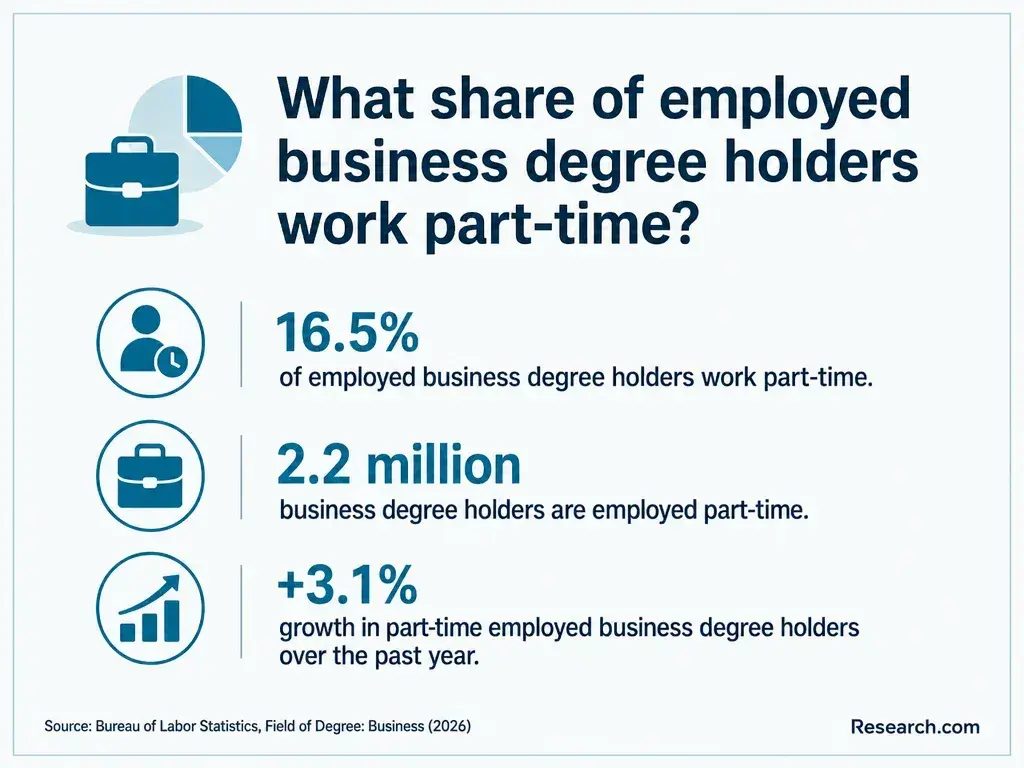
Completion time depends on the credits that apply to the degree, course sequencing, enrollment pace, and the availability of required classes. A part-time schedule may protect current income but extend the period in which you pay fees and cover living expenses. Faster study may shorten that period but require fewer work hours or more borrowing during enrollment.
Request a term-by-term plan that identifies prerequisites and the next offering of each required course. If you are comparing accelerated online business degree programs, test the proposed workload against your work schedule and calculate total cost across all terms - not just the advertised time to finish.
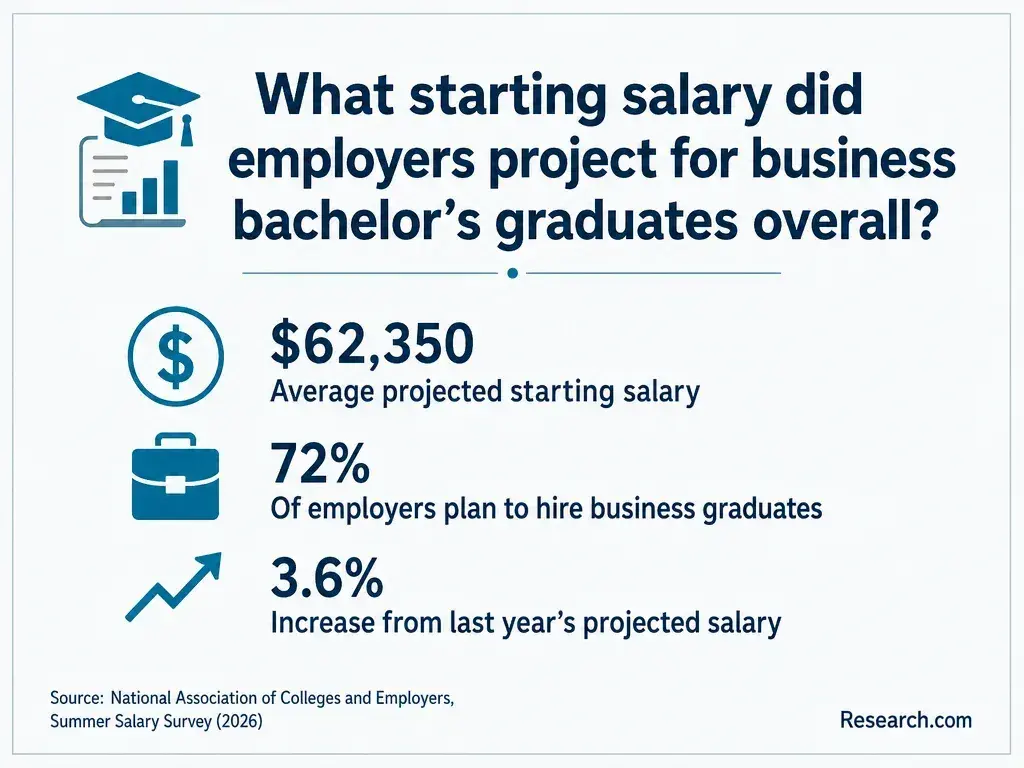
The degree can support applications for business-related roles, but job duties and experience requirements differ. Graduates may pursue coordinator or specialist work in operations, marketing, HR, or supply chain; management roles usually require demonstrated responsibility beyond the degree. Relevant work experience and internships may strengthen an application, but neither ensures a particular salary.
For context, the US Bureau of Labor Statistics reports a $78,760 median annual wage for market research analysts in May 2025 and projects 7% employment growth from 2025 to 2035. That is an occupation-wide median, not a starting wage for business administration graduates. Use local postings for attainable roles - and your own experience - to stress-test a loan payment. If supply chain is your target, an affordable supply chain degree planning guide can help you compare a focused degree with a general business path before borrowing.
Does Business Administration Require Licensure or Professional Certification?
A general BS in Business Administration does not itself require an occupational license. Some careers you might pursue have separate rules: CPA licensure, for example, is governed by state accountancy boards, while particular financial-services jobs may require licenses. Voluntary credentials can have their own education and experience requirements; a course or concentration does not award the credential.
Check the requirements for your intended job before paying for extra coursework. If your aim is project coordination rather than a specific certification, compare employer requirements with degree costs and the option to finish project management studies with transferred college credits. The least expensive relevant route may be experience or targeted training rather than another full degree.
Other Things You Should Know About Business Administration
Not automatically. Accept only what your verified budget requires, and check whether you can reduce or decline a loan. Keep a modest allowance for irregular essential expenses rather than relying on the maximum offer as a spending target.
Budget for the payment date, not just the promised amount. Ask about eligible courses, grade rules, caps, employment conditions, and whether you must pay the school before reimbursement arrives.
Treat a higher salary as a possibility, not a repayment plan. Test affordability using pay for jobs you could plausibly obtain with your current experience and the degree.
Contact the financial-aid office promptly about changed circumstances and available options. Before dropping courses or taking leave, ask how the change affects your bill, aid eligibility, and loan repayment status.
- Understanding College Costs | studentaid.gov https://studentaid.gov/resources/prepare-for-college/students/choosing-schools/consider-costs
- Cost of Attendance (Budget) | 2025-2026 Federal Student Aid Handbook https://fsapartners.ed.gov/knowledge-center/fsa-handbook/2025-2026/vol3/ch2-cost-attendance-budget
- Your financial path to graduation | consumerfinance.gov https://www.consumerfinance.gov/paying-for-college/your-financial-path-to-graduation/
- Fast Facts: Undergraduate graduation rates (40) | ed.gov https://nces.ed.gov/fastfacts/display.asp
- Tuition & Fees | Bursar | Chicago State University https://www.csu.edu/financialoperations/bursar/tuition/
- College Student Monthly Budget: How Much You Really Need | About the University of Cincinnati https://www.uc.edu/blog/college-student-budget-monthly.html
- Comparing Federal and Private Loans | Dickinson College https://www.dickinson.edu/info/20081/financial_aid/4623/comparing_federal_and_private_loans
- 2024-25 Tuition and Fees Report | schev.edu https://www.schev.edu/research-publications/reports-publications/2024-25-tuition-and-fees-report
- Comparing Private Student Loans | uillinois.edu https://blogs.uofi.uillinois.edu/view/7550/54213092
- Tuition and Fees | University of Illinois Chicago https://registrar.uic.edu/financial-matters/tuition-and-fees/