2027 A Second BS in Business Administration After a Bachelor's in Psychology: Credits, Cost, and Alternatives
Audited and Verified:
Our Editorial and Data Verification Process
Research.com uses government datasets, official education statistics and primary institutional information to support its career and degree guides. Our review process checks factual accuracy, occupational definitions, source dates and the requirements associated with the credentials discussed.
How This Article Was Fact-Checked
Our editorial team verifies salary estimates, employment projections, education requirements and program information against original data providers and official organizations. Salary figures are checked against the relevant occupational definitions and reporting periods. Information about licensure, accreditation and required in-person training is reviewed separately.
Fact-checked and verified on:

Co-Founder and Chief Data Scientist
A psychology bachelor's can provide useful preparation for business work, but it may leave gaps in accounting, finance, and operations. A second BS in Business Administration could fill those gaps - at a cost that depends heavily on how your first degree applies to the new program. This guide is for psychology graduates considering a career change or a more formal business qualification. It explains how to evaluate remaining credits, total cost, alternatives, and career fit before committing to another undergraduate degree.
Key Things You Should Know
- A completed psychology degree does not mean starting college over, but only an official degree audit can show which prior credits satisfy business requirements.
- Many bachelor's programs require around 120 semester credits in total; the useful figure for a second-degree applicant is the smaller, school-specific number still required, including any residency minimum.
- A second BS is most compelling when a target role calls for substantial undergraduate business coursework; for a narrower skill gap, targeted courses, experience, or graduate study may cost less and take less time.
Is a second bachelor's in business administration worth pursuing after psychology?
It can be worth pursuing if you need a broad foundation in business functions and the school will apply enough of your psychology coursework to make completion practical. Psychology study may already have strengthened your research, statistics, communication, and understanding of behavior. A business degree adds structured work in areas such as accounting, finance, operations, and organizational decision-making.
Start with the role you want, not the degree title. A psychology graduate seeking an operations or HR-support role may need demonstrable business skills and relevant work experience more urgently than a second credential. Someone changing into a function that requires several sequenced business courses may benefit more from the full curriculum. For a project-focused goal, compare the proposed degree with economical project management education online and with opportunities to document project work.
Consider the second BS when its remaining courses directly close identified gaps, its recruiting or applied-learning opportunities are accessible to second-degree students, and its total cost fits your likely career path. Reconsider if most required courses repeat skills you already have or if the target employer values function-specific experience more than another bachelor's.
How many credits are required for a second business administration bachelor's degree?
There is no universal second-degree credit requirement. Many bachelor's degrees are built around roughly 120 semester credits, but a school may waive completed general education requirements while still requiring its business core, prerequisites, upper-division courses, and a minimum number of credits earned at that institution. Some schools also set a separate minimum for the second degree.
Accepted credit is not the same as applied credit. A psychology statistics course might satisfy a business quantitative requirement at one school but count only as an elective at another. The same distinction applies to economics, communication, and prior mathematics courses. Ask for a written degree audit that separates general education, business core, concentration, electives, and residency requirements.
To estimate the calendar time, check the order and availability of accounting, finance, and capstone courses - not just the credits left. A course offered infrequently can delay graduation even when the remaining credit count is modest. Use ranked US colleges for faster business degree completion to identify programs to investigate, then request an individual evaluation before relying on any advertised timeline.
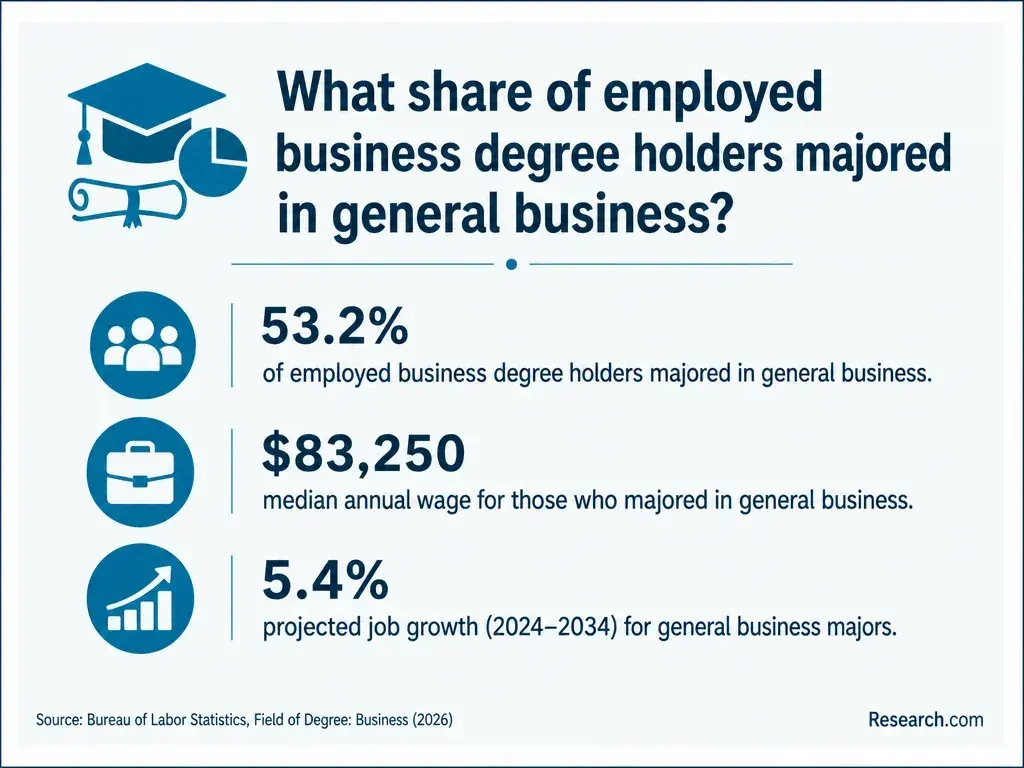
How much does a second business administration bachelor's degree cost?
The relevant price is the cost of your remaining requirements, not the advertised price of a full bachelor's degree. For per-credit tuition, estimate remaining billable credits multiplied by the applicable rate, then add mandatory fees, books or software, and any travel or proctoring costs. For term-based pricing, ask how course sequencing affects the number of terms you must pay for.
This comparison shows why two programs with similar tuition rates can produce different bills. Enter figures from each school's written audit and published charges rather than treating advertised starting prices as personal estimates.
| Cost factor | What to compare between schools |
| Required coursework | Credits that actually remain after prior courses are applied, including residency requirements |
| Tuition and fees | Per-credit or per-term charges, plus mandatory technology and other fees |
| Time costs | Course availability, work hours reduced, and any delay before applying for target jobs |
| Funding | Confirmed aid eligibility, employer reimbursement rules, and any borrowing needed before reimbursement |
Federal aid deserves particular attention: having a bachelor's can affect eligibility for certain grants, while loan eligibility depends on the student's circumstances and applicable limits. Confirm your options with each financial-aid office. To screen possible schools, compare business administration tuition and completion time, then calculate your own net cost using the official audit and aid offer.
The best alternative depends on whether you need broad business foundations, a specific skill, or access to a particular hiring pathway. The following options are not interchangeable; compare them against actual job postings and the coursework you have already completed.
| Pathway | Better fit when | Main limitation to check |
| Targeted undergraduate courses or certificate | You need accounting, analytics, or another defined skill rather than another degree | May not satisfy a job's stated degree preference or provide recruiting access |
| Relevant work, internship, or supervised project | You already meet educational requirements but lack evidence of business tasks | Access and responsibilities vary; participation does not automatically earn academic credit |
| MBA or specialized master's | Graduate-level study matches your goal and you meet the program's preparation requirements | Cost, prerequisites, and fit for career entry differ by program |
| Second, function-specific bachelor's | A substantial curriculum in HR, accounting, or another function fits your target better than general business | Transfer applicability and professional eligibility require separate checks |
For example, psychology graduates drawn to people operations can use understanding human resources degree levels to distinguish undergraduate HR study from graduate pathways. Neither an HR course nor a general business degree automatically awards an HR certification. If the goal is simply to move into an adjacent coordinator role, applying while building spreadsheet, budgeting, and process skills may be more direct than enrolling in another degree.
Schools set their own policies. A completed bachelor's and official college transcripts are common starting points, but a program may have GPA standards, business-major admission rules, prerequisite courses, or limits on admitting second-degree students. Prior psychology study does not by itself bar admission; nor does admission guarantee that particular courses will satisfy the new major.
Before applying, ask admissions whether second-bachelor's applicants are eligible for the specific BS in Business Administration, then ask the business department about prerequisites and the registrar or transfer office about course equivalencies. Submit syllabi when a statistics, economics, or other potentially relevant course needs individual review. If applications have fees, you can compare no-fee college applications, but fee savings should not outweigh a poor credit evaluation or program fit.
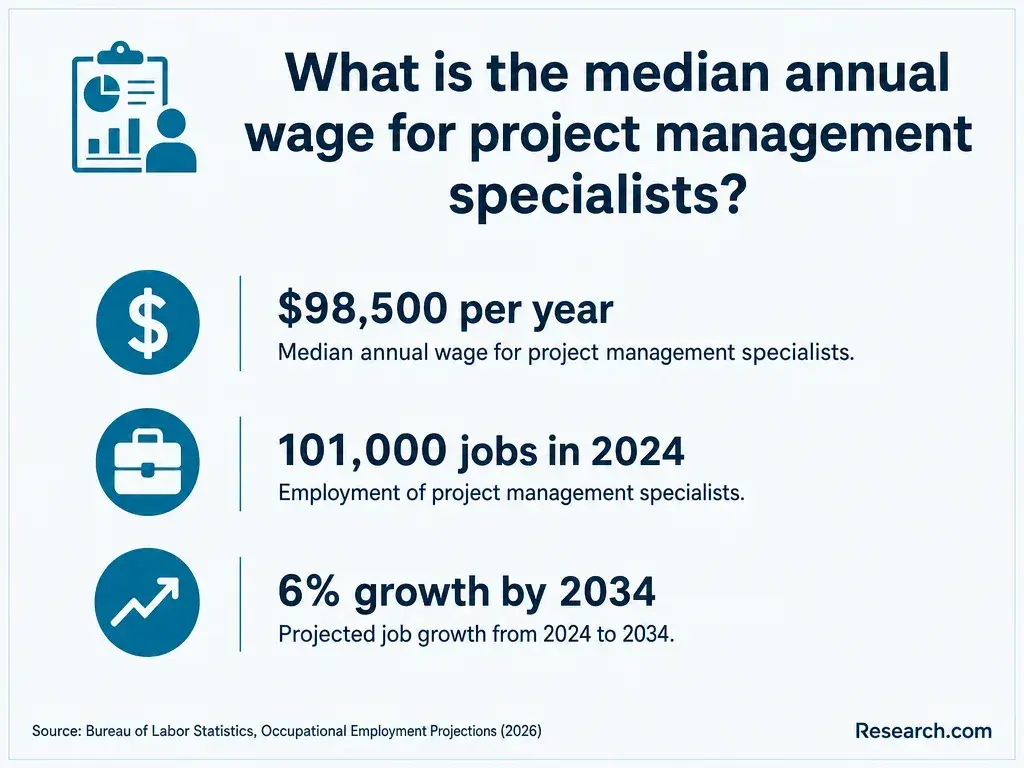
A BS in Business Administration commonly combines a general business core with electives or an official concentration. For a psychology graduate, the most consequential new work may be financial and managerial accounting, finance, economics, operations, marketing, and business analytics. Statistics or communication from the first degree may help, but only the receiving school can determine whether those courses replace requirements.
Look beyond course titles. A finance course may require prior accounting, while an analytics course may expect spreadsheet or quantitative preparation. Ask whether you can complete a relevant project, internship, or capstone and whether second-degree students can access it. A collection of supply chain electives, for example, is not necessarily a named concentration. If that function is your goal, planning an affordable supply chain education route can help frame the comparison; confirm the actual curriculum and credential on each school's catalog.
Neither format is inherently better. Online study can reduce commuting and expand program choice, while campus study may make it easier to attend recruiting events, meet classmates, or use local employer connections. The deciding issue is whether the required courses and applied opportunities work with your location, schedule, and target role.
Ask online programs about live sessions, group assignments, exam arrangements, deadlines, campus visits, and internship rules. Ask campus programs whether evening or part-time sections are reliably available. Advertised speed is not the same as a feasible schedule: accelerated business education for working adults may shorten the calendar only if the necessary courses are offered in sequence and you can sustain the workload.
First, confirm the institution's current accreditation and the accreditor's recognized status using the institution's disclosures and the U.S. Department of Education's accreditation information. Then check whether the business school claims additional accreditation from AACSB, ACBSP, or IACBE - and whether its published scope covers the specific undergraduate program. Institutional and business-program accreditation are different claims.
Accreditation alone does not establish that a second degree is a good purchase. Request the current catalog, a written degree audit, required-course schedules, second-degree advising policies, and any clearly defined completion or career outcomes. When researching FAFSA-accepting colleges for business administration students, verify both the school's aid participation and your individual eligibility; a school's ability to process FAFSA does not mean every applicant qualifies for every form of aid.
Psychology graduates may be able to build on research, interviewing, communication, and behavior-related skills in HR, training, market research, customer experience, or operations support. Business coursework can add the financial, analytical, and organizational context needed for particular tasks. Entry routes depend on the job description and the evidence you can show - not simply on earning a second diploma.
For HR-support work, look for experience with records, recruiting coordination, employee communication, and appropriate handling of sensitive information. For market research, demonstrate survey design, data interpretation, and a clear account of what findings do and do not establish. For operations or project coordination, show scheduling, process documentation, spreadsheet work, and stakeholder follow-through. If HR is the clear target, compare human resources bachelor's credit transfer options with a general business program before choosing the second degree.
These are possible entry paths, not promises of placement. Management roles typically require demonstrated responsibility and results beyond introductory coursework.
What salaries and job outlook can business administration graduates expect?
There is no single salary for a business administration graduate, especially one entering business from psychology. Occupation-specific figures are more useful, provided they are not mistaken for starting offers. The U.S. Bureau of Labor Statistics reports the following national occupation-wide medians for May 2025 and projected employment changes for 2025-2035.
| Occupation | Median annual pay, May 2025 | Projected growth, 2025-2035 |
| Human resources specialist | $75,940 | 6% |
| Market research analyst | $78,760 | 7% |
Both occupations have projected growth above the roughly 3.5% national average, but their medians include workers with varying experience, education, locations, and employers. Neither figure predicts a new second-degree graduate's pay. Compare local job requirements and likely entry offers with the degree's full cost and time out of work. Fast-track bachelor's degree options may reduce time to completion, but speed has financial value only when the credits apply, the schedule is manageable, and the resulting qualification serves your target jobs.
Other Things You Should Know About Business Administration
Your résumé can list both degrees and their institutions. Employers generally evaluate the qualifications and experience relevant to the role; you do not need to describe the business credential as a "second" bachelor's unless an application asks.
Yes, if you meet the posting's requirements. Label an unfinished degree accurately, include an expected completion date only if reasonably supported, and emphasize relevant coursework and work examples.
Potentially. A public or properly authorized project can show research and analysis skills, but describe its original purpose accurately. Do not present psychology findings as business results or share restricted participant data.
No. It may broaden your options, but psychology-related roles have different requirements. If you later pursue a licensed psychology profession, check that profession's graduate education and state licensing rules separately.
- Student Eligibility for Pell Grants | ed.gov https://fsapartners.ed.gov/knowledge-center/fsa-handbook/2024-2025/vol7/ch1-student-eligibility-pell-grants
- Second bachelor's degree | Admission | ASU https://admission.asu.edu/apply/second-bachelor-degree
- How Many Credits Do You Need to Graduate College? | snhu.edu https://www.snhu.edu/about-us/newsroom/education/how-many-credits-to-graduate-college
- Second Degree Students - SAS Academic Advising https://sasundergrad.rutgers.edu/incoming-students/non-traditional-students-incoming/second-degree
- Eligibility Requirements - Office of Student Financial Aid https://financialaid.iastate.edu/getting-started/qualifying-for-aid/eligibility-requirements/
- Guidelines for Second Bachelor's Degree | towson.edu https://catalog.towson.edu/undergraduate/admissions/undergraduate-admissions/guidelines-second-bachelors-degree/
- What kind of aid am I eligible for as a second-degree student? | unc.edu https://studentaid.unc.edu/faq/what-kind-of-aid-am-i-eligible-for-as-a-second-degree-student/
- Second Bachelor's Applicants - Undergraduate Admissions | Illinois https://www.admissions.illinois.edu/second-bachelors/
- Degree Requirements | Paul Merage School of Business https://merage.uci.edu/programs/undergraduate/degree-requirements.html
- Apply as a Second Degree Student | wisc.edu https://admissions.wisc.edu/apply-as-a-second-degree-student/