2027 Choosing a BS in Business Administration for Business Roles in Real Estate Brokerages
Audited and Verified:
Our Editorial and Data Verification Process
Research.com uses government datasets, official education statistics and primary institutional information to support its career and degree guides. Our review process checks factual accuracy, occupational definitions, source dates and the requirements associated with the credentials discussed.
How This Article Was Fact-Checked
Our editorial team verifies salary estimates, employment projections, education requirements and program information against original data providers and official organizations. Salary figures are checked against the relevant occupational definitions and reporting periods. Information about licensure, accreditation and required in-person training is reviewed separately.
Fact-checked and verified on:

Co-Founder and Chief Data Scientist
A real estate brokerage needs people who can manage budgets, support agents, coordinate transactions, market services, and improve operations. A BS in Business Administration can build those skills, but it is not the same as a real estate license - and not every business program prepares students equally well for brokerage work. This guide is for prospective and returning students considering business roles inside brokerages. It explains which roles the degree can support, what to look for in a program, and when licensing, experience, or a more targeted education path matters more.
Key Things You Should Know
- A BS in Business Administration is most useful for brokerage operations, marketing, finance-support, and people-management pathways when its coursework includes relevant projects and opportunities to gain industry experience.
- The degree does not itself grant a real estate broker license; state licensing authorities set separate education, experience, examination, and other requirements.
- For salary context, the U.S. Bureau of Labor Statistics reports a May 2025 median of $78,760 for market research analysts - an occupation-wide figure, not a starting salary or a brokerage-specific outcome.
What Is a BS in Business Administration for Real Estate Brokerage Careers?
A BS in Business Administration is an undergraduate degree covering functions such as accounting, marketing, management, operations, and business analysis. In a brokerage, those functions support the organization behind property transactions: agent onboarding, office budgets, lead-generation processes, vendor relationships, and customer experience. A brokerage-focused path is usually built through electives, projects, internships, or relevant employment rather than through the degree title alone.
Choose the degree for the work you want to do. A student aiming to improve brokerage operations may benefit from a broad business core and an operations project. Someone focused on recruiting and employee support might compare it with college pathways into human resources. An aspiring agent or licensed broker should treat state licensure and supervised industry experience as separate priorities, even if a business degree would help with running a firm later.
Does a Business Administration Degree Qualify You for Real Estate Broker Licensure?
No. A business administration degree does not automatically qualify its holder for a real estate broker license. Each state's real estate licensing authority determines the applicable coursework, examination, experience, application, and renewal rules. A state may recognize particular college coursework under its rules, but students should not assume that a business major - or a course labeled "real estate" - satisfies a licensing requirement.
Check the rules for the state where you intend to practice, including whether you must first hold a salesperson license and document qualifying experience. Ask the licensing authority whether any proposed college course counts before enrolling in it for that purpose. Admission to a degree is a different decision: academic eligibility for business administration degree study does not establish professional licensing eligibility.
What Careers Can You Pursue With a Business Administration Degree in Real Estate?
The best entry route depends on what you have already done. Customer-service experience can support agent-services or transaction-support applications; accounting experience may fit office budgeting; and digital marketing work can translate to campaign coordination. A degree helps explain business decisions, but employers will also look for evidence that you can carry out the tasks.
The following distinctions help separate accessible support work from roles that generally require deeper experience or a separate license.
| Brokerage role | Typical work | What to demonstrate |
| Operations or transaction coordinator | Track workflows, schedules, documents, and handoffs | Process organization, accuracy, and appropriate handling of client information |
| Marketing coordinator | Coordinate campaigns, listings-related materials, and reporting | Campaign samples, spreadsheet skills, and awareness of advertising rules |
| Agent-services or recruiting coordinator | Support onboarding, communication, and training logistics | Service experience, discretion, and reliable follow-through |
| Office or operations manager | Oversee staff, budgets, vendors, or office performance | Substantial relevant responsibility and supervisory readiness, not just a degree |
| Licensed salesperson or broker | Perform activities governed by state real estate law | The appropriate state license and any required experience |
Returning students interested specifically in brokerage recruiting or staff support can also investigate human resources bachelor's credit transfer options. Request an official evaluation: credits a school accepts may not satisfy its major requirements.
Start with the brokerage decisions you want to support, then inspect required courses, electives, and assignments. Accounting and managerial finance help with budgets and cash-flow awareness; marketing and analytics help evaluate campaigns; operations and information systems help improve transaction workflows; and management and business law support responsible staff and vendor decisions. Real estate law and transaction practice may require separate, state-specific study.
Look beyond course names. A useful applied assignment might ask students to map a transaction-support process, identify delays, and propose measures for improvement using authorized or fictional data. It should not require access to confidential client records. If you are transferring from another major, ask whether prior project or operations courses meet business requirements; guidance on transfer credit evaluations for project management majors illustrates why accepted credits and credits applied to a major are different questions.
Online and campus-based degrees can teach the same business subjects, but their practical fit differs. Online study may make it easier to keep a brokerage job and use workplace observations in assignments. Campus study may provide easier access to local recruiting events, faculty, and peers. Neither format guarantees an internship, a real estate industry connection, or a schedule that fits your work.
Before choosing, check live-session requirements, group-meeting times, examination arrangements, course availability, and whether projects or internships require an approved site. Brokerages can be busiest when clients are available, so evening and weekend obligations matter. Online business degrees with compressed terms may shorten the calendar but concentrate deadlines; compare the actual weekly workload with your job schedule rather than treating "online" as "self-paced."
First, verify that the institution holds recognized institutional accreditation. Then check whether the business school or specific program has applicable AACSB, ACBSP, or IACBE accreditation, and confirm the accreditor's scope rather than assuming every business degree at the institution is covered. Business accreditation can be a useful quality signal, but it does not confer a real estate license or prove that graduates obtain brokerage jobs.
Use the same checks when reviewing accelerated bachelor's program comparisons. Confirm the exact degree awarded, the current catalog, who teaches required courses, and whether the program offers relevant electives and career support. A shorter advertised timeline is less useful if a needed course is unavailable when you can take it.
Requirements vary by institution and by whether you apply as a first-year or transfer student. Schools commonly request prior academic records; some business majors also have separate entry standards or require preparatory mathematics, economics, or accounting courses. Previous study outside business does not automatically rule you out, but the school must determine how those credits apply.
Ask admissions for the entry requirements and the business department for its major requirements. If you have college credit, request a degree audit showing what remains in general education, the business core, and any concentration. If you are comparing business administration with a project-focused major, assess financing separately: college aid options for project management bachelor's applicants may help frame questions about aid, but eligibility and awards depend on your chosen institution and circumstances.
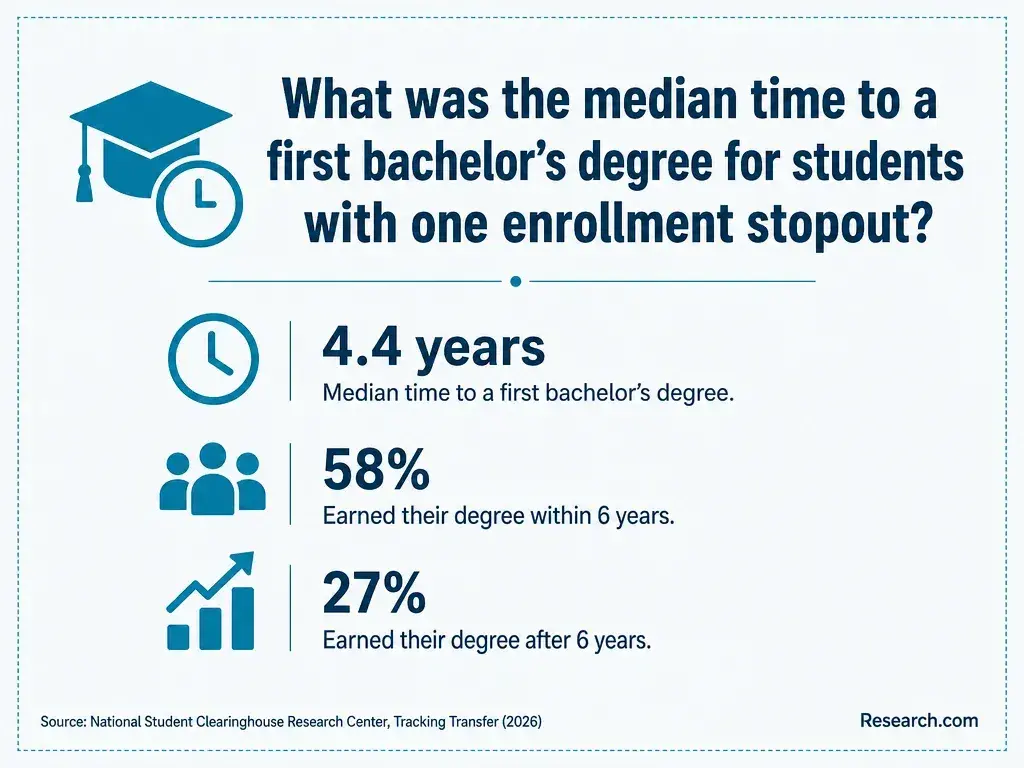
A traditional full-time bachelor's path commonly spans four academic years; transfer credit, part-time enrollment, course sequencing, and school residency rules can change the time remaining. Do not calculate a completion date from the number of accepted credits alone. A required course offered infrequently can delay graduation even when many credits transfer.
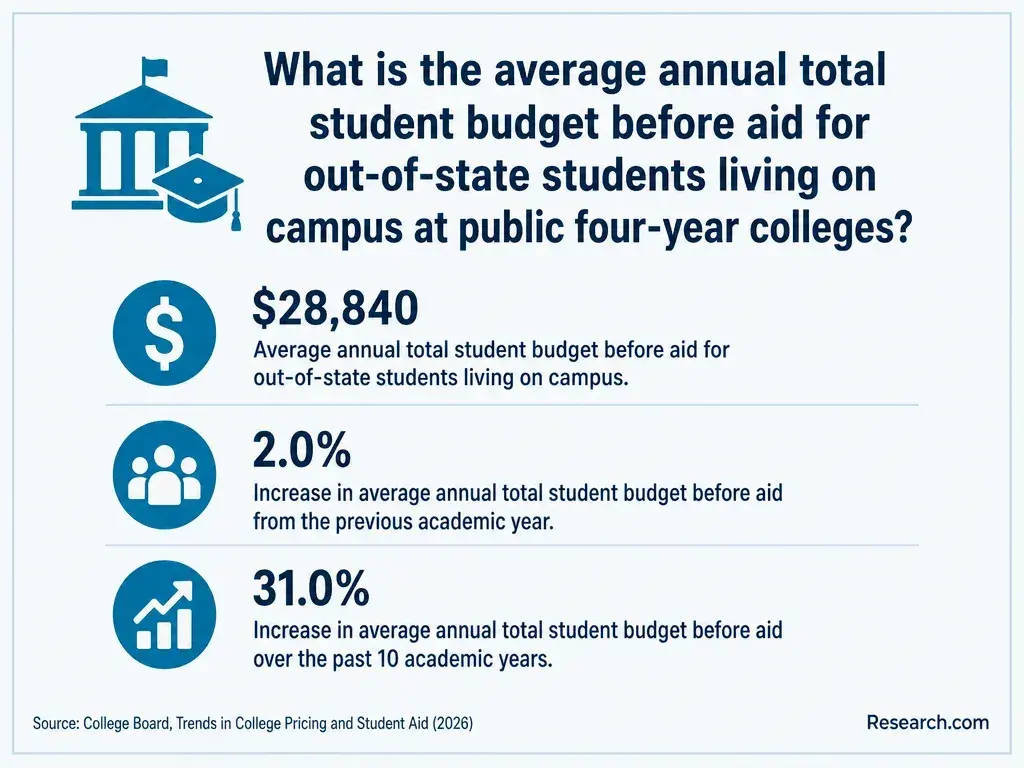
Compare schools using an individualized remaining-course plan and written cost estimate. Include tuition, mandatory fees, books or software, commuting or technology expenses, and earnings you might give up to study. Ask when financial aid or employer reimbursement is paid, not just whether you may qualify. Online business administration school cost comparisons are a starting point, but your cost depends on the credits that apply and the courses you still need.
There is no single salary for brokerage employees with a business degree. Pay depends on the occupation, location, employer, experience, and whether compensation includes commissions or incentives. The Bureau of Labor Statistics reports a May 2025 median annual wage of $78,760 for market research analysts. That figure covers workers across industries and experience levels; it is neither an entry-level brokerage marketing salary nor an earnings estimate caused by earning this degree.
For a personal return-on-investment decision, compare local postings for the specific role you can realistically enter with your current experience. Then weigh likely pay against the remaining degree cost and time. Affordable business education options online may reduce the education side of that comparison, but a lower advertised price matters only if the program meets your academic and career needs.
What Is the Job Outlook for Real Estate Brokerage Careers?
Brokerage hiring is shaped by local property-market conditions and the work a firm needs done. National projections for a related occupation should not be mistaken for a forecast of openings at local brokerages. For one relevant function, the Bureau of Labor Statistics projects 7% employment growth for market research analysts from 2025 to 2035. That suggests continued demand for analytical marketing skills across industries, not guaranteed growth in brokerage marketing jobs.
Use outlook data alongside local job postings: note which employers request real estate experience, which roles require a license, and which software or reporting skills recur. Do not rush into a program solely because a projection looks favorable. If speed matters, compare shorter undergraduate business programs across the US against their course schedules, applied opportunities, and your realistic time to completion.
Other Things You Should Know About Business Administration
No. Relevant coursework, work samples, and brokerage experience can be more useful than a concentration label. Check whether the concentration adds courses that serve your target role without delaying graduation.
Possibly, but only if your institution offers an applicable internship, work-based learning, or prior-learning process and approves your specific work. Employment alone does not award credit.
A process map or sample performance dashboard can show how you organize and interpret information. Use fictional or properly authorized data, label assumptions, and remove client and company-confidential details.
It depends on your education and goal. An MBA is a graduate degree, while a BS is an undergraduate credential. Check the qualifications for your target role before assuming either degree is necessary; targeted training or greater responsibility at work may be more direct.
- Requirements to Apply for a Real Estate Broker License - DRE https://www.dre.ca.gov/examinees/requirementsbroker.html
- The Role of Internships in Business Administration Programs | Campus https://campus.edu/blog/business/the-role-of-internships-in-business-administration-programs
- Business Administration - Craig School of Business | California State University, Fresno https://craig.fresnostate.edu/advising/degprog/businessadminmajor.html
- Real Estate | LACC https://www.lacc.edu/academics/aos/real-estate
- 13 careers to pursue in real estate | FIU College of Business https://business.fiu.edu/academics/graduate/insights/posts/13-careers-to-pursue-in-real-estate.html
- Launch a Real Estate Career With a Business Degree | Purdue Global https://www.purdueglobal.edu/blog/business/launch-real-estate-career-bachelors-business-administration/
- The Importance of Internships for Business Students | The Citadel Today http://today.citadel.edu/importance-internships-for-business-students/
- A Career in Real Estate | Lied Center for Real Estate https://liedcenter.unlv.edu/student-engagement/career-in-real-estate/
- California Real Estate Broker vs Salesperson | revei.com https://www.revei.com/guide/brokervssalesperson
- Choosing a Business Degree: Accelerated Programs & Career Guide | study.com https://study.com/college/online-degrees/choosing-a-business-degree.html