2027 Is an Online BS in Business Administration the Right Next Step for Medical Practice Administrators?
Audited and Verified:
Our Editorial and Data Verification Process
Research.com uses government datasets, official education statistics and primary institutional information to support its career and degree guides. Our review process checks factual accuracy, occupational definitions, source dates and the requirements associated with the credentials discussed.
How This Article Was Fact-Checked
Our editorial team verifies salary estimates, employment projections, education requirements and program information against original data providers and official organizations. Salary figures are checked against the relevant occupational definitions and reporting periods. Information about licensure, accreditation and required in-person training is reviewed separately.
Fact-checked and verified on:

Co-Founder and Chief Data Scientist
Medical practice administrators balance staffing, budgets, patient access, and day-to-day operations. If you are already doing some of that work, an online BS in Business Administration may help you qualify for roles that require a bachelor's degree and strengthen skills you use on the job. But a general business degree is not always the most direct choice for a healthcare-specific goal.
This guide compares the degree with practical alternatives and shows how to assess its curriculum, schedule, cost, and likely career value before enrolling.
Key Things You Should Know
- An online BS in Business Administration is most useful when a target practice-administration role requires a bachelor's degree and you need broader finance, people-management, or operations skills.
- For a specifically healthcare-focused role, compare the business degree with healthcare administration education and targeted training; neither a degree nor an online format guarantees advancement or schedule flexibility.
- Judge value by credits that actually satisfy graduation requirements, total remaining cost, and the responsibilities you could take on afterward - not by an occupation-wide manager salary.
Is an online BS in Business Administration right for medical practice administrators?
It may be the right next step if a bachelor's degree is a barrier to the role you want and you need stronger general business skills. A BS in Business Administration typically combines accounting, finance, management, operations, and quantitative coursework. It can build on experience in scheduling, billing oversight, staffing, or vendor coordination. It does not, by itself, establish expertise in healthcare reimbursement, clinical workflows, or regulatory compliance.
The best choice depends on the gap between your present responsibilities and the job you want. These options address different gaps:
| Path | Strongest fit | Limitation to check |
| BS in Business Administration | A bachelor's requirement or a need for broad financial and operational preparation | Healthcare-specific coursework may be limited |
| Healthcare administration bachelor's | A goal centered on healthcare systems, policy, reimbursement, and service delivery | Business-core depth varies by program |
| Targeted training or employer development | A specific skill gap when a new degree is not required | May not satisfy a bachelor's requirement |
If you already have a bachelor's degree, first ask whether the employer wants any bachelor's degree, healthcare knowledge, or documented leadership results. A second undergraduate degree could add substantial time without resolving the actual gap. If leadership development is the priority rather than a bachelor's requirement, accelerated organizational leadership college programs offer another curriculum to compare, but advertised speed is not an individual completion estimate.
What can medical practice administrators do with a business administration degree?
Practice administrators may coordinate front-office teams, monitor budgets and revenue-cycle reports, improve appointment access, manage vendors, or support expansion across sites. A business degree can help them analyze costs, communicate proposals, and supervise processes more effectively. Whether it opens a higher-level position depends on the employer's requirements and evidence of successful responsibility - not the degree title alone.
That distinction matters when considering adjacent careers. Someone who has led a scheduling-system rollout may be able to document project planning and stakeholder coordination; someone who has negotiated supply purchases may have relevant procurement experience. Neither task automatically qualifies the person for a specialist job. If purchasing and distribution, rather than clinic operations, is your longer-term goal, supply chain program tuition time and earnings context can help frame a more specialized comparison.
Build a record of the decisions you made and the measures you monitored, while protecting patient and employer information. A sanitized process map or approved project summary may show more about your readiness than a broad claim that you "managed operations."
What education is required to become a medical practice administrator?
There is no single degree requirement for every medical practice administrator position. Requirements vary with practice size, responsibility, and employer: some roles emphasize substantial office or revenue-cycle experience, while others require or prefer a bachelor's degree in business, healthcare administration, or a related field. Larger or more complex leadership roles may call for additional experience or graduate education.
Start with actual postings for the role and market you are targeting. Separate a required bachelor's degree from a preferred major, then note any expectations involving electronic health records, payer processes, budgeting, supervision, or compliance. If you have an associate degree and want a project-focused position instead, project management bachelor's routes for associate degree graduates provide a different degree-completion comparison; ask each school which prior courses would satisfy its major.
A business degree does not confer a clinical license or replace training on healthcare privacy and practice-specific rules. The useful question is which qualification the next job requires and which skills you can already demonstrate.
An online degree can make attendance possible without regular travel to campus, but online does not necessarily mean self-paced. Courses may have scheduled discussions, group presentations, proctored exams, or firm weekly deadlines. Campus programs may offer easier in-person contact with classmates and faculty, but travel and fixed meeting times can be difficult alongside practice hours.
Compare the actual obligations of required courses, not just the program's delivery label. Ask whether live sessions are mandatory, when exams take place, how group work is scheduled, and whether an internship or campus visit is required. An administrator responsible for early clinic openings or urgent staffing coverage should also ask how missed assessments and temporary changes in work hours are handled. US business college rankings for online learners can help assemble possibilities, but course schedules and support policies should determine whether a program works for you.
Requirements vary, but a business core commonly covers accounting, finance, economics, management, marketing, operations, statistics, and business communication. For practice administration, managerial accounting can support budget discussions; operations coursework can help evaluate patient-flow processes; and organizational behavior can inform team supervision. Introductory courses provide tools for better decisions, not proof of specialist competence.
Look beyond course titles. Check whether electives address healthcare management or allow an approved operations project, and whether statistics and accounting courses require earlier prerequisites. A concentration is an official program component only if the school lists it as such; a few related electives do not create a healthcare or project-management credential. If you are considering a separate project-management degree for implementation work, compare total costs of project management programs against the added value of those specialized courses.
First-time and transfer applicants can face different requirements. Schools generally request evidence of prior education, while transfer applicants also need official college transcripts for a credit evaluation. Some business majors have separate admission or prerequisite rules, including requirements involving mathematics, accounting, or academic standing. The program - not a general description of online degrees - sets the applicable rules.
If you have healthcare, liberal arts, or applied associate-degree coursework, request an evaluation showing where each accepted credit applies: general education, business core, electives, or nowhere in the degree. Ask about course recency, substitutions, and credits that must be earned at the institution. Quick online bachelor's pathways may be worth exploring, but admission and a preliminary credit estimate are not confirmation of your graduation date.
The timeline depends chiefly on applicable prior credits, remaining required courses, enrollment pace, and when those courses are offered. A working administrator may prefer fewer classes per term to preserve time for clinic responsibilities. An accelerated term shortens the calendar for an individual class; it does not remove its assignments or guarantee that prerequisite courses can be taken together.
Ask an adviser for a term-by-term plan based on an official degree audit. Check whether required business courses run every term, whether a capstone must be taken last, and how a break in enrollment affects the plan. If your goal has shifted toward purchasing or logistics, compare three-year-or-less supply chain degrees separately; a published program timeline should not be applied to your record without a credit evaluation.
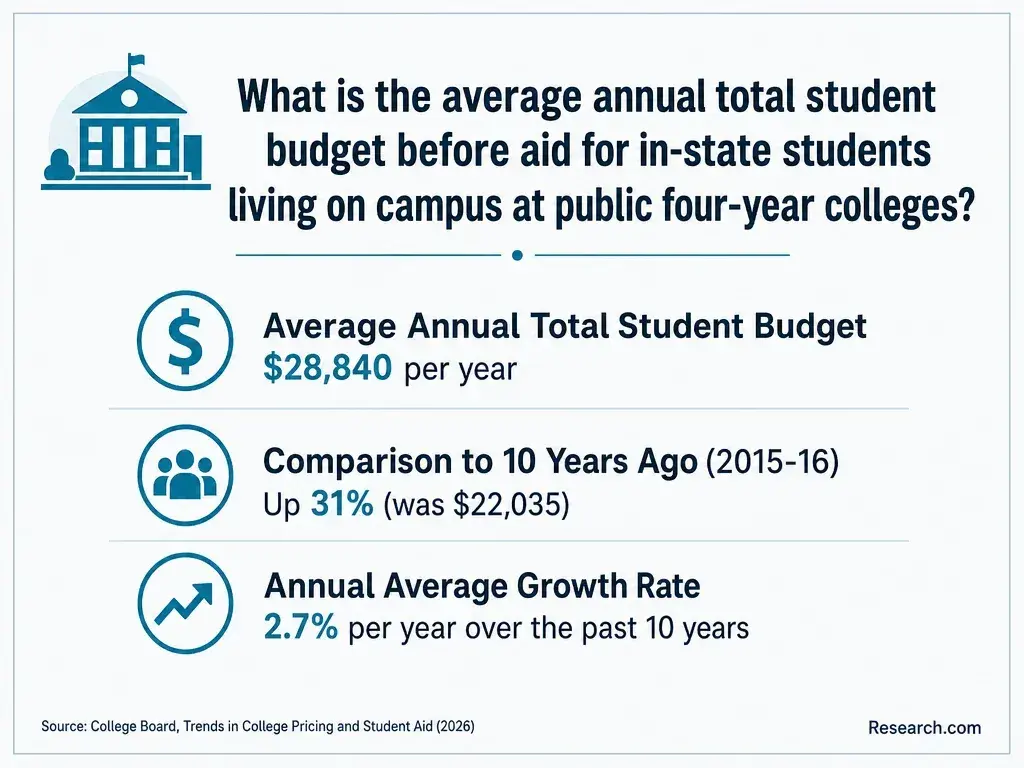
The meaningful price is the cost to finish your remaining requirements, not the advertised tuition rate alone. Request a written estimate covering tuition, mandatory fees, books or software, any proctoring or campus expenses, and the number of courses left after transfer evaluation. Part-time enrollment can also change how long you pay recurring charges.
Compare that estimate with available grants, scholarships, and employer tuition assistance. For employer benefits, verify when reimbursement is paid, any grade or continued-employment conditions, and whether you must cover tuition first. Online business degrees with lower tuition are useful candidates to investigate, but a lower rate may not produce a lower completion cost if fewer of your credits satisfy requirements. Include borrowing costs and time away from paid work in your decision.
There is no defensible single salary for a medical practice administrator with a business bachelor's degree. Pay depends on the duties, practice size, location, experience, and employer. The U.S. Bureau of Labor Statistics' medical and health services managers occupation is relevant to many healthcare management positions, but its occupation-wide median includes people with different credentials and levels of responsibility; it is not a starting salary or a degree-specific return.
For a useful comparison, collect pay ranges from local postings that match the responsibilities you could realistically qualify for, then distinguish required from preferred education. If the target role is already within reach through experience or employer training, paying for another degree may offer limited immediate financial benefit. Use that role-based comparison - not a national manager median - to judge whether budget-friendly colleges for business administration online would still represent a worthwhile investment.
How do you choose an accredited online business administration program?
Verify that the institution holds recognized institutional accreditation and that the exact online degree and any advertised concentration are offered under its current catalog. If a school cites AACSB, ACBSP, or IACBE, check the accreditor's listing and scope rather than assuming every program is covered. Accreditation is an important quality check, not evidence that graduates receive particular jobs or salaries.
Then compare programs against your practice-administration goal: an official transfer audit, relevant courses, feasible assessment times, faculty access, career support, and a complete cost estimate. Ask whether a workplace project is possible and what faculty approval and employer permission it requires before using practice information. If federal aid is part of your plan, review federal aid options at accredited business administration colleges and confirm eligibility and award details with each school's financial-aid office. Choose only after you can explain what the degree adds to your experience and what completing it will demand.
Other Things You Should Know About Business Administration
Do not upload patient records or identifiable information to a course platform. Get employer and faculty approval for the project and its data before starting; a fictional or properly approved, de-identified example may be safer.
Not necessarily. Review the syllabus for reimbursement or revenue-cycle content. If billing is your immediate skill gap, focused training and supervised practice may be more direct.
Possibly, but compare the target job's requirements with your experience first. An MBA is graduate study, not a substitute for missing hands-on practice operations knowledge, and may not be necessary for your next role.
Only if the school has an applicable prior-learning, internship, or work-based credit policy and formally approves your evidence or activities. Employment alone does not award credit.
- Cost of Attendance (Budget) | 2025-2026 Federal Student Aid Handbook https://fsapartners.ed.gov/knowledge-center/fsa-handbook/2025-2026/vol3/ch2-cost-attendance-budget
- Business Associates Frequently Asked Questions (FAQs) | hhs.gov https://www.hhs.gov/hipaa/for-professionals/privacy/guidance/business-associates/index.html
- A systematic review of outpatient billing practices - PMC - NIH https://pmc.ncbi.nlm.nih.gov/articles/PMC9134459/
- Accreditation in the U.S. | ed.gov http://www.ed.gov/laws-and-policy/higher-education-laws-and-policy/college-accreditation/accreditation-in-the-us
- Accreditation Process | AACSB https://www.aacsb.edu/educators/accreditation/accreditation-process
- Bachelor of Science in Health Services Administration | CUNY SPS https://sps.cuny.edu/academics/undergraduate/bachelor-science-health-services-administration
- Business Administration vs Healthcare Administration | Edgewood College https://online.edgewood.edu/blog/business-administration-vs-healthcare-administration-which-is-better/
- Career Outlook for Health Care Professionals | psu.edu https://hhd.psu.edu/hpa/undergraduate/career-opportunities/career-outlook-health-care-professionals
- Bachelor of Science in Healthcare Administration Online | Mount saint vincent https://online.mountsaintvincent.edu/degrees/undergraduate/bachelor-healthcare-administration/
- Policy on Awarding Academic Credit, Transfers and Substitutions | uthscsa.edu https://catalog.uthscsa.edu/generalinformation/generalacademicpolicies/policyonawardingacademiccredittransfersandsubstitutions/