2027 BS in Business Administration: Summer Availability of Required Business Classes
Audited and Verified:
Our Editorial and Data Verification Process
Research.com uses government datasets, official education statistics and primary institutional information to support its career and degree guides. Our review process checks factual accuracy, occupational definitions, source dates and the requirements associated with the credentials discussed.
How This Article Was Fact-Checked
Our editorial team verifies salary estimates, employment projections, education requirements and program information against original data providers and official organizations. Salary figures are checked against the relevant occupational definitions and reporting periods. Information about licensure, accreditation and required in-person training is reviewed separately.
Fact-checked and verified on:

Co-Founder and Chief Data Scientist
A summer class can help you finish a BS in Business Administration sooner - but only if it satisfies a remaining requirement and fits the sequence of courses you need. A school may offer accounting every summer while scheduling a required capstone only during the academic year.
This guide is for prospective, transfer, and returning students deciding whether summer availability makes a degree plan workable. You'll learn what to check in the catalog, schedule, and degree audit before relying on summer enrollment or comparing programs.
Key Things You Should Know
- Required business classes may run in summer, but availability depends on the institution, campus or online format, course rotation, enrollment, and whether you meet prerequisites.
- A summer seat helps only if the course applies to your degree audit; a 3-credit elective cannot automatically replace a required 3-credit business core course.
- Before enrolling, confirm the upcoming summer schedule and a backup plan with an adviser. A previously offered section is evidence of past availability, not a promise it will return.
What are required business classes in a BS in Business Administration?
Required business classes are courses a student must complete for the specific degree, beyond simply earning enough total credits. They may include a common business core, courses in an official concentration, and an integrative capstone. A program can also require general education, prerequisites, minimum grades, or a certain number of credits earned at the awarding institution.
The distinction matters in summer: an available business elective may move your credit total forward without clearing the requirement that controls graduation. Check how each class appears in your official degree audit, not just whether its title sounds relevant. If you are still determining which introductory courses you need, a business administration applicant eligibility checklist can help you frame questions for the program; the institution's catalog and audit govern your actual requirements.
Transfer students should be especially careful. A school may accept a previous course as elective credit without accepting it as its required accounting, statistics, or finance course. Get the applicable equivalency or substitution approved before building a summer plan around it.
Are required business classes offered during the summer?
Often, yes - but there is no universal summer schedule for a BS in Business Administration. Introductory or high-demand courses may be easier to find than upper-division concentration courses, internships, or capstones. Even a course that appears in a summer schedule may have limited seats, a minimum-enrollment threshold, or restrictions on who can register.
The following distinctions show why "summer classes available" is not the same claim as "all remaining requirements available in summer." They describe planning risks, not a guarantee about any school.
| Requirement | Why summer availability may differ |
| Common introductory business course | Demand may support more sections, though seats and prerequisites still matter. |
| Upper-division concentration course | A smaller enrollment pool may lead to a limited rotation. |
| Capstone or approved internship | Faculty supervision, standing rules, or a required sequence may restrict the term offered. |
Some business programs with accelerated online classes use shorter terms throughout the year. A faster calendar can create more entry points, but it does not establish that every required class is offered when you need it or that the workload is lighter.
How can students verify summer course availability before enrolling?
Use the catalog to identify requirements, the degree audit to identify your remaining requirements, and the registration system to see actual sections. Ask an adviser to reconcile any differences. Program descriptions and past summer schedules are useful starting points, but neither is a confirmed seat in an upcoming term.
Before committing to a program or a summer plan, work through these checks in order:
- Request a degree audit for your intended catalog year, including any evaluated transfer credit, concentration requirements, and residency rules.
- Match each remaining requirement to its course number and check the upcoming summer schedule for section, dates, format, capacity, restrictions, and prerequisites.
- Ask the department whether the course is planned every summer, offered only when enrollment permits, or subject to an upper-division rotation.
- Confirm registration dates and ask an adviser what approved alternative exists if the section fills or is canceled.
If the upcoming schedule has not been released, ask when it will become available and distinguish a department's tentative plan from a published offering. National rankings of fast-paced business bachelor's programs can identify options to investigate, but your likely completion date depends on your evaluated credits and access to the specific courses you still need.
Many programs include introductory accounting, economics, marketing, management, finance, operations, and business law or ethics. Quantitative requirements may involve statistics, spreadsheets, analytics, or information systems. An upper-division strategy course or capstone may bring these subjects together. Course names and requirements vary, so use the named school's catalog rather than treating this as a universal checklist.
For summer planning, identify which core courses feed later ones. An introductory accounting class may be required before finance; statistics may precede analytics. Taking a convenient summer marketing elective will not solve a finance prerequisite. Likewise, a general management class is not necessarily a substitute for specialized HR study. Students weighing that path can use a human resources program selection guide to distinguish broad business coverage from an HR-focused curriculum.
A course rotation is the pattern of terms in which a department expects to offer a class. Prerequisites determine when you become eligible to take it. Together, they create a critical path: the chain of requirements that could delay graduation if one class is missed. Summer is most valuable when it clears a course on that path, rather than merely adding elective credits.
For example, if accounting precedes finance and finance precedes the capstone, a summer accounting section may open later terms. But if the capstone is offered only in spring, finishing finance in summer may not change your graduation date. Ask an adviser to map the entire remaining sequence, including minimum-grade rules and whether prerequisites can be taken concurrently.
Concentration rotations can be decisive. If a required supply chain course rarely runs in summer, compare the actual course sequence with alternatives - including three-year-or-less supply chain degrees if that specialization is your goal. An advertised completion timeframe still needs to be tested against transfer evaluation, prerequisites, and scheduled sections.
Both formats may be available, but a program's overall delivery format does not guarantee that a particular required summer class is offered in that format. An online section may still have scheduled meetings, timed exams, group presentations, or fixed weekly deadlines. An on-campus section may meet more frequently than its fall or spring counterpart.
For employed students, compare the section-level schedule with work obligations before registering. Confirm time zones, attendance rules, exam arrangements, team-project expectations, and any campus visits. A shorter session compresses the same course requirements into less calendar time; it is not automatically easier to combine with full-time work. Business administration degree planning for employed applicants can help you compare broader scheduling approaches, while the current section syllabus and registration details determine the immediate fit.
Admission requirements vary by school and by entry route. First-year applicants generally need an accepted secondary-school credential; transfer applicants generally submit prior college transcripts. Some institutions admit students to the university first and require separate eligibility for upper-division business courses or the major. Mathematics, accounting, economics, GPA, and minimum-grade rules may affect that progression even when they are not conditions for initial admission.
If summer coursework is central to your plan, ask when you can register after admission and whether major-only sections are restricted until prerequisites or an internal application are complete. Submit transcripts early enough for an official credit evaluation; an informal estimate cannot confirm which business requirements remain. Application cost may also matter when comparing schools, and accredited colleges offering free online applications provide a starting point for that narrower comparison.
A bachelor's degree commonly takes about four years of full-time study from the beginning, but a transfer or returning student's timeline depends on credits applied to the degree, prerequisites, course rotations, and enrollment pace. Summer enrollment shortens completion only when it clears requirements that would otherwise postpone later courses or graduation. Taking extra credits that do not change that sequence adds cost without saving time.
Compare programs using a written estimate of remaining required credits and the school's published charges for the relevant terms. Include tuition, mandatory fees, books or software, possible travel, and any change in work hours. Ask the financial-aid office how summer enrollment, enrollment intensity, and satisfactory academic progress affect your particular aid package; do not assume that an award for fall and spring also covers summer. Business administration online programs with competitive tuition are worth comparing on total remaining cost, not price per credit alone.
A BS in Business Administration can support applications for roles in operations, marketing, HR, purchasing, and project coordination. The appropriate starting role depends on prior work, internships, technical skills, and employer requirements. Coursework alone does not confer a management position or a professional license.
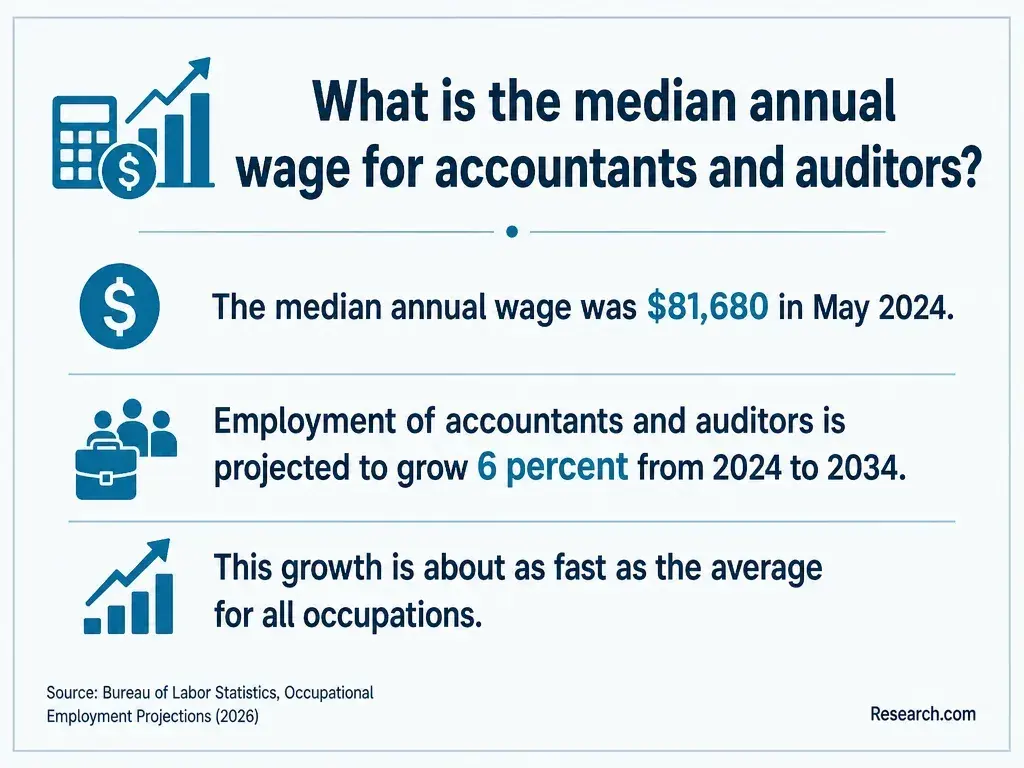
For context, the U.S. Bureau of Labor Statistics reports a May 2025 median annual wage of $75,940 for human resources specialists. That occupation-wide median includes experienced workers; it is not an expected starting salary for a new business graduate. Use occupational data to investigate a target role, then compare local postings for the skills and experience employers request.
If your goal is specifically project work, compare a broad business degree with a specialized program and the experience each pathway helps you document. A student considering the latter can also examine funding sources for a bachelor's in project management before assuming that specialization is the less costly route.
How should students evaluate accreditation and professional standards?
Check the institution's current accreditation status with its recognized accreditor. Then check separately whether its business school or the specific program is covered by AACSB, ACBSP, or IACBE accreditation, if that distinction matters to you. Institution-level and business-program accreditation have different scopes; neither confirms that a required class will run in summer.
For this decision, put scheduling evidence alongside accreditation evidence: the applicable catalog, official degree audit, upcoming course schedule, and written answers about rotations and substitutions. If federal aid is part of your plan, verify the school's eligibility and your own aid with its financial-aid office. A guide to accredited business administration programs and federal student aid can help narrow options, but program listings should not replace those direct checks. Business-school accreditation and a BS degree also do not, by themselves, establish eligibility for CPA licensure or another separate professional credential.
Other Things You Should Know About Business Administration
Possibly. Obtain written approval for the exact course equivalency before enrolling. Also ask whether the outside credits would satisfy residency, upper-division, and minimum-grade rules.
Not automatically. Internship credit usually needs advance academic approval and applies only where the degree audit permits it. Work experience alone does not replace a specified core course.
Check the program's grading policy first. A school may allow pass/fail enrollment but require a letter grade or minimum grade for the business major, a prerequisite, or transfer credit.
Not necessarily. Confirm the summer graduation application deadline, degree-audit clearance process, and degree-conferral date with the registrar before making employment or further-study plans.
- Summer 2023 Business Administration | uic.edu https://webcs7.osss.uic.edu/schedule-of-classes/static/schedules/summer-2023/BA.html
- BS In Business Administration (Major) - Academics | Montclair State University https://www.montclair.edu/academics/programs/bs-business-administration
- Courses | Summer Sessions at NC State https://summer.ncsu.edu/courses/
- Bachelor of Business Administration Degree Requirements | campbell.edu https://courses.campbell.edu/preview_program.php
- Summer Registration | New York Tech https://www.nyit.edu/students/classes-schedules-and-transcripts/register/summer/
- Business Administration | General Studies | BABA - UF Catalog https://catalog.ufl.edu/UGRD/colleges-schools/UGBUS/BAG_BABA/
- Quinlan School of Business | luc.edu https://catalog.luc.edu/undergraduate/business/
- Summer Courses | Illinois Institute of Technology https://www.iit.edu/academics/summer-courses
- Undergraduate Course Finder - UChicago Summer Session https://summer.uchicago.edu/undergraduates/undergraduate-course-finder/
- Schedule PDFs | Course Scheduling | Chicago State University https://www.csu.edu/coursebulletin/schedule_pdfs.htm