
2027 Cheapest Way to Get a Teaching Credential in Arkansas: Requirements & Certification

Co-Founder and Chief Data Scientist
The cheapest way to get a teaching credential in Arkansas depends on where you are starting: no degree, a bachelor’s degree in another field, an out-of-state license, or foreign teaching credentials. For 2026 planning, the best strategy is not simply choosing the lowest tuition program. You also need to confirm Arkansas Department of Education recognition, testing requirements, student teaching or classroom experience rules, background check costs, renewal requirements, and whether the program leads to the license you actually need.
This guide explains the lower-cost routes into Arkansas teaching, including traditional education degrees, alternative certification through the Arkansas Professional Educator Pathway, online options, reciprocity, provisional licenses, preschool and private school pathways, and subject-specific routes. It also shows where costs commonly appear, what to ask programs before enrolling, and how to avoid choosing an inexpensive option that delays licensure.
Quick answer: What is the cheapest way to become a licensed teacher in Arkansas?
For someone who already has a bachelor’s degree, the Arkansas Professional Educator Pathway is often one of the most direct lower-cost options because the program fee is about $3,000, paid in two annual installments of $1,500. For someone without a degree, the lower-cost path is usually to begin at a community college, transfer credits into an accredited bachelor’s program in education, use federal and state aid when eligible, and complete student teaching as part of the degree plan.
The cheapest route is not the same for every candidate. A future elementary teacher, preschool teacher, high school history teacher, middle school math teacher, or music teacher may face different coursework, testing, and field experience requirements. The safest low-cost choice is a state-approved program that clearly leads to the Arkansas license area you want.
Key Things You Should Know About the Cheapest Way to Get a Teaching Credential in Arkansas
- A bachelor’s degree is the usual starting point: Most public school teaching routes require a degree from an accredited institution, so choosing an affordable in-state, online, or transfer-friendly program matters.
- Student teaching should be built into the program: In a traditional education degree, supervised classroom experience is normally part of the plan, which helps avoid paying for a separate placement later.
- Praxis and other assessments can add costs: Arkansas candidates may need general, pedagogy, subject-area, or reading-related assessments depending on grade level and content area.
- Background checks are unavoidable: Fingerprinting and state and federal background checks should be included in your budget from the beginning.
- Licensure is not the final expense: Arkansas teachers must plan for ongoing professional development, including the 36 hours required each year to keep credentials current.
- How much does it cost to become a teacher in Arkansas?
- Can a foreign educator qualify for an Arkansas teaching license?
- Can I complete an Arkansas teaching credential online?
- Can I teach in Arkansas with an out-of-state license?
- How long do Arkansas teachers need to work before retirement eligibility?
- What should I do if my Arkansas teaching credential expires?
- How many credit hours are usually involved in an Arkansas teaching credential?
- How much do teachers in Arkansas make?
- What is the job outlook for teachers in Arkansas?
- What career path can Arkansas teachers follow?
- What are the cost-effective strategies for starting a preschool teaching career in Arkansas?
- What are the affordable online teaching credential pathways in Arkansas?
- What are the best affordable online bachelor’s degrees for aspiring teachers in Arkansas?
- Can supplementary certifications improve career options for Arkansas educators?
- What are the advantages of private school teaching pathways in Arkansas?
- How can I pursue a career as a history teacher in Arkansas?
- What career paths can you explore with an education degree beyond classroom teaching?
- What are the music teacher education requirements in Arkansas?
- What are the different teacher certification types and their requirements in Arkansas?
- How do I meet the kindergarten teacher credential requirements in Arkansas?
- What challenges can come up when choosing a budget-friendly Arkansas certification route?
- Are affordable Arkansas credential programs accredited and reliable?
- What are the middle school math teacher requirements in Arkansas?
- Key insights for choosing the lowest-cost Arkansas teaching credential route
Cheapest Arkansas teaching credential routes compared
Before choosing a program, match your background to the appropriate licensure route. A low advertised tuition rate can become expensive if the program does not satisfy Arkansas requirements, does not include field placement support, or forces you to retake coursework after transfer.
| Candidate situation | Likely lower-cost route | Best fit | Cost issues to check |
| No bachelor’s degree yet | Community college credits followed by an accredited bachelor’s degree in education | Students starting from the beginning who want a public school teaching license | Transfer credit policy, tuition by residency status, student teaching placement, Praxis preparation, and financial aid eligibility |
| Bachelor’s degree in another field | Arkansas Professional Educator Pathway or another state-recognized alternative route | Career changers who want to begin teaching while completing required preparation | Program fees, testing fees, background check costs, mentoring support, and whether the content area is eligible |
| Current out-of-state license | Licensure by reciprocity | Experienced teachers moving to Arkansas | $75 application fee, transcripts, background check, possible content testing, and reading assessment requirements for certain areas |
| Foreign teaching background | Credential evaluation followed by Arkansas licensure review | International educators with degrees, teaching experience, and professional documentation | NACES-related credential evaluation, TOEFL or other English proficiency requirements, application fee, testing, and background checks |
| Interested in early childhood or preschool | Early childhood education pathway, community college option, or state-supported grant route when eligible | Candidates focused on young children rather than broader K-12 certification | Degree level required by employer, state grant eligibility, fieldwork location, and long-term career goals |
| Open to private schools | Direct hiring by private institutions when certification is not required by the employer | Candidates who want classroom experience outside the public school licensure system | Salary structure, benefits, advancement, school-specific expectations, and whether the role helps with future licensure |
How much does it cost to become a teacher in Arkansas?
The total cost of becoming a teacher in Arkansas depends on your route. The largest expense is usually the degree or preparation program, but candidates also need to budget for assessments, background checks, licensure application fees, transcripts, transportation to field placements, and renewal-related professional development.
For career changers who already hold a bachelor’s degree, the Arkansas Professional Educator Pathway, commonly called ArPEP, is one of the clearest cost points to compare. The program fee is about $3,000, paid as two annual installments of $1,500. That amount covers the training and support tied to teaching while completing the pathway.
- Program fee: ArPEP costs about $3,000, with payment split into two annual installments of $1,500.
- Potential waiver: Candidates pursuing Computer Science for grades 4-12 may be able to qualify for a tuition waiver, which can reduce the total out-of-pocket cost.
- Assessment costs: Praxis subject assessments and other required exams are separate from program tuition.
- Background check costs: Fingerprinting and required screenings are additional expenses and should not be treated as optional.
For students who do not already have a bachelor’s degree, a cost-conscious plan often starts with lower-cost general education coursework at a community college, followed by transfer into an accredited bachelor’s program that is recognized for Arkansas teacher preparation. This can reduce the cost of the first two years, but only if credits transfer cleanly into the education degree.
Arkansas also has a relatively affordable living environment compared with many states. Arkansas has consistently been ranked among the top 10 states in the United States with the lowest cost of living per person, which can help candidates manage housing, transportation, and daily expenses while completing a credential.
Students should also look into grants and scholarships, including the AR Future Grant when eligible. If you are comparing nearby state options as part of your career planning, you may also want to review Oklahoma teacher certification classes and related pathways.
Can a foreigner get an Arkansas teaching license?
Yes. A foreign-trained educator can pursue an Arkansas teaching license, but the process requires documentation that shows how the applicant’s education, license, and teaching experience compare with U.S. and Arkansas standards.
The first step is usually a formal evaluation of foreign academic credentials. Applicants commonly use a recognized credential evaluation agency, such as one associated with the National Association of Credential Evaluation Services, known as NACES. This evaluation has a cost, but it is necessary because Arkansas needs to determine whether the foreign degree meets U.S. equivalency expectations.
Foreign applicants should expect to prepare an application packet for the Arkansas Department of Education. The packet may include:
- An online application and a nonrefundable fee of $75.
- Official transcripts from all relevant institutions.
- A copy of a current or expired teaching license from the applicant’s home country, with evidence of good standing for at least three years.
- Documentation of teaching experience and completed professional development, which can also matter for future compensation and career planning in areas such as child development degree outcomes.
Some applicants must also complete content-area testing and an English proficiency exam, such as the TOEFL. These requirements can increase costs, so international educators should confirm testing expectations before paying for additional coursework.
A provisional license may be possible for applicants who meet some requirements but still need to complete others. This can allow a qualified educator to begin working while finishing Arkansas-specific requirements, but candidates should verify eligibility directly with the Arkansas Department of Education before making employment plans.
Can I get my teaching credential online in Arkansas?
Yes, parts of the Arkansas teaching credential process can be completed online. However, most teacher preparation routes still require in-person field experience, student teaching, classroom observation, or employment-based teaching. An online program can reduce commuting and relocation costs, but it must be accredited and accepted for Arkansas licensure.
- Earn the required degree: Most candidates need at least a bachelor’s degree from an accredited institution. Online education programs can work if they meet Arkansas requirements.
- Complete required assessments: Certification tests, including Praxis exams, may be required. Fees for these exams can range from about $90 to $209, depending on the specific assessment.
- Verify state approval: Do not assume that any online education degree leads to Arkansas licensure. Confirm that the program is recognized by the Arkansas Department of Education before enrolling.
- Plan for local fieldwork: Even when coursework is online, student teaching or supervised practice often happens in an Arkansas school or an approved local placement.
- Use alternative routes when appropriate: Arkansas offers alternative certification options that may allow eligible candidates to teach under a provisional license while finishing requirements.
- Compare aid and payment options: Tuition for an online bachelor’s in education varies by institution, and candidates should review federal aid, scholarships, employer support, payment plans, and possible loan forgiveness eligibility.
| Online option | What can be online | What is usually not fully online | Best question to ask |
| Online bachelor’s in education | General education, pedagogy, content coursework, and some advising | Student teaching, observations, and some assessments | Will this program qualify me for Arkansas licensure in my grade level and subject? |
| Online alternative certification coursework | Training modules, assignments, coaching sessions, and some professional learning | Actual teaching placement or classroom employment | Can I teach while enrolled, and what license will I hold during the program? |
| Online test preparation | Practice exams, study guides, video lessons, and review sessions | Official testing requirements and state application steps | Which Praxis or content exams do I need before applying? |
Can I teach in Arkansas with an out of state credential?
Yes. Arkansas uses licensure by reciprocity for qualified educators who already hold a teaching license from another state or, in some cases, another country. Reciprocity can be a lower-cost route because it may reduce the need to complete a full Arkansas teacher preparation program from the beginning.
Typical steps include:
- Request the reciprocity information: Contact the Arkansas Department of Education for the correct packet, forms, and instructions.
- Complete a background check: Arkansas requires safety screening before issuing a license.
- Submit the online application: Applicants pay a nonrefundable fee of $75.
- Provide official documents: You will need transcripts and a copy of your out-of-state teaching license. The license should show good standing for at least three of the last five years.
- Check testing rules: Some teaching areas require additional exams. Candidates for K-6 Elementary or K-12 Special Education, for example, must pass the Foundations of Reading test.
- Document experience: Arkansas may ask for proof of teaching history and completed professional development.
After submission, the Arkansas Department of Education reviews the file and notifies the applicant of missing documents within two weeks.
Military families may have a faster option. Under Act 820 of 2019, active-duty service members and their spouses can receive an equivalent license if they hold a valid out-of-state license.
If you are comparing Arkansas reciprocity with graduate-level leadership options, review whether your future plans include classroom licensure, administration, or educational leadership degree pathways. These are different credential goals, and choosing the wrong one can waste both time and money.
How many years do you have to teach in Arkansas to retire?
Retirement planning should be part of your teaching credential decision, especially if you are comparing a public school route with private school employment or an alternative career in education. Arkansas teachers can begin considering retirement options after a minimum of five years of service, and longer service can improve benefits.
For candidates who already hold a license elsewhere, reciprocity may help them enter Arkansas classrooms without repeating a full preparation program. That can matter financially because it may allow qualified teachers to continue building service time sooner.
- Reciprocity can shorten the transition: Out-of-state teachers submit their license, transcripts, and required documents for Arkansas review.
- Testing may still apply: Some subject or grade areas require Arkansas-specific exams before full licensure.
- Background checks remain required: Even experienced teachers must complete required screening.
If you are comparing regional teaching careers, you can also review the steps to become a teacher in Oklahoma to understand how requirements may differ across state lines.
What happens if my Arkansas teaching credential expires?
If your Arkansas teaching credential expires, you cannot assume you may continue teaching without resolving the license issue. Renewal requirements depend partly on how long the credential has been expired and whether your professional development records are current.
- Professional development: If the license has been expired for over a year, you must complete 36 hours of professional development.
- Updated background checks: Renewal can require new state and federal checks, including electronic fingerprinting, consent forms, and related fees.
- Online renewal: The renewal process is handled digitally, and the application includes a nonrefundable fee of $75 unless a district covers it.
- Professional development verification: Teachers employed in Arkansas public schools may see completed development automatically reflected in the system. If not, an administrator may need to verify it.
- Reading requirement: Starting December 31, 2023, renewal also requires proof of an awareness credential related to scientific reading instruction.
The best low-cost approach is prevention. Track license dates, keep certificates from professional learning, and confirm renewal requirements months before expiration. Waiting until after a license lapses can add stress, cost, and employment risk.
How many units is an Arkansas teaching credential?
Arkansas does not usually describe teacher licensure as a fixed number of “units” in the way some states or institutions do. For most traditional candidates, the key academic benchmark is a bachelor’s degree, which typically requires around 120 credit hours from an accredited institution recognized by the U.S. Department of Education.
A teacher preparation bachelor’s program usually combines general education courses, subject-area coursework, pedagogy classes, classroom management training, and supervised field experience. The exact course mix depends on the grade level and content area.
For candidates entering through a Provisional Professional Teaching License, or PPTL, the structure is different. The candidate does not usually add another full set of undergraduate credit hours beyond the bachelor’s degree, but must show at least three years of relevant work experience in the subject area. During the three years under the provisional license, the teacher must complete 12 hours of pedagogy training each year.
After completing provisional requirements and passing required assessments, the candidate may move to a standard five-year license.
How much do teachers in Arkansas make?
Teacher pay in Arkansas varies by district, grade level, subject, experience, additional education, and local salary schedules. The average salary for teachers in Arkansas is around $51,000 a year. Entry-level salaries may be closer to $36,000, while teachers with a master’s degree can earn over $60,000 depending on location and years of experience.
Because salary growth is not guaranteed, candidates should compare credential costs against realistic early-career earnings. A lower-cost route can improve return on investment, but only if it leads to a valid license, a field with hiring demand, and a sustainable career path.
| Cost-control strategy | How it can help | What to verify first |
| Start at a community college | Can reduce the cost of lower-division coursework before transfer | Whether credits transfer into an approved education degree |
| Choose an accredited online program | May reduce housing and commuting expenses | Whether it satisfies Arkansas licensure rules |
| Use scholarships and grants | Can lower tuition and fees without increasing debt | Eligibility, deadlines, renewal rules, and whether education is an approved field |
| Use alternative certification after a bachelor’s degree | May be faster and less expensive than earning a second bachelor’s degree | Subject eligibility, employment requirements, mentoring, and testing rules |
| Use free or low-cost test preparation | Can reduce the chance of paying to retake exams | Whether materials match the exact Praxis or content test required |

What is the job outlook of teachers in Arkansas?
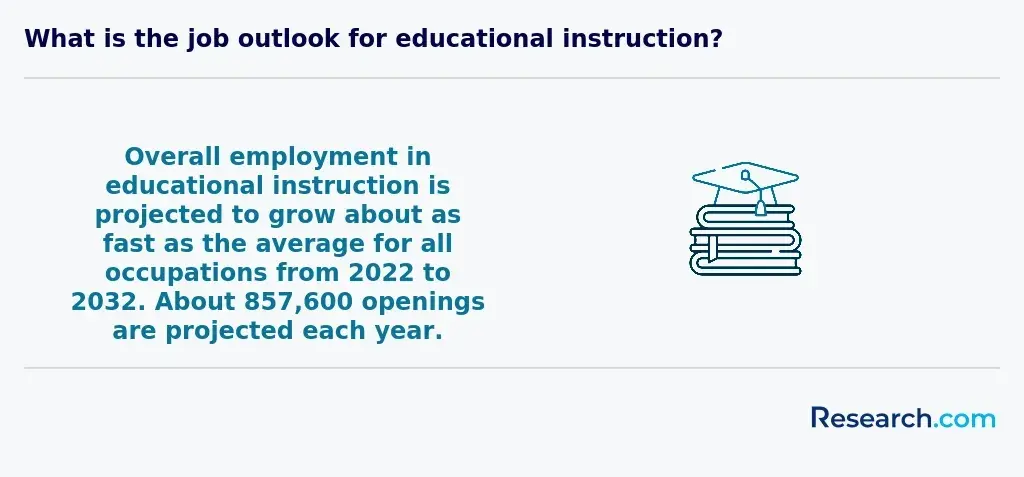
Arkansas has a favorable outlook for elementary teaching compared with the national projection cited in available labor data. As of 2020, Arkansas employed nearly 12,000 elementary school teachers, and that number is projected to reach about 13,000 by 2030. That represents 8% growth over the decade, compared with a national average of around 1%.
Projected openings are also important. Arkansas is expected to have around 980 elementary teacher job openings each year over the next ten years, including both new roles and replacement openings caused by retirement, relocation, or career changes.
- Demand is not equal across every field: Elementary, special education, math, science, reading, and rural district needs may differ, so candidates should research their intended license area.
- Openings include replacement jobs: Many opportunities come from turnover or retirements, not only new positions.
- Policy changes can affect pathways: The Arkansas LEARNS Act and other state initiatives may influence educator preparation, hiring priorities, and school staffing models.
- Credential fit matters: A license in a high-need area can be more useful than a general credential with limited local openings.
What is the career path of a teacher in Arkansas?
Most Arkansas teachers begin in classroom instruction, then move into leadership, specialization, or education-related roles as they gain experience and credentials. The right career path depends on whether you want to keep teaching students directly, support other teachers, lead schools, design curriculum, or work in education policy or products.
- Entry-level classroom teacher: New teachers focus on lesson planning, classroom management, family communication, assessment, and building instructional confidence.
- Experienced classroom leader: Teachers may mentor new educators, lead grade-level teams, support interventions, or coordinate programs.
- Instructional or school leadership: With experience and additional qualifications, teachers may become department heads, instructional coaches, curriculum specialists, or administrators.
- District-level work: Educators can move into curriculum direction, assessment coordination, professional development, or consulting across schools.
- Policy and advocacy: Some teachers use classroom experience to work with nonprofits, agencies, or advocacy organizations.
- Education products and services: Teachers may write curriculum, design training, create instructional materials, or support educational technology.
What are the cost-effective strategies for starting a preschool teaching career in Arkansas?
Preschool teaching can be a more targeted route for candidates who want to work with young children and may not need the same K-12 pathway as elementary or secondary teachers. The cost-effective strategy is to identify the exact setting where you want to work first: public pre-K, Head Start, child care, private preschool, or another early childhood environment. Each employer may expect different education, training, and credential documentation.
Lower-cost options may include community college early childhood programs, employer-supported training, state-supported grants, and targeted scholarships such as T.E.A.C.H. Early Childhood Arkansas when eligible. Candidates should also check whether credits can later apply toward a bachelor’s degree if they want to move into kindergarten or elementary licensure. For a detailed Arkansas-specific route, review how to become a preschool teacher in Arkansas.
What are the affordable online teaching credential pathways in Arkansas?
Online teaching pathways can be affordable when they reduce commuting, housing, and scheduling barriers. They are risky when candidates enroll without verifying licensure alignment. The most important rule is simple: an online program should be approved, accredited, and clearly connected to the Arkansas license you want.
Affordable online routes may include bachelor’s degrees in education, post-baccalaureate teacher preparation, alternative certification coursework, and online test preparation. Most still require local classroom experience, so candidates should ask how the school arranges student teaching or fieldwork in Arkansas.
A useful starting point is to compare affordable online teaching degree programs and then narrow the list to options that are recognized for Arkansas licensure. Public universities and nonprofit institutions may offer competitive tuition, but price should be compared with completion support, placement assistance, transfer credit acceptance, and exam pass preparation.
Online learning is most valuable when it helps you continue working while completing coursework. It is less valuable if the program delays field placement, does not support Arkansas testing requirements, or leaves you responsible for finding your own approved classroom site.
What are the best affordable online bachelor’s degrees for aspiring teachers in Arkansas?
For candidates starting without a bachelor’s degree, an online education degree can be a practical way to reduce relocation and commuting costs. The program still needs to prepare you for Arkansas classrooms, which means it should include the correct pedagogy, content preparation, classroom experience, and assessment guidance.
- Choose accreditation first: Before comparing tuition, confirm that the institution and teacher preparation program are recognized for licensure purposes.
- Use transfer credits wisely: Community college coursework can lower costs, but only if the online bachelor’s program accepts the credits toward the education major.
- Check fieldwork requirements: Ask whether student teaching can be completed near your home and whether the school helps arrange placement.
- Review financial aid: Compare federal aid, scholarships, state grants, payment plans, and education-specific awards.
- Confirm exam support: A strong online bachelor of education program should help students prepare for required licensure assessments, not just award credits.
Online bachelor’s programs for future teachers commonly include coursework in child development, classroom management, curriculum planning, instructional methods, and assessment. Candidates should also expect fieldwork or student teaching, even when most academic courses are online.
Can Supplementary Certifications Enhance Career Opportunities for Arkansas Educators?
Supplementary certifications can broaden an educator’s options when they are chosen strategically. They may support movement into library services, instructional technology, reading support, curriculum development, gifted education, administration, or other specialized roles. However, extra credentials are only worth the cost when they match employer demand and state requirements.
For example, a teacher interested in school library roles, information literacy, digital resource management, or instructional support may benefit from exploring library science degree jobs. Before enrolling in an added credential, ask whether it leads to a recognized endorsement, a salary step, a new job category, or simply an additional certificate with limited market value.
What are the advantages of private school teaching pathways in Arkansas?
Private schools in Arkansas can offer a different route into teaching because they often set their own hiring standards. Some may not require the same state-issued teaching license required in public schools, which can reduce the time and cost needed to enter a classroom.
This route may appeal to candidates with strong subject expertise, career changers, faith-based education interests, or teachers who prefer smaller school communities. However, private school flexibility comes with trade-offs. Pay scales, benefits, retirement systems, professional development expectations, and advancement structures may differ from public schools.
Before choosing this route, review the school’s hiring criteria, contract terms, mentoring support, and whether the experience will help if you later pursue public school licensure. For a focused overview, see private school teacher requirements in Arkansas.
How do I meet the kindergarten teacher credential requirements in Arkansas?
Kindergarten teaching generally requires preparation in early childhood development, literacy, classroom routines, family communication, and age-appropriate instruction. Candidates should choose a program that includes supervised experience with young learners, not only broad elementary coursework.
Because kindergarten can overlap with early childhood and elementary licensure structures, candidates should confirm the exact Arkansas license area their program supports. A program that is inexpensive but not aligned with kindergarten placement requirements can create delays. For step-by-step guidance, review how to become a kindergarten teacher in Arkansas.
What Challenges Might Arise When Pursuing Budget-Friendly Certification in Arkansas?
Lower-cost credential routes can work well, but they require careful screening. The main risk is choosing a program because it is cheap, only to discover later that it lacks state approval, adequate mentoring, classroom placement support, or the subject-area preparation needed for licensure.
- Limited advising: Some inexpensive programs leave candidates to interpret licensure rules on their own.
- Weak placement support: Online and alternative programs may require in-person classroom experience, and placement problems can delay completion.
- Testing surprises: Candidates may discover late that they need additional content exams, reading assessments, or English proficiency documentation.
- Transfer credit loss: Cheap credits are not savings if the receiving university does not accept them.
- Subject mismatch: A general education route may not satisfy requirements for specialized areas such as history, math, music, or special education.
If you plan to teach a specific subject, verify the exact requirements before enrolling. For example, candidates focused on secondary social studies should review how to become a high school history teacher in Arkansas so their coursework and tests align with the intended license.
Are Affordable Credential Programs in Arkansas Accredited and Reliable?
Affordable does not automatically mean low quality, but every program should be verified before you pay application fees or tuition. A reliable Arkansas credential pathway should be connected to a recognized institution, accepted by the Arkansas Department of Education, transparent about fieldwork, and clear about which license it prepares you to obtain.
Ask programs for direct answers about approval status, completion requirements, Praxis preparation, student teaching placement, graduate licensure results, transfer credit rules, and total program cost. If a school cannot explain how its program leads to Arkansas licensure, treat that as a warning sign.
For additional guidance on online credential routes and state expectations, review how to become a teacher in Arkansas.
What are the middle school math teacher requirements in Arkansas?
Middle school math candidates need both mathematics preparation and teacher training. A suitable program should include math content, adolescent learning, classroom management, assessment, and supervised teaching experience in the appropriate grade range.
Because math is a subject-specific license area, candidates should verify required assessments and coursework before choosing a budget program. A low-cost general education degree may not provide enough math preparation for the intended credential. For a more detailed pathway, see the middle school math teacher requirements in Arkansas.
How can I pursue a career as a history teacher in Arkansas?
Future history teachers should choose a pathway that combines historical content knowledge with secondary teaching methods. Strong preparation typically includes coursework in U.S. history, world history, research, primary sources, critical analysis, curriculum design, and adolescent instruction.
Cost-conscious candidates should not skip subject depth to save money. If the program does not prepare you for history-related assessments or student teaching in the correct setting, the cheaper route may become more expensive later. For Arkansas-specific planning, review how to become a history teacher in Arkansas.
What career paths can you explore with an education degree beyond classroom teaching?
An education degree can support careers outside traditional classroom instruction, especially for professionals skilled in curriculum design, training, assessment, communication, and program leadership. Common alternatives include instructional design, corporate training, education consulting, curriculum writing, nonprofit program management, student services, and education technology support.
These roles may not require the same public school teaching license, but employers may still value classroom experience and specialized credentials. If you are unsure whether teaching is your long-term plan, compare classroom and non-classroom options early. A useful next step is reviewing jobs with an education degree to see how education training can transfer into other fields.
What are the music teacher education requirements in Arkansas?
Music teachers need preparation in both education and music. Candidates typically study music theory, performance, ensemble instruction, classroom management, curriculum planning, pedagogy, and assessment while also completing supervised teaching experiences.
Because music education is specialized, candidates should not choose a general education program unless it clearly leads to music teacher licensure. Ask whether the program includes performance expectations, school music methods, and the assessments required for Arkansas certification. For a subject-specific overview, review music teacher education requirements in Arkansas.
What are the different teacher certification types and their requirements in Arkansas?
Arkansas offers multiple license pathways for different candidate backgrounds. Traditional candidates usually complete an approved teacher preparation degree and move toward a standard license. Career changers may use a provisional or alternative route. Out-of-state educators may qualify through reciprocity, and some candidates may begin under a provisional structure while completing additional requirements.
The major difference is not just the name of the credential. Each route has different rules for coursework, testing, classroom experience, professional development, renewal, and employment eligibility. To compare the options in more detail, review Arkansas teacher certification requirements.
How to choose the lowest-cost Arkansas teaching credential program without making an expensive mistake
A budget-friendly program should reduce cost without reducing your chance of becoming licensed. Use the following steps before enrolling.
- Identify the exact job you want: Decide whether you want preschool, kindergarten, elementary, middle school, high school, special education, music, math, history, or private school teaching.
- Match the job to the correct license: Confirm the Arkansas license area, grade band, and subject requirements.
- Verify program approval: Ask whether the program is recognized by the Arkansas Department of Education for your intended license.
- Calculate total cost: Include tuition, fees, books, exams, background checks, travel, unpaid student teaching time, and renewal requirements.
- Ask about placement support: Confirm who arranges student teaching, observations, mentoring, or employment-based teaching.
- Check transfer policies: If starting at community college, get written confirmation that credits apply to the education major.
- Compare completion time: A slower cheap program may cost more in lost wages than a slightly higher-priced program with a clearer path.
- Review financial aid: Look for federal aid, state grants, scholarships, employer tuition support, and payment plans.
- Plan for exams early: Use low-cost study resources before paying for Praxis or other required tests.
- Keep renewal in mind: Budget for professional development and track the 36 hours required each year.
Common mistakes to avoid when looking for the cheapest Arkansas teaching credential
| Mistake | Why it can cost more later | Better approach |
| Choosing a program based only on tuition | Low tuition does not help if the program does not lead to Arkansas licensure | Verify state approval, license alignment, fieldwork, and testing support |
| Ignoring transfer credit rules | Credits may not apply to the education major, forcing repeated coursework | Get transfer equivalency information before enrolling |
| Assuming online means fully online | Student teaching and classroom experience may still require in-person placement | Ask how local fieldwork is arranged and approved |
| Forgetting testing and background check fees | Out-of-pocket costs can appear late in the process | Build exam, fingerprinting, and application fees into the budget |
| Choosing a general route for a specialized subject | Math, music, history, special education, and early childhood may need specific preparation | Confirm subject-area requirements before selecting a program |
| Letting a license expire | Renewal may require added steps, updated checks, and professional development documentation | Track renewal dates and complete required hours on schedule |
| Relying only on rankings or advertising | Marketing may not show licensure outcomes or real total cost | Ask for approval status, completion requirements, and graduate support details |
Key Insights
- The cheapest route depends on your starting point: Career changers with a bachelor’s degree may find ArPEP more affordable, while first-time college students often save by starting with transferable community college credits.
- ArPEP has a clear published cost: The program fee is about $3,000, paid in two annual installments of $1,500, with a possible tuition waiver for Computer Science grades 4-12 candidates.
- Online programs can save money, but only when approved: Always confirm Arkansas recognition, field placement support, and license alignment before enrolling.
- Reciprocity can be the lowest-cost path for licensed teachers moving to Arkansas: Applicants still need documentation, a $75 application fee, background checks, and possibly additional testing.
- International educators should budget for credential evaluation: Foreign-trained teachers may also need TOEFL or other exams, official transcripts, experience documentation, and Arkansas review.
- Salary should shape your ROI calculation: Arkansas teacher salaries average around $51,000, with starting pay closer to $36,000 and master’s-level teachers able to earn over $60,000 depending on district and experience.
- Do not confuse low price with good value: The best affordable program is the one that leads efficiently to the exact Arkansas credential, grade level, and subject area you need.
- Plan beyond initial licensure: Teachers must maintain professional development, including 36 hours each year, and expired credentials can create extra renewal steps.
Related Articles for Nearby States
- 2027 Cheapest Way to Get a Teaching Credential in Oklahoma: Requirements & Certification
- 2027 Cheapest Way to Get a Teaching Credential in Tennessee: Requirements & Certification
- 2027 Cheapest Way to Get a Teaching Credential in Mississippi: Requirements & Certification
- 2027 Cheapest Way to Get a Teaching Credential in Louisiana: Requirements & Certification
- 2027 Cheapest Way to Get a Teaching Credential in Texas: Requirements & Certification
- 2027 Cheapest Way to Get a Teaching Credential in Kentucky: Requirements & Certification
- 2027 Cheapest Way to Get a Teaching Credential in Kansas: Requirements & Certification
- 2027 Cheapest Way to Get a Teaching Credential in Alabama: Requirements & Certification
- 2027 Cheapest Way to Get a Teaching Credential in Illinois: Requirements & Certification
- 2027 Cheapest Way to Get a Teaching Credential in Iowa: Requirements & Certification
References:
- Dese.ade.arkansas.gov (N.D.). Provisional Professional Teaching License. dese.ade.arkansas.gov
- Onetonline.org (2024). Arkansas Employment Trends 25-2021.00 - Elementary School Teachers, Except Special Education. onetonline.org
- Salary.com (2024). Public School Teacher Salary in Arkansas. https://www.salary.com/research/salary/benchmark/public-school-teacher-salary/ar
Other Things You Should Know About Getting a Teaching Credential in Arkansas
Arkansas requires fingerprint-based criminal background checks through the Arkansas State Police and the FBI before a standard teaching license is issued. Applicants must also submit the state’s teacher licensure application to the Arkansas Department of Education, which reviews the results before certification is granted.
To get a teaching credential in Arkansas, candidates must pass the Praxis Core Academic Skills Tests and Praxis Subject Assessments specific to their teaching area. These exams are mandated by the Arkansas Department of Education and are essential for certification eligibility.


