2027 Should You Choose a BS in Business Administration or CAPM for Your Next Career Step?
Audited and Verified:
Our Editorial and Data Verification Process
Research.com uses government datasets, official education statistics and primary institutional information to support its career and degree guides. Our review process checks factual accuracy, occupational definitions, source dates and the requirements associated with the credentials discussed.
How This Article Was Fact-Checked
Our editorial team verifies salary estimates, employment projections, education requirements and program information against original data providers and official organizations. Salary figures are checked against the relevant occupational definitions and reporting periods. Information about licensure, accreditation and required in-person training is reviewed separately.
Fact-checked and verified on:

Co-Founder and Chief Data Scientist
A business administration degree and the Certified Associate in Project Management (CAPM) credential can both support a move into business work, but they solve different problems. A BS can help you meet a bachelor's-degree requirement and build broad business knowledge; CAPM can demonstrate foundational project management knowledge without requiring a degree.
If you are choosing your next step while working or changing careers, the difference matters for your time and budget. This guide compares what each path offers, where each falls short, and what to check before committing.
Key Things You Should Know
- Choose a BS in Business Administration when your target jobs require a bachelor's degree or you need broad preparation across business functions; CAPM does not replace a degree.
- Choose CAPM when you already meet your target job's education expectations and need a narrower project-management credential. PMI requires a secondary degree and 23 hours of project management education before the exam.
- Neither credential guarantees a project role or a particular salary. The $102,320 May 2025 median for project management specialists covers an occupation, not new graduates or CAPM holders.
Should you choose a BS in Business Administration or CAPM certification?
Start with the job you want, your existing education, and the experience you can show. If postings for your target roles require a bachelor's degree and you do not have one, CAPM alone will not close that gap. A BS in Business Administration is the stronger choice when you also want to learn accounting, operations, finance, and other functions beyond project work.
If you already have a bachelor's degree - or the roles you want do not require one - and you can demonstrate useful workplace skills, CAPM may be the more direct next step. It is especially relevant to someone moving from scheduling, customer service, logistics, or administrative work into project coordination. It shows knowledge of project concepts, not a record of delivering projects.
The paths can complement each other. An employed student could pursue a degree for broader eligibility while preparing for CAPM when project work becomes a clear goal. Before taking on both, check whether your employer values the certification, will fund either option, or can assign you supervised project responsibilities. For a degree that fits around employment, compare online business administration degrees for employed adults against your actual weekly schedule.
What are the main differences between a BS in Business Administration and CAPM?
The two credentials differ in scope and in what an employer can reasonably infer from them. This comparison shows why similar-sounding coursework does not make them interchangeable.
| Decision factor | BS in Business Administration | CAPM certification |
| Credential | Undergraduate academic degree awarded by a college | Professional certification awarded by the Project Management Institute (PMI) |
| Primary scope | Broad business education, with project management coverage varying by program | Foundational project management knowledge |
| Assessment | Courses and institution-defined graduation requirements | PMI eligibility requirements and certification exam |
| Best fit | Roles requiring a bachelor's degree or cross-functional business preparation | Project-oriented roles when broader education requirements are already met |
| Ongoing obligation | Degree does not expire | Certification requires renewal under PMI's rules |
A business degree may include a project management course, but completing that course does not automatically award CAPM. Likewise, CAPM does not establish competence in accounting or finance. If completion speed is your concern, investigate fastest bachelor's-level business study options without assuming an accelerated degree is equivalent to a short certification course.
What career paths can a BS in Business Administration or CAPM prepare you for?
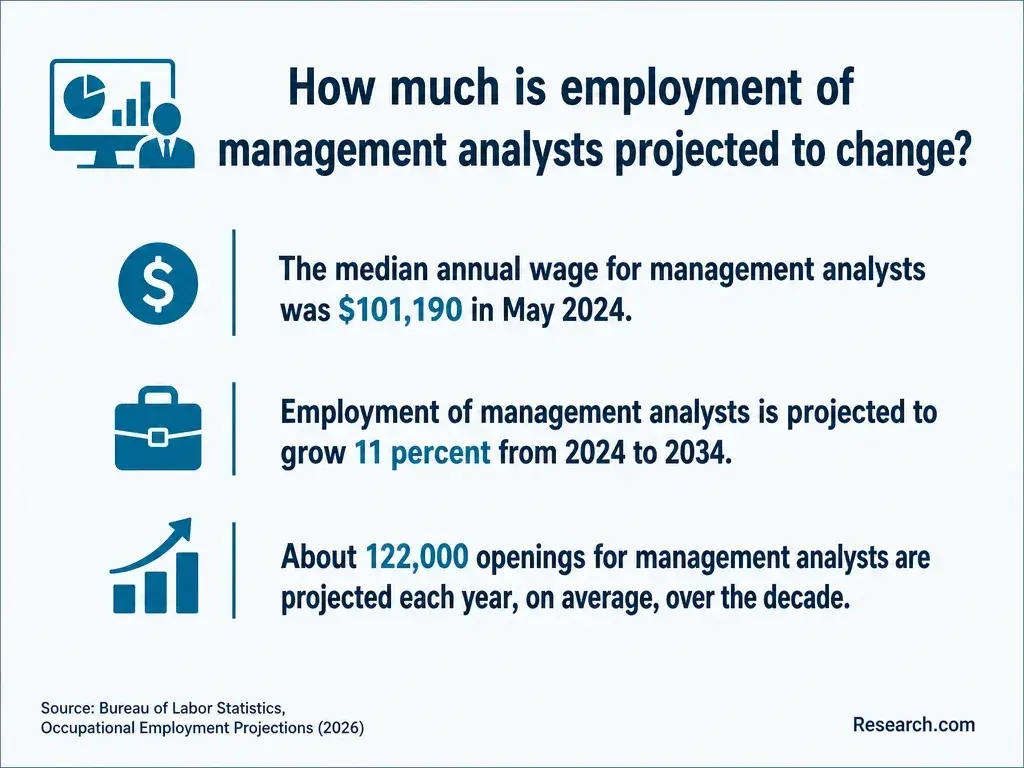
A BS can support applications across business operations, sales support, procurement, human resources, and administrative functions, depending on the role and your experience. CAPM is more targeted: it can help you explain project terminology and methods when applying for project coordinator, project administrator, or project-support positions. In those jobs, employers may still expect evidence that you can track tasks, communicate with stakeholders, maintain documentation, and flag risks.
For a career changer, the most credible route may be an adjacent move rather than an immediate project manager title. A logistics employee who already coordinates vendors and deadlines, for example, can document that work and use CAPM to strengthen a project-coordinator application. Someone seeking broader operations responsibility may benefit more from the BS and an internship or approved workplace project. Neither path substitutes for the experience usually needed to own major budgets or supervise teams.
If your goal is specifically purchasing, inventory, or distribution, compare these options with an affordable supply chain degree planning guide. A function-specific program may be a better fit than either a general business degree or CAPM.
PMI requires CAPM applicants to have a secondary degree, such as a high school diploma or equivalent, and 23 hours of project management education completed before the exam. PMI does not require a bachelor's degree or prior project management experience for CAPM eligibility. Check PMI's application, acceptable education documentation, exam, and renewal rules before paying for preparation; a course provider does not decide whether PMI will approve your application.
College admission is a separate process. If you plan to apply for a BS as well, fee-free applications for online college may reduce one application expense, but they do not affect CAPM eligibility or waive college admission requirements.
A BS in Business Administration generally combines general education with a business core that may cover accounting, economics, finance, marketing, management, operations, statistics, and business law. The exact requirements differ by school. Project-related learning might appear in an operations course, a dedicated elective, a concentration, or a capstone - not necessarily in every program.
For project-oriented work, look beyond a course title. Check whether assignments require you to define scope, build a schedule and budget, assess risk, communicate with stakeholders, and explain trade-offs. A simulation can help you practice those tasks, but it is not the same as managing an employer-approved project. If you are entering from another field, review required credits before entering business administration study and ask the school which of your previous courses will satisfy specific degree requirements.
CAPM preparation is generally the shorter route because it requires project management education and an exam rather than an undergraduate degree. Your timeline depends on how you obtain the required education, your study needs, and exam availability. Allow time to confirm that a course meets PMI's requirements before scheduling the exam.
A bachelor's degree involves substantially more coursework. Completion time depends on accepted transfer credit, how those credits apply to the major, enrollment pace, prerequisite sequences, and course availability. A transfer estimate is not a graduation date: request an official degree audit before relying on a projected finish. Faster undergraduate completion pathways may shorten the calendar, but compressed classes still require enough study time alongside work or caregiving.
CAPM usually requires a smaller initial financial commitment than a bachelor's degree, but an accurate comparison needs a complete price for each path. PMI fees, preparation-course prices, college tuition, and aid can change, so use current quotes rather than assuming a fixed total. Compare these cost categories before deciding:
- BS in Business Administration: Remaining tuition and required credits, mandatory fees, books or software, any travel or proctoring costs, and borrowing or lost-work-time costs.
- CAPM: Qualifying project management education, PMI exam and any applicable retake fees, study materials, and ongoing renewal costs.
Ask the college for an official credit evaluation and a term-by-term estimate; accepted credits do not always satisfy business-core requirements. Ask your employer whether tuition assistance or certification reimbursement is available and when payment occurs. If you are considering a related project management bachelor's program, guidance on paying for project management bachelor's study with grants can help frame aid questions, though eligibility and awards must be confirmed for your chosen school.
Neither format is inherently better. The stronger program is the one you can complete while gaining evidence of relevant skills. Campus study may make in-person networking and scheduled group work easier; online study may reduce travel and offer more scheduling options. Online does not necessarily mean self-paced: confirm live sessions, group meetings, exam arrangements, and any internship or campus attendance requirements.
For project-oriented roles, examine access to faculty feedback, team assignments, internships, employer projects, and career services in either format. Ask how the program handles a working student's approved workplace project and whether employer permission is needed to use company information. Use ranked American online business degree options as a starting list, then verify each program's current curriculum and scheduling rules directly.
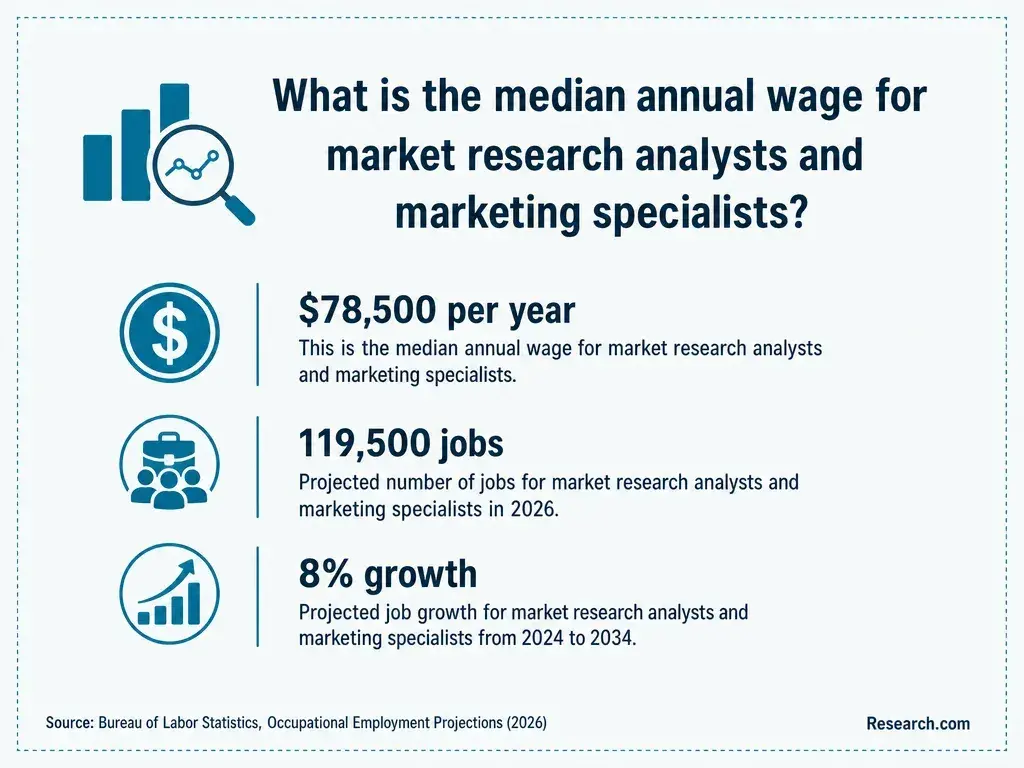
There is no single reliable salary for everyone with a business administration BS or CAPM. Pay follows the occupation, location, industry, experience, and responsibilities - not the credential alone. The US Bureau of Labor Statistics reports a May 2025 median annual wage of $102,320 for project management specialists and projects 7% employment growth for that occupation from 2025 to 2035. The median describes workers across the occupation, including experienced professionals; it is not an expected starting salary for a new graduate or CAPM holder.
For a useful return-on-investment comparison, collect local postings for jobs you could qualify for now, then separate roles that require a bachelor's degree from those that value CAPM or project experience. Compare the likely entry route and total education cost, rather than assuming either credential produces a salary increase. If the degree is necessary for your target roles, lower-tuition online business administration programs may be worth investigating alongside completion rates and support.
How should you evaluate accredited business schools and CAPM preparation programs?
For a BS, verify recognized institutional accreditation, the exact degree awarded, and whether any claimed AACSB, ACBSP, or IACBE accreditation covers the business program you are considering. Then compare required courses, transfer-credit application, project-based learning, career support, and the full cost to completion. Business accreditation and attractive marketing are not proof of job placement.
For CAPM preparation, confirm that the course supplies the project management education hours PMI requires and provides useful coverage of the exam content. Ask how it documents completion, whether materials and practice assessments are included, and what its refund terms are. PMI - not the preparation provider - controls certification eligibility and the exam. An budget-friendly online business schools list can help you identify colleges to investigate, but compare official school policies with current PMI requirements before choosing either path.
Other Things You Should Know About Business Administration
No. CAPM is a foundational PMI certification. Project Management Professional (PMP) is a separate credential with different eligibility requirements; holding CAPM does not automatically award PMP.
Not automatically. Ask the college whether it has a policy for evaluating your specific training or certification for credit, and whether any awarded credit would apply to your degree requirements.
Possibly. Check the employer's written education-benefit policy for eligible programs, approval deadlines, reimbursement timing, grade or completion rules, and any repayment obligation.
Describe your responsibilities and methods without disclosing restricted data. Obtain employer permission before using workplace documents, and use a clearly labeled practice example when permission is unavailable.
- College Degree Majors and Associated Earnings - PMC https://pmc.ncbi.nlm.nih.gov/articles/PMC10961939/
- Education vs. Experience: Which Do Employers Value More? | Northeastern University Graduate Programs https://graduate.northeastern.edu/knowledge-hub/education-vs-experience/
- Entry-Level Jobs With a Business Administration Degree | Warner Pacific University http://www.warnerpacific.edu/blog/top-entry-level-jobs-ba-business-administration/
- What Can I Do with a Business Administration Degree? | CTU https://www.coloradotech.edu/degrees/studies/business-and-management/articles/what-can-i-do-with-a-business-administration-degree
- Business Administration Program Guide | University of Bridgeport https://www.bridgeport.edu/news/guide-to-choosing-the-right-business-administration-program/
- Education vs Experience: What Matters More for Your Career | monash.edu.my https://www.monash.edu.my/news-and-events/trending/education-vs-experience-career-guide
- CAPM vs. PMP Certification | Purdue Project Management https://www.purdue.edu/projectmanagementcertification/news/capm-vs-pmp-certification/
- PMP vs CAPM: Which Project Management Certification is Best? | CIAT https://www.ciat.edu/blog/pmp-vs-capm/
- How Much Does CAPM Certification Cost? | superprof.com https://www.superprof.com/blog/capm-certification-cost/
- CAPM Certification Guide: Domains, Cost and CAPM vs PMP | Training Camp https://trainingcamp.com/articles/capm-certification-guide-domains-cost-and-capm-vs-pmp/