2027 How One Lost Transfer Course Changes the Cost of a Business Administration BS
Audited and Verified:
Our Editorial and Data Verification Process
Research.com uses government datasets, official education statistics and primary institutional information to support its career and degree guides. Our review process checks factual accuracy, occupational definitions, source dates and the requirements associated with the credentials discussed.
How This Article Was Fact-Checked
Our editorial team verifies salary estimates, employment projections, education requirements and program information against original data providers and official organizations. Salary figures are checked against the relevant occupational definitions and reporting periods. Information about licensure, accreditation and required in-person training is reviewed separately.
Fact-checked and verified on:

Co-Founder and Chief Data Scientist
A transfer evaluation can accept nearly all your previous coursework yet leave one business course out of your degree plan. For a returning student, that difference can mean more than another tuition charge: the course may block an upper-level requirement or push graduation into another term.
This guide shows how to identify the actual cost of a lost course, test whether it will delay completion, and ask the right offices for a decision before you enroll. The goal is to compare schools by the cost and time remaining, not by the number of credits they advertise as accepted.
Key Things You Should Know
- An accepted transfer course saves money only if it satisfies a requirement or reduces the credits you must still earn; elective credit may not do either.
- For a hypothetical three-credit replacement, the added cost is not just three credits of tuition: required fees, another term, and delayed graduation may matter more.
- Request an official degree audit and written course-equivalency decision, then compare remaining requirements and term-by-term course availability before committing.
What Is a Business Administration Bachelor's Degree?
A BS in Business Administration is an undergraduate degree combining general education with business subjects such as accounting, management, marketing, finance, and quantitative decision-making. Its exact curriculum belongs to the awarding institution.
A BBA or a specialized business degree may share courses without having the same transfer rules, upper-level requirements, or graduation timeline.
For a transfer student, the degree title matters less than the remaining degree requirements. If you are comparing a general business BS with a leadership-focused program, examine the courses each would require after your prior credits are applied; online leadership bachelor's programs with compressed schedules are an alternative to investigate, not evidence that the two curricula are interchangeable.
How Can One Lost Transfer Course Increase Degree Costs?
A "lost" course may be rejected entirely, accepted only as an elective, or awarded fewer usable credits than expected. The key question is whether it clears a requirement in the current catalog and official degree audit. If not, you may have to take a replacement even though your transcript shows that you studied the subject before.
The table separates the main cost mechanisms. Not every lost course triggers every cost; the course's place in your degree sequence determines which apply:
| Cost mechanism | When it arises | What changes |
| Replacement instruction | The prior course does not fulfill a required course or approved substitute | Additional tuition, course fees, and materials |
| Credit-load change | The replacement changes your enrollment intensity | Potential changes to aid eligibility or the balance due for that term |
| Extra term | The replacement is a prerequisite or is offered too late for your planned schedule | Possible additional term charges and later completion |
| Schedule conflict | The available section overlaps work or other required courses | Possible lost work time or a revised graduation plan |
For a hypothetical three-credit course, a useful comparison is the replacement course's tuition and fees plus any additional term costs and lost earnings, minus costs you would have paid anyway. Do not count a full extra term unless the actual course schedule makes one necessary.
Residency rules can also prevent an outside replacement from solving the problem; human resources bachelor's residency and transfer rules illustrate why students comparing related degrees must check each program's own policies.
How Do Transfer Credits Affect Business Degree Completion Time?
Completion time depends on which requirements transfer, not just the total accepted credits. A missing elective might fit alongside other coursework. A missing accounting or statistics prerequisite could hold up finance, analytics, or a capstone, particularly if the next required course is offered only in certain terms.
Before accepting a projected graduation date, work through this sequence with an adviser:
- Locate the course in the official degree audit and identify the requirement it was expected to satisfy.
- Check the current catalog for prerequisite chains, minimum grades, upper-level requirements, and residency credits.
- Place every remaining required course into an actual term schedule, using confirmed course availability rather than an idealized plan.
- Ask the transfer office or academic department whether an equivalency review, substitution, or appeal can change the audit; obtain the decision in writing.
Shorter terms do not necessarily repair a prerequisite bottleneck. If you are considering online degrees with accelerated terms, verify that the specific replacement and its follow-on courses are offered in an order that lets you finish sooner.
Check that the institution holds recognized institutional accreditation; it is an important consideration for federal financial-aid eligibility and future transfer.
Separately, a business school or program may hold AACSB, ACBSP, or IACBE accreditation. Confirm the accreditor's scope rather than assuming that every degree at an institution is covered.
Accreditation does not require another school to accept a particular course as its business core equivalent. The receiving institution decides applicability under its policies.
When comparing accredited online business administration study with aid eligibility, verify accreditation, your own aid eligibility, and a program-specific transfer evaluation as separate questions.
Requirements commonly include general education, a business core, upper-level work, and electives or a formal concentration. Accounting, economics, statistics, finance, management, and marketing are frequent subjects, but course titles and required sequences vary. A prior "business math" course, for example, should not be assumed equivalent to a particular statistics requirement.
For each disputed course, compare its catalog description, syllabus, credit value, level, and covered topics with the receiving school's requirement.
Ask which department approves equivalencies and whether a written substitution would satisfy the prerequisite as well as the degree audit. A business administration degree admissions requirements guide can help identify common preparation questions, but only the school can rule on your specific coursework.
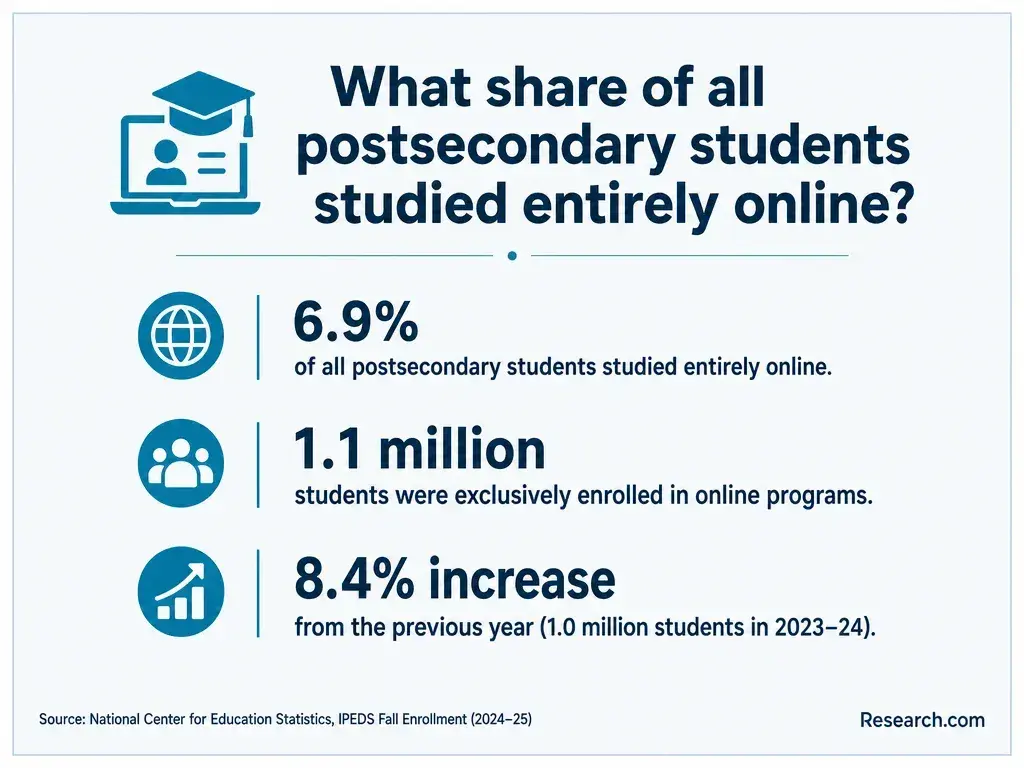
An online format does not, by itself, determine the degree's value or whether your transfer course will apply. Compare the awarding institution, curriculum, support, and outcomes relevant to your goal.
For this decision, also check whether the replacement course and every course it unlocks are available online when you need them.
Online does not always mean self-paced: live sessions, group projects, scheduled exams, or limited course rotations can affect a working student's plan.
When reviewing faster-paced business degree study options, ask for a schedule based on your approved audit. An advertised fast format cannot compensate for a required course that is unavailable until a later term.
Schools generally request previous academic records, but institutional admission, admission to the business major, and award of applicable transfer credit are separate decisions.
A student may be admitted while a prior accounting course remains under review or while a business prerequisite is still outstanding. Ask when the school will issue an official evaluation and which requirements must be met before upper-level enrollment.
If you are applying to several institutions to compare audits, application costs are part of the decision too. Online college application fee savings may make it easier to obtain competing evaluations, but confirm whether each school will provide a sufficiently detailed review before you pay a deposit.
For a transfer student, the useful figure is the net cost to finish, not the published price of an entire degree. Compare tuition for remaining required credits, mandatory fees, materials, and any additional terms.
Then account separately for grants, scholarships, employer reimbursement, and borrowing for which you actually qualify. A loan can address immediate cash flow without reducing the amount you ultimately owe.
Request an itemized estimate based on your approved audit from each school. Ask financial aid how a replacement course, changed enrollment intensity, or extra term affects your package and satisfactory academic progress; ask your employer when reimbursement is paid and what conditions apply.
Online business administration school cost comparisons can help you identify candidates, but the cheapest advertised tuition may not produce the lowest completion cost if more of your courses become electives.
A business administration BS can support applications for roles such as operations coordinator, marketing coordinator, HR assistant, or project coordinator, depending on experience and demonstrated skills.
It does not automatically qualify a graduate to manage staff, practice a regulated profession, or enter a specialized role. Relevant work, internships, spreadsheets, communication, and evidence of completed projects can matter alongside the degree.
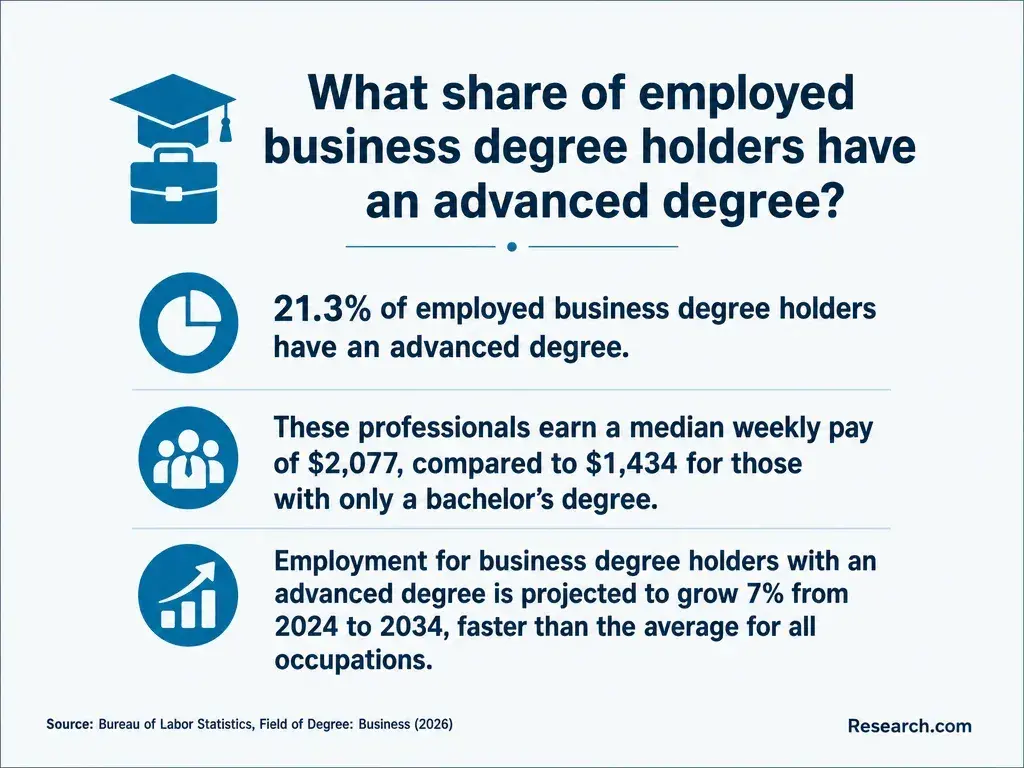
Career goals can also change the transfer-cost decision. If project coordination is your target, compare the remaining BS curriculum with focused experience or project management programs with lower total costs. A different credential is worthwhile only if its requirements, remaining cost, and access to relevant work better match the role you want.
What Salary and Job Outlook Can Business Graduates Expect?
There is no single salary or job-growth rate for Business Administration BS graduates; outcomes depend on the occupation, location, and experience.
The U.S. Bureau of Labor Statistics reports a May 2025 median annual wage of $75,940 for human resources specialists and projects 6% employment growth for that occupation from 2025 to 2035. Those are occupation-wide figures, not a starting salary or a return guaranteed by a business degree.
Use a target occupation, not a broad management wage, to assess whether paying for a replacement course is worthwhile. If HR is your intended function, compare business coursework, relevant experience, and HR education costs and career planning before assuming the general degree is the most direct route.
The soundest immediate decision is still to resolve the audit: an avoidable extra term is a real cost, while a future salary increase remains uncertain.
Other Things You Should Know About Business Administration
Usually, a course's credits cannot be earned twice merely because it could fit two categories. A school may allow one course to meet more than one requirement, but its audit determines whether additional credits are still needed.
Possibly. Ask whether the school accepts an exam for that specific requirement, whether you are eligible after taking a similar course, and whether exam credit would meet any prerequisite or residency rule.
Ask its designated transcript custodian for an official record. If you need a course review, look for an archived catalog or syllabus and ask the receiving school what alternative documentation it accepts.
No. Each receiving institution applies its own curriculum and transfer policies. Keep the prior decision and supporting syllabus, but request a new evaluation before relying on the credit in another degree plan.
- Delayed Time-to-Degree and Post-college Earnings - PMC https://pmc.ncbi.nlm.nih.gov/articles/PMC7875953/
- Staying Eligible | Federal Student Aid https://studentaid.gov/understand-aid/eligibility/staying-eligible
- Transfer Dispute - Texas Higher Education Coordinating Board https://www.highered.texas.gov/transfer-dispute/
- Tuition and Fees - Office of Academic Records and Registrar https://arr.usc.edu/tuition-and-fees/
- Tuition in Detail - One Stop Student Services https://onestop.utk.edu/billing-payments/tuition-detail/
- Course Transfer and Appeals Policies | indiana.edu https://vpfaa.indiana.edu/policies/bl-aca-h14-course-transfer-appeals-process/
- Transfer Credit Reevaluation - Core Education https://coreeducation.oregonstate.edu/students-0/transfer-credit-reevaluation
- Policy 3.21.2 Transfer Credit | Inver Hills Community College https://www.inverhills.edu/about/policies/chapter-3-educational/3-21-2-transfer-credit-policy/
- POL 02.05.09 - Transfer Credit Evaluation Policy | UNC Pembroke https://www.uncp.edu/about/administration/policies-procedures-reports/pol-02-05-09-transfer-credit-evaluation-policy.html