2027 BS in Business Administration Program Choice: A Nonprofit Operating Plan as a Capstone Option
Audited and Verified:
Our Editorial and Data Verification Process
Research.com uses government datasets, official education statistics and primary institutional information to support its career and degree guides. Our review process checks factual accuracy, occupational definitions, source dates and the requirements associated with the credentials discussed.
How This Article Was Fact-Checked
Our editorial team verifies salary estimates, employment projections, education requirements and program information against original data providers and official organizations. Salary figures are checked against the relevant occupational definitions and reporting periods. Information about licensure, accreditation and required in-person training is reviewed separately.
Fact-checked and verified on:

Co-Founder and Chief Data Scientist
A nonprofit operating plan can turn a business administration capstone into a useful decision document - but only if the program permits the project and the plan fits the time, data, and access available.
This guide is for prospective BSBA students and nonprofit professionals weighing that option. It explains what the plan should contain, which courses support it, and how to compare programs on project approval, scheduling, cost, and career relevance. The goal is to help you choose an achievable academic project, not mistake a classroom proposal for an approved organizational strategy.
Key Things You Should Know
- A nonprofit operating plan is a viable BSBA capstone only if the program approves the topic and deliverable; a nonprofit concentration or partner organization is not necessarily required.
- The strongest plan connects a defined service goal to staffing, operations, a feasible budget, risks, and measurable results while clearly labeling assumptions and protecting sensitive data.
- Compare programs on capstone rules and access to faculty and organizational feedback - not just degree format or speed. BLS occupation-wide wages do not predict what a new graduate will earn.
What Is a BS in Business Administration With a Nonprofit Capstone?
It is a BS in Business Administration whose student completes an approved final project about how a nonprofit would run a defined program or operational function. The degree typically covers several business functions; the capstone applies selected skills to a decision such as whether an organization can expand a service, manage volunteer capacity, or sustain a delivery schedule. The project's nonprofit subject does not, by itself, create a nonprofit concentration or a separately awarded credential.
An operating plan is more specific than a mission statement and broader than a budget. It identifies who will do what, with which resources, on what schedule, at what cost, and how decision-makers will recognize problems. A student might develop a proposed plan using public information and explicit assumptions, or work with an organization that has authorized access to internal information. Neither route implies that the organization has adopted the plan.
Check the catalog and capstone syllabus before enrolling: some programs prescribe a case analysis, simulation, or team assignment rather than allowing an individual operating plan. If the main goal is developing leadership skills rather than building an operations deliverable, compare accelerated organizational leadership degrees alongside the BSBA curriculum and project rules.
Why Choose a Nonprofit Operating Plan as a Business Capstone?
This project makes business trade-offs visible in a resource-constrained setting. A plan for a community food program, for example, must reconcile service targets with funding timing, volunteer availability, purchasing, storage, and reporting capacity. That combination can demonstrate budgeting and operational judgment more clearly than an isolated fundraising idea.
It is a good choice when the student can define a single decision-maker and a manageable planning horizon, obtain appropriate feedback, and show how assumptions affect the recommendation. It is a weaker choice if the intended organization cannot share essential information, the assignment requires implementation, or the student's real interest is only one technical task. A focused project-management course or credential pathway may be more direct for someone whose sole goal is learning to schedule and monitor projects; project management schools with competitive tuition offer a broader degree comparison for those considering that field instead.
For a nonprofit employee, the academic benefit is not proof of workplace impact. Even a well-reviewed capstone remains a proposal until authorized decision-makers approve, implement, and evaluate it.
What Does a Nonprofit Operating Plan Include?
Start with a narrow purpose, such as planning the next service cycle for one program - not redesigning an entire nonprofit. The structure below gives a director or program lead enough information to judge feasibility while giving a faculty assessor a traceable basis for evaluating the analysis.
Build the deliverable in this sequence, revising earlier assumptions as the budget and capacity picture develops:
- Decision and scope: Name the intended decision-maker, service, beneficiaries, planning period, and choices the plan will help resolve.
- Evidence and assumptions: Identify permitted sources, what is unknown, and which estimates are hypothetical rather than observed results.
- Service workflow: Map intake, delivery, handoffs, purchasing, records, and responsibilities, including any volunteer or partner dependencies.
- Capacity and budget: Estimate staff time, materials, fixed and variable costs, likely funding timing, and what changes if resources fall short.
- Measures and safeguards: Select a small set of service, cost, and quality measures; identify privacy, safety, financial-control, and continuity risks.
- Decision and revision: Present alternatives, a proposed schedule, unresolved questions, and the conditions under which the recommendation should change.
Keep cash timing distinct from an annual budget: a program may appear funded for the year but lack cash when expenses come due. Likewise, an output such as deliveries completed is not the same as evidence of a lasting benefit to participants. If distribution routing or inventory is the project's central question, specialized operations study may be more useful than a general nonprofit plan; students considering that emphasis can compare accelerated supply chain bachelor's degrees.
Use public or invented, clearly labeled example data when permission for real records is unavailable. For an authorized workplace project, agree on data use, review rights, and what may appear in a class presentation or portfolio before collecting information.
The most useful preparation combines accounting and budgeting, operations or project management, organizational behavior, marketing or stakeholder research, and statistics or spreadsheet analysis. Accounting helps distinguish costs, funding, and cash needs; operations coursework helps test whether a proposed workflow fits actual capacity. Communication and ethics matter when presenting uncertainties to people who may act on the plan.
Course titles alone are a poor test of readiness. Ask whether assignments require students to build budgets, analyze a process, explain assumptions, and revise work after feedback. A nonprofit management elective can add context about governance and funding, but it is not a substitute for the business core or evidence that the program offers an official concentration.
Transfer students should check which prior courses satisfy prerequisites and major requirements, not merely how many credits a school accepts. If comparing adjacent degrees because project scheduling is the main interest, project management undergraduate transfer pathways can help frame questions about how existing coursework applies. The receiving institution's official evaluation controls the answer.
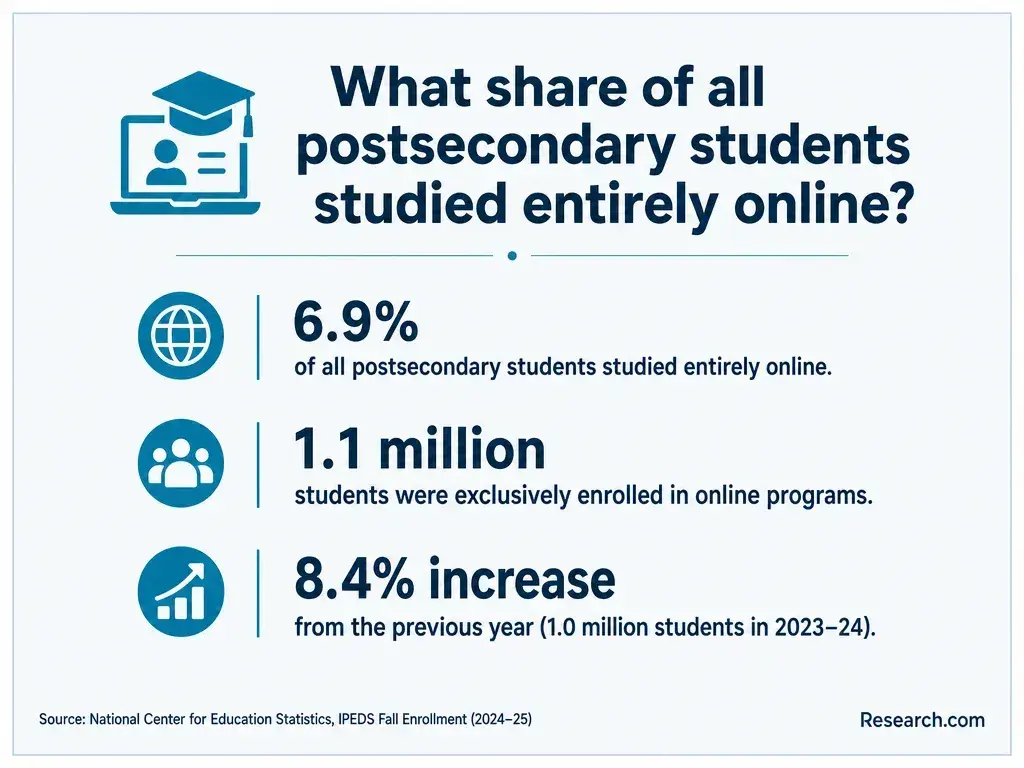
Either format can support the same type of plan. The meaningful difference is how easily the student can obtain supervision, collaborate, present work, and meet deadlines - not whether the lectures arrive online. Compare the actual capstone course rather than assuming that an online degree is self-paced.
The following comparison highlights access and scheduling issues that can change the feasibility of this particular project.
| Capstone condition | Online program | Campus program |
| Faculty and peer feedback | May use scheduled video meetings and shared documents; live attendance can still be required | May offer in-person workshops; travel and fixed meeting times can constrain attendance |
| Nonprofit contact | Can accommodate a remote or local organization if the course permits it | May make local introductions easier, but a partner or placement is not assured |
| Final assessment | May require a live presentation, team work, or proctored assessment | May require an on-campus presentation or scheduled team meetings |
Ask for a recent syllabus and confirm presentation times, team-assignment rules, permitted external partners, and whether an organization must sign an agreement. Students balancing employment or caregiving can use working-adult business administration program comparisons as a starting point, then verify the capstone schedule directly with each school.
Check the institution's accreditation first, including whether it is recognized by the U.S. Department of Education for federal student-aid purposes. Then check whether the business school or specific program holds applicable accreditation from AACSB, ACBSP, or IACBE. These are different claims: an accredited university does not necessarily have a separately accredited business program, and business accreditation does not guarantee that a nonprofit operating plan is an allowed capstone.
Confirm the exact degree, campus or online offering, and accreditation scope through the institution and accreditor. Ask the department which faculty assess nonprofit projects and whether its rubric values financial feasibility, ethical data use, and operational measures. Accreditation is a quality-screening factor, not evidence of a particular job outcome or project partnership.
The distinction applies to adjacent choices, too: when reviewing accredited project management programs with low tuition, verify what is accredited and whether the curriculum would serve the intended nonprofit work better than a BSBA.
Requirements vary by school and by entry route. First-year applicants generally document secondary education; transfer applicants provide college transcripts. A school may also set GPA standards or require mathematics, accounting, or other courses before entry to the business major - even when the student qualifies for admission to the university. Admission and permission to take the capstone are separate milestones.
For someone choosing the degree because of this project, the practical sequence is to confirm eligibility, request an evaluation of previous coursework, and obtain the current degree audit and capstone prerequisites. Ask whether the intended topic needs prior faculty approval and whether an outside organization must participate. Do not count an existing job or volunteer assignment as capstone credit without formal approval.
If an accelerated route is appealing, explore US business bachelor's fast-track rankings only after checking entry requirements and the term in which the required capstone is actually offered. A short advertised completion time may depend on transfer credits or a course sequence unavailable to a particular student.
Completion time depends on credits that apply to the degree, course availability, enrollment pace, and capstone prerequisites. A student with substantial applicable transfer credit may have a shorter path than a first-time undergraduate, but neither a preliminary credit count nor an accelerated label establishes a graduation date.
Compare schools using the remaining required courses and the charges you would actually incur: tuition, mandatory fees, books or software, possible travel or proctoring, and any additional term needed if the capstone is offered infrequently. A workplace-based project may reduce the need to find an outside setting, but it does not remove tuition or guarantee employer permission. Request a written degree audit and school-specific cost estimate before treating one option as cheaper.
Scholarships, aid eligibility, and employer reimbursement can change out-of-pocket cost and payment timing. To reduce tuition spending on an online business administration degree, compare verified charges against the courses still required - not a published tuition figure in isolation.
A nonprofit operating plan can provide a relevant work sample for program coordinator, operations assistant, development operations, or administrative roles. Those jobs may involve scheduling services, tracking spending, maintaining records, coordinating volunteers, or communicating with funders. The fit depends on the employer's needs and the student's other experience; the capstone is not a substitute for supervised work.
A graduate applying to project coordination roles can point to a documented schedule, risks, and responsibilities. Someone targeting program operations can show a workflow, budget assumptions, and service measures. In either case, describe the work accurately as an academic proposal unless an organization approved and implemented it. Redact personal information and obtain permission before displaying organizational materials.
Management, specialized finance, and regulated roles commonly require further experience or qualifications. When weighing the degree against a quicker route into an entry-level position, business administration college costs and potential career outcomes can inform a comparison, but local job postings and an official degree-cost estimate are more relevant to an individual decision.
What Are the Salary and Job Outlook for Business Graduates?
There is no single salary or growth rate for "BSBA nonprofit graduates." U.S. Bureau of Labor Statistics figures describe occupations across industries and experience levels, not the earnings of people with this degree or capstone. Nonprofit employers, locations, duties, and funding structures also vary.
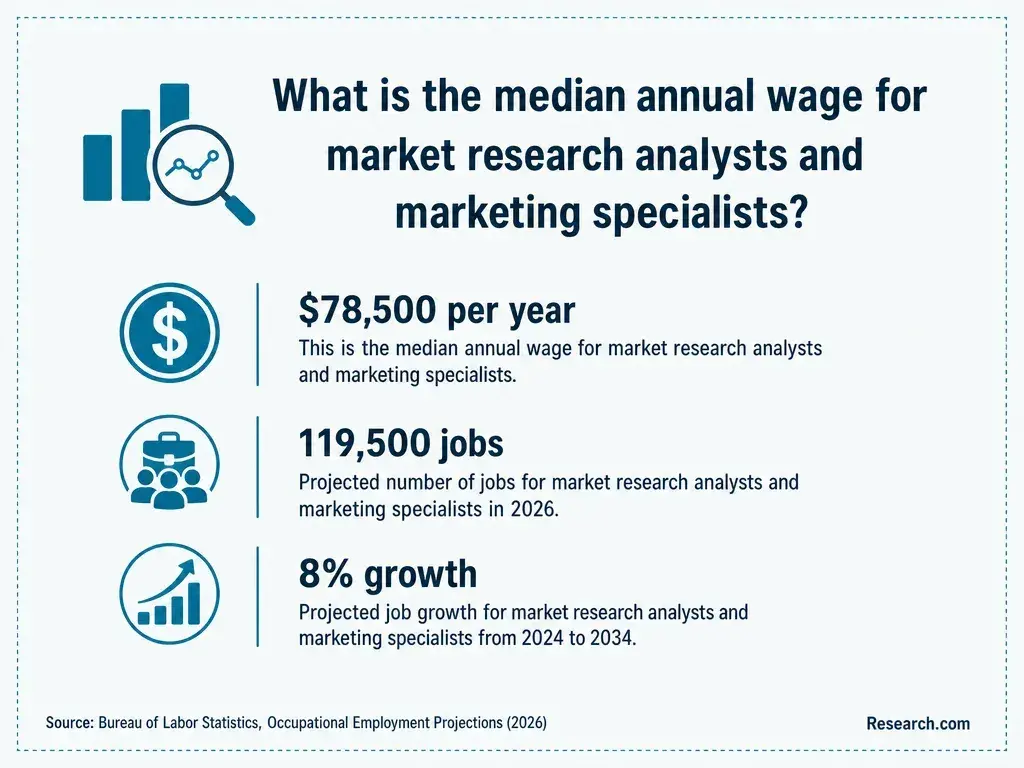
For one relevant occupation, BLS reports a $102,320 median annual wage for project management specialists in May 2025 and projects 7% employment growth from 2025 to 2035. These figures can help a student assess interest in project-oriented work, but they are not an entry-level nonprofit salary estimate. Many such positions call for experience beyond an undergraduate planning assignment.
Use the occupation that matches the job's actual duties when comparing outlook, and check local nonprofit postings for required experience and pay. Finishing a degree sooner does not itself secure a role or higher earnings; if timing is central to the decision, compare accelerated online bachelor's programs against their remaining coursework, cost, and opportunities to build relevant experience.
Other Things You Should Know About Business Administration
No. A capstone is an academic deliverable. Forming an organization and seeking federal tax-exempt recognition involve separate legal and tax processes.
Follow the course's AI policy and disclose use where required. Verify any generated claims or calculations, and do not enter confidential organizational or personal data into an unapproved tool.
Only if it supports the operating decision and the assignment allows it. A funding assumption or revenue strategy belongs in the plan; donor-facing materials are a different deliverable.
Tell the faculty supervisor promptly. The project may be narrowed or reframed around a documented scenario, subject to course rules; do not present an outdated proposal as the organization's current plan.
- Supporting organizations: Requirements and types | Internal Revenue Service https://www.irs.gov/charities-non-profits/charitable-organizations/supporting-organizations-requirements-and-types
- Section 5. Developing an Action Plan - Community Tool Box https://ctb.ku.edu/en/table-of-contents/structure/strategic-planning/develop-action-plans/main
- How to Start a Nonprofit: A Step by Step Guide | UC San Diego Division of Extended Studies https://extendedstudies.ucsd.edu/news-events/extended-studies-blog/how-to-start-a-nonprofit-a-step-by-step-guide
- What Is a Capstone Project? - Boston University Questrom https://www.bu.edu/questrom/blog/what-is-a-capstone-project/
- Business Sustainability and Nonprofit Management, BSBA | Oklahoma State University Catalog https://catalog.okstate.edu/spears-business/management/business-sustainability-nonprofit-management-bsba/
- Nonprofit Best Practice: Evaluation and Measurement of Outcomes | Foundation | Pensacola State College https://foundation.pensacolastate.edu/nonprofit-best-practices-evaluation-and-measurement-of-outcomes/
- Capstone Support Resources | For Faculty and Staff https://vpuefacstaff.stanford.edu/grants-and-resources/capstone-support-resources
- Business Planning for Nonprofits | councilofnonprofits.org https://www.councilofnonprofits.org/running-nonprofit/administration-and-financial-management/business-planning-nonprofits