2027 ECPI University BS in Business Administration: Checking How Professional Training Might Count
Audited and Verified:
Our Editorial and Data Verification Process
Research.com uses government datasets, official education statistics and primary institutional information to support its career and degree guides. Our review process checks factual accuracy, occupational definitions, source dates and the requirements associated with the credentials discussed.
How This Article Was Fact-Checked
Our editorial team verifies salary estimates, employment projections, education requirements and program information against original data providers and official organizations. Salary figures are checked against the relevant occupational definitions and reporting periods. Information about licensure, accreditation and required in-person training is reviewed separately.
Fact-checked and verified on:

Co-Founder and Chief Data Scientist
If you have completed employer training, earned a professional certification, or learned business skills on the job, you may be hoping to finish ECPI University's BS in Business Administration without repeating what you already know. The important distinction is between valuable experience and credit the university will actually award toward graduation.
This guide explains what to submit, how to read a credit evaluation, and which questions to settle before comparing the degree's time and cost with other paths.
Key Things You Should Know
- Professional training may be considered for credit only under ECPI's applicable policies; completing workplace training does not itself establish a course equivalency.
- Ask for a written evaluation showing whether any awarded credit satisfies a business requirement, general education requirement, or elective—not just whether it transfers.
- Compare the remaining courses and total cost after evaluation. Even a credit award may leave prerequisite, concentration, or university graduation requirements unchanged.
What Is ECPI University's BS in Business Administration?
ECPI University's Bachelor of Science in Business Administration is an undergraduate business degree. For an experienced employee, its potential value lies in combining prior responsibility with formal study in areas such as management, accounting, marketing, and business decision-making. It is not an MBA, a professional license, or a substitute for the experience required by a particular employer.
Before applying, request the catalog and degree requirements for your intended start term. They should identify the business core, general education requirements, available concentrations, electives, and graduation rules. A concentration is a defined part of a degree; taking a related elective does not necessarily earn that designation. If finishing quickly matters more than a particular concentration, compare the remaining requirements with US fast-track undergraduate business degree options using written credit evaluations rather than advertised completion times.
Is ECPI University's Business Administration Degree Accredited?
ECPI University reports institutional accreditation by the Southern Association of Colleges and Schools Commission on Colleges (SACSCOC). Institutional accreditation concerns the university; it does not, by itself, establish that this specific business degree holds separate AACSB, ACBSP, or IACBE accreditation. Check the accreditor's current directory and ask ECPI whether any business-specific accreditation covers the exact program and enrollment location you are considering.
Accreditation is also separate from credit for professional training: an accredited university still decides which prior learning it will accept and how it applies to its degree. If your main goal is project management rather than broad business study, compare the named credentials and accreditation scope of alternatives. Affordability checks for accredited project management programs can help frame that comparison, but ECPI must answer questions about its own degree and credit policies.
Can Professional Training Count Toward ECPI's Business Degree?
Possibly, but do not budget for credit until ECPI evaluates your specific learning in writing. A completion badge, years in a role, and a college course are different kinds of evidence. The decisive questions are whether ECPI has an applicable credit-award route, whether your documented learning qualifies under it, and where any credit fits in the BS in Business Administration.
Gather evidence before requesting an evaluation:
- List each training program, certification, examination, or military course with its provider, dates, hours, assessed learning, and completion record.
- Obtain detailed syllabi or competency outlines, assessment results, transcripts, and any available ACE or NCCRS credit recommendations; a recommendation is not an ECPI credit award.
- Ask admissions or the transfer-credit office which prior-learning routes ECPI accepts for your enrollment term, who makes the decision, and whether fees, exams, portfolios, or deadlines apply.
- Request a written degree audit showing awarded credits separately from the requirements they satisfy, then ask about appeals or reassessment if relevant evidence was overlooked.
For example, a supervisor's logistics training may demonstrate substantial skill but still receive no credit, elective credit, or a course equivalency, depending on ECPI's rules and assessment. If your target is a project-coordination role and the training does not shorten this degree, compare the remaining degree cost with online project management programs for smaller budgets and with targeted employer training. Do not assume that changing programs will make the same training transferable.
Use ECPI's catalog for your enrollment term to verify course titles and requirements rather than relying on a general description of business study. Pay particular attention to accounting, finance, marketing, management, quantitative work, and any concentration or culminating course relevant to your goal. Training in one function may not replace a broader course that assesses different learning outcomes.
A useful audit question is, "If this training earns credit, which exact requirement disappears from my remaining course plan?" Ask an adviser to identify prerequisites and course sequence as well. Someone with procurement or logistics training, for instance, should compare the business degree's available operations coursework with a specialized supply chain curriculum. Shorter completion timelines for supply chain bachelor's students matter only if the specialized courses and the final credit evaluation fit that person's goal.
Confirm which delivery options are offered for the BS in Business Administration at your intended start date and whether every remaining required course is available in that format. A program's online availability does not establish that classes are self-paced or that you can avoid scheduled meetings, group work, presentations, or fixed assessment deadlines.
If you intend to study while working, ask for a sample schedule covering the courses left after credit evaluation. Check session length, weekly deadlines, live-attendance rules, technology requirements, and whether a required course is offered when you need it. Compare those commitments with business degree options with shorter sessions; shorter sessions can reduce calendar time while making each week more demanding.
Admission and prior-learning credit are separate decisions. Ask ECPI admissions for the current undergraduate application requirements, accepted secondary-school or previous college records, and any requirements specific to this business program. Then ask the office responsible for credit evaluation what additional records it needs from your training providers or former colleges.
Professional experience may strengthen your explanation of why you are returning to school, but it does not automatically replace an admissions document or an academic prerequisite. If you have been away from coursework, review your mathematics, writing, and accounting preparation against the actual curriculum. Online guides to academic preparation for business administration applicants can help you formulate questions, while ECPI's current requirements control your application.
Your completion time depends on the courses still required after ECPI applies any prior credit, the order in which those courses must be taken, their availability, and the pace you can sustain. A training award that fills an unused elective slot may have less effect on graduation timing than one that satisfies a required course offered infrequently.
Ask an adviser for a term-by-term plan based on your written audit, including a version in which proposed training credit is not awarded. That comparison exposes the risk of enrolling before an evaluation is final. When considering US fast-track undergraduate business degree options, compare your own remaining-course plans rather than each school's shortest advertised timeline.
A reliable cost estimate requires ECPI's current charges and your remaining-course plan. Ask for tuition and mandatory fees for your intended enrollment format, then account for books, required technology, possible prior learning assessment charges, and financing costs. Verify whether an awarded credit changes what you must pay or merely changes which course you take.
Compare a written estimate with inexpensive online business administration colleges only after each school evaluates the same academic and training records. Employer reimbursement can affect your net cost, but check its eligibility rules and payment timing before treating it as available cash.
For an experienced employee, the strongest career case usually connects the degree to responsibility already demonstrated: coordinating operations, supporting budgets, supervising workflows, serving customers, or improving processes. Possible next roles include operations coordinator, project coordinator, sales operations specialist, and administrative or HR support positions, subject to each employer's requirements.
Match the intended role to evidence, not just the degree title. A project coordinator may need schedules and stakeholder communication; an operations role may call for spreadsheet analysis and documented process improvements. If your objective is leadership in your current organization, compare its promotion criteria with undergraduate leadership programs with shorter timelines. A broad business degree may help meet an education requirement, but neither route automatically qualifies you to manage staff or budgets.
What Salary and Job Outlook Can Business Administration Graduates Expect?
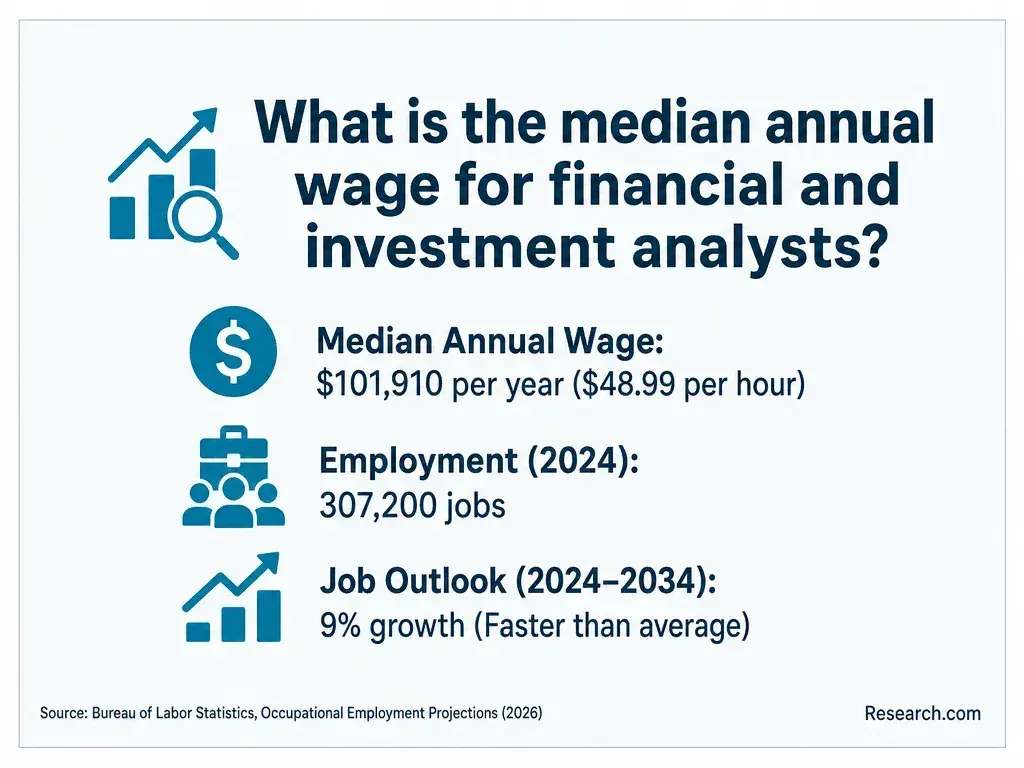
There is no single salary for a BS in Business Administration graduate. Pay depends on the occupation, location, employer, and experience the graduate brings. For one possible career direction, the U.S. Bureau of Labor Statistics reports a May 2025 median annual wage of $78,760 for market research analysts and projects 7% employment growth from 2025 to 2035. These are occupation-wide figures, not ECPI graduate earnings or an entry-level offer; applicants must still meet the role's analytical and experience requirements.
Use a specific target job—not a management-wide salary—to evaluate the degree's financial value. Compare local job postings, your current compensation, the employer's education requirements, and the remaining cost after ECPI's credit decision. If the role calls primarily for a specialized skill you can gain through targeted training, a full bachelor's degree may not be the most direct next step.
If a project management degree is your alternative, review federal aid for undergraduate project management study separately; aid eligibility and awards depend on the school, program, and student.
Other Things You Should Know About Business Administration
Ask admissions or the transfer-credit office when it can issue a written evaluation and whether any decision is conditional on receiving official records.
Ask ECPI whether archived syllabi, third-party transcripts, certification records, or other independently verifiable documents meet its evidence rules. A résumé alone may not establish assessed learning.
Not without appropriate employer permission. Ask ECPI what evidence it needs and whether a redacted, nonproprietary description would be acceptable.
First ask whether ECPI recognizes that specific certification and how any resulting credit would apply. Otherwise, you could spend time and money on a credential that does not change your degree plan.
- Military Training Evaluation Program (MTEP) | dantes.mil https://www.dantes.mil/credit4training/
- Business Administration (BS) | General Business Concentration | ECPI University Catalog https://catalog.ecpi.edu/programs/B8DXVvtfUFtuuill4z1f
- How Colleges Can Simplify Transfer Credit Policies | American College of Education https://ace.edu/blog/how-the-college-credit-transfer-process-works-and-how-it-can-be-improved/
- The Military Guide | acenet.edu https://www.acenet.edu/Programs-Services/Pages/Credit-Transcripts/Military-Guide-Online.aspx
- Will ECPI University Accept my Transfer Credits? https://www.ecpi.edu/admissions/transfer-credits
- Credit for Prior Learning | Minnesota State University, Mankato https://admin.mnsu.edu/organizational-information/policies-procedures/university-policies/credit-for-prior-learning/
- Professional & military learning - Office of the Provost | Master's Degree in Public Administration https://in.nau.edu/provost/professional-military-learning/