2027 BS in Business Administration Math Planning: Comparing a General Track with an Accounting Track
Audited and Verified:
Our Editorial and Data Verification Process
Research.com uses government datasets, official education statistics and primary institutional information to support its career and degree guides. Our review process checks factual accuracy, occupational definitions, source dates and the requirements associated with the credentials discussed.
How This Article Was Fact-Checked
Our editorial team verifies salary estimates, employment projections, education requirements and program information against original data providers and official organizations. Salary figures are checked against the relevant occupational definitions and reporting periods. Information about licensure, accreditation and required in-person training is reviewed separately.
Fact-checked and verified on:

Co-Founder and Chief Data Scientist
Choosing between a general and an accounting track can change which math courses you take, when you take them, and how often you use quantitative skills afterward. This guide is for prospective and returning BS in Business Administration students who want a workable course plan - not a vague verdict on which track is "harder."
You'll see where the tracks overlap, where accounting adds depth, and what to check in a degree audit before committing to a schedule or career goal.
Key Things You Should Know
- Both tracks commonly use algebra, statistics, accounting, and finance; the accounting track usually adds more sustained work with financial records, rules, and reconciliations - not necessarily higher-level pure math.
- Compare prerequisite chains and the courses your credits actually satisfy. A statistics or accounting class accepted for transfer may still leave a required business course unfinished.
- An accounting track is not a CPA license. Accountants and auditors had a $83,680 U.S. median annual wage in May 2025, but that occupation-wide figure is not an expected starting salary for graduates.
What Is a BS in Business Administration With General and Accounting Tracks?
A BS in Business Administration typically combines a business core - such as accounting, economics, finance, management, and marketing - with general education and electives. A general track leaves more room to sample business functions. An accounting track directs more of that room toward accounting coursework. Schools may call these options concentrations, emphases, or tracks; the official catalog determines whether the choice appears on the transcript and what it requires.
Choose the general track if you want flexibility across functions and have no accounting-specific qualification in mind. Choose accounting if you want deeper preparation for accounting work and are willing to plan its course sequence early. Neither is interchangeable with a specialized accounting bachelor's degree without comparing actual courses. If supervising teams is your main goal, organizational leadership bachelor's completion planning offers a different comparison; its leadership focus does not replace accounting preparation.
How Much Math Is Required in General and Accounting Business Tracks?
Accounting generally requires more repeated quantitative work, but not necessarily more advanced mathematics. General-track students may apply algebra and statistics to budgets, forecasts, and business decisions. Accounting-track students are more likely to spend additional courses calculating, classifying, reconciling, and explaining financial amounts under specific rules. Accuracy and interpretation matter as much as arithmetic.
The distinction matters if you are comfortable with practical numbers but wary of calculus: do not assume accounting requires calculus, or that the general track avoids quantitative work. Check each program's math requirement and whether finance, analytics, or operations electives increase the general track's workload. If your preferred quantitative work involves inventory and logistics rather than financial reporting, supply chain program length and value comparisons may help you evaluate a more targeted alternative.
Which Math Courses Are Required for a Business Administration Degree?
Requirements vary by school and catalog year. The table separates common quantitative foundations from courses that may add math-related work; it is a planning aid, not a universal curriculum.
| Course or skill area | Typical use in either track | Potential accounting-track implication |
| College algebra or quantitative reasoning | Rates, formulas, graphs, and business calculations | Often supports later accounting and finance work |
| Business statistics | Summarizing data and interpreting uncertainty | May support auditing or analytical electives |
| Financial and managerial accounting | Reading statements, costs, and budgets | Usually prerequisites for advanced accounting courses |
| Business calculus, analytics, or finance | Program-dependent modeling and decision-making | Requirements depend on the degree plan, not the track name alone |
For course planning, read the catalog's prerequisites for a business administration degree, then ask an adviser for a term-by-term sequence. Returning students should request a written evaluation showing whether prior math and statistics courses meet the specific requirement, rather than merely transfer as electives.
The general track typically preserves elective space for subjects such as marketing, human resources, operations, or analytics. The accounting track usually uses more of that space for intermediate accounting, taxation, auditing, or accounting information systems, where offered. The practical difference is breadth versus depth: a general-track project might compare staffing or purchasing options, while an accounting assignment might require supported journal entries, reconciliations, or analysis of financial statements.
Review the incremental courses, not just the track names. An accounting course with a prerequisite may delay a later course if it is offered infrequently; a general-track elective may be easier to fit into a changing schedule. Neither track alone proves workplace competence. Students targeting logistics, for example, may find that faster-paced online supply chain college study aligns more directly with that function than either accounting depth or unrestricted business electives.
Yes, schools offer business administration degrees in online, campus, and sometimes hybrid formats, but the available tracks and required courses may differ by format. For math planning, confirm how exams are administered, whether accounting assignments require specific software, and whether statistics or advanced accounting courses run every term. Online does not necessarily mean self-paced: scheduled meetings, group work, and fixed deadlines can still shape your course load.
If you work or care for family, ask for sample syllabi and a course rotation before selecting a pace. Accelerated degree options for working adults can shorten the calendar only when required courses, transfer evaluations, and your available study time align; a faster schedule does not remove the accounting prerequisite chain.
Admission rules depend on the institution and whether you are entering as a first-year or transfer student. Schools commonly review previous education and transcripts; some separately control entry into the business major or an accounting track. A math placement result or prerequisite may affect your first eligible course without determining whether you can enter the institution.
Before applying, ask admissions what is required for entry, the business department when you may declare the track, and the transfer office how prior algebra, statistics, and accounting will be evaluated. Obtain course descriptions or syllabi if equivalency is uncertain. If application expense is a concern, colleges that waive online application costs offer one filter, but confirm the current policy and program fit directly with each school.
A traditional full-time bachelor's plan is often built around four academic years, but your remaining time depends on applied transfer credit, enrollment pace, course availability, and prerequisites. An accounting track need not add credits if its courses fit the degree's elective space; it can still add time when a required course is unavailable or its prerequisite has not been met.
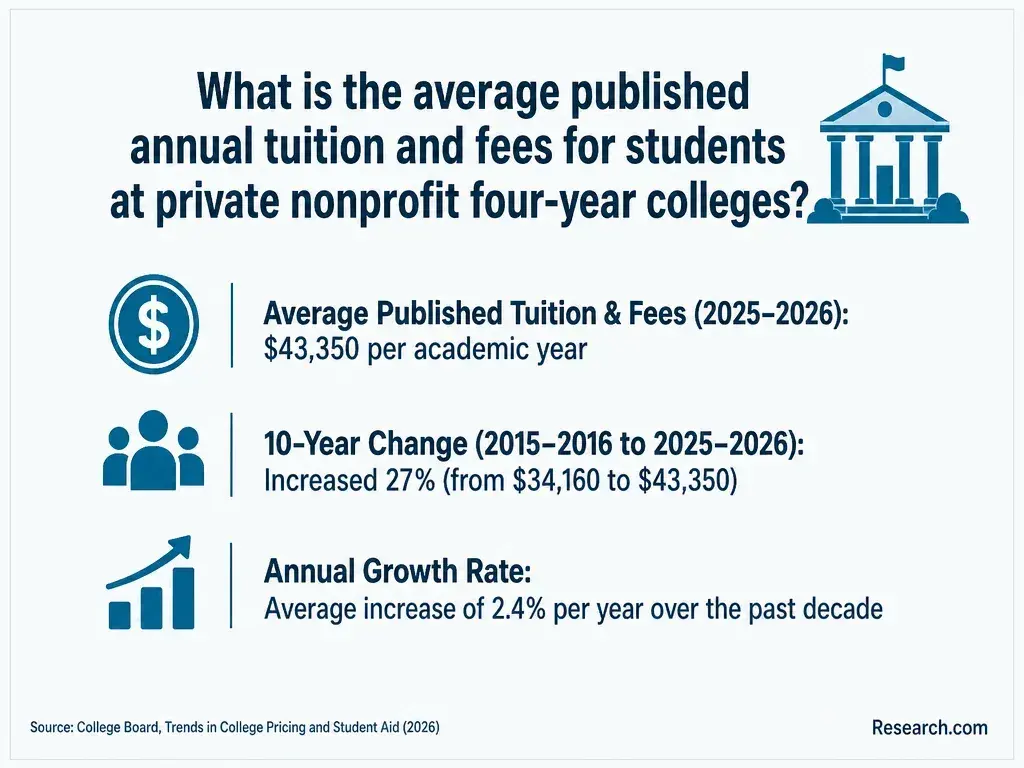
Compare cost to finish, not just advertised tuition. Request an official degree audit and an estimate covering remaining tuition, mandatory fees, books or software, and any travel or exam costs. Then check how an added term would affect aid and work income. Use compare cost-to-finish for shorter business administration programs as a starting point, not a substitute for a school-specific quote based on credits that actually satisfy your requirements.
First, verify that the institution holds recognized accreditation. Then check whether any claimed business accreditation - such as AACSB, ACBSP, or IACBE - covers the school or program you would enter. Institutional accreditation and business accreditation have different scopes; neither, by itself, establishes that an accounting track meets CPA education rules or produces particular employment results.
When using US business college rankings for online learners to build a shortlist, confirm accreditation with the institution and accreditor, then compare the actual catalog and online course rotation. Those details are more decisive for a workable math and accounting plan than a ranking position.
A general track can support applications for entry-level business functions such as operations, sales support, or HR coordination, depending on electives and experience. An accounting track can better support applications for accounting assistant, staff accounting, or audit-related roles when the coursework matches employer requirements. Neither track automatically qualifies a graduate for management or a licensed role.
For context, the U.S. Bureau of Labor Statistics reports a $83,680 median annual wage for accountants and auditors in May 2025 and projects 5% employment growth from 2025 to 2035. These are occupation-wide measures, not starting-pay or placement figures for accounting-track graduates. Compare job postings in your area for required accounting courses, software, experience, and CPA preferences; for a general-track goal, do the same for the specific function you intend to enter.
If HR is that function and you have prior college credit, compare credit acceptance at online HR schools against a general business track with HR electives. The better route is the one that applies your credits efficiently while providing the coursework and experience relevant to your target jobs.
Does an Accounting Track Meet CPA Education Requirements?
Not automatically. CPA eligibility is determined under the rules of the jurisdiction where you seek licensure, including its education and subject-area requirements and other conditions. A business administration degree with an accounting track may include relevant courses but may not contain every course or credit that jurisdiction requires. Even satisfying educational requirements does not itself award a CPA license.
Before choosing electives, identify your intended state board and compare its published requirements with the school's course descriptions and a written degree plan. Ask the accounting department which courses cover required subject areas and whether additional study would be necessary. Do not choose among fastest bachelor's-level business study options on speed alone if CPA eligibility is your goal; missing coursework could require study after graduation.
Other Things You Should Know About Business Administration
Often, but permitted calculators and software vary by instructor and assessment. Check the syllabus, especially for proctored exams; you still need to explain your method and interpret the answer.
It depends on the school's grading and transfer policies. Ask for written confirmation before changing a course to pass/fail, particularly if it is a prerequisite.
Usually only if you can meet the new requirements. Ask an adviser to show which completed electives would still apply and how the switch would affect course sequencing and graduation timing.
Yes. Basic formulas, cell references, tables, and checking calculations are useful in both tracks. Ask which spreadsheet skills your first quantitative courses expect so you can prepare without buying unnecessary software or training.
- Mathematics Frequently Asked Questions | Texas Education Agency https://tea.texas.gov/educators/subject-areas/mathematics-frequently-asked-questions
- Semester Course Load and Student Performance - PMC - NIH https://pmc.ncbi.nlm.nih.gov/articles/PMC7568764/
- Education Requirements | texas.gov https://www.tsbpa.texas.gov/applicants/education/
- Recommended Course Sequence | Texas Higher Education Coordinating Board https://www.highered.texas.gov/data-submission-reporting/recommended-course-sequence/
- CPA Exam Sections Explained: A Guide for Accounting Grads | Pittsburg State University https://degree.pittstate.edu/online-programs/master-professional-accountancy/cpa-exam-sections-explained/
- Minnesota CPA Requirements: Exam, Licensure & Salary Guide | Southwest Minnesota State University https://online.smsu.edu/resources/article/minnesota-cpa-requirements/
- Summer 2026 and Later: Core GenEd | wisc.edu https://gened.wisc.edu/summer-2026-and-later-core-gened/
- Major Plans of Study | Undergraduate Programs - UConn https://undergrad.business.uconn.edu/academics/plans-of-study/
- MBA Majors & Concentrations | The Wharton School | MBA Program https://mba.wharton.upenn.edu/mba-majors/
- Gen Ed Requirements | General Education @ Illinois https://gened.illinois.edu/requirements/