2027 Choosing an Online BS in Business Administration Around Warehouse Peak Demand Periods
Audited and Verified:
Our Editorial and Data Verification Process
Research.com uses government datasets, official education statistics and primary institutional information to support its career and degree guides. Our review process checks factual accuracy, occupational definitions, source dates and the requirements associated with the credentials discussed.
How This Article Was Fact-Checked
Our editorial team verifies salary estimates, employment projections, education requirements and program information against original data providers and official organizations. Salary figures are checked against the relevant occupational definitions and reporting periods. Information about licensure, accreditation and required in-person training is reviewed separately.
Fact-checked and verified on:

Co-Founder and Chief Data Scientist
Warehouse peak periods can bring overtime, changing shifts, and little control over when a workday ends. An online BS in Business Administration may fit around that schedule, but "online" does not necessarily mean self-paced. For warehouse employees considering a degree, the deciding details are course deadlines, live attendance, exam rules, and the ability to reduce enrollment during busy months. This guide explains how to check those policies, choose relevant coursework, and weigh the degree against your next operations or supply chain goal.
Key Things You Should Know
- Choose by the busiest weeks you actually work: asynchronous lectures help, but fixed exams, team meetings, and weekly deadlines can still conflict with peak shifts.
- Ask for a term-by-term plan that places demanding or sequential courses outside your peak period; an accelerated calendar is not automatically a lighter workload.
- For career planning, the U.S. Bureau of Labor Statistics projects 18% employment growth for logisticians from 2025 to 2035, but a business degree alone does not qualify a graduate for every supply chain role.
What Is an Online BS in Business Administration for Warehouse Careers?
An online BS in Business Administration is an undergraduate degree covering business functions such as accounting, management, analytics, and operations. For a warehouse employee, its value is the chance to connect daily work - staffing, inventory accuracy, service levels, and costs - to broader business decisions. It is not a warehouse license or a substitute for experience with a facility's systems and processes.
Program titles matter less than the courses and schedule. A general business BS may suit someone seeking wider operations responsibilities, while a supply chain or logistics-focused bachelor's may offer more specialized coursework. Compare actual curricula and online requirements, not just degree labels. A starting point for finding programs is to compare nationally ranked online business programs, then verify each candidate's current catalog and course schedule yourself.
How Can an Online Business Degree Prepare You for Warehouse Peak Demand?
Peak demand tests decisions that business courses can help you examine: how much capacity to plan, when labor costs rise, which bottleneck limits throughput, and how service commitments affect priorities. Operations and analytics coursework can provide a framework for those questions. Workplace judgment still depends on current data, safety rules, supervisors' authority, and experience on the floor.
The first program test is whether you can complete assignments during your hardest shift pattern, not your average week. Request sample syllabi for courses you would take during peak season and check these specific obligations:
- Whether lectures are recorded and whether attendance at live classes or group meetings is mandatory.
- When weekly work is due, how far ahead assignments are released, and whether exams have fixed or proctored windows.
- Whether you may take fewer courses, skip a term, or return after an approved leave without disrupting course sequences or aid eligibility.
- Whether an internship, presentation, or capstone requires daytime availability or employer-approved access to workplace information.
Build a calendar using your employer's expected overtime and the school's estimated weekly workload for each course. If the plan works only when shifts end on time, reduce the course load. Guidance on business administration degree planning for employed applicants can help frame that conversation with an adviser.
Is an Online BS in Business Administration Accredited?
An online degree is not automatically accredited because it is offered by a college. Confirm the institution's current accreditation with a recognized institutional accreditor and check that the online BS is an authorized offering. Institutional accreditation is distinct from business-school or programmatic accreditation through AACSB, ACBSP, or IACBE; if a school advertises the latter, confirm that its stated scope includes the degree you intend to pursue.
Accreditation is an essential check, not evidence that a program will accommodate overtime. Read the current catalog's attendance, leave, transfer, and graduation policies as well. Schools with no application charge can reduce upfront college application expenses, but a waived fee should not outweigh verified accreditation or scheduling fit.
Expect a business core that may include accounting, finance, management, economics, statistics, marketing, and business communication, alongside general education requirements. For warehouse work, inspect the depth - not just the presence - of operations, supply chain, analytics, information systems, and human resource topics. Course names and requirements vary by institution.
Useful assignments might involve interpreting inventory measures, comparing staffing scenarios, or explaining a process change to stakeholders. A course exercise does not establish that a proposal is safe, approved, or effective at your workplace. If you want to use actual facility data, obtain the required employer and faculty permissions and protect employee, customer, and proprietary information.
Choose electives around the responsibility you want next. Labor scheduling may call for management and HR knowledge, but someone aiming specifically for an HR career should compare that breadth with a specialized path, including whether they can finish an HR bachelor's using previous college credits. An operations elective does not, by itself, create a formal concentration; check the credential recorded by the school.
Completion time depends on credits that satisfy degree requirements, enrollment pace, prerequisite order, and when required courses are offered. Full-time study can shorten the calendar, while part-time enrollment may make it possible to remain employed through peak season. An accepted transfer course might count only as an elective rather than fulfill a required business course.
Ask an adviser to map the remaining courses against your peak calendar for more than one possible pace. Confirm whether a missed prerequisite delays later courses and whether sitting out a term changes your catalog requirements or financial aid. Flexible accelerated bachelor's degrees are worth comparing if shorter terms match your available hours; shorter terms can also concentrate exams and assignments into your busiest weeks.
Requirements depend on whether you apply as a first-time student or a transfer student. Schools commonly request prior academic records and may set separate standards for admission to the business major. Some require particular mathematics or introductory business courses before upper-level study. Ask admissions which requirements apply to you, then ask the registrar or transfer office how prior courses will apply to the degree.
If you have college credit, obtain an official evaluation showing what fulfills general education, the business core, electives, and any residency requirement. Do not assume that credit accepted by the institution shortens the degree. If your goal is specifically project coordination, it may also be useful to compare how you could use prior college credits in a project management bachelor's before choosing a general business program.
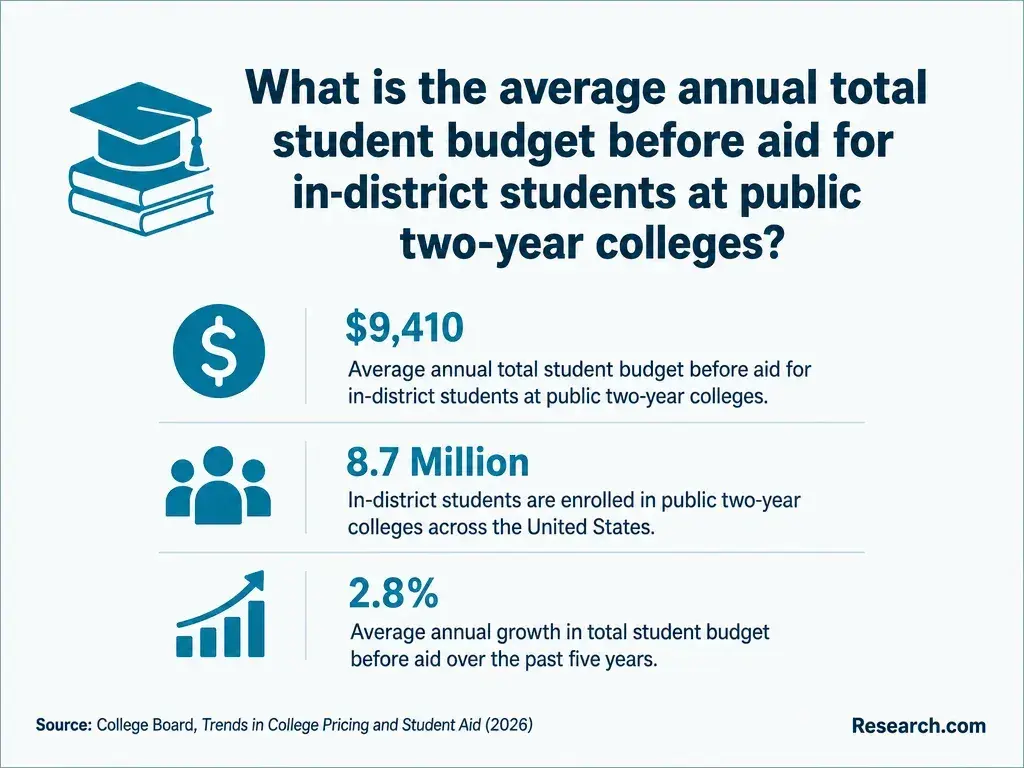
The useful figure is your estimated cost to finish, not an advertised per-credit price. Request a degree audit and a written cost estimate based on the courses you still need. Compare tuition and mandatory fees with books, software, proctoring, and any travel or campus requirements. Add the cash-flow effect of reducing work hours, if that is part of your plan.
For warehouse employees, employer tuition assistance can change the calculation - but reimbursement may arrive after grades are posted and may carry course, grade, or continued-employment conditions. Compare business administration college affordability and FAFSA participation with your own aid eligibility, rather than assuming every listed school or course will be covered. Ask the financial-aid office how part-time enrollment or a term off affects your particular award.
Your current duties should shape the next role you target. A warehouse employee who already tracks inventory or coordinates shifts can document those responsibilities when applying for inventory control, operations coordination, or supervisory opportunities. A move into logistics analysis or broader supply chain planning may require stronger data skills and experience beyond a general business degree.
The U.S. Bureau of Labor Statistics projects 18% growth in logistician employment from 2025 to 2035. That indicates demand for the occupation, not automatic access to it after graduation. Review local job descriptions for required systems, industry knowledge, and experience; then choose coursework and work samples that address the gaps. If the intended move is people leadership rather than supply chain specialization, three-year organizational leadership bachelor's options provide another curriculum to compare, subject to your transfer evaluation and schedule.
There is no single salary for online BS in Business Administration graduates working in warehouses. Pay depends on the occupation, location, industry, shift, and level of responsibility. The Bureau of Labor Statistics reports a May 2025 median annual wage of $82,320 for logisticians. That is an occupation-wide median - not a starting salary, a warehouse supervisor wage, or a forecast of what earning this degree will add to your pay.
For a sound return-on-investment decision, compare wages in actual local postings for roles you could plausibly reach with your experience. Weigh that evidence against your remaining education costs and the risk that peak-season coursework could slow completion. Budget-conscious online business administration education may lower one side of that comparison, but the least expensive advertised program is not necessarily the least costly path to graduation.
Which Certifications Strengthen Warehouse Management Career Prospects?
A relevant certification can help demonstrate focused knowledge, but its value depends on the job you want and the certifying organization's eligibility rules. Compare supply chain, inventory, process improvement, or project management credentials against local job postings. Check required experience, exam content, maintenance obligations, and total fees before paying; a business degree does not automatically meet certification requirements.
If postings emphasize a specific system or process you use at work, documented training and a supervised improvement project may be more immediately useful than another broad credential. Conversely, a substantial move into project-focused work may justify comparing a specialized degree and its funding options, such as funding an online project management bachelor's degree. Choose the smallest credible qualification that addresses a verified gap rather than collecting credentials without a target role.
Other Things You Should Know About Business Administration
No. Peaks vary by employer, products, customers, and region. Use your facility's actual busy calendar - not a generic retail calendar - when planning enrollment.
Employer policies vary. If you are studying for an internal promotion, ask HR whether the specific accredited degree meets the posting or tuition-benefit requirements before enrolling.
Possibly, but employment alone does not award internship credit. Ask the program whether your role, supervision, learning objectives, and documented work meet its requirements before the internship term begins.
Describe your responsibilities, decision process, and skills without revealing restricted staffing, customer, pricing, or performance data. Use figures only if your employer permits their disclosure.
- Independent Study Frequently Asked Questions | ca.gov https://www.cde.ca.gov/sp/eo/is/faq.asp
- Types of Financial Aid: Grants, Work-Study, and Loans | studentaid.gov https://studentaid.gov/understand-aid/types
- Cost of Attendance (Budget) | 2025-2026 Federal Student Aid Handbook https://fsapartners.ed.gov/knowledge-center/fsa-handbook/2025-2026/vol3/ch2-cost-attendance-budget
- Reduced Course Load - Study in the States - Homeland Security https://studyinthestates.dhs.gov/sevis-help-hub/student-records/manage-program-dates-registration-and-course-load/reduced-course
- What happens to my financial aid if I enroll part-time or reduce my course load? - Student Financial Aid https://www.washington.edu/financialaid/2026/09/14/what-happens-to-my-financial-aid-if-i-enroll-part-time-or-reduce-my-course-load/
- Liberty University Academic Calendar Online https://www.liberty.edu/online/important-dates-and-deadlines/
- Time Managment Calculator | School of Chemical Sciences | Illinois https://scs.illinois.edu/time-managment-calculator
- Synchronous vs Asynchronous | University of Bridgeport https://www.bridgeport.edu/news/synchronous-vs-asynchronous/
- What's the Difference Between Asynchronous and Synchronous Learning? | Ohio State Online https://online.osu.edu/content-hub/blogs/whats-the-difference-between-asynchronous-and-synchronous-learning/
- Asynchronous and Synchronous Online Courses | nmsu.edu https://dacc.nmsu.edu/faculty-and-staff/online-quality-assurance/asynchronous-and-synchronous-online-courses.html