2027 A Second BS in Business Administration After a Bachelor's in Civil Engineering: Credits, Cost, and Alternatives
Audited and Verified:
Our Editorial and Data Verification Process
Research.com uses government datasets, official education statistics and primary institutional information to support its career and degree guides. Our review process checks factual accuracy, occupational definitions, source dates and the requirements associated with the credentials discussed.
How This Article Was Fact-Checked
Our editorial team verifies salary estimates, employment projections, education requirements and program information against original data providers and official organizations. Salary figures are checked against the relevant occupational definitions and reporting periods. Information about licensure, accreditation and required in-person training is reviewed separately.
Fact-checked and verified on:

Co-Founder and Chief Data Scientist
A civil engineering degree already gives you quantitative and project-based preparation, but it may not cover the accounting, finance, and management knowledge needed for your next role. If you are considering a second BS in Business Administration, the key decision is whether its remaining requirements justify the cost and time - or whether targeted business training would get you there sooner. This guide explains how schools evaluate prior credits, what you may still need to study, and how to compare the degree with more direct paths into business responsibilities.
Key Things You Should Know
- A completed engineering bachelor's may satisfy much of a school's general education requirement, but only an official second-degree audit can establish which business courses and residency credits remain.
- Compare the cost of required remaining credits, not the advertised cost of a full bachelor's; course sequencing and eligibility for aid can also change the total.
- A second BS is most useful when a target role calls for broad undergraduate business preparation. For an engineering-adjacent promotion, focused coursework and documented work experience may be more direct.
Is a second business administration bachelor's degree worthwhile after civil engineering?
It can be worthwhile if you want a broad business foundation and your target employers value a business bachelor's specifically. It is harder to justify if you already qualify for the roles you want through engineering experience and need only a few functional skills. The answer depends less on the title of the new degree than on the gap between your current responsibilities and your next job.
Civil engineers commonly bring quantitative reasoning, scheduling, technical communication, and experience working within budgets or contracts. Those strengths can transfer to construction operations, infrastructure consulting, procurement, or project delivery. A business curriculum adds a different perspective: interpreting financial statements, evaluating markets, managing people, and making organization-wide decisions. Neither degree substitutes for demonstrated responsibility in those areas.
Start with several job descriptions for the role you want. If they accept an engineering bachelor's and emphasize experience, ask whether employer-sponsored courses or a stretch assignment would address the missing skills. If they explicitly favor business study, compare the second degree's remaining requirements with a certificate or graduate program. For engineers who intend to keep working, business administration degree planning for employed applicants can help frame the scheduling decision.
How many credits transfer into a second bachelor's degree in business administration?
There is no reliable universal credit number. A school may recognize your completed civil engineering bachelor's, accept individual courses, and still require its business core, upper-division coursework, or a minimum amount of study at that institution. Accepted credit is not the same as credit that satisfies a remaining degree requirement.
This table shows how prior engineering work might be classified. It is a planning aid, not a prediction of an individual school's evaluation.
| Prior study | Possible application | What to verify |
| General education and writing | General education or second-degree waiver | Whether the school waives categories because you already hold a bachelor's |
| Calculus, statistics, or computing | Quantitative requirement, prerequisite, or elective | Whether content matches a required business statistics or analytics course |
| Engineering economics or project coursework | Elective or possible substitution | Whether the business department approves equivalence; similar titles are insufficient |
| Courses without a business equivalent | Free electives, subject to program limits | Whether free-elective space remains after other requirements are met |
Send official transcripts and, where a substitution is plausible, course descriptions or syllabi to the transfer office or registrar. Request a written degree audit that separates general education, prerequisites, business core, concentration, electives, and institutional residency. Ask the business department who approves exceptions and whether an appeal is available. This same distinction matters when using existing credits in a human resources degree instead: generous transfer acceptance does not necessarily shorten the major.
How much does a second bachelor's degree in business administration cost?
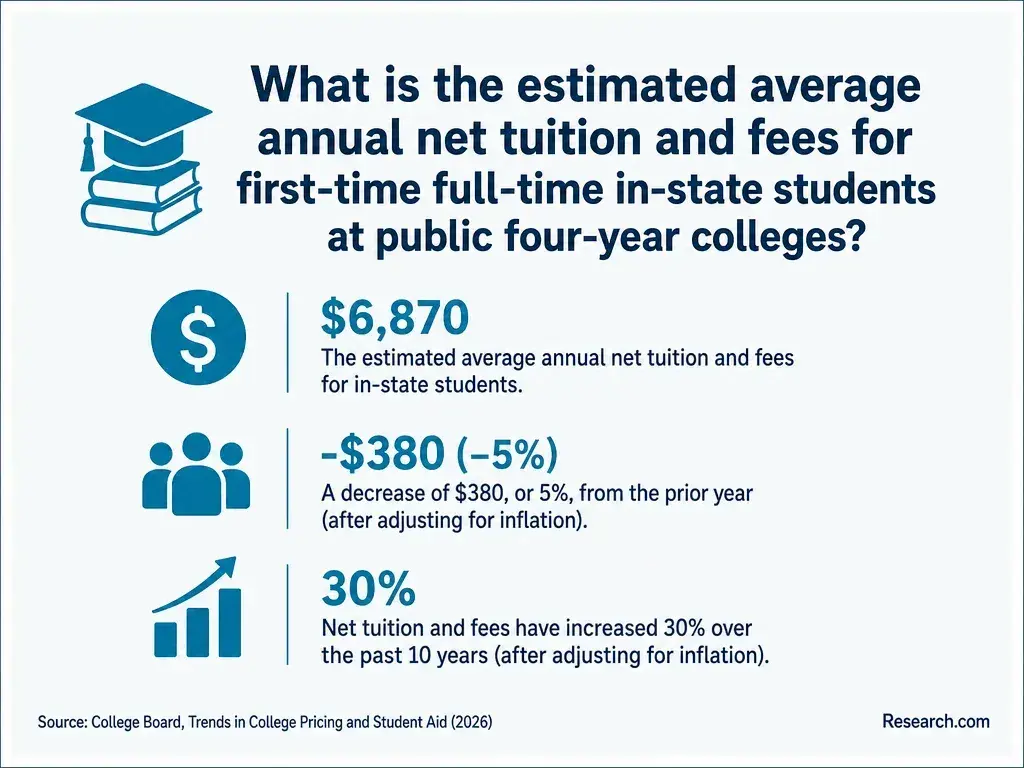
The useful price is the cost of your remaining approved degree plan, not a school's advertised full-program tuition. Schools may charge per credit, per course, or per term, and a second-degree student may face different aid rules from a first-time undergraduate. Do not assume your engineering degree automatically reduces the bill.
Compare offers using the same cost categories so a lower tuition rate does not conceal extra courses or a longer enrollment period.
| Cost component | Question for the school |
| Required coursework | Which audited courses remain, and how is each charged? |
| Mandatory charges | Are technology, online, proctoring, or other fees added? |
| Completion time | Will course availability require additional terms? |
| Work and travel | Would classes, campus visits, or reduced work hours affect earnings or expenses? |
| Funding | Which grants, loans, scholarships, or employer benefits are available to a prior bachelor's holder? |
Federal Pell Grant eligibility is generally limited for students who already have a bachelor's degree; ask the financial-aid office about your specific eligibility for other aid, satisfactory academic progress rules, and borrowing limits. If an employer reimburses tuition, check when payment arrives and whether grades or continued employment are required. Use the audited course list when you compare the least expensive business administration schools; the lowest published rate may not produce the lowest completion cost.
Expect the business requirements your engineering curriculum did not cover, subject to the school's audit. Common areas include financial and managerial accounting, economics, finance, marketing, management, business law, operations, and a strategy or capstone course. Some programs also require statistics, information systems, or a concentration. The exact courses - and whether they must be taken in sequence - vary by institution.
Your engineering mathematics may support quantitative business work without replacing business statistics. Likewise, engineering economics may introduce cost comparisons without covering financial reporting or corporate finance. Ask for a course-by-course equivalency decision rather than relying on overlapping terminology.
Choose electives to close a role-specific gap. Someone moving toward construction operations might prioritize procurement, accounting, and organizational behavior; someone considering personnel responsibilities may need deeper HR coursework. A few HR electives are not the same as a separately awarded HR credential, so choosing a degree in human resources is a distinct decision if HR is the actual destination.
Possibly, but availability depends on whether a program admits second-degree students in its online or campus format. Delivery mode does not determine how your engineering credits apply; the school's academic policies do. Confirm that required upper-division courses and any concentration are offered in the format you would use.
For an engineer maintaining a full-time job, online access can remove commuting without removing scheduled obligations. Ask about live sessions, group presentations, exam proctoring, weekly deadlines, internships, and campus visits. Campus study may offer easier access to in-person recruiting or faculty projects, but its timetable may conflict with site work or travel. When reviewing leading US colleges for online business study, check each program's second-degree admission policy and required-course schedule before judging its flexibility.
Schools commonly ask second-degree applicants for an application and official college transcripts, but their GPA thresholds, prerequisite rules, deadlines, and eligibility policies differ. Admission to the university may also be separate from admission to its business major. A civil engineering degree does not, by itself, establish either admission or credit equivalence.
Ask admissions whether prior bachelor's holders can enter the specific BS in Business Administration, whether introductory accounting or other prerequisites must be completed first, and whether your earlier general education is waived. Then ask the registrar for the credit evaluation and the business department for any major-level approval. If comparing programs with different names, including organizational leadership bachelor's completion planning, confirm their policies separately rather than assuming one second-degree rule applies to both.
The timeline depends on the audited courses you must finish, their prerequisites, your enrollment pace, and when each required class runs. A program that accepts many engineering credits can still take longer than expected if accounting precedes finance, a capstone is offered infrequently, or residency rules require additional study.
Request a term-by-term plan showing every prerequisite and the next available offering of each required course. If you need to remain employed, compare a realistic part-time schedule with the school's advertised fastest path. Explore US business bachelor's fast-track rankings for candidates to investigate, but treat any listed duration as a starting point - not a completion promise for a second-degree applicant.
The most direct transitions often keep your engineering knowledge in use. Project coordination or project management work involves scope, schedules, costs, and stakeholders; construction or infrastructure operations work adds staffing, purchasing, and process decisions. Procurement and supply chain roles may value familiarity with technical specifications and vendors. Consulting or management analysis can draw on experience identifying operational problems and presenting recommendations.
These are different hiring paths, not automatic outcomes of a business degree. A move into marketing, HR, or finance may require function-specific projects or experience beyond a general business core. Compare job postings by required tasks: if procurement is your aim, for example, look for evidence you can develop in vendor evaluation, contract administration, and cost analysis. Explore fast-track supply chain bachelor's programs only if that specialized curriculum addresses a gap a shorter option cannot.
There is no single salary for a second BS in Business Administration. Pay attaches to an occupation, location, industry, and level of responsibility - not simply to the degree printed on a diploma. Your existing engineering experience may matter more than the new credential when an employer sets compensation.
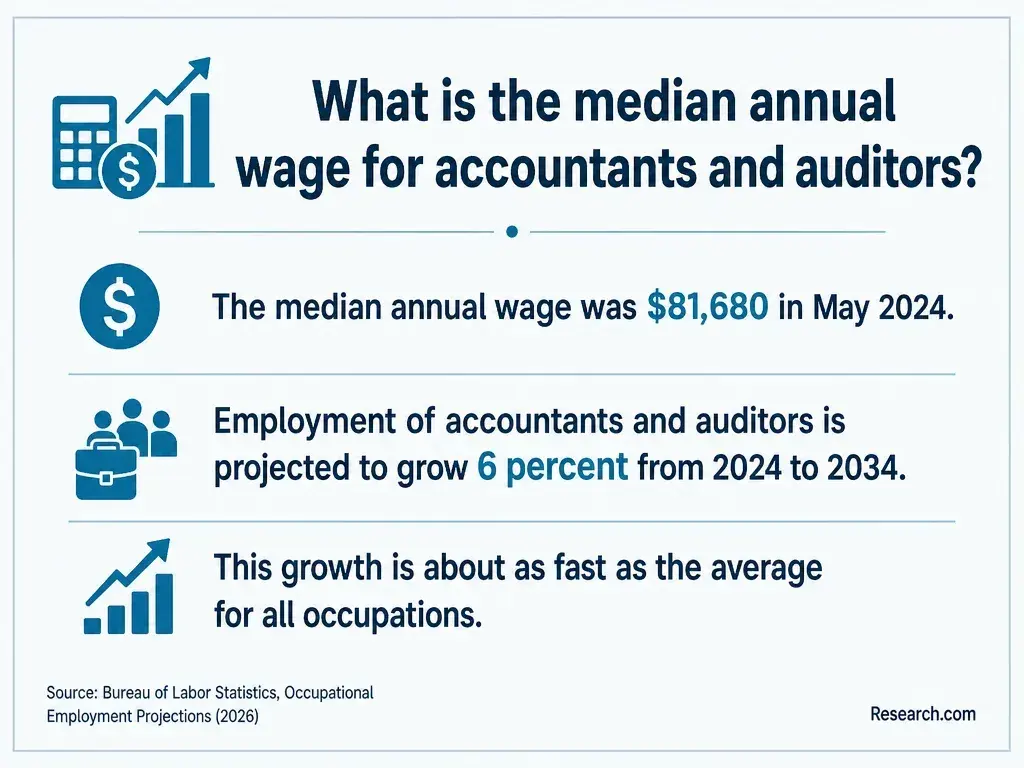
For context, the U.S. Bureau of Labor Statistics reports a $102,320 median annual wage for project management specialists in May 2025 and projects employment growth of 7% from 2025 to 2035. The wage describes workers across that occupation, not starting pay for business graduates or a raise attributable to a second degree. Before estimating a return on education, compare openings suited to your experience with the audited cost of each pathway. If a specialized degree is under consideration, an accredited online project management tuition guide can help you compare its education costs rather than assuming the broader business BS is cheaper.
What alternatives to a second bachelor's degree support a business career?
Choose the smallest qualification that credibly closes the gap to your target role. A second business bachelor's makes the strongest case when you need a broad undergraduate curriculum and the audited path is manageable; it is not the default next step simply because your first degree was technical.
The alternatives differ in breadth and in the evidence they give an employer.
| Pathway | Best fit | Main limitation to check |
| Targeted courses or certificate | A defined gap such as accounting or procurement | May not meet an employer's degree preference |
| Employer training and stretch assignments | Advancement into business responsibility within your current industry | Opportunity and supervision depend on the employer |
| MBA or specialized graduate program | A role that benefits from graduate-level study and for which you meet admission expectations | Cost, prerequisites, and experience expectations vary |
| Specialized bachelor's | A clear move into a function such as supply chain or project management | Another undergraduate program may still require substantial coursework |
Before enrolling anywhere, obtain the second-degree audit, a written cost and course schedule, and several relevant job descriptions. Compare those against what you could accomplish through a supervised workplace assignment or shorter study. If project management is the goal, also compare program-specific funding options; financial aid packages for online project management bachelor's students will not necessarily match those offered for a second business bachelor's.
Other Things You Should Know About Business Administration
No. You retain both credentials. List the one most relevant to each application first, and describe the combined technical and business skills you can demonstrate.
No. Engineering licensure is governed by state boards and has separate education, examination, and experience requirements. Check your state board if licensure is part of your career plan.
Only if the program approves the activity under its academic rules. You may also need employer permission and a project that protects confidential information.
Not necessarily. Both are undergraduate business degrees, but required courses, quantitative emphasis, and second-degree policies vary by school. Compare their actual degree audits rather than their abbreviations.
- Fast Facts: Tuition costs of colleges and universities (76) | ed.gov https://nces.ed.gov/fastfacts/display.asp
- Student Eligibility for Pell Grants | ed.gov https://fsapartners.ed.gov/knowledge-center/fsa-handbook/2024-2025/vol7/ch1-student-eligibility-pell-grants
- FAQs | Economics and Business Management - UC Merced https://economics.ucmerced.edu/undergraduate-programs/faqs
- RE: BBA - Bachelor of Business Administration in Real Estate | Florida International University Catalog https://catalog.fiu.edu/programs/RE%3ABBA/requirements-uz47h
- Earned a Bachelor's Degree - Undergraduate Admissions https://admissions.charlotte.edu/apply/transfer-students/transfer-requirements/earned-a-bachelors-degree/
- Undergraduate Students Earning a Second Degree | Charter Oak State College https://www.charteroak.edu/catalog/current/ug_admissions/ug_earning_second_degree.php
- Eligibility Requirements - Office of Student Financial Aid https://financialaid.iastate.edu/getting-started/qualifying-for-aid/eligibility-requirements/
- Everything you need to know before choosing an undergraduate business degree - Penn State World Campus https://www.worldcampus.psu.edu/about-us/news-and-features/choosing-a-business-degree-program
- Transfer Credit Information - Spartan Central - UNC Greensboro https://spartancentral.uncg.edu/registration-degree-planning/transfer-credit-information/
- What Can You Do with a Construction Management Degree? | Texas A&M University College of Architecture https://www.arch.tamu.edu/news/2025/12/09/what-can-you-do-with-a-construction-management-degree/