2027 Is a International Business Focus Worth Adding to a BS in Business Administration If You Already Work as a international sales coordinator?
Audited and Verified:
Our Editorial and Data Verification Process
Research.com uses government datasets, official education statistics and primary institutional information to support its career and degree guides. Our review process checks factual accuracy, occupational definitions, source dates and the requirements associated with the credentials discussed.
How This Article Was Fact-Checked
Our editorial team verifies salary estimates, employment projections, education requirements and program information against original data providers and official organizations. Salary figures are checked against the relevant occupational definitions and reporting periods. Information about licensure, accreditation and required in-person training is reviewed separately.
Fact-checked and verified on:

Co-Founder and Chief Data Scientist
As an international sales coordinator, you may already handle overseas customers, order handoffs, and cross-border communication. Adding an international business focus to a BS in Business Administration is worthwhile only if it builds skills your work has not taught you - or helps you qualify for a specific next role.
This guide compares the focus with other concentrations, explains what to check in a program, and puts career prospects and completion costs in context. You can use it to decide whether to add the focus, choose different electives, or keep the degree plan simpler.
Key Things You Should Know
- An international business focus is most valuable when it adds trade, market-entry, or cross-border strategy skills beyond your current sales coordination duties.
- Check whether it is an official concentration, whether its courses count toward graduation, and whether it adds time or cost before enrolling.
- The U.S. Bureau of Labor Statistics reports a $82,320 median annual wage for logisticians in May 2025 and projects 18% job growth from 2025 to 2035; those occupation-wide figures are not expected outcomes for degree graduates.
Is an international business focus worth adding to a business administration degree?
Usually, yes - if it fills a defined gap between your current duties and your next role without delaying graduation substantially. A BS in Business Administration provides a general foundation in functions such as finance, marketing, management, and operations. An international business focus may be an official concentration, a minor, or simply a group of electives; the label and transcript recognition depend on the school.
Start with the responsibilities you want next. If you coordinate orders but want to evaluate new markets, negotiate with overseas partners, or help plan regional sales strategy, relevant coursework can extend your experience. If your goal is a senior coordinator or sales operations role at your current employer, a broader business degree plus stronger analytics or pricing skills may offer more immediate value.
The deciding test is incremental value: compare the proposed courses with skills you already demonstrate, then ask an adviser whether every course applies to your degree audit. A focus that adds semesters solely to repeat familiar material is harder to justify. If your intended move is managing cross-border implementations rather than international commercial strategy, online project management degrees for transfer applicants offer a different pathway to compare - not an equivalent credential.
How does international business coursework benefit an experienced international sales coordinator?
Your experience is an asset, but coordinating transactions and making international business decisions are different levels of responsibility. You may know how to resolve an order exception; coursework can help you examine why a market, channel, contract term, or distribution arrangement creates that exception in the first place.
Look for assignments that connect your existing work to a decision you have not yet owned: comparing market-entry options, estimating how currency movements affect a quoted price, or assessing distributor risks. Finance and analytics courses may be more useful than another introductory sales class if pricing and margin decisions are your gap. Seek permission before using employer records; an anonymized or hypothetical case is safer when customer terms and pricing are confidential.
Coursework also gives you a way to explain your readiness for expanded responsibility, but it does not replace evidence of results or employer trust. If you must study while retaining your role, compare career advancement study options in business administration by their actual course requirements, not just their advertised flexibility.
What career opportunities can an international business focus create?
The focus may support a move from coordination into international sales operations, export account support, regional business development support, trade operations, or supply chain analysis. The attainable step depends on what you already do: maintaining distributor relationships is stronger evidence for account-facing work, while resolving shipment and inventory problems may point toward logistics.
Employers generally assess role-specific capabilities as well as education. A business development position may require prospecting and revenue responsibility; a trade-compliance position may require detailed regulatory knowledge and training; a sales manager position normally calls for demonstrated sales and leadership experience. The focus alone confers none of those qualifications.
If shipment planning and supplier coordination are your strongest interests, a specialized supply chain route may offer greater depth than international business electives. Fast-track online supply chain bachelor's options can help frame that comparison, but confirm transfer applicability and remaining requirements before treating an advertised timeline as yours.
There is no universal course list. Programs may combine international marketing, global strategy, international finance, trade policy, cross-cultural management, and international operations. Some require a language course or an applied project; others offer these only as electives. Review the current catalog to distinguish required courses from choices that might not be offered when you need them.
For a sales coordinator, course content matters more than an international-sounding title. International marketing can deepen channel and customer analysis; finance can strengthen currency and payment-term reasoning; operations can clarify handoffs among sales, purchasing, and shipping. Check prerequisites and whether a final project lets you investigate an approved business question without disclosing employer information.
If the available courses concentrate on freight and sourcing, compare their depth with a dedicated supply chain curriculum. Supply chain program length and value comparisons are a starting point, but the decisive evidence is the specific course sequence and degree audit at each school.
Choose by the work you want to perform, not by which concentration sounds closest to your current job title. The comparison below shows where common options place their emphasis; individual curricula vary.
| Focus | Typical emphasis | Strongest fit for a sales coordinator seeking to... |
| International business | Cross-border markets, strategy, and business practices | Take on regional or international commercial planning |
| Marketing or sales | Customers, channels, campaigns, and revenue processes | Move toward account development or sales operations |
| Supply chain or operations | Sourcing, inventory, logistics, and process performance | Own fulfillment or distribution decisions |
| Business analytics | Data preparation, reporting, and decision support | Analyze pricing, forecasts, or sales performance |
| Project management | Scope, schedules, stakeholders, and delivery | Coordinate complex launches or implementations |
Ask which option provides the most useful additional courses per required credit. For instance, project management may fit a launch-coordination goal, but compare the complete cost rather than assuming a concentration is cheaper than a separate degree. Project management college costs after financial aid provide context for that alternative; your own aid offer and remaining credits determine the comparison.
Choose the format that accommodates both your work schedule and the courses you need. Online delivery can eliminate a commute, but it does not necessarily mean self-paced study: live discussions, group work, proctored assessments, and fixed deadlines can collide with customer calls across time zones. Campus classes may offer useful face-to-face access to faculty and peers if their meeting times are predictable.
Request a sample schedule for the international business courses - not just the business core. Confirm whether required classes run online every term, whether any campus visits are mandatory, and how group presentations are scheduled. If you compare US rankings of online business degree programs, use them to identify candidates, then verify the specific concentration and its delivery format directly with each school.
First, confirm that the institution holds accreditation recognized by the U.S. Department of Education or the Council for Higher Education Accreditation. Then check whether any advertised business accreditation - such as AACSB, ACBSP, or IACBE - actually covers the school or program you would enter. Institutional accreditation and business-specific accreditation are different, and neither by itself establishes that an international business concentration is available.
Check the accreditor's listing and ask the school to identify the exact degree and delivery mode covered. Price and application convenience are separate considerations: colleges that waive online application costs may reduce an upfront expense, but a fee waiver is not evidence of program quality or accreditation scope.
Requirements depend on whether you are entering as a first-time student, transferring, or returning after a break. Schools commonly request prior academic records; some separately set requirements for entry to the business major. Previous work as an international sales coordinator can strengthen your application, but it does not automatically satisfy accounting, economics, mathematics, or other required coursework.
Before applying, request an evaluation of previous college credit and ask which credits satisfy general education, the business core, and the proposed focus. An accepted elective may not replace a required course. Confirm minimum grades, prerequisite sequencing, residency rules, and whether the concentration is open to students in your chosen format. For a closer look at possible requirements, see business administration admissions coursework and credit requirements; the admitting school has final authority over its policies and your credit evaluation.
Your remaining requirements - not the advertised length of the full bachelor's program - determine your likely completion time. A transfer student might have substantial credit accepted yet still need sequenced business courses or concentration classes offered infrequently. Part-time enrollment can protect your work schedule while extending the calendar time needed to finish.
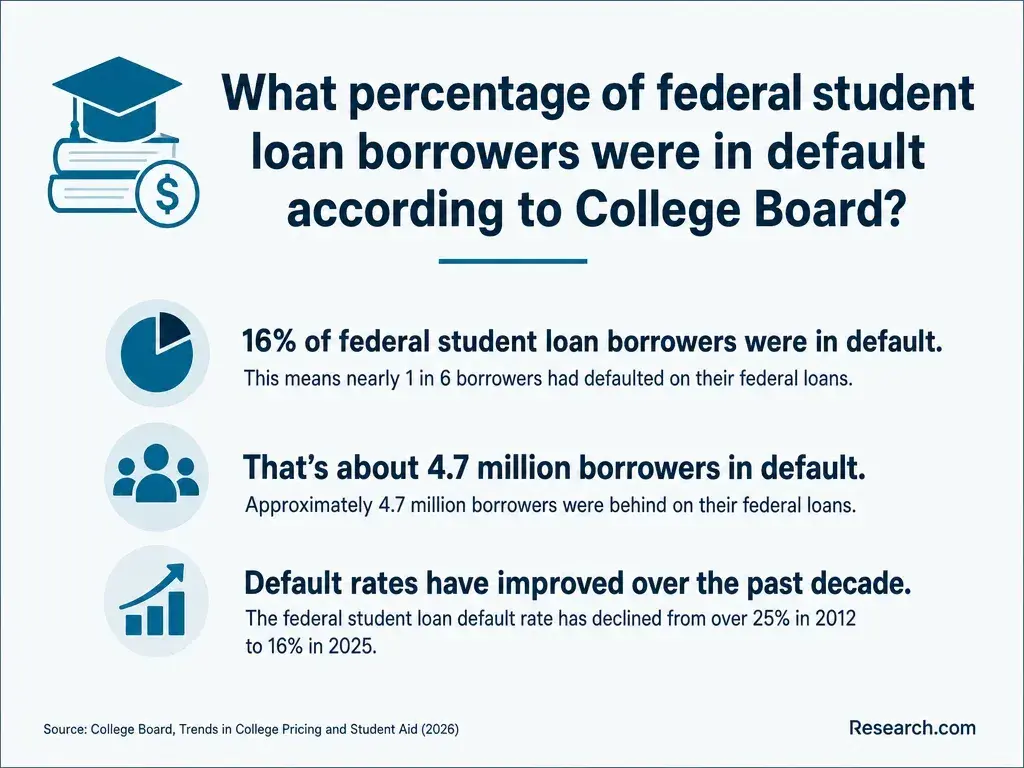
Ask each school for a written degree audit and a term-by-term plan, then price the courses still required. Include tuition, mandatory fees, books or software, travel or proctoring costs, and the effect of delayed completion. Ask your employer whether tuition assistance covers the institution and concentration, when reimbursement occurs, and what grade or continued-employment conditions apply. Use comparisons of business administration tuition and completion time to identify questions, not as a substitute for a personalized cost estimate.
What salaries and job outlook can international business graduates expect?
There is no single salary for an international business focus. Pay follows the occupation, location, employer, and responsibilities - not the concentration name. As one relevant benchmark, the U.S. Bureau of Labor Statistics reports a $82,320 median annual wage for logisticians in May 2025 and projects 18% employment growth from 2025 to 2035. That is an occupation-wide measure, not a starting salary or hiring forecast for international sales coordinators who earn a BS.
A move toward logistics may be plausible if your work includes shipment planning, inventory coordination, or analysis, but employers will assess those skills directly. For a sales-focused move, examine local postings for the exact target role and compare their required experience with yours. Balance any potential advancement against the degree's remaining cost; online business programs for cost-conscious students can broaden your search, while a school-specific aid offer and degree audit make the financial comparison meaningful.
Other Things You Should Know About Business Administration
Not necessarily. Language requirements vary by program. Language ability can help with particular customers or regions, but it does not replace business, communication, and role-specific skills.
Not automatically. Check the catalog for required study abroad or travel. Job travel also depends on the employer and position, not the concentration.
Possibly, if the school offers prior-learning assessment or approves your role for an internship or other requirement. Employment alone does not award credit; ask about eligibility, documentation, supervision, and fees.
No. International business classes may introduce trade issues, but export compliance requires knowledge of the applicable rules and your employer's procedures. Seek role-specific training and appropriate supervision before taking responsibility for regulated decisions.
- Your financial path to graduation | consumerfinance.gov https://www.consumerfinance.gov/paying-for-college/your-financial-path-to-graduation/
- Education credits - AOTC and LLC | Internal Revenue Service https://www.irs.gov/credits-deductions/individuals/education-credits-aotc-and-llc
- Global employability skills in the 21st century workplace - PMC - NIH https://pmc.ncbi.nlm.nih.gov/articles/PMC10637906/
- 7 International Business Careers That Are in High Demand | Northeastern University Graduate Programs https://graduate.northeastern.edu/knowledge-hub/international-business-careers/
- What can I do with an international business degree? | Prospects https://www.prospects.ac.uk/careers-advice/what-can-i-do-with-my-degree/international-business/
- Bachelor of Science in Business Administration (BSBA) | Boston University https://www.bu.edu/academics/questrom/programs/undergrad/bsba/
- International Business Careers You Can Pursue with a Bachelor's | Tiffin University https://www.tiffin.edu/news/international-business-careers-you-can-pursue-with-a-bachelors/
- International Business Major | Cleveland State University https://business.csuohio.edu/academics/international-business-major
- Post-graduation opportunities and possibilities: International Students in Higher Education | OECD https://www.oecd.org/en/publications/international-students-in-higher-education_005ff28d-en/full-report/post-graduation-opportunities-and-possibilities_42892cac.html
- Export Manager: occupation, studies, degree an salary | em-lyon.com https://em-lyon.com/en/student/guides/jobs/export-manager