2027 Online BS in Business Administration Admissions with Withdrawals During Family Caregiving: What to Check
Audited and Verified:
Our Editorial and Data Verification Process
Research.com uses government datasets, official education statistics and primary institutional information to support its career and degree guides. Our review process checks factual accuracy, occupational definitions, source dates and the requirements associated with the credentials discussed.
How This Article Was Fact-Checked
Our editorial team verifies salary estimates, employment projections, education requirements and program information against original data providers and official organizations. Salary figures are checked against the relevant occupational definitions and reporting periods. Information about licensure, accreditation and required in-person training is reviewed separately.
Fact-checked and verified on:

Co-Founder and Chief Data Scientist
A transcript showing withdrawals during family caregiving does not necessarily close the door to an online BS in Business Administration. But admission, transfer credit, and financial-aid eligibility are separate decisions, and an acceptance letter may not settle all three. This guide is for returning students who need to explain an interrupted record without disclosing more than necessary. It shows what to check on your transcript, which offices can answer each question, and how to judge whether an online schedule will work if caregiving continues.
Key Things You Should Know
- A withdrawal marked W is not automatically a failing grade, but schools may still consider withdrawal patterns, academic standing, and the explanation you provide.
- Check three decisions separately: admission to the university, admission to the business major, and eligibility for transfer credit and financial aid.
- Before enrolling, obtain a written degree audit and confirm how live classes, deadlines, group work, and leave policies fit your caregiving schedule.
What is an online BS in business administration after caregiving-related withdrawals?
It is a bachelor of science in business administration delivered primarily online to a student whose earlier college enrollment was interrupted while caring for a family member. The degree is not a special "returning student" credential: the school determines whether you can enter or reenter, which previous courses satisfy its requirements, and what remains to graduate.
A BS in Business Administration usually combines general education with accounting, economics, finance, marketing, management, and quantitative coursework. Its exact requirements differ from those of a BBA or a specialized business degree. If caregiving still limits your availability, compare the program's actual course schedule and support - not just its online label. Working-adult business administration program comparisons can help you identify options to investigate, but confirm policies with each school.
How can caregiving withdrawals affect online business degree admission decisions?
The effect depends on what the transcript records and which decision is being made. A W generally indicates that a course was not completed; a failing or punitive withdrawal grade may affect GPA under the school's rules. Neither notation alone tells you whether a new school will admit you or how it will treat an earlier attempt.
The distinctions below help you direct each question to the office that can answer it.
| Issue | What may matter | Who to ask |
| Admission | Overall record, academic standing, recent coursework, and any required explanation | Admissions office |
| Business-major entry | Required courses, grades, GPA rules, and a separate major application if applicable | Business-school adviser or admissions office |
| Transfer evaluation | Completed courses and how they apply to the new degree; a withdrawn course generally earns no transfer credit | Transfer-credit office or registrar |
| Financial aid | Satisfactory academic progress, previous aid-related withdrawals, and any appeal requirements | Financial-aid office |
Before applying, request official transcripts and check the exact grade codes, dates, and academic-standing notation. If an application asks about the interruption, briefly state when caregiving affected enrollment, what has changed, and how you will manage coursework now. Provide medical or family documentation only if a school's applicable policy calls for it; an admissions explanation need not include a relative's diagnosis.
Ask your previous school whether a hardship withdrawal, record correction, or readmission process is available, but do not assume an old grade can be changed. If your goal is specifically HR, transfer admission options for human resources majors may be worth comparing with a general business degree; the transcript and aid questions still require school-specific answers.
What admission requirements apply to online business administration bachelor's programs?
Online delivery does not create one nationwide admissions standard. A school may assess you as a first-year applicant, transfer applicant, or former student seeking readmission. Some universities admit students first and require separate approval to enter the business major.
Check the applicant category before gathering documents. It determines which requirements and deadlines apply.
- Ask admissions how your completed college work determines your applicant category and whether your prior academic standing affects eligibility.
- Submit transcripts from every institution the school requires, including the college where the withdrawals occurred.
- Check whether the business major requires particular grades or completed courses in mathematics, statistics, accounting, economics, or communication.
- If your record falls below a stated standard, ask whether recent coursework, conditional admission, academic renewal, or an appeal is available and when any unmet prerequisite must be completed.
Professional or caregiving experience may strengthen an explanation, but it does not automatically replace a prerequisite or award credit. For a closer look at possible academic preparation, see prior education requirements for business administration applicants.
Start with institutional accreditation: confirm the institution's current status and that the accreditor is recognized by the U.S. Department of Education or the Council for Higher Education Accreditation. Use the accreditor's directory as well as the school's listing, and check the institution's exact name and any relevant campus or organizational changes. Accreditation does not, by itself, guarantee that another school will accept credits.
Then check any claimed business accreditation separately. AACSB, ACBSP, and IACBE accreditation can cover different units or programs; ask whether the particular online BS in Business Administration is within the stated scope. A school's institutional accreditation does not establish business-program accreditation, and business accreditation does not substitute for checking degree requirements.
If application costs are a concern after an interrupted enrollment, accredited colleges offering free online applications can provide a starting list. Verify both current accreditation and the fee policy before applying.
For a caregiver, the useful comparison is not simply where classes happen. It is whether required work can be completed during the hours you reliably have available. An asynchronous course can still impose fixed deadlines, timed exams, group meetings, or presentations.
Ask for a recent syllabus or sample schedule for required courses, not only the program's marketing description. Compare live attendance, evening or weekend obligations, exam proctoring, group-project scheduling, campus visits, accessibility support, course frequency, and rules for reducing your course load or taking leave. Confirm whether an internship or capstone can be completed without assuming a current job or caregiving experience will count.
A campus program may be more workable if it offers predictable class blocks and nearby support; an online program may be better if travel is the constraint. If your objective is mainly leadership development rather than a broad business core, undergraduate leadership programs with shorter timelines offer another comparison. Check which prior credits actually apply before treating an advertised timeline as your own.
Typical requirements include accounting, economics, business law, finance, marketing, management, operations, statistics, and business communication, alongside general education. Programs may also require a strategy capstone, electives, or an official concentration. The catalog and your degree audit - not the program title - establish the courses you must take.
For returning students, course sequence matters as much as course content. A withdrawn accounting or statistics class may need to be repeated before you can take upper-level finance or analytics. Ask whether a completed course transfers as a business requirement, general education, or elective; accepted credit does not necessarily satisfy a prerequisite.
If supply chain work is your specific goal, compare the depth and availability of operations courses with supply chain bachelor's programs with compressed schedules. A faster advertised format will not help if prerequisite gaps or caregiving obligations make its pace unsustainable.
Your remaining courses - not the standard length advertised for a new student - determine the likely timeline. A written degree audit should show completed requirements, courses still needed, prerequisites, residency rules, and when required courses are offered. Ask an adviser to map a part-time and a fuller-time schedule that account for periods when caregiving may intensify.
Compare costs using the same remaining-course plan at each school: tuition, mandatory and technology fees, books or software, proctoring, and any travel. Then ask financial aid how your prior withdrawals affect satisfactory academic progress and what an appeal would require if you are ineligible. If you withdrew from all courses during an aid-funded term, ask whether that withdrawal created any unresolved aid balance. Do not assume admission restores aid eligibility.
Shorter published programs can be useful candidates for comparison; business bachelor's rankings focused on completion speed are one starting point. Request an individual credit evaluation before estimating your time or savings, and check whether a quicker pace would create an unmanageable weekly workload.
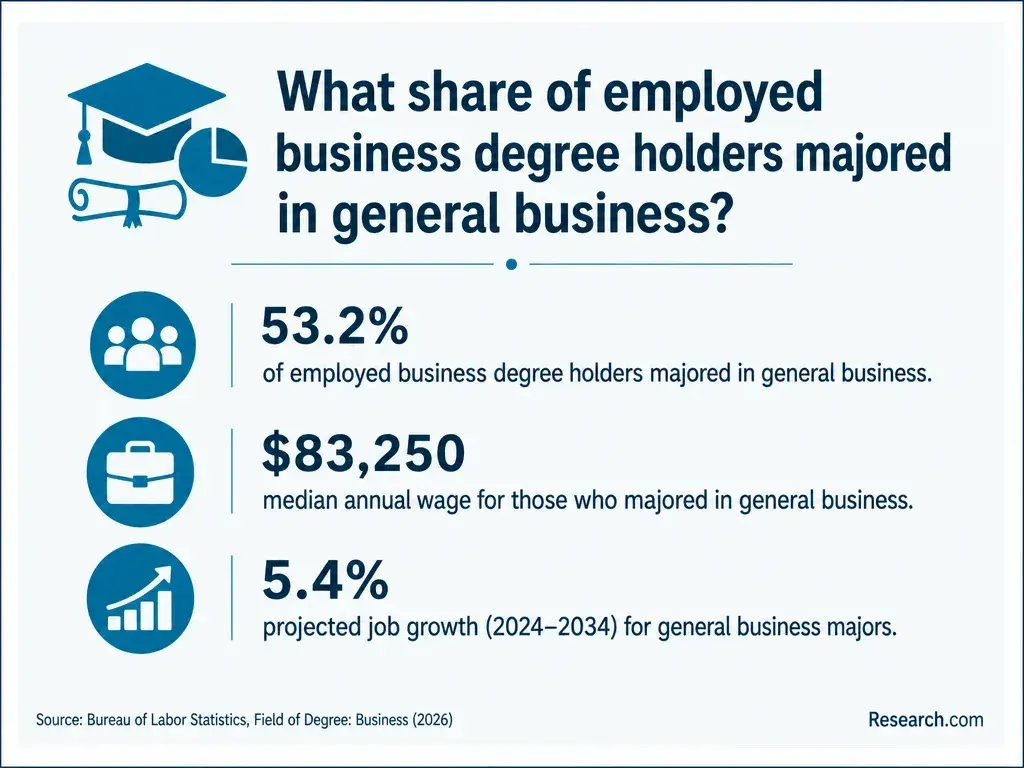
A broad business degree can support applications for roles such as operations coordinator, administrative specialist, HR assistant, marketing coordinator, or project coordinator. The appropriate entry point depends on your prior work and the tasks you can demonstrate. Caregiving may have involved scheduling or budgeting, but describe those skills accurately; it is not automatically equivalent to paid supervisory or specialist experience.
Use course projects, relevant employment, or an approved internship to show specific skills such as spreadsheet analysis, financial-statement interpretation, process mapping, and professional communication. If you already know you want supply chain work, compare the functional coursework, time, and cost of a specialized degree using supply chain program tuition, time, and earnings context. Neither pathway alone establishes readiness for a management position.
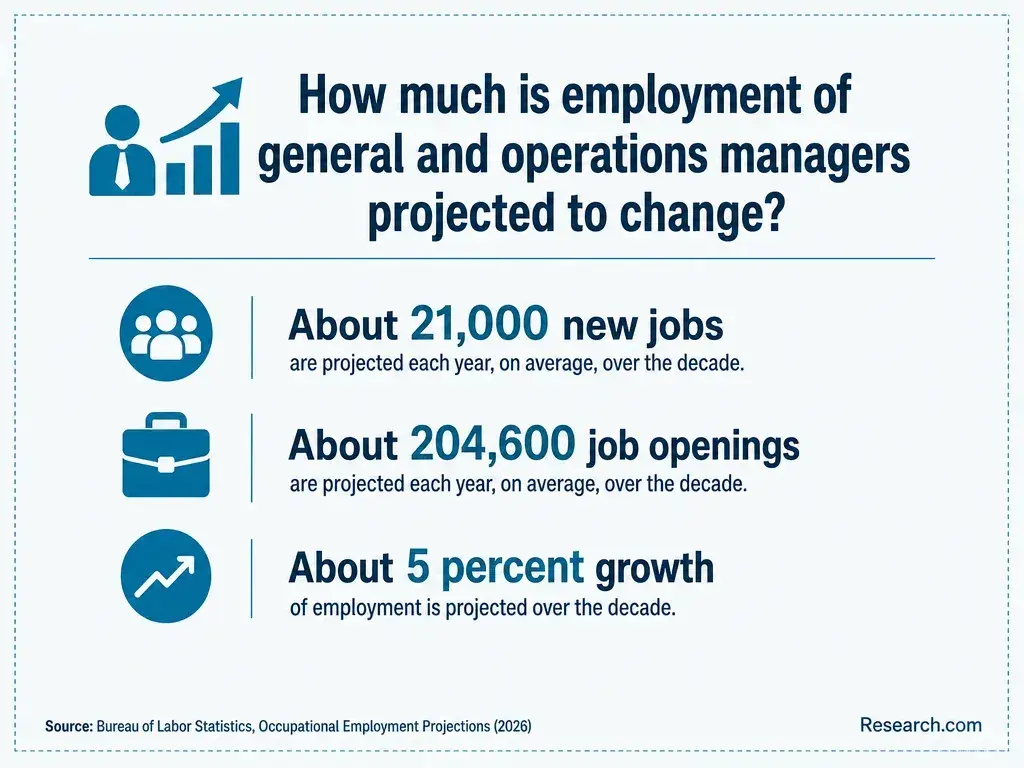
There is no single salary or growth rate for BS in Business Administration graduates: labor statistics describe occupations, not everyone holding a degree. For example, the U.S. Bureau of Labor Statistics reports a May 2025 median annual wage of $75,940 for human resources specialists and projects 6% employment growth for that occupation from 2025 to 2035. Those occupation-wide figures include workers with varied experience; they are not a starting-salary estimate or a promise of employment.
Judge financial value against a realistic target role, your existing experience, local job requirements, and the cost of finishing. Evaluating the price, duration, and outcomes of business administration degrees can help frame the comparison, but an individual degree audit and aid review are necessary before calculating your own return.
Which certifications or professional standards matter after a business administration degree?
Choose an additional credential only after identifying the role it serves. HR, project management, accounting, and financial-services credentials have different eligibility rules, experience expectations, examinations, or licensing authorities. A business degree or concentration does not automatically qualify you for a certification, CPA licensure, or regulated financial work.
For a project-coordination goal, compare employer job postings with the requirements published by the relevant certifying organization before paying for preparation. If a project-management bachelor's is another option, grants for project management undergraduates may affect the degree-cost comparison; aid availability and certification eligibility remain separate questions.
Other Things You Should Know About Business Administration
Use the space if the withdrawal pattern needs context. Keep it brief, describe the interruption and your plan to study now, and follow any application instructions. You do not need to disclose a family member's private medical details.
Yes, if that professor can speak to your academic work. Provide your course details and current goals. If the school accepts professional references, a supervisor who knows your recent work may also be useful.
Possibly. Ask whether nondegree enrollment is available, whether the course would count toward this specific BS if you are admitted later, and whether nondegree students qualify for the aid you need.
Contact your instructor and adviser promptly, before a deadline when possible. Ask about extensions, an incomplete, course withdrawal, or leave under the school's policies, and check financial-aid consequences before changing enrollment.
- Staying Eligible | Federal Student Aid https://studentaid.gov/understand-aid/eligibility/staying-eligible
- General Requirements for Withdrawals and the Return of Title IV Funds | 2025-2026 Federal Student Aid Handbook https://fsapartners.ed.gov/knowledge-center/fsa-handbook/2025-2026/vol5/ch1-general-requirements-withdrawals-and-return-title-iv-funds
- Frequently Asked Questions | MSU Denver https://www.msudenver.edu/registrar/frequently-asked-questions/
- Federal Financial Aid Policies | unomaha.edu https://catalog.unomaha.edu/aboutuno/financing-your-education/federal-financial-aid-policies/
- Impact of Withdrawal on Students Receiving Federal Financial Aid | Student Account Services https://studentaccounts.ua.edu/impact-of-withdrawal-on-students-receiving-federal-financial-aid/
- Academic Policies and Procedures | post.edu https://post.edu/student-services/academic-affairs/academic-policies-and-procedures/
- Complete Withdrawal from Term | University of Arizona Office of the Registrar https://registrar.arizona.edu/records-enrollment/enrollment/leave-absences/complete-withdrawal-term
- Medical and Compassionate Withdrawal Request | University Registrar Services https://registrar.asu.edu/forms/medical-compassionate-withdrawal-request
- Dean of Students - Compassionate Withdrawals | Information Technology Services https://student.louisville.edu/compassionate-withdrawals
- Financial Aid Appeals for Special or Unusual Circumstances https://financialaid.arizona.edu/policies/appeals